Tyrosine: Benefits, Foods, Dosage, and Side Effects
Discover tyrosine's role in neurotransmitter production, mood support, stress relief, and thyroid function with food sources and safe dosing guidelines.
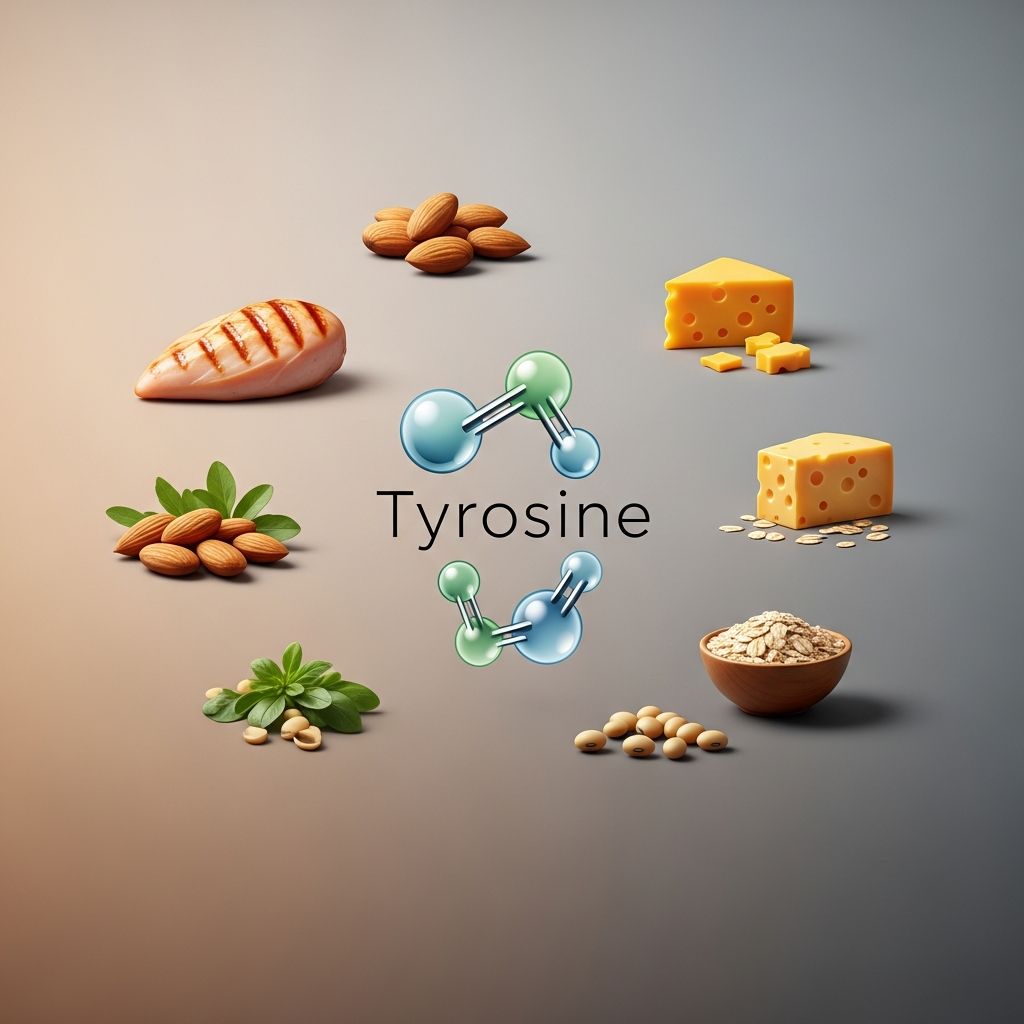
Tyrosine is a nonessential amino acid that plays a crucial role in producing neurotransmitters like dopamine and norepinephrine, which influence mood, focus, and stress response. Synthesized from phenylalanine, it supports brain function, thyroid hormone production, and melanin synthesis, making it essential for overall health.
What Is Tyrosine?
Tyrosine, also known as L-tyrosine, is one of the 20 standard amino acids used by the body to build proteins. The body produces it from the essential amino acid phenylalanine through hydroxylation in the liver and other tissues. As a precursor to catecholamines—dopamine, norepinephrine, and epinephrine—tyrosine is vital for neurotransmitter synthesis, particularly under stress when demand increases.
Beyond brain chemistry, tyrosine contributes to thyroid hormones (thyroxine and triiodothyronine), which regulate metabolism, growth, and energy levels. It also aids melanin production, the pigment responsible for skin, hair, and eye color. While the body can synthesize tyrosine, dietary intake ensures adequate levels, especially in cases like phenylketonuria (PKU) where phenylalanine metabolism is impaired.
Deficiencies, though rare in healthy individuals, can lead to hypothyroidism, low blood pressure, and reduced body temperature. Supplemental tyrosine is commonly used for mood elevation, memory enhancement, and combating fatigue, though evidence varies by context.
Tyrosine Benefits
Research highlights several potential benefits of tyrosine, particularly in stressful or demanding situations where neurotransmitter levels deplete.
Supports Brain Function and Cognitive Performance
Tyrosine replenishes dopamine and norepinephrine, neurotransmitters that decline during mental stress, cold exposure, or sleep deprivation. Studies show supplementation improves working memory, attention, and executive function in such conditions. For instance, it enhances cognitive performance during multitasking or high-altitude stress, preventing declines in vigilance and reaction time.
A meta-analysis confirms tyrosine effectively boosts cognition in short-term stressful scenarios, making it valuable for athletes, students, or professionals under pressure.
Enhances Mood and Reduces Stress
By boosting catecholamine production, tyrosine acts as a natural mood elevator and anti-depressant. It may alleviate symptoms of depression, anxiety, and chronic fatigue by supporting nerve cell communication. Animal studies demonstrate increased noradrenergic activity under stress, correlating with better motivation and arousal.
Boosts Physical Performance
Evidence is mixed, but tyrosine may improve endurance and motivation during prolonged exercise by elevating dopamine and norepinephrine, linked to reward and arousal. It shows promise in preventing performance drops in extreme environments like cold or hypoxia.
Supports Thyroid Health
Tyrosine is a building block for thyroid hormones T3 and T4, essential for metabolism regulation. Transporters like SLC16A2 facilitate thyroid hormone movement across barriers, underscoring tyrosine’s role in homeostasis.
Other Potential Benefits
- PKU Management: Essential supplementation for PKU patients unable to convert phenylalanine to tyrosine.
- Melanin Production: Contributes to pigmentation and UV protection.
- Alertness: Improves mental alertness and combats narcolepsy.
Tyrosine Foods
Rich dietary sources provide tyrosine naturally, reducing the need for supplements in most people. High-protein foods are primary sources since tyrosine comprises part of complete proteins.
| Food | Serving Size | Tyrosine (mg) |
|---|---|---|
| Parmesan Cheese | 1 oz (28g) | 1,900 |
| Soybeans (roasted) | 1 cup (172g) | 1,600 |
| Beef (lean, cooked) | 3 oz (85g) | 1,200 |
| Lamb (lean, cooked) | 3 oz (85g) | 1,100 |
| Pork (lean, cooked) | 3 oz (85g) | 1,000 |
| Chicken (breast, cooked) | 3 oz (85g) | 900 |
| Fish (tuna, cooked) | 3 oz (85g) | 800 |
| Eggs | 2 large | 600 |
| Almonds | 1 oz (28g) | 400 |
| Oats | 1 cup cooked (234g) | 500 |
Related Stories



Incorporate these into meals: start your day with eggs and oats, add chicken or fish to lunches, and snack on nuts. Vegetarians can rely on soy, beans, and dairy. A balanced diet typically meets daily needs of 875–1,250 mg for adults.
Tyrosine Supplements
Available as L-tyrosine powder, capsules, or in pre-workouts, supplements are popular for targeted benefits. They are generally recognized as safe (GRAS) by the FDA up to 150 mg/kg body weight daily for three months.
Dosage Recommendations
- General Cognitive Support: 500–2,000 mg/day, divided doses.
- Stress/Performance: 100–150 mg/kg, 60 minutes pre-activity.
- PKU: As prescribed, often in medical formulas.
Take on an empty stomach for better absorption, avoiding competition with other amino acids. Cycle use to prevent tolerance.
Tyrosine Side Effects
Tyrosine is safe for most at recommended doses, with rare mild effects like nausea, headache, or heartburn at high intakes (>12g/day).
Interactions and Precautions
- Thyroid Medications: May amplify hormone levels; monitor with hyperthyroidism or levothyroxine.
- MAOIs/Levodopa: Risk of hypertensive crisis or altered dopamine levels.
- PKU: Consult physician.
- Pregnancy/Breastfeeding: Insufficient data; avoid supplements.
Those with migraines or high blood pressure should use caution due to catecholamine effects.
Who Should Take Tyrosine?
Ideal for individuals under chronic stress, athletes in demanding conditions, or those with low dietary intake. It’s ineffective in low-stress scenarios as baseline levels suffice. Vegetarians, vegans, or PKU patients may benefit most.
Frequently Asked Questions (FAQs)
Is tyrosine safe to take daily?
Yes, up to 150 mg/kg/day for months is safe for most, but consult a doctor for long-term use or interactions.
Can tyrosine help with depression?
It may support mood via neurotransmitter production, but evidence is preliminary; not a substitute for therapy.
Does tyrosine increase dopamine?
Yes, as a precursor, it boosts dopamine synthesis, especially under stress.
What’s the best time to take tyrosine?
Morning or pre-stress on an empty stomach for optimal absorption.
Can vegetarians get enough tyrosine?
Yes, from soy, nuts, seeds, and grains; combine for complete proteins.
References
- Tyrosine: Uses, Interactions, Mechanism of Action — DrugBank Online. 2023-10-01. https://go.drugbank.com/drugs/DB00135
- Tyrosine: Benefits, Side Effects and Dosage — Healthline. 2023-05-15. https://www.healthline.com/nutrition/tyrosine
- Tyrosine – Uses, Side Effects, and More — WebMD. 2024-01-10. https://www.webmd.com/vitamins/ai/ingredientmono-1037/tyrosine
- Tyrosine Supplementation: Can This Amino Acid Boost Brain Dopamine and Improve Physical and Mental Performance? — GSSI Web. 2022-06-20. https://www.gssiweb.org/sports-science-exchange/article/sse-157-tyrosine-supplementation-can-this-amino-acid-boost-brain-dopamine-and-improve-physical-and-mental-performance-
- Effect of tyrosine supplementation on clinical and healthy populations under stress or cognitive demands—A review — PubMed. 2015-10-01. https://pubmed.ncbi.nlm.nih.gov/26424423/
Similar Articles








Read full bio of medha deb