Tzanck Smear: 4 Key Uses And A Quick Bedside Guide
Simple, rapid cytology test for diagnosing blistering skin diseases and viral infections like herpes.
The
Tzanck smear
is a simple, rapid, and cost-effective cytological test used in dermatology to diagnose vesicular, bullous, erosive, and certain nodular skin lesions by examining individual cells under a microscope.What is a Tzanck Smear?
The Tzanck smear test, also known as the Tzanck test, involves scraping the base of a fresh blister, vesicle, or ulcer to obtain cellular material, which is then smeared on a glass slide, stained, and examined microscopically for characteristic cytological features. Named after Arnault Tzanck, who described it in 1947, this technique relies on cytology—the study of individual cells—to differentiate blistering disorders.
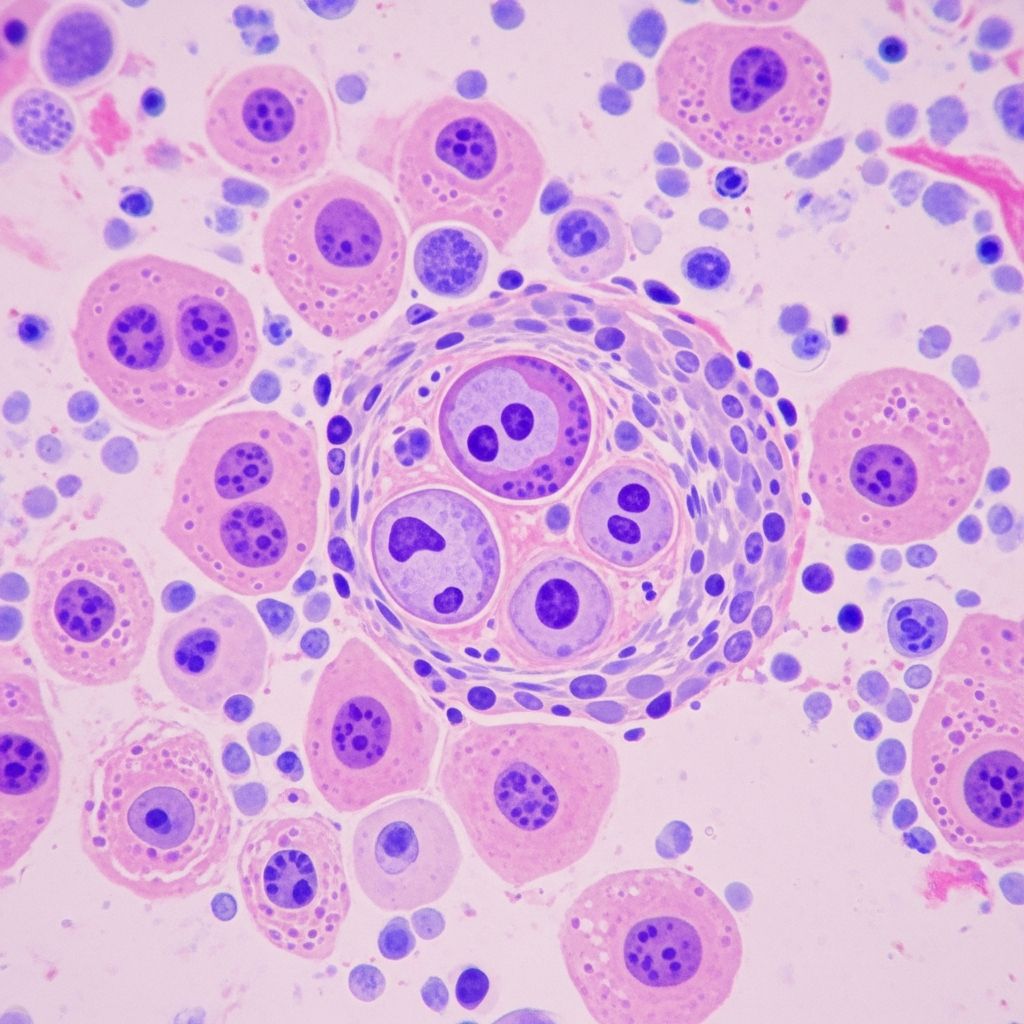
It is particularly valuable in acute settings for rapid diagnosis, such as distinguishing herpetic infections from other blistering conditions. The test detects specific cell changes like
multinucleated giant cells
in viral infections oracantholytic cells
in autoimmune blistering diseases.Who is the Tzanck Smear Named After?
French dermatologist
Arnault Tzanck
(1886–1964) pioneered this bedside procedure in 1947 to distinguish various blistering conditions rapidly without needing complex laboratory equipment. His work laid the foundation for cytodiagnosis in dermatology, making it accessible even in resource-limited settings.What is the Tzanck Smear Used For?
The Tzanck smear is primarily employed to diagnose:
- Viral infections: Herpes simplex virus (HSV) causing cold sores or genital herpes, and varicella-zoster virus (VZV) causing chickenpox or shingles. It identifies multinucleated giant cells with molded nuclei and nuclear inclusions.
- Autoimmune blistering diseases: Pemphigus vulgaris and pemphigus foliaceus, revealing acantholytic (rounded, detached) squamous cells.
- Other conditions: Staphylococcal scalded skin syndrome vs. Stevens-Johnson syndrome/toxic epidermal necrolysis (SJS/TEN), bullous impetigo, bullous pemphigoid (less specific), cutaneous leishmaniasis (showing amastigotes), basal cell carcinoma, seborrheic keratosis, and granulomatous diseases.
- Pigmented lesions: Differentiating melanocytic from non-melanocytic lesions with accuracy comparable to dermatoscopy.
In emergency dermatology, it provides immediate results to guide treatment, such as starting antivirals for herpes.
Preparation for Tzanck Smear
Proper preparation ensures optimal cell yield and accurate interpretation:
- Select the lesion: Choose a fresh, intact vesicle, bulla, pustule, or unroofed blister base. Avoid old, crusted, or healed lesions, as they yield poor samples.
- Clean the area: Gently cleanse with alcohol or saline to remove debris, but do not over-clean to preserve cells.
- Anesthetize if needed: Local anesthesia (e.g., lignocaine) for painful lesions.
- Tools required: Sterile scalpel (#15 blade), glass slide, or blunt spatula/needle. For blade-free methods, use a syringe or curette.
A recent innovation includes a blade-free approach using a sterile syringe to aspirate and smear fluid, reducing injury risk.
Laboratory Work / Procedure
The procedure is straightforward and can be performed at the bedside:
- Scraping: Unroof the vesicle/bulla with a scalpel or scrape the erythematous base firmly to obtain serous fluid and cells. Multiple scrapes improve yield.
- Smear preparation: Transfer material to a clean glass slide, spread thinly in one direction to avoid overlapping cells. Make 2–3 smears for different stains.
- Fixation: Air-dry (for Giemsa/Wright) or fix in 95% ethanol (for Papanicolaou stain).
- Staining: Common stains include:
- **Giemsa** or
Wright’s stain
(Romanowsky-type): Best for viral inclusions and multinucleated cells (5–10 minutes). - **May-Grünwald-Giemsa**: Enhances nuclear details.
- **Papanicolaou (Pap) stain**: Useful for acantholytic cells and malignancies.
- **Hemotoxylin and Eosin (H&E)** or
Diff-Quik
: Rapid alternatives.
- **Giemsa** or
- Microscopy: Examine under light microscope at 40x–100x oil immersion. A skilled dermatologist or cytopathologist interprets findings.
Related Stories



The entire process takes 5–15 minutes, with results available immediately.
Interpretation of Tzanck Smear
Key cytological findings guide diagnosis:
| Finding | Description | Associated Conditions |
|---|---|---|
| **Multinucleated giant cells (Tzanck cells)** | Enlarged epithelial cells with 10–20 molded nuclei, chromatin margination, and multinucleation. Syncytial formation. | HSV, VZV (chickenpox/shingles). |
| **Acantholytic cells** | Rounded keratinocytes with large hyperchromatic nuclei, prominent nucleoli, dense cytoplasm. “Row of tombstone” appearance. | Pemphigus vulgaris/foliaceus. |
| **Inflammatory cells** | Neutrophils, eosinophils, lymphocytes. | Bullous pemphigoid, SJS/TEN, impetigo. |
| **Amastigotes** | Small oval bodies in macrophages. | Cutaneous leishmaniasis. |
| **Peripheral palisading basaloid cells** | Uniform cells with retraction artifact. | Basal cell carcinoma. |
Negative results do not rule out disease; early or late lesions may lack diagnostic cells. Confirm with biopsy, PCR, or culture.
Advantages and Disadvantages
Advantages:
- Rapid (results in minutes).
- Cost-effective, no special equipment needed.
- Minimally invasive, bedside procedure.
- High specificity for herpes (90–95%) and pemphigus.
- Useful in resource-poor settings or outbreaks.
- Comparable to dermatoscopy for pigmented lesions; better than biopsy for leishmaniasis in some cases.
Disadvantages:
- Operator-dependent; requires cytological expertise.
- Low sensitivity (50–70% for herpes if not optimal timing).
- False negatives in early (<24h), healed, or treated lesions.
- Non-specific for some conditions (e.g., eosinophils in pemphigoid vs. arthropod bites).
- Cannot speciate viruses (HSV vs. VZV); needs PCR confirmation.
- Limited by poor sample quality or overlapping cells.
History
Introduced by Arnault Tzanck in 1947, the test gained prominence in the 1950s for HSV/VZV diagnosis (Blank et al., 1951). Its use expanded to pemphigus, impetigo, and tumors. Despite advanced techniques like PCR and immunofluorescence, it remains relevant for rapid triage, especially post-2010 rediscovery in literature.
Recent Developments
Studies affirm its utility: A 2011 review highlighted its role in vesiculobullous diseases. A 2023 capstone recommends it as first-line for vesiculobullous/pustular lesions, with 90.5% accuracy matching dermatoscopy. Blade-free techniques enhance safety. Diagnostic accuracy rivals punch biopsy for leishmaniasis (64–77% sensitivity).
Frequently Asked Questions
What is a positive Tzanck smear?
A positive result shows characteristic cells like multinucleated giant cells (viral) or acantholytic cells (pemphigus).
Is the Tzanck smear painful?
Minimally; local anesthesia can be used for sensitive areas.
Can it diagnose HSV vs. VZV?
No, both show similar giant cells; PCR differentiates.
How accurate is it for herpes?
Sensitivity 50–95%, specificity high; best 24–72 hours post-onset.
Alternatives to Tzanck smear?
Biopsy, viral culture, PCR, DFA immunofluorescence (higher sensitivity).
References
- Tzanck Smear Test — Dr. Kothiwala’s SkinEva Clinic. 2023. https://drkothiwalaskineva.com/medical-dermatology/tzanck-smear/
- The Tzanck Smear Test: Rediscovery of a Practical Diagnostic Tool — PubMed (Chosidow O, et al.). 2011-04-01. https://pubmed.ncbi.nlm.nih.gov/21409959/
- Tzanck smear – DermNet — DermNet NZ. 2023. https://dermnetnz.org/topics/tzanck-smear
- Tzanck Smear in Dermatologic Practice — University of Colorado Anschutz Medical Campus. 2023. https://medschool.cuanschutz.edu/docs/librariesprovider31/education-docs/capstone/posters-2023/dinkelrebecca_288819_19416232_tzanck-smear-in-dermatologic-practice_dinkel.pdf?sfvrsn=8a5724bb_2
- Tzanck test – Wikipedia — Wikipedia. 2023. https://en.wikipedia.org/wiki/Tzanck_test
- Tzanck smear: A useful diagnostic tool — Indian Journal of Dermatology, Venereology and Leprology. 2005. https://ijdvl.com/tzanck-smear-a-useful-diagnostic-tool/
- Tzanck smear – Knowledge and References — Taylor & Francis. 2023. https://taylorandfrancis.com/knowledge/Medicine_and_healthcare/Pathology/Tzanck_smear/
Similar Articles








Read full bio of medha deb