Ulcerative Colitis: Causes, Symptoms, Diagnosis & Treatment
Understanding ulcerative colitis: A comprehensive guide to symptoms, diagnosis, and evidence-based treatment options.
What is Ulcerative Colitis?
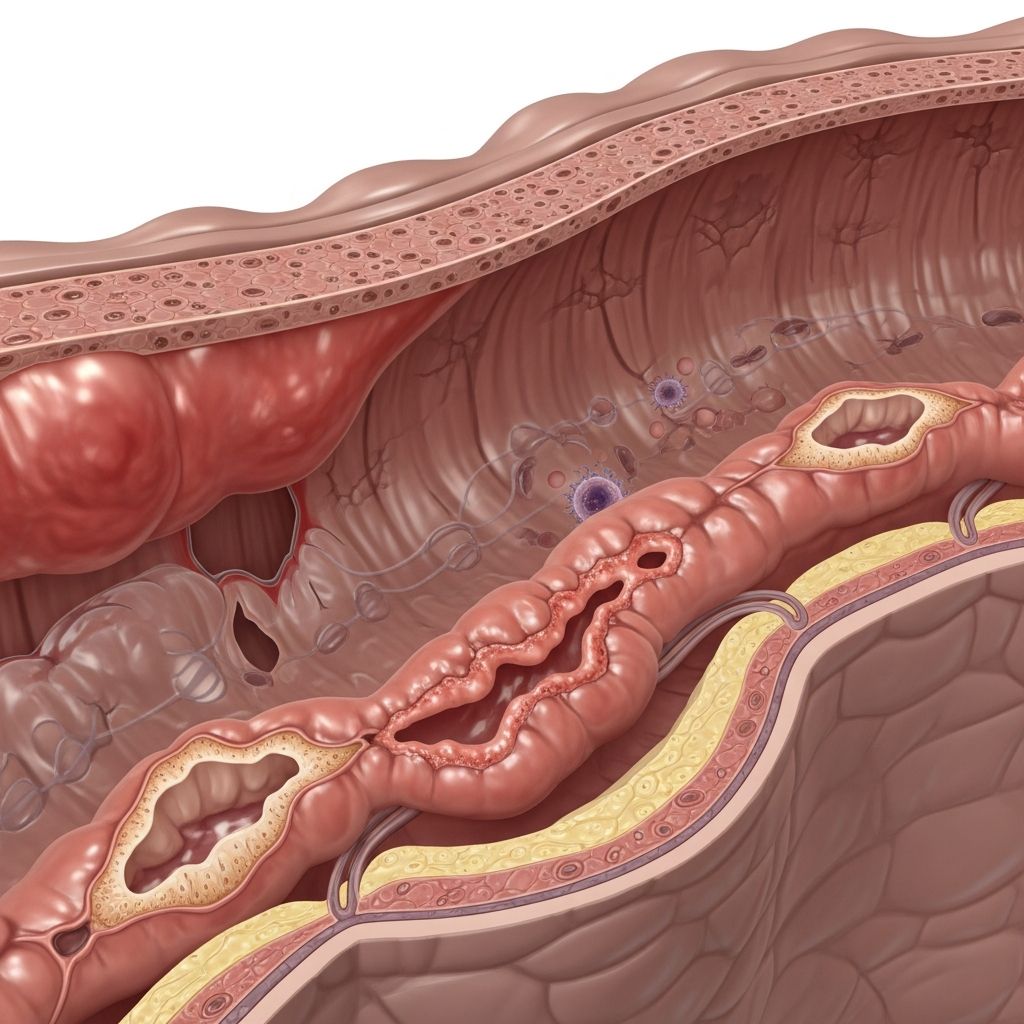
Ulcerative colitis (UC) is a chronic inflammatory bowel disease (IBD) characterized by diffuse mucosal inflammation of the colon and rectum. The condition causes active inflammation that can affect the colon from the rectum to the cecum in a relapsing and remitting course. Unlike Crohn’s disease, which can affect any part of the digestive tract, ulcerative colitis always involves the rectum and may extend proximally in a contiguous pattern to involve other sections of the colon.
The inflammation in ulcerative colitis is primarily limited to the superficial layers of the large bowel, distinguishing it from conditions that affect deeper layers of the intestinal wall. This chronic disease requires long-term management and monitoring to prevent complications and maintain quality of life.
Types of Ulcerative Colitis Based on Extent
The extent of ulcerative colitis varies among patients and influences treatment decisions. The classification includes:
– Proctitis: Inflammation limited to the rectum- Proctosigmoiditis: Inflammation extending to the sigmoid colon- Left-sided colitis: Inflammation involving the descending colon- Pancolitis: Inflammation affecting the entire colon
The extent of colonic involvement can often, but not always, be predicted by the degree of symptomatology exhibited by the patient, with more fulminant presentations often associated with pancolitis and severe inflammation.
Symptoms and Clinical Presentation
The hallmark symptoms of ulcerative colitis include intermittent bloody diarrhea, rectal urgency, and tenesmus (a persistent urge to empty the bowels). Additional symptoms may encompass abdominal pain, weight loss, fatigue, and in severe cases, fever and dehydration.
Beyond gastrointestinal symptoms, patients may experience extraintestinal manifestations (EIMs) such as joint pain, skin manifestations, and other systemic complications. The reported frequency of extraintestinal manifestations in patients with ulcerative colitis ranges from 6 to 47 percent, highlighting the systemic nature of this disease.
Diagnosis of Ulcerative Colitis
Laboratory Studies
In patients with suspected ulcerative colitis, several laboratory studies are essential to confirm diagnosis and exclude other causes of chronic diarrhea:
– Stool examinations: Testing for ova, parasites, and cultures to rule out infectious causes- Clostridium difficile testing: To eliminate infectious causes of diarrhea- Inflammatory biomarkers: Erythrocyte sedimentation rate (ESR), C-reactive protein (CRP), and fecal calprotectin to assess systemic inflammation- Complete blood count: May show anemia from chronic blood loss- Basic metabolic profile: May demonstrate electrolyte abnormalities such as hypokalemia from persistent diarrhea
Endoscopic Evaluation
Colonoscopy is the gold standard diagnostic procedure for ulcerative colitis, allowing direct visualization of the colon and rectum. The procedure enables assessment of the extent and severity of inflammation and facilitates biopsy collection for histological confirmation. Initial screening colonoscopy should be performed eight years after a diagnosis of pancolitis and 12 to 15 years after a diagnosis of left-sided disease, with subsequent examinations every one to three years.
Related Stories



Differentiating Ulcerative Colitis from Crohn’s Disease
While both conditions are forms of inflammatory bowel disease, they differ in important ways that affect treatment and prognosis:
| Feature | Ulcerative Colitis | Crohn’s Disease |
|---|---|---|
| Abdominal Pain | Variable | Common |
| Depth of Inflammation | Mucosal (superficial) | Transmural (full thickness) |
| Diarrhea Severity | Severe | Less severe |
| Distribution Pattern | Diffuse, contiguous spread; always involves rectum | Segmental, noncontiguous spread (skip lesions); less common rectal involvement |
| Tract Involvement | Spares proximal gastrointestinal tract | Occurs throughout entire gastrointestinal tract |
Medical Treatment Approach
Treat to Target Strategy
Modern management of ulcerative colitis follows a “treat to target” approach. Treatment should aim to achieve a level of remission that impacts relevant clinical outcomes such as minimizing long-term complications including surgery, hospitalization, disability, colorectal cancer, and mortality, while using the safest therapeutic options possible. This approach emphasizes corticosteroid-sparing strategies and individualized therapy selection involving the patient’s values and lifestyle.
Individualized Treatment Selection
The choice of therapy needs to be tailored to each patient and their specific disease characteristics. Multiple factors influence treatment decisions including disease activity, prior treatment failures or responses, presence of extraintestinal manifestations, associated conditions such as psoriasis, comorbidities including history of malignancy or cardiovascular disease, life events and lifestyle considerations such as pregnancy planning or travel, preferred mode of administration (oral, injection, or infusion), and patient preference.
Available Therapies for Ulcerative Colitis
Mild to Moderate UC Flare Management
In patients with mild to moderate UC activity and at low risk for colectomy, induction of remission is usually achieved with either oral or topical corticosteroids or 5-aminosalicylic acid (5-ASA) agents, or a combination of both. Rectal 5-ASA is more effective than oral 5-ASA for mild proctitis, whereas a combination of rectal and oral 5-ASA is needed for more extensive colitis.
Moderate to Severe UC Flare and High Colectomy Risk
Therapies for moderate to severe UC and for patients at high colectomy risk are categorized into thiopurines, biologics, and small molecules. Thiopurines are not effective in inducing remission and are only indicated to maintain remission induced with steroids. Biologics and small molecules are effective at inducing and maintaining remission; however, a short course of corticosteroids may be used to control symptoms until therapy is initiated and as a bridge until the onset of action of the chosen drug.
Biologic Therapies
Vedolizumab (VDZ) is a gut-selective biologic that blocks cell adhesion molecules. The induction regimen consists of intravenous VDZ at 0, 2, and 6 weeks, followed by maintenance every 8 weeks. In clinical trials, the response at week 6 in treatment-naive patients was 53% in the VDZ group versus 26% in the placebo group, with clinical remission at week 52 reaching 46% in the VDZ group versus 19% in the placebo group.
Ustekinumab (UST) is another effective biologic therapy. It is initiated as a weight-based intravenous infusion followed by 90 mg subcutaneously every 8 weeks. In the UC-UNIFI trial, clinical response at week 8 was significantly higher in the UST group: 66% in treatment-naive patients versus 35% in the placebo group and 57% in previously treated patients versus 27% in the placebo group.
Small Molecules and Other Therapies
Small molecule therapies represent a newer class of treatment options for ulcerative colitis, offering oral administration and alternative mechanisms of action compared to biologic therapies. These medications provide additional options for patients who may not respond to or tolerate biologic treatments.
Therapeutic Drug Monitoring
Therapeutic drug monitoring and dose optimization of thiopurines and anti-TNF agents are strongly recommended to optimize treatment response. The utility of drug monitoring with other biologics is not clear at this point.
Management of Acute Severe Ulcerative Colitis
Hospitalization and Intravenous Therapy
When patients do not respond to orally administered steroids, hospitalization is necessary to receive intravenous corticosteroids. Intravenous methylprednisolone at a dose equivalent of 40 to 60 mg per day, along with intravenous fluid and electrolyte repletion, is the mainstay of management for hospitalized adults.
In a retrospective study of 85 patients hospitalized with severe ulcerative colitis, the highest failure rate with intravenous corticosteroids occurred when symptoms lasted more than six weeks or when severe lesions were noted on endoscopy. Enteral nutrition as tolerated is always favored over total parenteral nutrition, which is associated with increased risk of catheter infection and upper extremities deep venous thrombosis.
Pre-Treatment Laboratory Evaluation
Before initiating systemic immunosuppressive therapy, comprehensive laboratory testing is essential:
– Complete metabolic profile and complete blood count with differential– Inflammatory biomarkers: ESR, CRP, and fecal calprotectin for objective measurement of treatment response- QuantiFERON gold test: To screen for active or latent tuberculosis- Hepatitis B serologies: In anticipation of anti-TNF therapy- Lipid panel: In anticipation of cyclosporin A or TOFA therapy- TPMT enzyme activity: In anticipation of thiopurines
Preventive Care and Monitoring
Infection Prevention
Patients receiving systemic immunosuppression through biologics, thiopurines, and small molecule drugs should receive pneumococcal vaccines and an annual flu vaccine to prevent infectious complications. Additionally, annual skin checks are recommended to screen for skin cancer, as immunosuppressive therapy may increase this risk.
Bone Health
Patients who take chronic steroids for their ulcerative colitis should be screened for osteoporosis, and they usually receive prophylactic therapy with calcium, vitamin D, and bisphosphonates to maintain bone density.
Dietary Considerations
Dietary management plays an important role in managing ulcerative colitis symptoms. Patients often benefit from avoiding foods that worsen symptoms, eating smaller meals at more frequent intervals, drinking adequate fluids, and avoiding caffeine and alcohol. During flares, it is advisable to reduce high-fiber foods and limit excess fat in the diet.
Nutritional deficiency screening is recommended, as chronic inflammation and medication use can impair nutrient absorption. Some patients may be lactose intolerant and benefit from eliminating dairy products. Vitamin and mineral supplementation may be necessary to address deficiencies.
Treatment Outcomes and Prognosis
Approximately 66 percent of patients will achieve clinical remission with medical therapy, and 80 percent of treatment-compliant patients maintain remission. The combination of appropriate medical therapy, lifestyle modifications, and careful monitoring significantly improves outcomes for patients with ulcerative colitis.
When Surgery May Be Necessary
While medical management is the first-line approach for ulcerative colitis, surgery may become necessary in certain situations. Indications for surgery include failure of medical therapy, severe complications, or significantly compromised quality of life despite optimal medical management. Surgical options typically involve removal of the colon and rectum, which completely resolves the disease.
Frequently Asked Questions (FAQs)
Q: Is ulcerative colitis the same as Crohn’s disease?
A: While both are forms of inflammatory bowel disease, they differ significantly. Ulcerative colitis affects only the colon and rectum with mucosal inflammation, while Crohn’s disease can affect any part of the digestive tract with transmural (full-thickness) inflammation. Ulcerative colitis always involves the rectum, whereas Crohn’s disease may spare the rectum.
Q: Can ulcerative colitis be cured?
A: Ulcerative colitis cannot be cured with medical therapy alone, but symptoms can be managed effectively with appropriate treatment. Surgery to remove the entire colon and rectum is the only definitive cure, as it completely eliminates the disease.
Q: What is the primary goal of ulcerative colitis treatment?
A: The primary goal is to achieve and maintain remission while minimizing complications such as surgery, hospitalization, disability, and colorectal cancer, while using the safest therapeutic options possible.
Q: How often should I have colonoscopies if I have ulcerative colitis?
A: Initial screening should occur eight years after diagnosis of pancolitis and 12 to 15 years after diagnosis of left-sided disease, with subsequent examinations every one to three years.
Q: What vaccinations are important for patients with ulcerative colitis taking immunosuppressive therapy?
A: Patients should receive pneumococcal vaccines and annual flu vaccines to prevent infectious complications related to immunosuppressive therapy.
Q: Are there dietary restrictions for ulcerative colitis?
A: While there is no universal diet for ulcerative colitis, many patients benefit from avoiding trigger foods, limiting high-fiber foods during flares, reducing fat intake, avoiding caffeine and alcohol, and eating smaller, more frequent meals.
References
- Medical Treatment Options for Ulcerative Colitis — National Center for Biotechnology Information (NIH). 2023. https://pmc.ncbi.nlm.nih.gov/articles/PMC9797279/
- Ulcerative Colitis: Diagnosis and Treatment — American Academy of Family Physicians. 2007. https://www.aafp.org/pubs/afp/issues/2007/1101/p1323.html
- Existing Dietary Guidelines for Crohn’s Disease and Ulcerative Colitis — Johns Hopkins University. 2021. https://pure.johnshopkins.edu/en/publications/existing-dietary-guidelines-for-crohns-disease-and-ulcerative-col-3
Similar Articles








Read full bio of Sneha Tete