Understanding Ulcerative Colitis Diagnosis
Complete guide to ulcerative colitis diagnosis: Tests, procedures, and clinical evaluation.
Ulcerative colitis (UC) is one of the two main subtypes of inflammatory bowel disease (IBD), alongside Crohn’s disease. Achieving a timely and accurate diagnosis is critical for effective treatment and disease management. Unlike some conditions that can be identified with a single test, ulcerative colitis diagnosis requires a comprehensive approach combining clinical evaluation, laboratory testing, endoscopic examination, and histopathologic analysis. Understanding what doctors look for during the diagnostic process can help patients recognize symptoms early and seek appropriate medical care.
What Is Ulcerative Colitis?
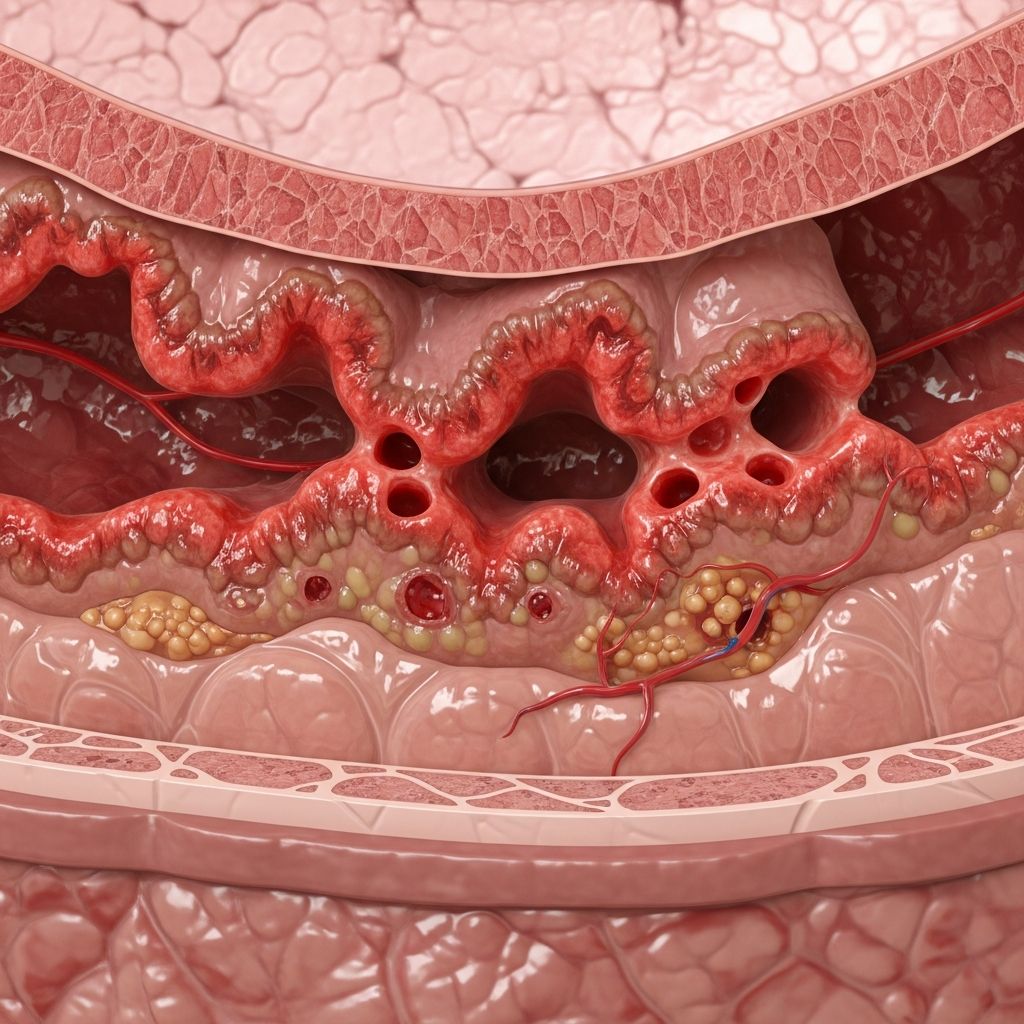
Ulcerative colitis is a chronic, relapsing, and remitting inflammatory condition of the gastrointestinal tract that predominantly affects the colon and rectum. The disease typically presents in early adulthood, with peak incidence occurring between ages 15 and 30 years old. UC is characterized by inflammation limited to the mucosa (the innermost lining of the colon), which distinguishes it from Crohn’s disease, which can affect any layer of the digestive tract and may involve the small intestine.
The condition causes significant discomfort and can substantially impact quality of life. Common symptoms include bloody diarrhea, mucous in the stool, urgency to defecate, tenesmus (a persistent urge to have a bowel movement), and abdominal cramping. Recognizing these symptoms and reporting them to a healthcare provider is the first step toward diagnosis.
Clinical Evaluation and Symptom Assessment
The diagnostic process begins with a thorough clinical evaluation by a healthcare provider. During the initial presentation, doctors assess several important factors to determine disease severity and guide diagnostic testing:
- Frequency of bowel movements: Healthcare providers evaluate how many times daily a patient experiences diarrhea or loose stools.
- Severity of bleeding: The presence and amount of blood in the stool is documented and assessed.
- Nocturnal bowel movements: Whether patients wake during sleep to use the bathroom is an important indicator of disease severity.
- Degree of weight loss: Unintentional weight loss may indicate more severe disease or nutritional concerns.
- General symptoms: Doctors inquire about abdominal pain, fatigue, and any extraintestinal manifestations (symptoms occurring outside the digestive tract).
This clinical assessment helps healthcare providers establish disease severity and determine the appropriate diagnostic pathway and testing strategy. It also provides a baseline against which treatment response can be measured.
Laboratory Testing for Ulcerative Colitis
While no single laboratory test can definitively diagnose ulcerative colitis, several laboratory tests provide valuable information about inflammation levels and can support the diagnostic process.
Inflammatory Markers
C-reactive protein (CRP) and erythrocyte sedimentation rate (ESR) are nonspecific inflammatory markers that may correlate with endoscopic severity and predict the need for colectomy (surgical removal of the colon). However, it is important to note that up to 25% of patients will have normal CRP levels even during a disease flare, making these tests useful for monitoring but not definitive for diagnosis.
These markers are particularly valuable for disease monitoring over time and assessing response to treatment. Elevated levels suggest active inflammation, while declining levels typically indicate improvement with therapy.
Related Stories



Serologic Markers
Serologic markers are antibodies found in the blood that may help differentiate ulcerative colitis from Crohn’s disease and other conditions. These include:
- Antineutrophil cytoplasmic antibodies (ANCA): Often present in UC patients
- Perinuclear ANCA (pANCA): A variant commonly associated with UC
- Anti-Saccharomyces cerevisiae antibodies (ASCA): More commonly found in Crohn’s disease but may be present in some UC patients
These tests are frequently included in comprehensive IBD laboratory panels marketed by clinical laboratories. While helpful for differentiation, they are not diagnostic on their own and must be interpreted in conjunction with clinical and endoscopic findings.
Infectious Disease Testing
At initial presentation and during subsequent flares, testing for Clostridioides difficile infection (CDI) is essential. CDI can exist simultaneously with newly diagnosed or relapsing ulcerative colitis and significantly complicates the clinical picture. Concurrent CDI is associated with increased risks of hospitalization, longer hospital stays, higher mortality rates, and need for colectomy. Testing should utilize two-step PCR-based enzyme-linked immunosorbent assay or antigen testing methodologies.
Other infectious causes of colitis must also be excluded during the diagnostic workup to ensure accurate diagnosis.
Endoscopic Diagnosis: Colonoscopy
Colonoscopy is the gold standard diagnostic procedure for ulcerative colitis. This procedure is essential for distinguishing UC from Crohn’s disease and other non-IBD-related conditions affecting the colon. The procedure involves inserting a long, flexible tube with a camera (colonoscope) through the rectum to visualize the entire colon. Modern colonoscopy is considered safe, with low risk of adverse events when performed by experienced gastroenterologists.
Key Endoscopic Findings in Ulcerative Colitis
During colonoscopy, doctors observe specific patterns of inflammation characteristic of ulcerative colitis:
- Diffuse and continuous inflammation: UC typically shows inflammation extending from the rectum proximally (toward the upper colon) in a continuous, uninterrupted pattern.
- Mucosal involvement only: Inflammation is limited to the innermost lining of the colon, not extending through deeper layers.
- Erythema and edema: Redness and swelling of the mucosa are visible.
- Loss of vascular pattern: The normal blood vessel patterns in the mucosa may be obscured.
- Mucopurulent exudate: A discharge containing pus and mucus may be observed.
- Ulceration: In severe disease, actual erosions or ulcers in the mucosa are visible.
Distinguishing UC from Crohn’s Disease
Colonoscopy with intubation of the terminal ileum is standard for UC diagnosis and helps differentiate this condition from Crohn’s disease. In one prospective study, index colonoscopy accurately distinguished Crohn’s disease from ulcerative colitis in up to 89% of cases. Key differences include:
Ulcerative colitis generally features diffuse and contiguous inflammation from the rectum extending proximally and limited to the colon. In contrast, Crohn’s disease has more variable endoscopic phenotypes that may include small bowel or upper gastrointestinal involvement. Endoscopic features more consistent with Crohn’s disease include discontinuous inflammation with areas of normal bowel, rectal sparing, involvement of the terminal ileum, identification of a fistulous tract, and anal or perianal disease.
When Crohn’s disease is limited to the colon and granulomas are not present on biopsy, these two diseases can be more difficult to distinguish, requiring careful correlation of clinical, endoscopic, and histologic findings.
Histopathologic Findings and Biopsy
Tissue biopsy obtained during colonoscopy is crucial for confirming the diagnosis of ulcerative colitis. Biopsies are examined under a microscope by pathologists who identify characteristic histologic features of active and chronic inflammation.
Active Inflammation Findings
Active inflammation in ulcerative colitis is identified by the presence of:
- Epithelial injury: Damage to the surface lining cells of the colon
- Cryptitis: Infiltration of neutrophils (white blood cells) into the crypt epithelium
- Crypt abscesses: Collections of neutrophils within the crypts
- Neutrophilic infiltration: Presence of neutrophils in the surface epithelium, with or without ulceration
Chronic Changes
Pathologic signs of chronicity indicate longstanding disease and include crypt architectural distortion, basal plasmacytosis, and decreased crypt density. These findings help establish that the inflammation is chronic rather than acute from an infectious cause.
Disease Monitoring and Ongoing Evaluation
After initial diagnosis, close and ongoing clinical follow-up is essential for proper disease monitoring. This monitoring strategy may include a combination of approaches:
- Symptom monitoring: Regular assessment of bowel movement frequency, bleeding, and abdominal symptoms
- Physical examination: Clinical assessment for signs of disease activity or complications
- Laboratory monitoring: Periodic measurement of inflammatory markers and other blood tests
- Endoscopic evaluation: Surveillance colonoscopy to assess mucosal healing and disease extent
- Radiographic assessment: Imaging studies when indicated to evaluate for complications
It is important to note that symptom monitoring alone is insufficient for clinical monitoring. Patients may experience clinical improvement or apparent remission while ongoing mucosal disease persists, potentially leading to complications if not detected through objective measures like endoscopy.
Colorectal Cancer Screening in Ulcerative Colitis
Patients with ulcerative colitis have a significantly increased risk of colorectal cancer compared to the general population. The gold standard for colorectal cancer screening in UC patients is colonoscopy. Other screening tests offered for colorectal cancer screening in the general population, such as stool-based tests (fecal immunohistochemical tests) or CT colonography, are not appropriate for this high-risk patient population and do not provide adequate surveillance.
Regular surveillance colonoscopy starting at appropriate intervals after diagnosis is recommended to detect dysplasia or cancer at early, more treatable stages.
Frequently Asked Questions (FAQs)
Q: How long does it take to diagnose ulcerative colitis?
A: The diagnostic process typically involves an initial clinical evaluation, laboratory testing, and colonoscopy with biopsies. While individual appointments may be scheduled over several weeks, the actual diagnostic procedures can often be completed within 2-4 weeks of initial presentation.
Q: Is colonoscopy painful?
A: Colonoscopy is generally not painful because the colon has few pain receptors. Patients typically receive sedation before the procedure to ensure comfort and memory of the procedure is minimal. Some patients may experience mild pressure or cramping, but this is usually well-tolerated.
Q: Can ulcerative colitis be confused with other conditions?
A: Yes, ulcerative colitis can initially be confused with Crohn’s disease or infectious colitis. This is why comprehensive testing including clinical evaluation, laboratory studies, endoscopy, and histopathology is essential to establish an accurate diagnosis.
Q: What should I do if I have symptoms of ulcerative colitis?
A: If you experience persistent bloody diarrhea, abdominal cramping, urgency, or other symptoms suggestive of ulcerative colitis, schedule an appointment with your primary care physician or a gastroenterologist. Early evaluation and diagnosis improve treatment outcomes.
Q: Is there a cure for ulcerative colitis?
A: While there is no cure for ulcerative colitis, the disease can be managed effectively with appropriate medications and lifestyle modifications. In cases of severe disease unresponsive to medical therapy, surgical removal of the colon (colectomy) is curative.
Q: How often do I need colonoscopy after being diagnosed?
A: The frequency of surveillance colonoscopy depends on disease activity, extent, and individual risk factors. Your gastroenterologist will recommend an appropriate surveillance schedule, typically ranging from every 1-5 years or as indicated by clinical circumstances.
References
- Diagnosis and Monitoring of Ulcerative Colitis — National Center for Biotechnology Information (NCBI), National Institutes of Health. 2022-12-20. https://pmc.ncbi.nlm.nih.gov/articles/PMC9797286/
- Inflammatory Bowel Disease: Epidemiology, Pathogenesis, and Therapeutic Opportunities — Mayo Clinic. https://www.mayoclinic.org/diseases-conditions/ulcerative-colitis/
- Ulcerative Colitis: A Guide for Patients — American College of Gastroenterology. https://gi.org/
Similar Articles








Read full bio of medha deb