Ulipristal Acetate for Uterine Fibroids (Esmya)
Comprehensive guide to Esmya (ulipristal acetate) for managing uterine fibroids: uses, efficacy, risks, and patient advice.
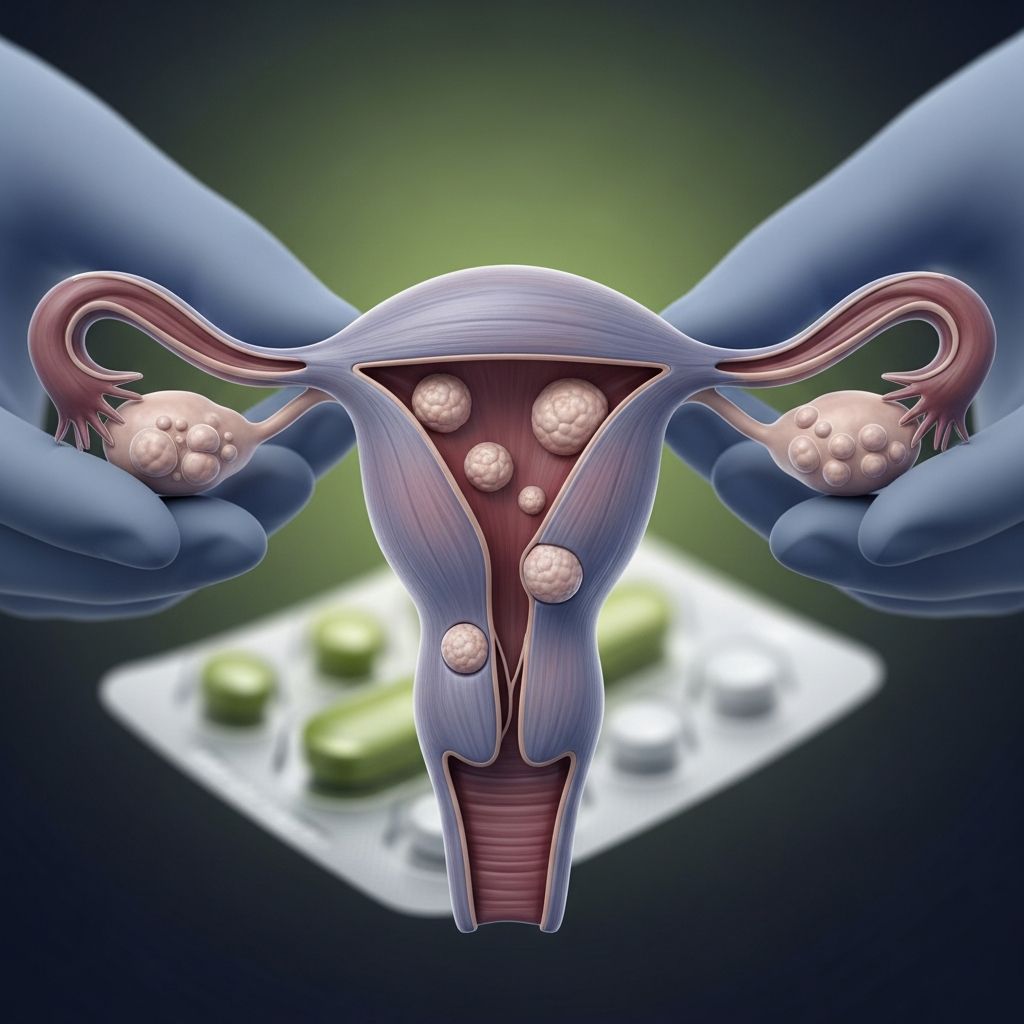
Ulipristal acetate, marketed as Esmya, is a selective progesterone receptor modulator (SPRM) used to treat moderate to severe symptoms of uterine fibroids (also known as myomas or leiomyomas) in adult women of reproductive age. It works by binding to progesterone receptors in the myometrium, inhibiting fibroid cell proliferation and inducing apoptosis, which reduces fibroid volume and controls heavy menstrual bleeding.
About ulipristal acetate tablets
Esmya tablets contain 5 mg of ulipristal acetate, an emergency contraceptive also repurposed for fibroids due to its selective progesterone receptor modulation. Unlike GnRH agonists like leuprorelin, ulipristal provides rapid bleeding control without hypoestrogenic side effects such as hot flushes or bone density loss. It is indicated for premenopausal women with symptomatic fibroids where surgery (e.g., myomectomy or hysterectomy) or uterine fibroid embolization is not suitable or has failed.
The European Medicines Agency (EMA) has restricted its use following reports of serious liver injury, including rare cases requiring transplantation. It must not be used for preoperative symptom control while awaiting surgery.
Before taking ulipristal acetate tablets
Allergy
Do not take Esmya if allergic to ulipristal acetate or any ingredients. Inform your doctor of hypersensitivity reactions.
Pregnancy and breastfeeding
Esmya is contraindicated in pregnancy; discontinue immediately if pregnancy occurs. Use effective non-hormonal contraception during treatment and until the first menses after stopping (due to ovulation delay). It is not recommended during breastfeeding; avoid for at least 21 days post-treatment as it passes into breast milk.
Sexually transmitted infections
Esmya does not protect against STIs; use barrier methods if at risk.
Other medicines
Discuss all medications with your doctor, especially CYP3A4 inducers (e.g., rifampicin, phenytoin) that reduce efficacy, or strong inhibitors (e.g., ketoconazole). Avoid during ulipristal emergency contraceptive use.
Conditions to mention to your doctor
- Liver disease or abnormal liver tests (contraindicated if ALT/AST >2.5x upper limit).
- Breast cancer, uterine cancer, or unexplained vaginal bleeding.
- Severe asthma.
- History of fibroid-related complications.
How to take ulipristal acetate tablets
Take one 5 mg tablet daily at the same time, with or without food, for up to 3 months per course, followed by at least a 2-month break without hormonal treatment. Swallow whole. Start within first day of menses. Up to four courses may be used intermittently for long-term management in non-surgical candidates.
| Dose | Duration | Break | Max Courses |
|---|---|---|---|
| 5 mg once daily | 12 weeks | ≥2 months (no hormones) | 4 (per EMA restrictions) |
If you forget a dose of ulipristal acetate tablets
Take as soon as remembered unless near next dose; do not double. If >24 hours late in first 28 days, use additional contraception until end of treatment + first menses. Consult doctor if issues persist.
Side-effects of ulipristal acetate tablets
Common side effects (>1/10): Amenorrhoea or hypomenorrhoea, ovarian cysts, headache, abdominal pain. Serious risks include liver injury (monitor LFTs before, during week 2-4, 8-12, post-treatment, and if symptoms like jaundice, fatigue occur).
- Frequent (>1/100): Nausea, breast tenderness, fatigue, dizziness.
- Rare: Endometrial thickening (benign pausisomenia changes, no hyperplasia in trials), mood changes.
- No increased serious adverse events with repeated courses.
Related Stories



Report symptoms of liver damage immediately: nausea, vomiting, abdominal pain, jaundice, dark urine, fatigue.
Long-term use of ulipristal acetate
PEARL III/IV studies demonstrated efficacy over four 3-month courses: amenorrhoea in 79-90%, fibroid volume reduction 50-72%, bleeding control >95%, pain relief, quality of life improvement. Effects persist during breaks; norethisterone may manage off-treatment bleeding. No cumulative toxicity; benign endometrial histology.
PEARL Studies: Efficacy Evidence
PEARL I/II: 3-month preoperative: Bleeding control 90-98% (vs 19% placebo, 89% leuprolide); median time 5-7 days (vs 21 days leuprolide); fibroid reduction ~30-40%.
PEARL III: Long-term: Cumulative amenorrhoea 79% (course 1) to 90% (course 4); fibroid volume -72%.
PEARL IV: 5 vs 10 mg equivalent; sustained benefits, no new safety signals.
Pregnancy after ulipristal acetate treatment
Fertility returns after first post-treatment menses. Pregnancies reported post-UPA: 18/21 women conceived, 12 healthy births. Use contraception during/after treatment.
Stopping ulipristal acetate tablets
Fibroids may regrow post-treatment, but slower than with GnRH agonists. Monitor symptoms; liver tests required post-course. Discuss surgery if appropriate.
Date of Last Review
2025 (updated for EMA restrictions).
Frequently Asked Questions (FAQs)
Q: Who can take Esmya?
A: Premenopausal women with moderate-severe fibroid symptoms unsuitable for surgery/embolization.
Q: How quickly does it reduce bleeding?
A: Median 5-7 days to control; amenorrhoea by day 3.5-7.
Q: Is long-term use safe?
A: Yes, up to 4 courses in trials; monitor liver closely.
Q: Does it shrink fibroids permanently?
A: Reductions up to 72% sustained during intermittent use; regrowth possible on stopping.
Q: Can I get pregnant after treatment?
A: Yes, fertility preserved; successful pregnancies reported.
References
- Esmya® and the PEARL studies: A review — NIH/PMC. 2017-03-16. https://pmc.ncbi.nlm.nih.gov/articles/PMC5373264/
- Ulipristal acetate for uterine fibroids: EMA recommends restricting use — European Medicines Agency. 2018-07-20. https://www.ema.europa.eu/en/news/ulipristal-acetate-uterine-fibroids-ema-recommends-restricting-use
- Ulipristal acetate as a treatment option for uterine fibroids — NIH/PMC. 2018-02-28. https://pmc.ncbi.nlm.nih.gov/articles/PMC5824685/
- Ulipristal Acetate: a novel medical therapy for uterine fibroids — Global Library of Women’s Medicine. 2023. https://www.glowm.com/Critical-current-issue/page/5
- Esmya (ulipristal acetate) for fibroids — Plymouth Hospitals NHS Trust. 2022. https://www.plymouthhospitals.nhs.uk/display-pil/pil-esmya-ullipristal-acetate-for-fibroids-5582/
- Esmya 5 mg tablets, INN-Ulipristal — E-lactancia/EMA. 2016. https://www.e-lactancia.org/media/papers/UlipristalEsmya-EMA2016en.pdf
- Esmya — NPS MedicineWise. 2023. https://www.nps.org.au/assets/medicines/93e5d27f-bfdb-4c11-9313-a66b01023256.pdf
- Ulipristal acetate 5mg (Esmya): further restrictions due to risk of serious liver injury — UK Gov MHRA. 2020-09-10. https://www.gov.uk/drug-safety-update/ulipristal-acetate-5mg-esmya-further-restrictions-due-to-risk-of-serious-liver-injury
Similar Articles








Read full bio of medha deb