Ulna Bone: Anatomy, Location & Function
Comprehensive guide to ulna bone anatomy, structure, functions, and common conditions affecting forearm movement.
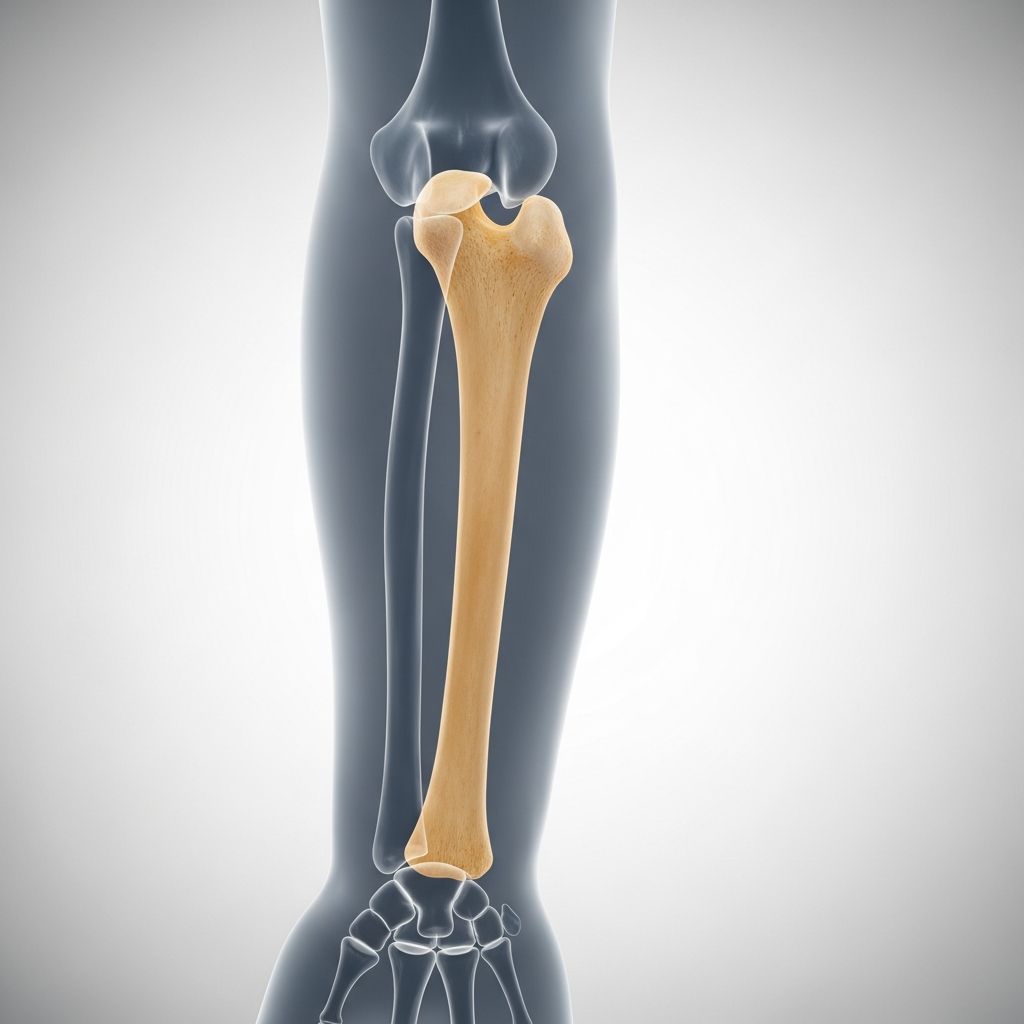
Understanding the Ulna Bone
The ulna is one of two bones that make up your forearm, playing a crucial role in enabling arm, wrist, and hand movement. Located on the medial (pinkie) side of your forearm, the ulna is the longer of the two forearm bones and is one of the longest bones in the human body. Most adults have an ulna bone approximately 11 inches long. This remarkable bone supports numerous muscles, tendons, ligaments, and blood vessels that are essential for daily activities and functional movement.
Understanding the ulna’s structure and function can help you recognize when something may be wrong and seek appropriate medical attention. The ulna works in tandem with the radius to provide stability, strength, and the range of motion necessary for complex arm movements.
Anatomy and Structure of the Ulna
The ulna, despite being one continuous bone, comprises several distinct anatomical regions that serve different functions. Healthcare providers use these anatomical divisions to describe pain, injuries, or pathology affecting this important bone.
Proximal End (Upper End)
The proximal end of the ulna connects to your humerus, the upper arm bone, and forms the bony point of your elbow. This region is particularly important because it bears significant stress during arm movements and activities requiring elbow stability. The proximal end contains several key structures:
– The olecranon process: the bony prominence you feel at the tip of your elbow- The coronoid process: a smaller projection that articulates with the humerus- The trochlear notch: a specialized groove that fits with the humerus to allow elbow flexion and extension
Shaft (Diaphysis)
The shaft is the long middle portion of the ulna that extends from the proximal end to the distal end. This section supports the weight of your forearm and provides the characteristic shape of the bone. The ulnar shaft is slightly curved, which allows for proper biomechanics during arm rotation and movement. Research demonstrates that the ulna exhibits lateral bowing, with the lateral ulnar bow typically located at approximately 33% of the bone’s length and having a mean depth of 2.0 centimeters. This natural curvature is important for fracture fixation and surgical planning in cases of elbow arthroplasty.
Distal End (Lower End)
The lower (distal) end of the ulna forms part of your wrist joint and ends in a rounded bump called the styloid process. This small protuberance is the bump you can feel above your wrist on the pinkie side of your hand. The distal end is sometimes referred to as the head of the ulna and is critical for wrist stability and rotation.
Location and Positioning
The ulna is positioned on the medial aspect of your forearm, directly alongside its companion bone, the radius. When your arm is in a relaxed position with your palm facing down (pronated position), the ulna is located on the side of your pinkie finger. The radius, by contrast, is on the lateral (thumb) side of your forearm. Understanding this anatomical positioning helps explain why injuries to one bone often affect the other.
The relationship between the radius and ulna is dynamic rather than static. When you extend your arm straight out in front of you with your palms facing down, the radius rotates over the ulna. When you hold your arms straight out with your palms facing up, the bones become more parallel to each other. This movement, called pronation and supination, is essential for many daily activities such as turning a doorknob, using a screwdriver, or washing your face.
Primary Functions of the Ulna
The ulna serves multiple critical functions in your musculoskeletal system. Its primary roles include:
– Enabling arm, wrist, and hand movement through connections with muscles and tendons- Supporting the weight and structure of your forearm- Forming the elbow joint with your humerus, allowing bending and straightening movements- Articulating with the radius to facilitate pronation and supination- Providing attachment points for numerous muscles that control hand and wrist movements- Housing and protecting nerves and blood vessels that supply your forearm and hand
The Ulna and Radius: A Dynamic Partnership
While the ulna and radius are distinct bones, they function as an integrated unit. Both bones are equally important for proper forearm function, despite common misconceptions that one is more significant than the other. Their complementary shapes and the ligaments connecting them allow your wrist and hand to rotate smoothly through a full range of motion.
The ulnar artery and nerve run along the ulna, closer to your pinkie finger, while the radial artery and nerve run along the radius, closer to your thumb. This anatomical arrangement ensures that both bones receive adequate blood supply and neural innervation. The interosseous membrane, a tough connective tissue, connects the radius and ulna along their shafts, further strengthening the partnership between these two bones.
Common Conditions Affecting the Ulna
Several conditions can affect the ulna and compromise its function. Understanding these conditions and their warning signs can help you seek timely medical care.
Ulna Fractures
A bone fracture is the medical term for a broken bone, and ulnar fractures are among the most common injuries affecting this bone. The most common causes of ulna fractures include:
– Falls onto an outstretched arm- Direct trauma or impact to the forearm- Motor vehicle accidents- Sports-related injuries- Repetitive stress injuries in certain occupations
Symptoms of a fracture typically include:
– Sudden, severe pain in the forearm- Swelling and bruising- Visible deformity or unusual angulation- Inability to move the arm normally- Numbness or tingling in the hand- Weakness in the forearm or hand
Seek emergency medical attention immediately if you experience trauma or suspect a fracture. Early diagnosis and treatment are crucial for optimal healing and restoration of function.
Osteoporosis
Osteoporosis is a condition that weakens bones, making them more susceptible to sudden and unexpected fractures. Unlike acute fractures from trauma, osteoporosis often develops silently without noticeable symptoms. Many people don’t realize they have osteoporosis until they sustain a fracture from a minor fall or even from normal daily activities. The ulna, being a weight-bearing bone in the upper extremity, is vulnerable to fracture in individuals with compromised bone density.
Ulnar Nerve Damage
Because your ulna is connected to so many muscles and nerves, injuries to one can often affect the others. The ulnar nerve runs along the ulna and can be compressed, stretched, or damaged by fractures, inflammation, or other traumatic injuries. Ulnar nerve damage can result in weakness, numbness, or tingling in your pinkie and ring fingers.
Diagnosis and Imaging
If you experience pain, swelling, or dysfunction in your forearm or elbow, your healthcare provider may recommend imaging tests to evaluate your ulna. Common diagnostic procedures include:
– X-rays: the first-line imaging to detect fractures- Computed tomography (CT) scans: for detailed visualization of complex fractures- Magnetic resonance imaging (MRI): to assess soft tissue injuries and nerve damage- Ultrasound: to evaluate muscles, tendons, and ligaments- Bone density tests: to screen for osteoporosis
Treatment Options
Treatment for ulna-related conditions depends on the specific diagnosis and severity. Usually, your ulna won’t need treatment unless you’ve experienced a fracture or other injury to your arm. However, if diagnosed with osteoporosis, your healthcare provider may recommend preventive strategies.
Fracture Management
If you’ve experienced a fractured (broken) ulna, treatment depends on the type of fracture and what caused it. Management typically involves:
– Immobilization using a splint or cast to keep the bone stable during healing- Surgery to realign (set) the bone to its correct position so it can heal properly- Physical therapy to help you regain strength and ability to move after healing- Pain management and anti-inflammatory medications- Regular follow-up appointments to monitor healing progress
Recovery time varies depending on the severity of the fracture and individual healing capacity. Most uncomplicated ulnar fractures heal within 6 to 12 weeks with appropriate immobilization, while more complex fractures requiring surgery may require longer recovery periods.
Prevention Strategies
While not all injuries can be prevented, following these general safety tips can reduce your risk of ulna-related injuries:
– Wear appropriate protective equipment during sports and high-risk activities- Use proper techniques when lifting heavy objects- Maintain good balance and awareness of your surroundings to prevent falls- Strengthen your forearm muscles through regular exercise- Take frequent breaks during repetitive activities- Maintain good posture and ergonomic practices at work- Stay physically active to maintain bone density and muscle strength- Ensure adequate calcium and vitamin D intake for bone health- Avoid smoking and excessive alcohol consumption, which can weaken bones
Osteoporosis and Bone Health
Your ulna, like all bones, can be affected by osteoporosis. This progressive condition requires proactive management to prevent fractures. If you’re concerned about your bone health, talk to your healthcare provider about a bone density test. Your provider can assess your individual risk factors and recommend strategies to support your bones as you age, including:
– Dietary modifications to ensure adequate calcium and vitamin D- Weight-bearing exercise programs- Medication if indicated- Regular monitoring and follow-up care
When to Seek Medical Attention
Consult with a healthcare provider if you experience:
– Persistent pain in your forearm, elbow, or wrist- Swelling or bruising that doesn’t improve with rest and ice- Difficulty moving your arm, wrist, or hand- Numbness, tingling, or weakness in your forearm or hand- Visible deformity in your forearm- Any suspected bone fracture
Frequently Asked Questions
Q: Which bone is longer, the ulna or the radius?
A: The ulna is slightly longer than the radius, making it one of the longest bones in the human body. Most adults’ ulna bones are approximately 11 inches long.
Q: On which side of the forearm is the ulna located?
A: The ulna is located on the medial (pinkie) side of your forearm, opposite the radius which is on the thumb side.
Q: What is the styloid process?
A: The styloid process is a rounded bump at the distal (lower) end of the ulna that you can feel as a small protuberance above your wrist on the pinkie side.
Q: Can you break just the ulna without breaking the radius?
A: Yes, it is possible to fracture the ulna alone, though fractures to both bones are also common. Treatment depends on the type and location of the fracture.
Q: How long does it take for an ulna fracture to heal?
A: Most uncomplicated ulnar fractures heal within 6 to 12 weeks with appropriate immobilization. More complex fractures requiring surgery may require a longer recovery period.
Q: What is the olecranon?
A: The olecranon is the bony prominence at the tip of your elbow, formed by the proximal end of the ulna. It’s the part that sticks out when you bend your elbow.
Q: How can I reduce my risk of ulna fractures?
A: You can reduce your risk by wearing protective equipment during sports, maintaining good balance, practicing proper lifting techniques, and maintaining strong bones through exercise and adequate nutrition.
Conclusion
The ulna is a vital component of your skeletal system, enabling the complex movements necessary for daily activities and functional living. Its partnership with the radius creates a sophisticated system for forearm rotation, wrist movement, and hand positioning. By understanding the anatomy, function, and potential issues affecting your ulna, you can take proactive steps to protect this important bone and maintain your long-term musculoskeletal health. If you have concerns about your bone health or experience forearm pain or injury, consult with your healthcare provider for proper evaluation and treatment.
References
- Ulna (Bone): Anatomy, Location & Function — Cleveland Clinic. 2024. https://my.clevelandclinic.org/health/body/24520-ulna
- A Cadaveric Study of Radial and Ulnar Bowing in the Sagittal Plane — Weber, M.B., et al. PubMed Central. 2020. https://pubmed.ncbi.nlm.nih.gov/32146042/
- Radius (Bone): Anatomy, Location & Function — Cleveland Clinic. 2024. https://my.clevelandclinic.org/health/body/24528-radius
- Elbow Joint: Anatomy, Function & Common Conditions — Cleveland Clinic. 2024. https://my.clevelandclinic.org/health/body/elbow-joint
- Anatomy of the Hand & Wrist: Bones, Muscles & Ligaments — Cleveland Clinic. 2024. https://my.clevelandclinic.org/health/body/25060-anatomy-of-the-hand-and-wrist
Similar Articles








Read full bio of Sneha Tete