Ulnar Collateral Ligament (UCL) Injuries of the Elbow
Understanding UCL injuries: causes, symptoms, diagnosis, and treatment options for athletes.
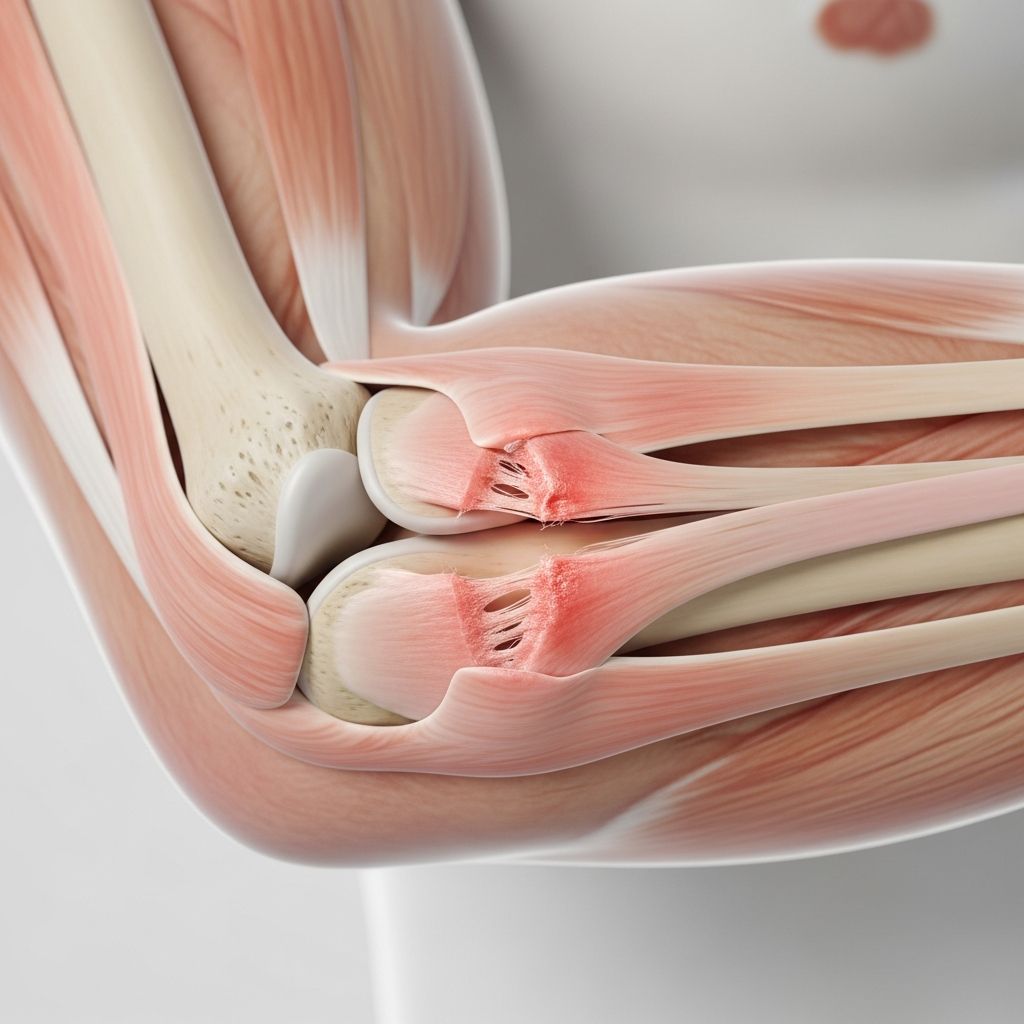
The ulnar collateral ligament (UCL) is a critical structure in the elbow that plays a vital role in stabilizing the joint during overhead arm movements and throwing activities. When this ligament becomes injured, whether through acute trauma or chronic overuse, it can result in significant pain, functional limitations, and potential career-ending consequences for athletes. Understanding UCL injuries is essential for athletes, coaches, and healthcare providers alike, as early recognition and appropriate management can lead to better outcomes and a successful return to activity.
Overview of UCL Injuries
An ulnar collateral ligament injury refers to any strain or tear of the connective tissue located on the pinky finger side of the elbow. These injuries are particularly common among overhead throwing athletes, including baseball pitchers, but can also occur in other sports and activities that place stress on the medial elbow. The UCL is the sturdiest of the three sections within the ulnar collateral ligament complex and acts as the primary restraint against valgus stress at the elbow during both flexion and extension.
The injury typically occurs during the acceleration phase of throwing, when extreme valgus stress and tensile strain are placed on the ligament. Acute or chronic disruption of the ulnar collateral ligament results in medial elbow pain, valgus instability, and impaired throwing performance. Without proper diagnosis and treatment, these injuries can significantly impact an athlete’s ability to perform at their highest level.
Anatomy of the Elbow
To better understand UCL injuries, it is important to have a basic understanding of elbow anatomy. The elbow is a complex joint composed of three main articulations that work together to allow for a wide range of motion:
- The humeroulnar joint: This joint enables the primary movements for bending and straightening the arm
- The humeroradial joint: This joint assists with bending and straightening motions and allows rotation of the forearm, enabling the hand to turn so the palm faces up or down
- The proximal radioulnar joint: This joint allows rotation of the lower arm and forearm
The ligaments supporting the elbow include the ulnar collateral ligament running along the inside of the elbow, the lateral collateral ligament along the outside, and the annular ligament which circles the top of the radius. The UCL is particularly important for stabilizing the elbow during overhead throwing motions, as it provides medial support to the joint.
Causes and Risk Factors
Chronic Overuse and Repetitive Stress
The most common mechanism of UCL injury is chronic deterioration resulting from repetitive stress on the ligament. This slow and progressive injury typically occurs in throwing athletes who repeatedly place valgus stress on the medial elbow. During the overhead throwing motion, valgus stress occurs during the arm cocking and acceleration phases of the throw. The repetitive stress causes microscopic tears in the ligament, gradually leading to loss of structural integrity over time. Initial pain may be bearable but can progressively worsen to the point where it terminates an athlete’s career if left untreated.
Related Stories



Acute Rupture
While less common than chronic deterioration, acute ruptures of the UCL can occur during traumatic events. These injuries typically happen during collisions when the elbow is in flexion, such as during wrestling matches or football tackles. The ulnar collateral ligament distributes over fifty percent of the medial support of the elbow, so an acute rupture can result in severe damage to the elbow and the radioulnar joints.
Biomechanical Risk Factors
Recent research has identified specific biomechanical factors that increase the risk of UCL injury. A significant finding from studies on professional baseball pitchers demonstrated that high elbow varus torque is associated with a greater risk of UCL surgery. In one study, pitchers with subsequent injuries requiring UCL surgery had significantly higher elbow varus torque (100.8 ± 18.1 N·m) compared with pitchers without such injuries (94.3 ± 16.1 N·m). This discovery is important as it suggests that teams can use motion capture technology and biomechanical analysis to identify pitchers at risk and implement preventive interventions.
Signs and Symptoms
UCL injuries present with a characteristic array of symptoms that can help guide diagnosis and treatment decisions:
- Medial elbow pain: Pain along the inside of the elbow is the primary symptom, occurring most frequently during the acceleration phase of throwing
- Acute onset: Many throwing athletes report experiencing a sharp “pop” in the elbow followed by immediate pain during a single throw
- Swelling and bruising: Inflammation and discoloration around the medial elbow are common
- Loss of range of motion: Decreased ability to fully flex or extend the elbow
- Decreased throwing velocity: A sudden and noticeable drop in the speed and power of throws
- Functional limitations: Difficulty with overhead activities and throwing motions
The severity of symptoms often depends on the extent of the injury. In less severe cases, pain may alleviate with complete rest. However, in more significant injuries, symptoms persist and worsen with continued activity.
Diagnosis
Clinical Examination
In most cases, a physician will diagnose a UCL injury using a combination of patient medical history and physical examination. The clinical evaluation typically includes a valgus stress test, which is performed on both the affected and unaffected arms. A positive test is indicated by pain on the affected arm that is not present on the uninvolved side. This comparison helps establish the specificity of the findings and confirm the diagnosis.
Imaging Studies
Physicians often employ imaging techniques to aid in proper diagnosis and to assess the extent of the injury. Common imaging modalities include:
- Ultrasound: Allows real-time visualization of the ligament and may reveal tears or partial disruption
- X-rays: Help rule out associated bony injuries or avulsion fractures
- Magnetic resonance imaging (MRI): Provides detailed visualization of soft tissue structures and can definitively identify full-thickness tears or partial injuries
- Arthroscopic surgery: While typically reserved for therapeutic purposes, arthroscopy can provide direct visualization of the ligament when diagnosis is uncertain
Classification of Injuries
UCL injuries can be classified based on their etiology and severity. Chronic injuries result from repetitive stress and microtearing over time, while acute injuries typically result from traumatic events. The degree of ligament disruption can range from partial tears and sprains to complete ruptures, each requiring different management approaches.
Treatment Options
Conservative (Non-Surgical) Management
For mild to moderate UCL injuries, conservative treatment approaches may be appropriate. These include rest from throwing activities, ice application, anti-inflammatory medications, and progressive physical therapy. The goal of conservative management is to allow the ligament to heal through the body’s natural healing processes while maintaining overall fitness and gradually restoring function. However, conservative management may not be suitable for competitive athletes seeking to return to overhead throwing at high levels of performance.
Surgical Reconstruction: Tommy John Surgery
For more severe injuries or when conservative management fails, surgical reconstruction of the UCL is often necessary to restore the ability to perform overhead throwing motions. This surgical procedure is commonly known as “Tommy John surgery,” named after baseball pitcher Tommy John, who was the first patient to undergo this procedure in 1974 when it was performed by Dr. Frank Jobe. Since its inception, the technique has been modified several times to improve outcomes.
The surgical technique typically involves either an autograft or allograft to reconstruct the ligament. In an autograft procedure, a tendon from another area of the patient’s body is used, most commonly the palmaris longus tendon, which is considered an accessory tendon. Alternatively, an allograft may be used, which involves tissue from a cadaver or donor. Parts of the original UCL may also be attached to the new tendon to provide additional strength. The reconstructed ligament is then attached to both the ulna and humerus to restore stability to the joint.
Recovery and Rehabilitation
Post-Operative Timeline
Following UCL reconstruction surgery, patients typically require an extended recovery period. Physical therapy usually begins shortly after surgery. The standard rehabilitation protocol requires approximately 12 to 15 months for complete recovery, as a tendon requires significant time to convert into a ligament and develop the necessary properties to withstand the stresses of throwing. On average, patients can begin full active or unlimited range of motion approximately 40 days after surgery for nonoperative injuries (36 days) and 41 days for operative injuries, though these timelines can vary based on individual factors.
Rehabilitation Protocol
Rehabilitation following UCL injuries or surgery should follow a sequential and progressive multi-phased approach that emphasizes gradual and protected return of range of motion. An effective rehabilitation program should include:
- Proprioceptive exercises to stimulate mechanoreceptors in the joint
- Arm strengthening, with particular emphasis on proximal scapular stabilization
- Low-resistance, high-repetition programs to promote optimal return to uncompensated throwing
- Restoration of normal scapulohumeral rhythm, beginning with trunk stability
- Progressive elbow range of motion and strength development
- Balance exercises to restore neuromuscular control
Post-operative treatment aims at restoring normal scapulohumeral rhythm while establishing adequate trunk stability, elbow range of motion, and strength. The gradual and protected return to throwing activities is essential to minimize re-injury risk.
Prevention Strategies
While not all UCL injuries can be prevented, several strategies may reduce the risk of injury in throwing athletes. These include proper throwing mechanics instruction, appropriate training periodization with adequate rest periods, progressive loading of throwing volume, and conditioning programs focused on core strength and scapular stability. For young athletes, adherence to pitch count limits and proper rest intervals between throwing sessions is particularly important. Organizations like Major League Baseball now employ biomechanists who work with teams to analyze pitcher mechanics and identify movement patterns that may increase injury risk, allowing for early intervention and modification.
Frequently Asked Questions
Q: How long does it take to recover from Tommy John surgery?
A: Recovery typically requires 12 to 15 months of rehabilitation. However, athletes can often begin full range of motion activities within 40 days on average. Full return to competitive throwing usually takes closer to 12 months.
Q: Can a UCL injury heal without surgery?
A: Mild to moderate injuries may heal with conservative treatment including rest, ice, and physical therapy. However, complete tears and severe injuries typically require surgical reconstruction for athletes who wish to return to overhead throwing activities.
Q: What is the success rate of Tommy John surgery?
A: Tommy John surgery has a high success rate, with most studies showing return-to-sport rates exceeding 80-90% in professional and collegiate athletes. However, outcomes may vary depending on the surgical technique, rehabilitation adherence, and individual factors.
Q: Are there any preventive measures to avoid UCL injuries?
A: Yes, preventive measures include proper throwing mechanics, adequate conditioning with emphasis on core and scapular strength, appropriate training volume and periodization, and adherence to pitch count limits in young athletes.
Q: Can athletes return to their sport after UCL reconstruction?
A: Yes, many athletes successfully return to competitive overhead throwing sports after proper rehabilitation. Professional baseball players have shown high rates of return to sport and performance maintenance following Tommy John surgery.
References
- Ulnar collateral ligament injury of the elbow — Wikipedia. Accessed December 2025. https://en.wikipedia.org/wiki/Ulnar_collateral_ligament_injury_of_the_elbow
- Risk Factors for an Ulnar Collateral Ligament Injury Resulting in Surgery in Professional Baseball Pitchers — National Institutes of Health, National Center for Biotechnology Information. 2024. https://pmc.ncbi.nlm.nih.gov/articles/PMC12227930/
- What to Know About UCL Injuries of the Elbow — WebMD. December 2025. https://www.webmd.com/first-aid/what-to-know-ucl-injuries-elbow
Similar Articles








Read full bio of Sneha Tete