Ulnar Nerve Entrapment: Causes, Symptoms, and Treatment
Learn about ulnar nerve entrapment, its symptoms, causes, and effective treatment options.
What Is Ulnar Nerve Entrapment?
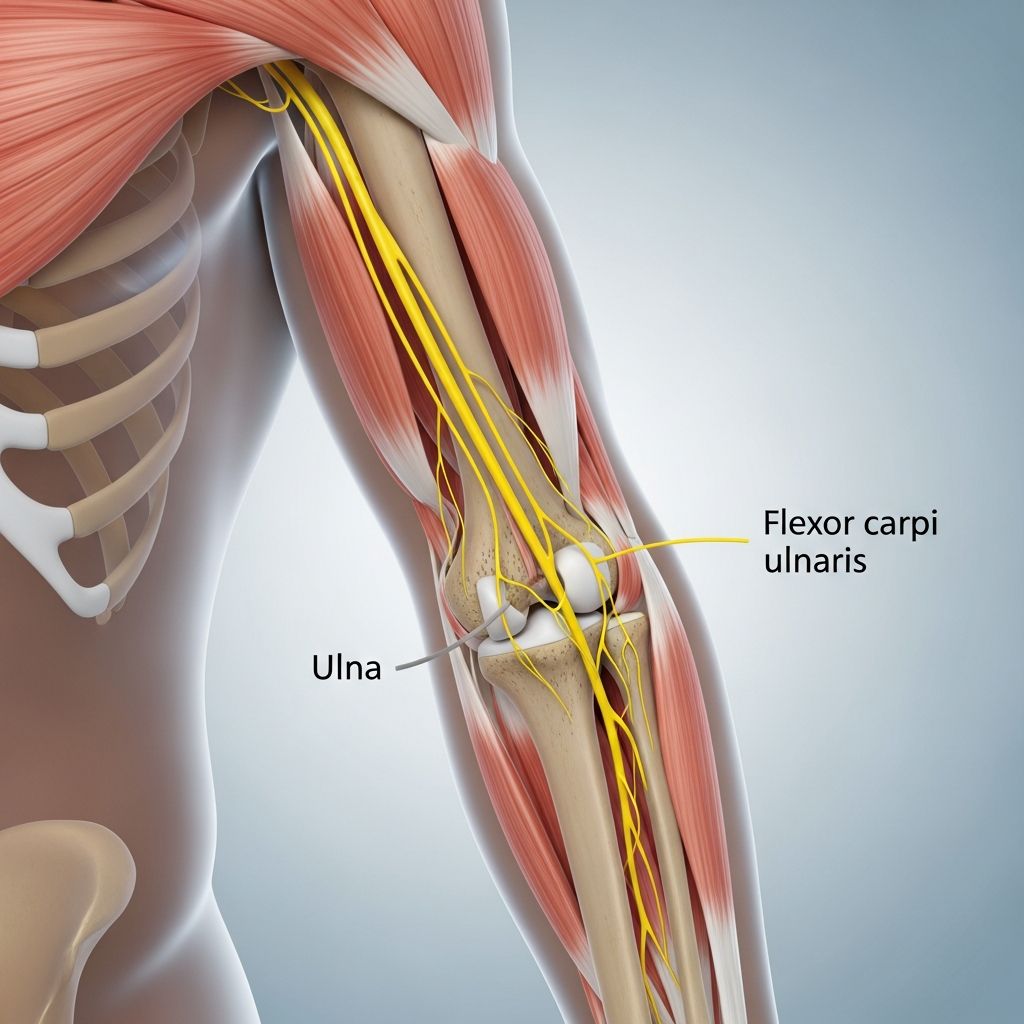
Ulnar nerve entrapment is a condition that occurs when the ulnar nerve, which runs from the neck down the arm to the hand, becomes compressed or irritated. This nerve is responsible for sensation in the little finger and half of the ring finger, as well as controlling many of the small muscles in the hand. When the nerve is compressed, it can lead to pain, numbness, tingling, and weakness in the affected areas.
Common Locations of Ulnar Nerve Entrapment
Ulnar nerve entrapment most commonly occurs at the elbow, a condition known as cubital tunnel syndrome. Less frequently, it can occur at the wrist, referred to as Guyon canal syndrome. The ulnar nerve is particularly vulnerable to compression at these sites due to its superficial position and the narrow tunnels through which it passes.
Symptoms of Ulnar Nerve Entrapment
The symptoms of ulnar nerve entrapment can vary depending on the location and severity of the compression. Common symptoms include:
- Numbness and tingling in the little finger and half of the ring finger
- Weakness in the hand, leading to a diminished grip strength
- Pain or aching in the inside of the elbow
- Difficulty with fine motor control, such as handling small objects or dropping items
- Worsening symptoms at night or with elbow bending
- Muscle atrophy or wasting in the hand or forearm in advanced cases
- Claw-like deformity of the ring and little fingers in severe cases
Causes of Ulnar Nerve Entrapment
Several factors can contribute to ulnar nerve entrapment:
- Leaning on the elbow for long periods of time
- Repetitive movements or exercises that strain the elbow or wrist
- The nerve sliding out of place when the elbow is bent
- Arthritis or bone spurs
- Fluid buildup or swelling around the nerve
- A direct blow to the nerve
- Cysts or tumors pressing on the nerve
- Scar tissue from previous injuries or surgeries
Diagnosis of Ulnar Nerve Entrapment
Diagnosing ulnar nerve entrapment typically involves a combination of a physical examination, medical history, and diagnostic tests. A healthcare provider may:
- Assess the patient’s symptoms and medical history
- Perform a physical examination to check for tenderness, weakness, and changes in sensation
- Order nerve conduction studies to measure the speed and strength of electrical signals in the nerve
- Use imaging studies, such as MRI or ultrasound, to visualize the nerve and surrounding structures
Conservative Treatment Options
For mild to moderate cases of ulnar nerve entrapment, conservative treatments are often effective. These may include:
- Anti-inflammatory medications to reduce swelling and pain
- Elbow braces or splints to keep the elbow and/or wrist in a straight position, reducing pressure on the nerve
- Rest and avoidance of activities that aggravate symptoms
- Physical therapy, including stretching and strengthening exercises
- Corticosteroid injections to reduce inflammation and pressure on the nerve
- Nerve gliding exercises to improve nerve mobility
Related Stories



Surgical Treatment Options
If conservative treatments do not provide relief or if the entrapment is severe, surgical intervention may be necessary. The primary goal of surgery is to decompress the ulnar nerve and, if needed, relocate it to a less compressive location. Common surgical procedures include:
- Simple decompression: Cutting adhesions and fibers that are constricting the nerve without relocating it
- Decompression with transposition: Relocating the nerve to a less compressive area
- Medial epicondylectomy: Removing a portion of the bone to create more space for the nerve
- Endoscope-assisted or small-incision procedures: Minimally invasive techniques for nerve decompression
Recovery and Prognosis
The recovery process after surgery can vary depending on the severity of the entrapment and the type of procedure performed. Most patients experience significant improvement in symptoms, but full recovery may take several months. Physical therapy is often recommended to help regain strength and function in the affected hand and arm.
It is important to note that early diagnosis and treatment are crucial for the best outcomes. Delayed treatment can lead to permanent nerve damage and muscle atrophy.
Prevention of Ulnar Nerve Entrapment
While not all cases of ulnar nerve entrapment can be prevented, certain measures can reduce the risk:
- Avoiding prolonged pressure on the elbow
- Taking breaks during repetitive activities
- Using ergonomic equipment and techniques
- Maintaining good posture and body mechanics
- Seeking medical attention for persistent symptoms
Frequently Asked Questions (FAQs)
Q: What is the difference between cubital tunnel syndrome and Guyon canal syndrome?
A: Cubital tunnel syndrome is ulnar nerve entrapment at the elbow, while Guyon canal syndrome is entrapment at the wrist.
Q: Can ulnar nerve entrapment cause permanent damage?
A: Yes, if left untreated, ulnar nerve entrapment can lead to permanent nerve damage and muscle atrophy.
Q: How long does it take to recover from ulnar nerve entrapment surgery?
A: Recovery time varies, but most patients see significant improvement within several months. Physical therapy may be needed to regain full function.
Q: Are there any non-surgical treatments for ulnar nerve entrapment?
A: Yes, non-surgical treatments include anti-inflammatory medications, braces or splints, physical therapy, and corticosteroid injections.
Q: What activities should I avoid if I have ulnar nerve entrapment?
A: Avoid activities that put prolonged pressure on the elbow or wrist, such as leaning on the elbow or repetitive movements.
References
- Ulnar Nerve Entrapment – Elbow, Wrist, Finger Neuropathy — Hospital for Special Surgery. 2023. https://www.hss.edu/health-library/conditions-and-treatments/list/ulnar-nerve-entrapment
- An Update on Treatment Modalities for Ulnar Nerve Entrapment — National Center for Biotechnology Information. 2021. https://pmc.ncbi.nlm.nih.gov/articles/PMC8207847/
- Ulnar Nerve Entrapment (Cubital Tunnel Syndrome) — UCI Orthopaedic Institute. 2023. https://www.uciortho.com/ulnar-nerve-entrapment-orthopaedic-irvine-newportbeach-california.html
- Ulnar Nerve Entrapment: Symptoms, Causes Exercises, and Surgery — Healthline. 2023. https://www.healthline.com/health/lunar-nerve-entrapment
- Ulnar Nerve Entrapment: Causes, Symptoms & Treatment — Cleveland Clinic. 2023. https://my.clevelandclinic.org/health/diseases/22272-ulnar-nerve-entrapment
- Ulnar Nerve Entrapment – Neurosurgery – UCLA Health — UCLA Health. 2023. https://www.uclahealth.org/medical-services/neurosurgery/conditions-treated/ulnar-nerve-entrapment
- Ulnar Nerve Entrapment and Treatment – Lake Charles, LA — Cascio Sports Medicine. 2023. https://casciosports.com/elbow-treatments/ulnar-nerve-entrapment-and-treatment/
- Ulnar Nerve Entrapment: What Is It, Symptoms, Causes, Treatment — Osmosis. 2023. https://www.osmosis.org/answers/ulnar-nerve-entrapment?search_term=carpal+tunnel+syndrome
Similar Articles








Read full bio of medha deb