Umbilical Cord Prolapse: Causes, Symptoms & Treatment
Understanding umbilical cord prolapse: emergency complications, risk factors, and immediate treatment options for expectant mothers.
Umbilical Cord Prolapse: Overview and Definition
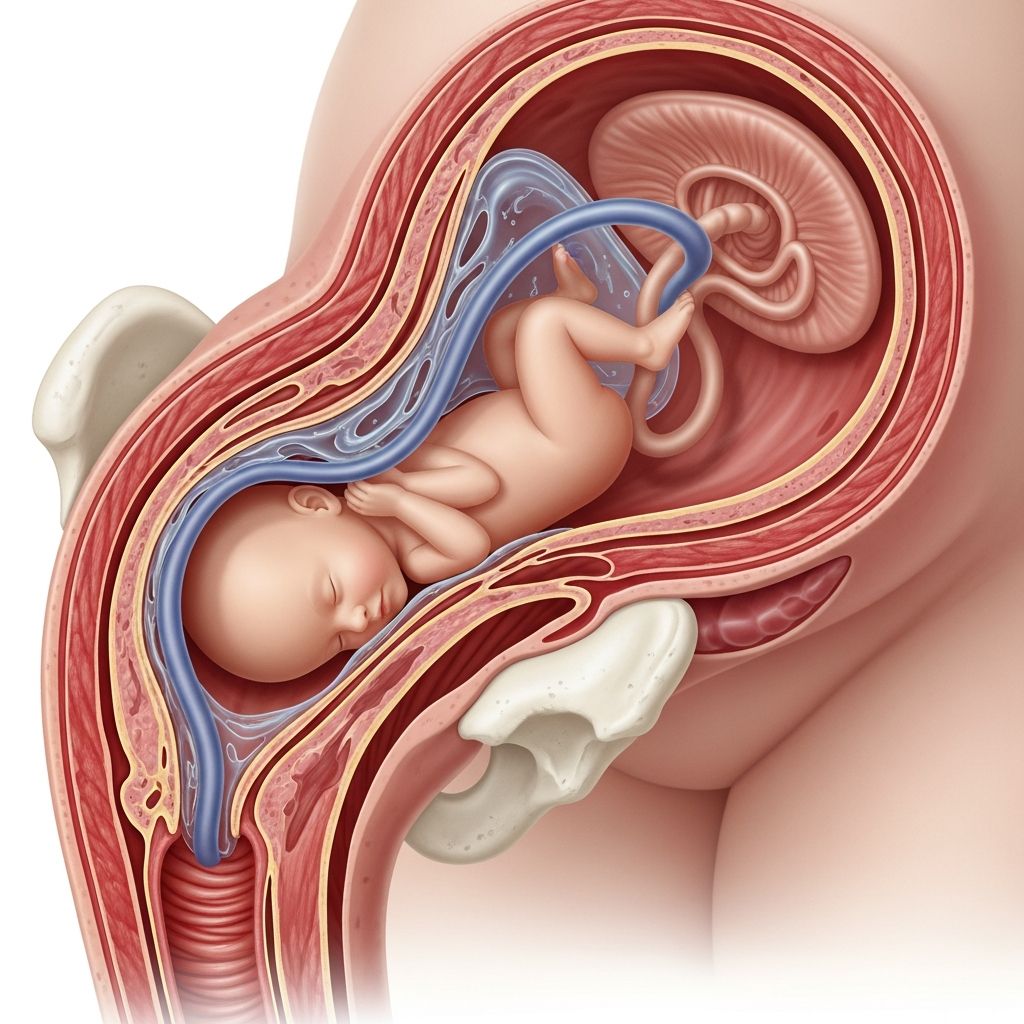
Umbilical cord prolapse is a rare but serious pregnancy complication that occurs when the umbilical cord drops through the cervix and enters the vagina before the baby is born. This abnormal positioning happens when the cord moves ahead of the baby’s presenting part, typically occurring after the amniotic sac ruptures (membranes break). During labor, the baby’s weight and contractions can compress the cord against the birth canal, restricting blood flow and oxygen to the fetus and potentially causing severe fetal distress.
While umbilical cord prolapse is uncommon, occurring in approximately 0.11 to 0.18% of live births, it is considered an obstetric emergency requiring immediate medical intervention. The condition demands swift action to prevent serious complications, and when detected early and managed appropriately in a medical setting, outcomes can be favorable with perinatal mortality rates between 0 to 3% among monitored patients.
Types of Umbilical Cord Prolapse
Medical professionals recognize two distinct types of umbilical cord prolapse, each presenting different challenges and requiring specific management approaches:
Overt Prolapse
Overt prolapse occurs when the umbilical cord visibly protrudes from the vagina, extending outside the mother’s body. This type typically happens after the amniotic membranes rupture, either spontaneously or through medical intervention. Overt prolapse is more frequently associated with breech presentations (when the baby is positioned buttocks-first) or transverse lie (when the baby is positioned horizontally across the uterus). However, it can also occur with vertex presentation (head-down position), particularly when membranes rupture before the baby’s head is properly engaged in the pelvis. The visible nature of overt prolapse usually makes it easier to detect, though it still constitutes a medical emergency requiring immediate intervention.
Occult Prolapse
Occult prolapse, also called hidden prolapse, occurs when the cord is compressed within the uterus by fetal parts—typically the baby’s shoulder or head—but does not protrude from the vagina. This type is more difficult to diagnose initially because there are no external signs of cord prolapse. The primary indication of occult prolapse comes from abnormal fetal heart rate patterns detected through electronic fetal monitoring. Healthcare providers may observe severe bradycardia (slow heart rate) or severe variable decelerations (sudden drops in heart rate) that suggest cord compression and progression toward fetal hypoxemia (oxygen deprivation).
Risk Factors for Umbilical Cord Prolapse
Several maternal and fetal factors can increase the likelihood of umbilical cord prolapse occurring during pregnancy and labor:
- Abnormal fetal presentation: Breech presentation and transverse lie significantly increase prolapse risk compared to normal vertex (head-down) presentation
- Premature rupture of membranes: Artificial or spontaneous rupture of the amniotic sac dramatically increases prolapse risk, particularly if the baby is not properly engaged
- Low cervical dilation: Rupturing membranes before cervical dilation reaches 6 centimeters substantially increases prolapse risk, particularly with unengaged fetal stations
- Unengaged fetal station: When the baby’s presenting part has not descended properly into the pelvis at the time of membrane rupture, prolapse risk escalates significantly
- Earlier gestational age: Procedures performed earlier in gestation carry higher prolapse risk than those performed near term
- Multiple gestations: Twin or higher-order pregnancies have increased prolapse risk, particularly after delivery of the first baby
- Polyhydramnios: Excess amniotic fluid can increase prolapse risk by providing more space for cord movement
- Assisted reproductive technology: Some studies suggest higher prolapse rates in pregnancies conceived through ART
Related Stories



Research has shown that artificial rupture of membranes (AROM) before 6 centimeters cervical dilation approximately doubles the risk of cord prolapse compared to AROM after 6 centimeters dilation. Additionally, when AROM occurs at 6-10 centimeters dilation with an unengaged fetal station (−3 or higher), prolapse risk increases substantially compared to engaged presentations.
Signs and Symptoms
The presentation of umbilical cord prolapse varies depending on whether the prolapse is overt or occult. Recognition of these signs is crucial for prompt medical intervention:
Overt Prolapse Symptoms
In overt prolapse, mothers or healthcare providers may observe:
- Visible umbilical cord protruding from the vagina
- Cord tissue visible at the vaginal opening, particularly after membrane rupture
- Sudden gush of amniotic fluid followed by cord visibility
- Pulsations of the cord felt externally
Occult Prolapse Symptoms
Occult prolapse is detected through electronic monitoring rather than visual symptoms:
- Abnormal fetal heart rate patterns indicating cord compression
- Severe bradycardia (fetal heart rate below 110 beats per minute)
- Severe variable decelerations (abrupt drops in fetal heart rate)
- Progressive signs of fetal distress during labor contractions
- Fetal heart rate patterns that don’t resolve with position changes or oxygen administration
Some mothers may experience a sudden change in baby movement patterns or a gush of fluid followed by abnormal monitoring findings, which should prompt immediate medical evaluation.
Diagnosis and Detection
Healthcare providers use multiple approaches to diagnose umbilical cord prolapse, depending on the clinical presentation:
Visual Inspection
For overt prolapse, direct visualization of cord tissue protruding from the vagina provides definitive diagnosis. This typically occurs immediately after membrane rupture during labor or delivery preparations.
Electronic Fetal Monitoring
Continuous electronic fetal monitoring is the primary method for detecting occult prolapse. Characteristic patterns include severe variable decelerations that may not respond to simple interventions like position changes. The monitoring strips show abnormal patterns consistent with cord compression.
Ultrasound Examination
Ultrasound may be used to confirm cord position and assess fetal status, particularly if diagnosis is uncertain. Some providers recommend ultrasound examination or careful palpation before performing AROM in high-risk situations to verify cord position and reduce prolapse risk.
Clinical Examination
Careful vaginal examination by an experienced provider can sometimes detect cord loops within the vaginal canal before overt prolapse occurs, allowing for preventive measures.
Emergency Treatment Protocol
Umbilical cord prolapse requires immediate emergency management. The treatment approach differs slightly based on prolapse type but shares the common goal of restoring fetal blood flow and expediting delivery:
Immediate Response for Overt Prolapse
When overt prolapse is identified, the following emergency protocol is implemented immediately:
- Elevate the presenting part: Healthcare providers gently lift the baby’s presenting part (head, buttocks, or shoulder) away from the prolapsed cord using a hand in the vagina, continuously maintaining this pressure to restore blood flow
- Position the mother: The mother is placed in a knee-to-chest position (also called the Trendelenburg position or modified Sims position) to use gravity to reduce pressure on the cord
- Medication administration: Terbutaline 0.25 mg may be given intravenously to reduce uterine contractions, further relieving compression on the cord
- Continuous manual support: A healthcare provider maintains continuous manual elevation of the fetal presenting part throughout transport and preparation for delivery
- Expedited cesarean delivery: Immediate cesarean section is performed to safely deliver the baby while maintaining cord blood flow
Management of Occult Prolapse
For occult prolapse detected through abnormal fetal heart rate patterns:
- Position changes: The mother is repositioned to relieve cord compression. Right or left lateral positioning may help decompress the cord
- Continued monitoring: Fetal heart rate patterns are closely monitored to assess response to position changes
- Oxygen administration: Supplemental oxygen may be provided to improve fetal oxygenation
- Cesarean delivery: If abnormal fetal heart rate patterns persist despite position changes and conservative measures, emergency cesarean delivery is performed
Prevention and Risk Reduction
While not all cases of umbilical cord prolapse can be prevented, several strategies can reduce risk:
- Careful AROM timing: Delaying artificial rupture of membranes until adequate cervical dilation (preferably 6 centimeters or more) and fetal engagement reduces prolapse risk
- Pre-AROM assessment: Careful palpation or ultrasound examination before AROM in high-risk situations can identify abnormal cord positioning
- Fetal station verification: Confirming adequate fetal descent before membrane rupture is essential, particularly in breech presentations
- Careful membrane rupture technique: Controlled amniotomy rather than abrupt rupture allows controlled amniotic fluid release
- Planned delivery for breech: Scheduled cesarean delivery for breech presentations eliminates prolapse risk from vaginal delivery
- Monitoring high-risk pregnancies: Enhanced surveillance for pregnancies with known risk factors allows for earlier detection and intervention
Long-Term Outcomes and Prognosis
The prognosis for umbilical cord prolapse has improved significantly with modern obstetric care and rapid emergency response capabilities. When detected in monitored settings and managed promptly:
- Perinatal survival rates exceed 97% in hospital settings with immediate cesarean delivery capability
- Neurologic outcomes are generally favorable when intervention occurs within minutes of prolapse detection
- Delayed diagnosis or treatment in unmonitored settings carries higher risk of adverse outcomes
- Most babies born following cord prolapse that was promptly managed have normal developmental outcomes
Maternal outcomes are also generally favorable, with cesarean delivery being the standard management approach. Recovery from emergency cesarean birth is similar to planned cesarean delivery in most cases.
Future Pregnancies After Umbilical Cord Prolapse
Women who have experienced umbilical cord prolapse in a previous pregnancy may be candidates for vaginal birth after cesarean (VBAC) in subsequent pregnancies, depending on the circumstances of the original prolapse. However, careful evaluation and discussion with their healthcare provider is essential. Recurrence risk is low, particularly if risk factors can be modified or avoided in subsequent pregnancies.
Frequently Asked Questions About Umbilical Cord Prolapse
Q: How common is umbilical cord prolapse?
A: Umbilical cord prolapse is rare, occurring in approximately 0.11 to 0.18% of live births, or roughly 1 to 2 in 1,000 deliveries. Despite its rarity, it remains a serious obstetric emergency requiring immediate intervention.
Q: Can umbilical cord prolapse be prevented?
A: While not all cases can be prevented, risk can be reduced by delaying artificial rupture of membranes until adequate cervical dilation and fetal engagement, carefully assessing fetal positioning before AROM, and planning appropriate delivery methods for abnormal presentations.
Q: What should I do if I notice cord tissue protruding from my vagina?
A: Call 911 immediately or go to the nearest emergency room. This is a medical emergency. Do not attempt to push the cord back into place. Lie down in a knee-to-chest position while waiting for emergency services to help reduce pressure on the cord.
Q: Will my baby be okay after umbilical cord prolapse?
A: With prompt recognition and immediate cesarean delivery in a hospital setting, most babies born following umbilical cord prolapse have excellent outcomes. Perinatal survival rates exceed 97% when managed in monitored hospital settings, and most children develop normally.
Q: Is vaginal delivery possible after a previous cord prolapse?
A: This depends on the circumstances of the original prolapse and current pregnancy factors. Many women are candidates for vaginal birth after cesarean (VBAC), but careful evaluation with your healthcare provider is essential to assess individual risk factors and create the safest birth plan.
Q: What happens during emergency cesarean delivery for cord prolapse?
A: Emergency cesarean delivery for cord prolapse involves rapid surgical delivery of the baby through an incision in the abdomen and uterus. The procedure prioritizes speed while maintaining safety for both mother and baby. A healthcare provider typically maintains manual elevation of the fetal presenting part throughout the procedure.
Q: Can cord prolapse cause cerebral palsy or permanent brain damage?
A: When umbilical cord prolapse is recognized promptly and managed with emergency cesarean delivery, the risk of permanent neurologic injury is very low. Most babies delivered emergently for cord prolapse have normal neurologic outcomes and development.
References
- Umbilical Cord Prolapse — Merck Manuals Professional. 2025. https://www.merckmanuals.com/professional/gynecology-and-obstetrics/intrapartum-complications/umbilical-cord-prolapse
- Risk Factors for Umbilical Cord Prolapse at the Time of Artificial Rupture of Membranes — National Center for Biotechnology Information. 2018. https://pmc.ncbi.nlm.nih.gov/articles/PMC5945286/
- Amniotomy (Breaking Your Water): How & Why It’s Done — Cleveland Clinic. 2024. https://my.clevelandclinic.org/health/treatments/24270-amniotomy
- C-Section (Cesarean Section): Procedure, Risks & Recovery — Cleveland Clinic. 2024. https://my.clevelandclinic.org/health/treatments/7246-cesarean-birth-c-section
- Umbilical Cord Location, Care & Appearance — Cleveland Clinic. 2024. https://my.clevelandclinic.org/health/body/umbilical-cord
Similar Articles








Read full bio of Sneha Tete