Undecenoate For Athlete’s Foot: Mycota Treatment Guide
Effective over-the-counter undecenoate treatment for athlete's foot symptoms, application, and prevention tips.
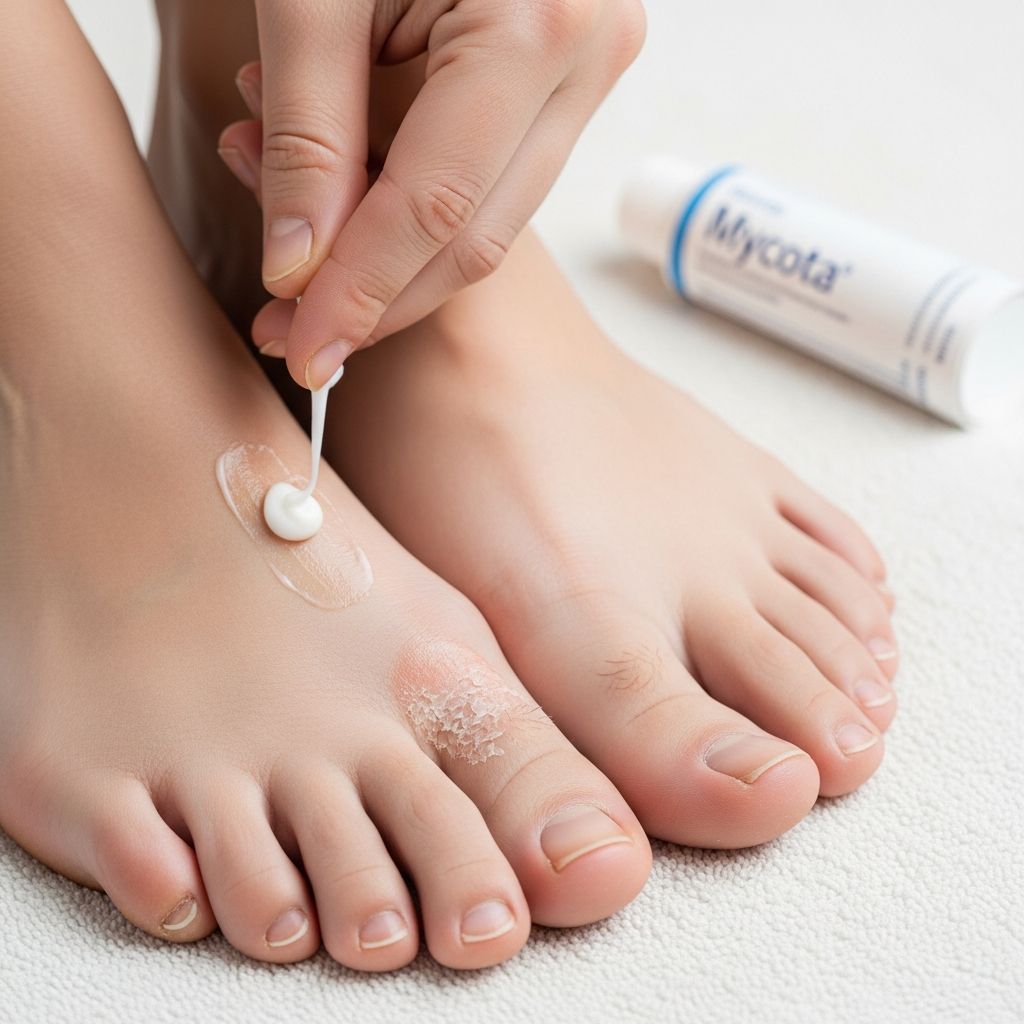
Athlete’s foot, medically known as tinea pedis, is a common fungal infection affecting the skin of the feet, particularly between the toes. Undecenoate, commonly found in products like Mycota cream and powder, is an effective over-the-counter antifungal treatment that targets the dermatophytes responsible for the infection. This article covers everything from symptoms and diagnosis to treatment protocols, side effects, and preventive measures.
About Undecenoate for Athlete’s Foot
Undecenoate, often in the form of zinc undecylenate or undecylenic acid, belongs to the group of medicines called antifungals. It works by disrupting the fungal cell membrane, preventing the growth and spread of fungi like Trichophyton species that cause athlete’s foot. According to clinical reviews, undecenoates are fungistatic, meaning they inhibit fungal reproduction rather than killing the fungi outright, but they demonstrate significant efficacy in curing infections.
Mycota is a popular brand containing undecenoate, available as a cream for direct application and a powder for absorbing moisture. These formulations are particularly useful for the moist environments between toes where fungi thrive. A placebo-controlled trial showed undecanoates reduced treatment failure by 86% at two weeks compared to placebo, confirming their reliability for mild to moderate cases.
Athlete’s foot typically presents as itching, redness, cracking, peeling, or blistering between the toes, especially the fourth and fifth. If untreated, it can spread to soles, sides, or nails (onychomycosis), or lead to secondary bacterial infections like cellulitis. Early use of undecenoate helps prevent these complications.
Key Symptoms of Athlete’s Foot
- Interdigital type: Rash between toes, often starting in the space between the fourth and fifth toes, with itching, scaling, and maceration.
- Moccasin type: Affects soles and sides with silvery scaling and inflammation; often linked to nail infections and harder to treat topically.
- Vesicular type: Small blisters on the instep, possibly from allergic reactions to the fungus.
- Additional signs: Pain, burning, odor, or spread to groin (tinea cruris).
Diagnosis is usually clinical, but microscopy confirms fungal presence if treatment fails. Non-fungal mimics like psoriasis or erythrasma require lab tests.
Before Using Undecenoate
Consult a pharmacist or doctor before starting, especially if you have diabetes, weakened immunity, extensive infection, nail involvement, or signs of bacterial infection (e.g., pus, severe swelling). Refer to a GP for recurrent cases or if no improvement after one week.
- Avoid if allergic to undecenoates or similar antifungals.
- Not for children under 16 without advice.
- Pregnant or breastfeeding individuals should seek medical guidance.
How to Use Mycota Undecenoate Cream and Powder
Follow package instructions precisely for best results. Consistency is key to eradicate the fungus fully.
For Mycota Cream
- Wash and thoroughly dry feet, especially between toes.
- Apply a thin layer of cream to affected areas and 2-3 cm beyond, twice daily (morning and night).
- Gently massage in; wash hands after unless treating hands.
- Continue for 4 weeks or 1 week after symptoms clear to prevent recurrence.
For Mycota Powder
- Sprinkle liberally between toes, on feet, in socks, and shoes after drying feet.
- Use twice daily or after washing feet.
- Ideal for sweaty feet or as adjunct to cream.
Related Stories



Combination use (cream + powder) enhances efficacy by reducing moisture. For aerosol powder, shake well and spray from 5-10 cm away.
| Form | Application | Best For | Duration |
|---|---|---|---|
| Cream | Twice daily, rub in | Dry/cracked skin | 4 weeks |
| Powder | Sprinkle on feet/socks/shoes | Moist, sweaty feet | 4 weeks |
| Aerosol Foam | Spray on clean feet | Quick application | 4 weeks |
Duration of Treatment
Treat for at least 4 weeks. Symptoms often improve in 1-2 weeks, but stopping early risks recurrence. Mycota recommends continuing 1 week post-clearance. If no improvement after 7 days, see a GP.
Possible Side Effects
Undecenoate is generally well-tolerated. Common mild effects include:
- Skin irritation, redness, or burning at application site.
- Itching or dryness.
Rare serious reactions: Allergic rash, swelling, or blistering. Discontinue and seek medical help if these occur. No systemic absorption issues reported for topical use.
Precautions and Warnings
- Avoid eyes/mouth: Rinse immediately if contact occurs.
- Bandages: Do not cover tightly; allow air circulation.
- Interactions: Minimal; inform doctor of other topicals.
- Diabetes/immunocompromised: Monitor closely; may need oral antifungals like terbinafine.
Preventing Athlete’s Foot Recurrence
Athlete’s foot spreads via contaminated floors, shoes, or towels. Preventive strategies reduce risk by 50-70%:
- Wash feet daily and dry thoroughly, especially between toes.
- Wear breathable cotton socks; change daily or when damp.
- Use flip-flops in public showers/lockers.
- Alternate shoes; dry thoroughly between uses.
- Apply antifungal powder prophylactically if prone.
- Keep toenails short and clean.
- Avoid barefoot walking in communal areas.
Discard old shoes if heavily contaminated. Wash hands after touching feet.
When to See a Doctor
- No improvement after 1 week of treatment.
- Spread to nails, hands, or groin.
- Signs of bacterial infection: Pus, fever, swelling.
- Recurrent infections or underlying conditions like diabetes.
Severe cases may require prescription azoles, allylamines (e.g., terbinafine, more effective per reviews), or oral therapy.
Comparison with Other Treatments
| Agent | Type | Efficacy | Duration |
|---|---|---|---|
| Terbinafine | Fungicidal | Highest (allylamine) | 1-2 weeks |
| Clotrimazole/Miconazole | Fungistatic (azole) | Effective | 4 weeks |
| Tolnaftate | Fungistatic | Good | 4 weeks |
| Undecenoate | Fungistatic | 71-86% reduction in failure | 4 weeks |
Frequently Asked Questions (FAQs)
Is Mycota undecenoate safe for daily use?
Yes, for treatment up to 4 weeks; for prevention, use powder sparingly as needed.
Can undecenoate treat nail fungus?
Limited efficacy for onychomycosis; consult a doctor for oral or specialized topicals.
How quickly does it work?
Symptoms ease in 3-7 days; full cure requires 4 weeks.
Is athlete’s foot contagious?
Yes, via direct contact or shared items; isolate shoes/towels.
Can children use Mycota?
Not under 16 without medical advice.
References
- Over-the-counter treatments for athlete’s foot — The Pharmaceutical Journal. 2019-approx (recent review). https://pharmaceutical-journal.com/article/ld/over-the-counter-treatments-for-athletes-foot
- Topical treatments for fungal infections of the skin and nails of the foot — PMC (Cochrane Review). 2020-03-19. https://pmc.ncbi.nlm.nih.gov/articles/PMC7073424/
- Undecylenic acid: Uses, Interactions, Mechanism of Action — DrugBank Online (official database). Ongoing. https://go.drugbank.com/drugs/DB11117
- Undecylenic acid (topical route) – Description — Mayo Clinic. Recent update. https://www.mayoclinic.org/drugs-supplements/undecylenic-acid-topical-route/description/drg-20066601
- Skin conditions treatments — Patient.info (NHS standards). Ongoing. https://patient.info/treatments-for-skin-conditions?sort=az
Similar Articles








Read full bio of Sneha Tete