Understanding Abdominal Ultrasound: Complete Guide
Learn how sound wave technology reveals abdominal organ health safely and effectively.
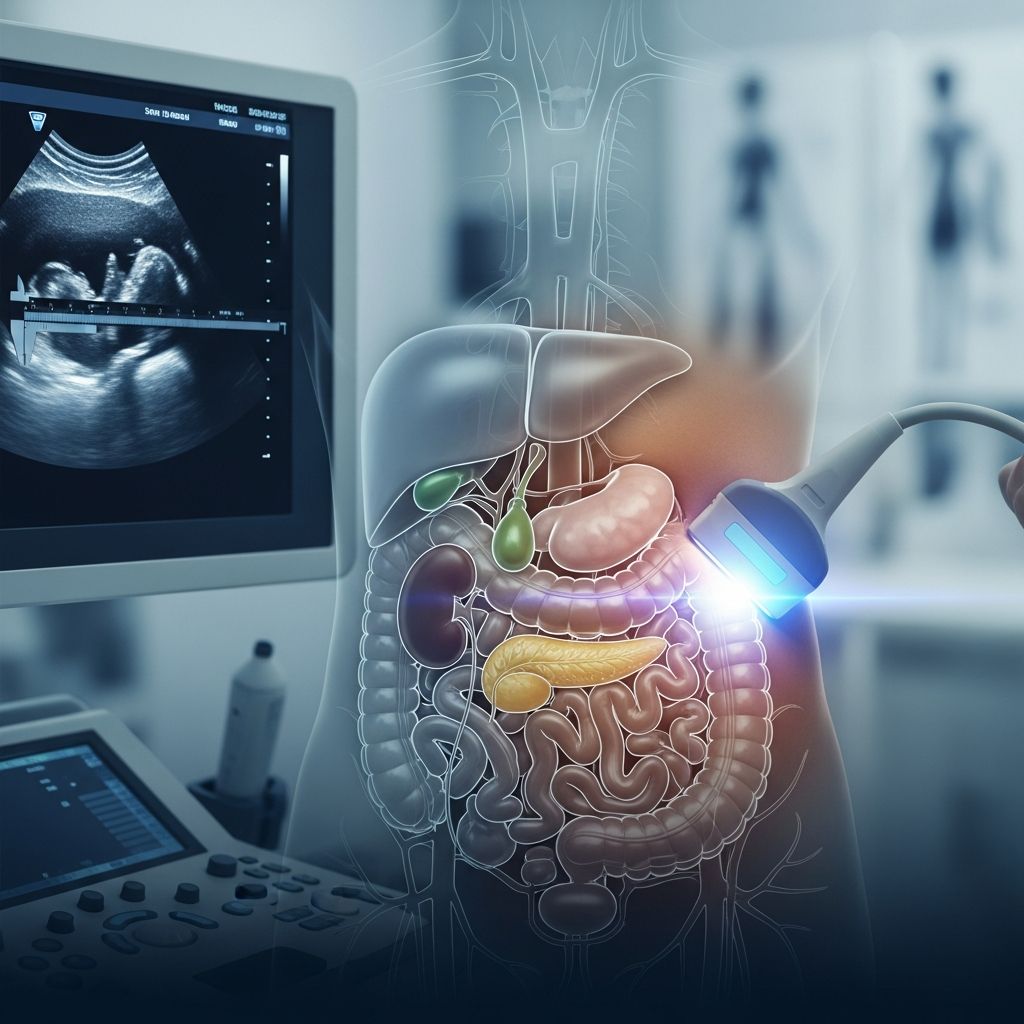
Abdominal ultrasound represents one of the most versatile and frequently utilized diagnostic tools in modern medicine. This imaging technique harnesses the power of high-frequency sound waves to create detailed pictures of internal organs and structures located within your midsection. Unlike certain imaging methods that rely on radiation exposure, abdominal ultrasound offers a safe, non-invasive approach to evaluating numerous conditions affecting the digestive system, urinary tract, and vascular structures.
The Science Behind Ultrasound Technology
Ultrasound imaging operates on principles similar to those used by sonar systems deployed by ships and bats navigating their environments. The fundamental concept involves transmitting sound waves into the body, which then bounce off internal organs and tissues, creating echoes that are captured and converted into visual images. When a sound wave encounters an object, it returns to its source with information about distance, size, shape, and tissue consistency.
During an ultrasound examination, a specialized device called a transducer serves dual functions: it emits high-frequency sound waves into the body while simultaneously recording the echoes that return. These inaudible sound waves travel through the body tissue, and when they strike internal structures, the sensitive receiver within the transducer detects the returning signals. A computer instantaneously processes these reflected waves and converts them into real-time moving images displayed on a monitor.
The transducer collects information based on the amplitude (loudness) and frequency (pitch) of returning sound waves, as well as the time required for signals to return to the device. This data allows the imaging system to determine tissue characteristics—whether structures are solid or fluid-filled—and to visualize organ movement and blood flow patterns.
Clinical Applications and Diagnostic Purposes
Abdominal ultrasound serves multiple diagnostic purposes across various medical specialties. Healthcare providers utilize this imaging technique to evaluate a wide range of organs and assess numerous conditions affecting abdominal health.
Organ Assessment
The procedure enables comprehensive evaluation of several critical abdominal structures:
- Kidneys and urinary system
- Liver and bile ducts
- Gallbladder
- Pancreas
- Spleen
- Abdominal aorta and associated blood vessels
Common Diagnostic Indications
Physicians order abdominal ultrasound examinations when patients present with specific symptoms or when certain clinical conditions warrant investigation. The procedure helps diagnose conditions such as:
- Abdominal pain or unexplained distention
- Abnormal liver function test results
- Organ enlargement
- Kidney stone formation
- Gallstone disease
- Abdominal aortic aneurysm
- Abdominal trauma with suspected internal bleeding
- Small bowel obstruction
- Appendicitis
Advanced Imaging Capabilities
Doppler ultrasound represents an advanced variation that extends diagnostic capabilities by visualizing blood flow patterns within vessels. This specialized technique enables physicians to identify blockages caused by clots, detect vessel narrowing, evaluate blood supply to specific organs, and assess for signs of infection through increased blood flow patterns. Additionally, ultrasound can guide physicians during biopsy procedures, allowing them to precisely target tissue samples from suspected abnormal areas.
The Examination Procedure: What Happens During Your Ultrasound
Understanding what to expect during an abdominal ultrasound can help reduce anxiety and ensure optimal cooperation during the imaging process. The procedure typically requires less than thirty minutes from start to finish and involves several straightforward steps.
Related Stories



Positioning and Preparation
When you arrive for your examination, the technologist or radiologist will position you on an examination table in a supine position, though the exact positioning may vary depending on which abdominal structures require visualization. The technician will expose the area of your abdomen that requires examination while keeping the rest of your body covered for comfort and modesty.
Application of Ultrasound Gel
A water-based, clear gel is applied to the skin overlying the area under examination. This gel serves critical functions in the imaging process: it eliminates air pockets between the transducer and skin that would otherwise block sound wave transmission into the body, and it enables smooth, comfortable movement of the transducer across your skin. The gel is typically warm, contributing to patient comfort during the examination.
Transducer Placement and Movement
The sonographer places the transducer directly against the prepared skin area and systematically moves it across your abdomen using sliding and rotating motions. These movements allow the technician to capture images from multiple angles and obtain comprehensive views of the organs and structures under examination. The transducer is moved deliberately across areas of interest, and the technician captures individual frames and video sequences as needed.
Image Capture and Documentation
As the transducer moves across your abdomen, images appear in real-time on a nearby monitor that both you and the technician can observe. The technician typically captures still images at key points and may record brief video sequences showing organ movement and blood flow. These images are automatically stored and become part of your medical record for physician interpretation.
Safety Profile and Key Advantages
Abdominal ultrasound stands out among diagnostic imaging methods for its exceptional safety profile and multiple clinical advantages. The procedure utilizes sound waves rather than ionizing radiation, eliminating concerns associated with radiation exposure. This non-invasive approach requires no needles, injections, or incisions, making it comfortable and accessible for patients of all ages, including pregnant women.
The real-time imaging capability represents another significant advantage, as the procedure captures images of both static organ anatomy and dynamic processes such as organ movement and blood circulation patterns. This real-time visualization often provides information that static imaging cannot capture, enhancing diagnostic accuracy.
Pre-Examination Preparation
While abdominal ultrasound is a straightforward procedure requiring minimal preparation compared to other imaging studies, certain guidelines may apply depending on which structures your physician wants to visualize. Your healthcare provider will furnish specific preparation instructions tailored to your particular examination. Generally, you may be asked to avoid eating or drinking for a specific period beforehand, particularly if gallbladder evaluation is planned, as food consumption affects gallbladder appearance on ultrasound images.
Arriving in comfortable, loose-fitting clothing facilitates the examination process by allowing easy access to your abdomen. You may be asked to change into an examination gown, though many facilities allow you to remain in your own clothing with your shirt simply lifted or lowered as needed for the procedure.
Post-Examination Experience
Following the completion of your ultrasound examination, the technician will provide tissues to remove the remaining ultrasound gel from your skin. You may experience a slight stickiness initially, but the gel washes off easily with soap and water. You are immediately free to return to your normal activities, as the procedure imposes no activity restrictions or recovery period.
A radiologist—a physician specifically trained to interpret diagnostic imaging studies—will review your ultrasound images and generate a detailed report describing findings. This report is typically available to your primary care physician within a few days, though urgent findings may be communicated more rapidly.
Frequently Asked Questions
Does an abdominal ultrasound hurt?
No, abdominal ultrasound is completely painless. The procedure is entirely non-invasive, and the gentle pressure applied by the transducer should not cause discomfort. If you experience pain during an ultrasound, you should immediately notify the technician, as this may indicate an area of significant tenderness requiring modified technique or further evaluation.
How long does an abdominal ultrasound take?
Most abdominal ultrasound examinations are completed in less than thirty minutes. The exact duration depends on the complexity of the examination, how many organs require visualization, and whether additional imaging sequences are necessary for complete evaluation.
Is radiation exposure a concern with ultrasound?
No, ultrasound uses sound waves rather than ionizing radiation, so there is no radiation exposure risk. This makes ultrasound particularly valuable for imaging pregnant women and pediatric patients where radiation exposure should be minimized.
Can I eat before my ultrasound?
This depends on which structures your physician wishes to evaluate. If gallbladder imaging is planned, you may be instructed to fast for six to eight hours beforehand, as food consumption causes the gallbladder to contract, potentially affecting image quality. Your healthcare provider will furnish specific dietary instructions based on your particular examination requirements.
Will I receive results immediately?
While images are visible during the examination, formal interpretation requires a radiologist’s review. Results are typically available within a few days, though your healthcare provider can sometimes discuss preliminary findings on the same day if urgent issues are identified.
Comparison with Other Imaging Modalities
| Imaging Modality | Radiation Exposure | Real-Time Imaging | Cost | Contraindications |
|---|---|---|---|---|
| Abdominal Ultrasound | None | Yes | Low to Moderate | Minimal |
| CT Scan | High | No | Moderate to High | Pregnancy, Contrast Allergy |
| MRI | None | Limited | High | Metal Implants, Claustrophobia |
| X-Ray | Low | No | Low | Pregnancy |
Technological Advances and Future Directions
Ultrasound technology continues to evolve, with advances in probe design, image resolution, and specialized imaging techniques expanding diagnostic capabilities. Point-of-care ultrasound now enables bedside evaluation in emergency departments and intensive care units, allowing rapid assessment of trauma patients and critically ill individuals. Three-dimensional and four-dimensional ultrasound technologies are being increasingly integrated into clinical practice, offering enhanced visualization of complex anatomical relationships and dynamic processes.
These technological improvements maintain ultrasound’s core advantages while expanding its clinical applications, making it an increasingly valuable diagnostic tool across diverse medical settings and specialties.
References
- Abdominal Ultrasound Exam — Radiologyinfo.org. Accessed February 2026. https://www.radiologyinfo.org/en/info/abdominus
- Ultrasound Imaging — U.S. Food and Drug Administration. https://www.fda.gov/radiation-emitting-products/medical-imaging/ultrasound-imaging
- What Should You Expect from an Abdominal Ultrasound — Artery and Vein. https://arteryandvein.com/what-should-you-expect-from-an-abdominal-ultrasound/
- Ultrasound — InsideRadiology. https://www.insideradiology.com.au/ultrasound/
- Ultrasound: What It Is, Purpose, Procedure & Results — Cleveland Clinic. https://my.clevelandclinic.org/health/diagnostics/4995-ultrasound
Similar Articles








Read full bio of medha deb