Albinism: A Complete Guide To Causes, Symptoms, And Care
Explore the genetic basis, visual challenges, and lifelong management strategies for albinism in this comprehensive guide.
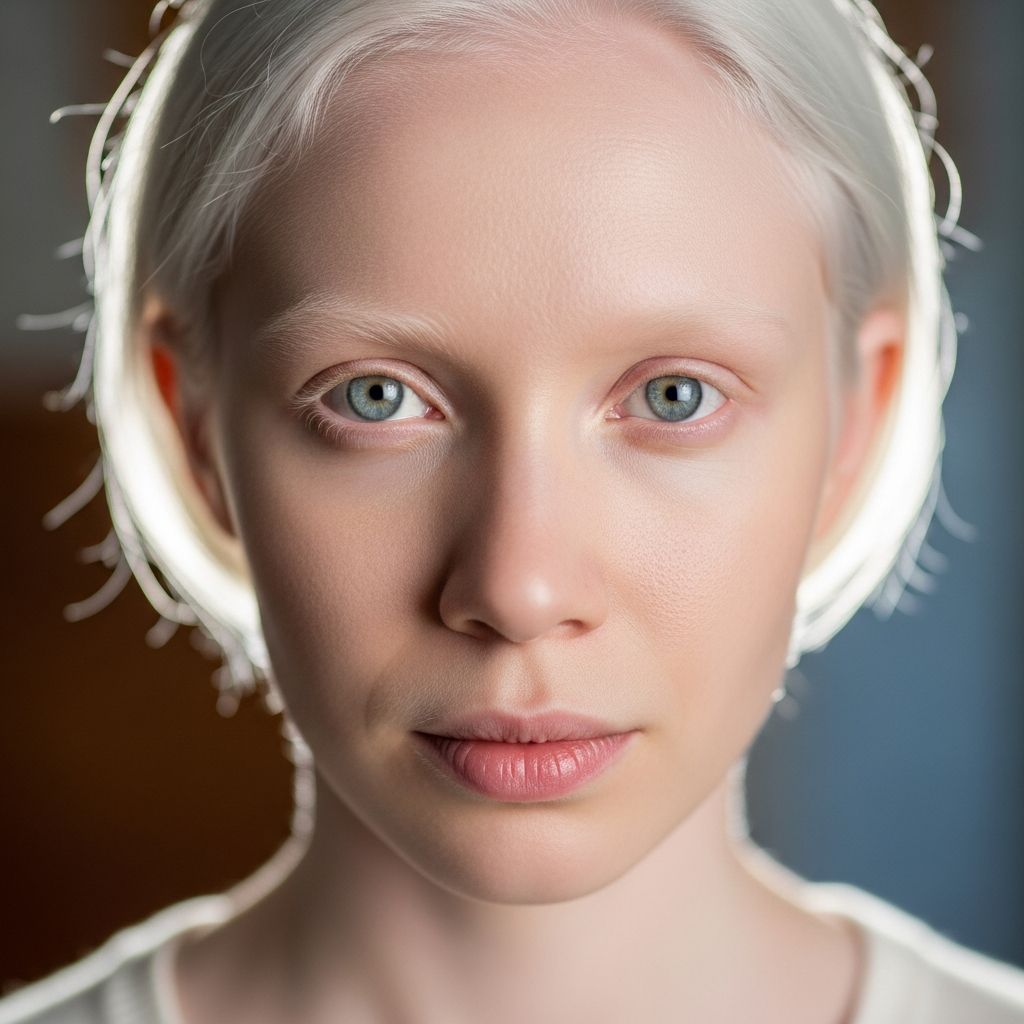
Albinism represents a spectrum of inherited disorders where the body produces minimal or no melanin, the pigment responsible for coloring skin, hair, and eyes. This deficiency not only alters physical appearance but also profoundly influences visual function and sun sensitivity. Affecting individuals across all ethnic backgrounds, albinism demands comprehensive care focusing on eye health, dermatological protection, and genetic counseling.
The Biological Role of Melanin and Its Absence
Melanin serves critical functions beyond coloration: it shields skin from ultraviolet radiation, supports retinal development, and aids visual processing. In albinism, genetic mutations disrupt melanin synthesis pathways, leading to hypopigmentation or depigmentation. Skin becomes highly vulnerable to sunburn and cancers, while eyes exhibit structural anomalies that impair sight from infancy.
Without adequate melanin, the fovea—a central retinal region for sharp vision—fails to develop properly, termed foveal hypoplasia. Optic nerve pathways also misroute, disrupting binocular vision and depth perception. These changes manifest early, often detectable at birth through pale irises that transilluminate light.
Primary Forms of Albinism
Albinism manifests in distinct categories, primarily oculocutaneous albinism (OCA) and ocular albinism (OA). OCA, the predominant form, impacts skin, hair, and eyes due to mutations in genes like TYR (OCA1), OCA2 (OCA2), TYRP1 (OCA3), and SLC45A2 (OCA4), with rarer types up to OCA8. Pigmentation levels vary: OCA1A yields complete absence, resulting in milky-white features, while OCA1B allows some darkening over time.
OA primarily affects eyes, sparing skin and hair pigmentation. X-linked OA (OA1) stems from GPR143 gene mutations, disproportionately impacting males. Affected individuals show iris translucency and fundus hypopigmentation without widespread dermal changes.
Syndromic Variants and Associated Risks
Beyond isolated forms, albinism integrates into syndromes with multisystem involvement. Hermansky-Pudlak syndrome (HPS) combines OCA-like traits with platelet dysfunction causing bleeding tendencies and ceroid lipofuscin accumulation in tissues, linked to lung fibrosis in some subtypes. Chediak-Higashi syndrome (CHS) features partial albinism, recurrent infections from immune defects, neurological deterioration, and bleeding risks.
Griscelli syndrome presents silvery hair, immune issues, and neurological problems. These syndromic cases necessitate vigilant screening for non-ocular complications like infections or coagulopathies.
Recognizing Symptoms Across Body Systems
- Skin and Hair: Pale or white skin prone to freckling and burns; hair ranges from white to yellow-red, sometimes darkening slightly with age.
- Eye Manifestations: Nystagmus (rhythmic eye oscillations), strabismus (misaligned eyes), photophobia (light intolerance), reduced visual acuity (often 20/60 to legally blind levels), and astigmatism or refractive errors.
- Functional Impacts: Poor contrast sensitivity, limited stereopsis, and head tilting to minimize nystagmus null points.
Infants may appear with pinkish skin and light eyes that redden under light. Vision stabilizes somewhat post-infancy but rarely reaches normalcy.
Genetic Mechanisms and Inheritance Patterns
Most albinism follows autosomal recessive inheritance: both parents must carry a mutated gene, conferring a 25% risk per pregnancy. OA1 is X-linked recessive, affecting males more severely as females are carriers. Carrier frequency varies globally; higher in specific populations like those with OCA2 in sub-Saharan Africa.
Related Stories



| Type | Gene(s) | Inheritance | Pigmentation Level |
|---|---|---|---|
| OCA1 | TYR | Autosomal Recessive | None to minimal |
| OCA2 | OCA2 | Autosomal Recessive | Mild to moderate |
| OA1 | GPR143 | X-linked Recessive | Eyes only |
| HPS | Multiple (AP3B1 etc.) | Autosomal Recessive | Variable + systemic |
Genetic testing confirms subtypes, aiding family planning.
Diagnostic Approaches from Infancy Onward
Diagnosis begins clinically: characteristic hypopigmentation, family history, and ophthalmologic exam revealing foveal hypoplasia via optical coherence tomography (OCT) or electroretinography. Iris transillumination and fundus albino-like features are hallmarks. Molecular testing identifies specific mutations, differentiating non-syndromic from syndromic forms—essential for prognosis.
Differential diagnoses include partial albinism (piebaldism), vitiligo, or Chediak-Higashi. Early evaluation by ophthalmologists and geneticists optimizes interventions.
Comprehensive Management Strategies
No cure exists, but multidisciplinary care mitigates impacts. Vision aids include spectacles for refractive errors, low-vision devices like magnifiers, and tinted lenses for photophobia. Surgical options for nystagmus (rarely effective) or strabismus may improve alignment.
Skin Protection Imperatives
Daily broad-spectrum SPF 50+ sunscreen, UPF clothing, hats, and shade avoidance are non-negotiable. Squamous cell carcinoma risk escalates 1000-fold, demanding regular dermatologic surveillance.
Educational and Social Support
Children benefit from individualized education plans addressing visual impairments. Counseling combats stigma; support groups foster resilience.
Living with Albinism: Long-Term Outlook
Life expectancy mirrors the general population absent syndromic complications. Intelligence remains unaffected, though vision limits certain careers. Advances in gene therapy hold promise, but current focus is supportive. Proactive management enables fulfilling lives, emphasizing adaptation over limitation.
Frequently Asked Questions (FAQs)
Is albinism only found in white people?
No, it occurs universally across races, with prevalence around 1 in 20,000 for OCA.
Can children with albinism attend regular schools?
Yes, with accommodations like large-print materials and preferential seating.
Does albinism worsen over time?
Vision stabilizes after early childhood; skin cancer risk accumulates without protection.
Are there treatments to restore pigment?
Not currently; management targets symptoms.
How is albinism passed to children?
Typically recessive; genetic counseling clarifies risks.
References
- Albinism – symptoms, diagnosis and support — Healthdirect (Australian Government). 2023. https://www.healthdirect.gov.au/albinism
- Oculocutaneous Albinism — National Organization for Rare Disorders (NORD). 2023-02-15. https://rarediseases.org/rare-diseases/oculocutaneous-albinism/
- Albinism — StatPearls, NCBI Bookshelf (NIH). 2023-07-17. https://www.ncbi.nlm.nih.gov/books/NBK519018/
- Albinism — Merck Manual Consumer Version. 2024. https://www.merckmanuals.com/home/skin-disorders/pigment-disorders/albinism
- Oculocutaneous albinism — Primary Care Dermatology Society. 2021-07-08. https://www.pcds.org.uk/clinical-guidance/albinism
- Albinism — Health Encyclopedia, FloridaHealthFinder. 2023. https://quality.healthfinder.fl.gov/health-encyclopedia/HIE/1/001479
- Albinism – Symptoms and causes — Mayo Clinic. 2023-11-07. https://www.mayoclinic.org/diseases-conditions/albinism/symptoms-causes/syc-20369184
Similar Articles








Read full bio of Sneha Tete