Autism Spectrum Disorder: A Comprehensive Guide For Families
Comprehensive guide to autism: symptoms, diagnosis, support strategies, and lifelong management for families and individuals.
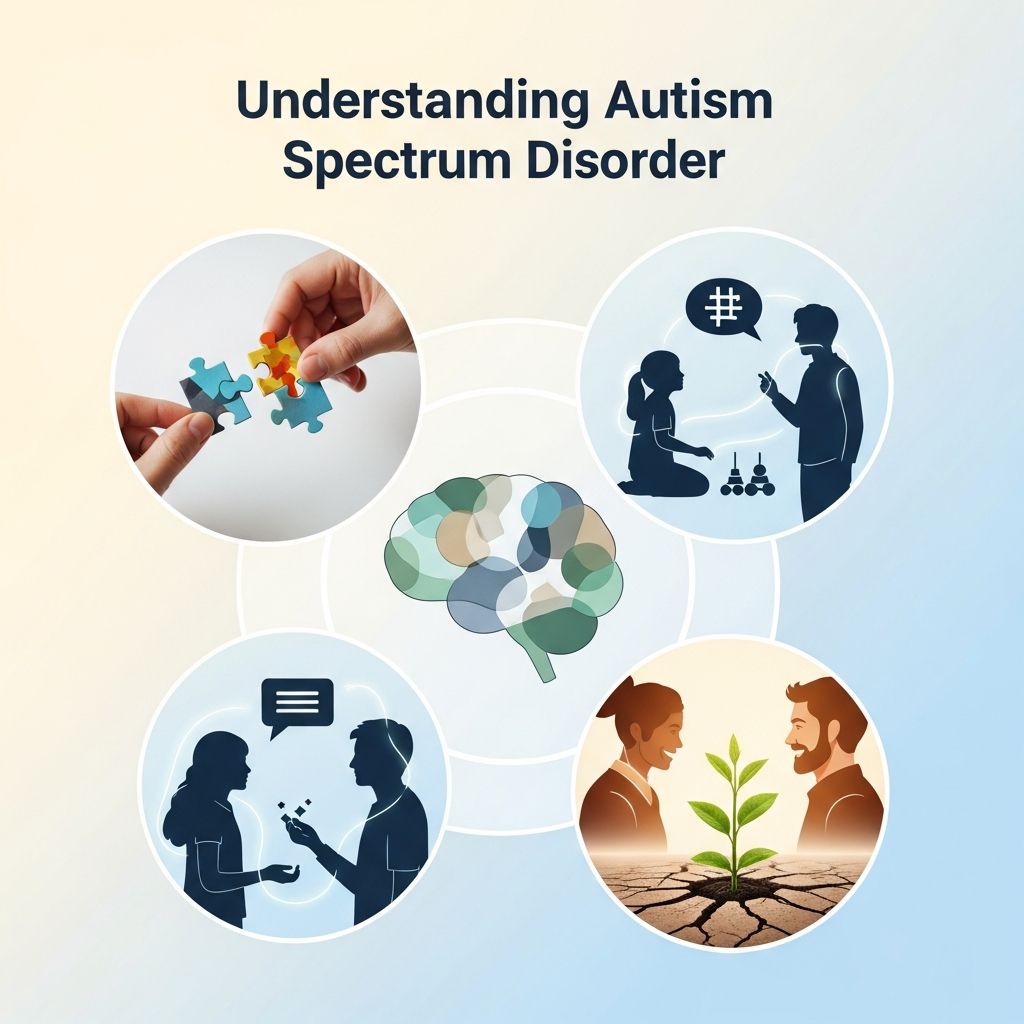
Autism spectrum disorder (ASD) represents a complex neurodevelopmental condition that influences social interactions, communication abilities, and behavioral patterns from early childhood onward. Characterized by a wide range of strengths and challenges, ASD affects individuals across all demographics, with early identification and tailored interventions playing crucial roles in enhancing quality of life.
The Neurological Foundations of ASD
At its core, ASD arises from differences in brain development and function, often detectable before age three, though manifestations vary widely. These brain variations can stem from genetic factors, environmental influences, or their interplay, leading to atypical processing of sensory input, social cues, and routine changes. While some cases link to specific genetic conditions, many causes remain under investigation, underscoring the need for ongoing research.
Individuals with ASD may exhibit exceptional abilities in areas like pattern recognition or memory, alongside hurdles in flexible thinking or emotional reciprocity. This spectrum nature means no two experiences are identical, necessitating personalized approaches to support.
Recognizing Early Indicators in Children
Signs of ASD often emerge within the first two years, though subtler cases might surface later, such as during school entry. Parents and caregivers can observe patterns like limited eye contact, delayed responses to their name, or minimal sharing of interests through gestures or words. Children might engage in prolonged monologues on preferred topics without noting listeners’ reactions or struggle with peer play due to challenges in perspective-taking.
- Limited or atypical eye contact and facial expressions mismatched to context
- Delayed or absent pointing to share attention or objects
- Preference for solitary play over interactive activities
- Unusual speech patterns, such as echolalia (repeating phrases) or monotone delivery
Repetitive actions, like hand-flapping, lining up toys, or intense fixation on spinning objects, alongside distress from routine disruptions, further signal potential ASD. Sensory sensitivities—aversion to loud sounds or textures—commonly accompany these traits.
Diagnostic Pathways for Accurate Identification
Diagnosis begins with routine developmental screenings recommended by pediatric organizations, ideally at 18-24 months. If concerns arise, a multidisciplinary team—including developmental pediatricians, psychologists, speech therapists, and neurologists—conducts comprehensive assessments. This involves observing behaviors, cognitive testing, language evaluations, family history reviews, and checks for daily living skills.
For children under three, early intervention programs provide initial evaluations; for older kids, schools offer special education assessments. Adults seeking diagnosis benefit from similar processes, focusing on lifelong patterns to access appropriate services. Early, precise diagnosis unlocks targeted therapies, preventing skill regression and fostering growth.
| Age Group | Typical Evaluation Steps | Key Professionals Involved |
|---|---|---|
| Infants/Toddlers (<3 years) | Developmental milestone checks, parent interviews, behavioral observation | Pediatricians, early intervention specialists |
| Preschool/School Age (3+ years) | Cognitive/language tests, school-based assessments, sensory evaluations | Psychologists, speech pathologists, educators |
| Adolescents/Adults | Retrospective history, functional impact analysis, co-occurring condition screening | Psychiatrists, occupational therapists, neurologists |
Core Challenges and Co-Occurring Conditions
Beyond social and behavioral traits, ASD often intersects with sensory processing differences, making everyday environments overwhelming. Repetitive interests provide comfort but can limit broader engagement. Communication barriers range from nonverbal states to literal interpretations of language, hindering abstract understanding.
Related Stories



Many individuals face co-occurring issues like ADHD, anxiety, depression, sleep disturbances, or intellectual disabilities, amplifying daily demands. Addressing these holistically through integrated care improves outcomes, with prevalence estimates indicating 1 in 36 U.S. children identified with ASD.
Evidence-Based Interventions and Therapies
Interventions emphasize skill-building in structured, intensive formats, often involving families. Applied Behavior Analysis (ABA) systematically reinforces adaptive behaviors while reducing maladaptive ones, promoting independence. Social skills groups teach navigation of interactions via role-play and feedback.
- Speech-Language Therapy: Enhances verbal/nonverbal communication, pragmatics, and comprehension.
- Occupational Therapy: Targets fine motor skills, sensory integration, and self-care routines.
- Cognitive Behavioral Therapy (CBT): Manages anxiety and emotional regulation for older individuals.
- Educational Supports: Individualized Education Programs (IEPs) provide classroom accommodations.
Parent training equips caregivers with strategies for positive reinforcement and boundary-setting, while medications may alleviate co-occurring symptoms like hyperactivity or insomnia under medical supervision.
Navigating School and Educational Supports
Schools play a pivotal role via IEPs or 504 Plans, tailoring curricula to ASD needs—such as quiet spaces, visual schedules, or peer buddy systems. Special education services address social deficits, repetitive behaviors, and academic gaps, fostering inclusion. Transition planning for adolescence prepares youth for vocational training, independent living, or higher education.
Strategies for Family Empowerment and Daily Life
Families thrive by adopting strength-based language, emphasizing capabilities over deficits, and building routines that accommodate sensory preferences. Visual aids, social stories, and predictable schedules ease transitions. Support groups offer emotional outlets and practical tips, reducing isolation.
Promoting autonomy involves teaching life skills like budgeting, cooking, and transportation. Community resources, including respite care and advocacy organizations, bolster resilience. Celebrating unique talents—artistic flair or deep knowledge in niche areas—nurtures self-esteem.
Adult Life: Independence and Ongoing Support
ASD persists lifelong, but many adults achieve employment, relationships, and self-sufficiency with supports like job coaching, housing assistance, and therapy. Challenges in executive functioning or social nuances persist, yet strengths in detail-oriented tasks suit roles in tech, data analysis, or creative fields. Research into adult-specific services continues to evolve.
FAQs on Autism Spectrum Disorder
What causes autism?
ASD results from brain differences influenced by genetics and environmental factors; no single cause exists.
Can adults be diagnosed with ASD?
Yes, retrospective evaluations help adults understand lifelong patterns and access supports.
Is there a cure for autism?
No cure exists, but interventions significantly improve functioning and well-being.
How common is ASD?
Approximately 1 in 36 children in the U.S. are identified with ASD.
Does ASD affect intelligence?
Intelligence varies widely; some have intellectual disabilities, others exceptional abilities.
Emerging Research and Future Directions
Ongoing studies explore genetic markers, brain imaging, and novel therapies like virtual reality for social training. Emphasis on neurodiversity views ASD as a difference rather than deficit, advocating inclusive policies. Families are encouraged to stay informed via reputable sources for the latest advancements.
References
- Autism Spectrum Disorder — National Institute of Mental Health. 2023. https://www.nimh.nih.gov/health/publications/autism-spectrum-disorder
- What Is Autism Spectrum Disorder? — American Psychiatric Association. 2024-02-15. https://www.psychiatry.org/patients-families/autism/what-is-autism-spectrum-disorder
- About Autism Spectrum Disorder — Centers for Disease Control and Prevention. 2024. https://www.cdc.gov/autism/about/index.html
Similar Articles








Read full bio of medha deb