Understanding Biopsy Reports: A Complete Guide
Learn how to read and understand your biopsy report with expert guidance.
A biopsy report is one of the most important documents you may receive during your medical care. It provides detailed information about tissue samples that have been collected and examined under a microscope by a pathologist. Whether you’re awaiting results or trying to understand a report you’ve already received, this comprehensive guide will help you navigate the information and understand what your biopsy report means for your health.
What Is a Biopsy?
A biopsy is a medical procedure in which a small sample of tissue is removed from your body for examination. This tissue sample is then sent to a laboratory where a pathologist—a doctor who specializes in diagnosing diseases by examining tissues and cells—carefully analyzes it under a microscope. Biopsies are commonly used to diagnose various conditions, including cancer, infections, inflammatory disorders, and other medical conditions that require tissue-level analysis.
The process of obtaining tissue for diagnosis of bone and soft-tissue tumors is one of the primary goals of all biopsies. However, a biopsy must be well planned to avoid complications and ensure that adequate tissue is collected for accurate diagnosis.
Types of Biopsies
Several different types of biopsies exist, each suited to different situations and body locations:
- Excisional Biopsy: Removal of an entire lesion or suspicious area
- Incisional Biopsy: Removal of a portion of a larger lesion
- Core Needle Biopsy: Use of a special needle to extract tissue samples
- Fine Needle Aspiration (FNA): Use of a thin needle to collect cells or fluid
- Endoscopic Biopsy: Tissue collection through a scope inserted into the body
- Skin Biopsy: Removal of skin tissue for diagnosis
- Bone Marrow Biopsy: Extraction of bone marrow samples
Components of a Biopsy Report
Understanding the structure and components of your biopsy report is essential for interpreting your results. A typical biopsy report contains the following sections:
Clinical History
This section provides background information about why the biopsy was performed. It includes information about symptoms you were experiencing, relevant medical history, and what your healthcare provider suspected might be the issue. This context helps the pathologist understand the clinical picture and focus their analysis appropriately.
Specimen Description
The specimen description details exactly what tissue was submitted for analysis. It describes the physical appearance of the sample, including color, size, texture, and any other relevant characteristics. This information confirms that the correct tissue was received and processed in the laboratory.
Microscopic Findings
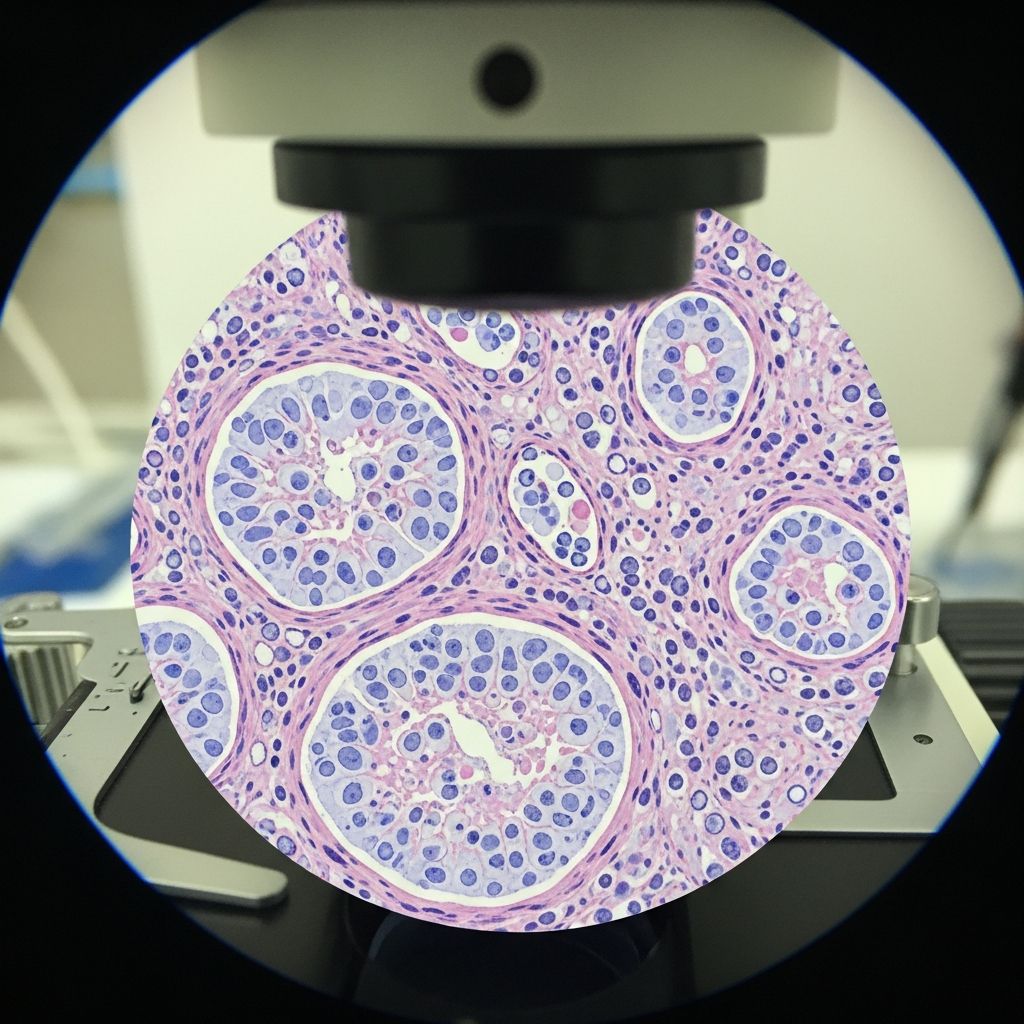
This is the core of the biopsy report. The pathologist describes what they observed when examining the tissue under the microscope. This includes information about the tissue architecture, cell types present, any abnormalities, and other significant findings. The microscopic findings form the basis for the diagnosis.
Diagnosis
The diagnosis section provides the pathologist’s interpretation of the microscopic findings. This is typically the most important part of the report for patients and physicians. The diagnosis may be straightforward (such as “benign lipoma”) or more complex (such as a specific type of cancer with additional staging information).
Additional Tests and Stains
Related Stories



Sometimes the tissue sample undergoes special staining or additional testing to help establish the diagnosis. These may include immunohistochemical stains, which use antibodies to identify specific cellular proteins, or molecular testing to detect genetic abnormalities. These results are reported in this section.
Comments and Recommendations
Pathologists often include comments that provide context for the diagnosis or recommendations for additional testing or clinical follow-up. These comments can be valuable in understanding the significance of the findings and what steps should be taken next.
How to Read Your Biopsy Report
Reading a biopsy report can be challenging because it often contains medical terminology and scientific language. However, with some guidance, you can develop a better understanding:
Start with the Diagnosis
Begin by reading the diagnosis section, as this is the most important finding. Write down the diagnosis exactly as written. If you don’t understand a term, make a note to ask your healthcare provider to explain it.
Understand Key Terms
Medical reports frequently use terms like “benign” (not cancerous), “malignant” (cancerous), “atypical” (unusual but not necessarily cancerous), and “inconclusive” (unable to determine from the sample). Understanding these basic terms will help you grasp the significance of your diagnosis.
Note Any Recommendations
Pay attention to any recommendations in the report. These might include suggestions for additional testing, follow-up appointments, or specialist consultations. These recommendations are designed to ensure you receive appropriate care.
Identify Special Testing Results
If special stains or molecular tests were performed, locate these results in your report. These tests often provide important information about prognosis and treatment options, particularly for cancer diagnoses.
Understanding Common Biopsy Findings
Benign Findings
Benign findings indicate that the tissue is not cancerous and typically does not pose a serious health threat. Examples include benign skin growths, non-cancerous cysts, and inflammatory conditions. While benign findings are generally reassuring, your healthcare provider may still recommend monitoring or treatment depending on the specific condition.
Malignant Findings
Malignant findings indicate the presence of cancer. The report will typically specify the type of cancer, its grade (how aggressive it appears under the microscope), and whether it has invaded surrounding tissues. This information is crucial for determining appropriate treatment options.
Inconclusive Results
Sometimes a biopsy cannot provide a definitive diagnosis. This may be due to insufficient tissue, technically poor samples, or findings that genuinely overlap between benign and malignant conditions. In these cases, your healthcare provider may recommend repeat biopsy or alternative diagnostic approaches.
Atypical or Dysplastic Findings
These findings describe tissue that has some unusual characteristics but doesn’t meet the full criteria for cancer. Atypical findings require careful follow-up, as some may progress to cancer over time while others remain stable.
Important Information Contained in Biopsy Reports
| Report Component | Why It Matters | What to Ask About |
|---|---|---|
| Specimen Type and Size | Confirms adequate tissue was collected for accurate diagnosis | Was enough tissue obtained for reliable testing? |
| Microscopic Description | Provides detailed findings that support the diagnosis | What specific abnormalities were found? |
| Diagnosis and Grade | The primary conclusion about your condition | What does this diagnosis mean for my treatment? |
| Special Stains/Testing | Additional information about cell characteristics and behavior | How do these results affect my prognosis? |
| Recommendations | Guidance on next steps in your medical care | What follow-up is recommended? |
Questions to Ask Your Healthcare Provider
When discussing your biopsy report with your healthcare provider, it’s important to ask clarifying questions to ensure you fully understand your diagnosis and treatment options:
- What is the diagnosis, and can you explain it in simpler terms?
- Is this condition benign or malignant?
- What does the grade or stage mean?
- Are there any special test results I should know about?
- What are my treatment options?
- What is the prognosis with each treatment option?
- Do I need additional testing or specialist consultation?
- What should I do to monitor this condition?
- Are there any clinical trials appropriate for my condition?
- Can you provide written information about my diagnosis?
Frequently Asked Questions About Biopsy Reports
Q: How long does it take to get biopsy results?
A: Most routine biopsy results are available within 5-10 business days. However, if special stains or molecular testing is needed, results may take longer, sometimes up to 2-3 weeks. Urgent cases may be processed more quickly.
Q: What if my biopsy results are inconclusive?
A: Inconclusive results don’t necessarily indicate a problem. Your healthcare provider may recommend repeating the biopsy, obtaining a larger sample, or using alternative diagnostic methods to reach a definitive diagnosis.
Q: Can a biopsy result be wrong?
A: While pathologists are highly trained professionals, errors can occasionally occur. If you have concerns about your results, you can request a second opinion from another pathologist, which is a standard practice in medicine.
Q: What is the difference between a biopsy and a blood test?
A: A biopsy examines actual tissue under a microscope, providing detailed information about tissue structure and cellular characteristics. Blood tests analyze chemicals and cells in your blood. Each test provides different information and serves different diagnostic purposes.
Q: Will my insurance cover a biopsy?
A: Most insurance plans cover biopsies when they are medically necessary for diagnosis. However, coverage varies by insurance plan. Contact your insurance company before the procedure to understand your specific coverage.
Q: Can I get a copy of my biopsy report?
A: Yes, you have the right to request a copy of your medical records, including your biopsy report. Contact your healthcare provider’s office or the hospital where the biopsy was performed to request this information.
Q: What happens if the biopsy sample is contaminated?
A: If a sample is contaminated or inadequate, your healthcare provider will typically be contacted, and you may be asked to have another biopsy performed to ensure accurate results.
Next Steps After Receiving Your Biopsy Report
Once you have received your biopsy report, several important steps should follow:
Schedule a Follow-Up Appointment
Schedule an appointment with your healthcare provider to discuss the results in detail. This allows you to ask questions and understand the implications for your health and treatment.
Seek Specialist Consultation if Needed
If your diagnosis is complex or involves cancer, your healthcare provider may recommend consultation with a specialist such as an oncologist, dermatologist, or other appropriate specialist.
Develop a Treatment Plan
Based on your biopsy results, your healthcare provider will work with you to develop an appropriate treatment plan. This may involve surgery, medication, radiation, or monitoring depending on your diagnosis.
Maintain Medical Records
Keep a copy of your biopsy report and other medical records in a safe place. These documents are valuable for future medical consultations and treatments.
Follow Recommended Follow-Up Care
Adhere to any recommended follow-up appointments or monitoring schedules. Regular follow-up ensures that your condition is being appropriately managed and allows for early detection of any changes.
Conclusion
A biopsy report is a valuable tool that provides detailed information about your health status and helps guide treatment decisions. While the terminology may seem complex, taking time to understand your report and asking questions of your healthcare provider ensures you are an informed participant in your medical care. Remember that you have the right to understand your medical information and to ask for clarification whenever needed. By becoming familiar with the components and language of biopsy reports, you can better advocate for your health and work effectively with your healthcare team.
References
- Pathology Report FAQs — Johns Hopkins Department of Pathology. 2024. https://pathology.jhu.edu/patient-care/pathology-report-faqs
- Biopsy of Soft Tissue Masses: Evidence-Based Medicine for the Musculoskeletal Radiologist — Johns Hopkins University Department of Radiology. 2024. https://pure.johnshopkins.edu/en/publications/biopsy-of-soft-tissue-masses-evidence-based-medicine-for-the-musc/
- Clinical Laboratory Standards Institute (CLSI): Procedures for Handling and Processing Blood Specimens — CLSI Standards. 2023. https://clsi.org/
Similar Articles








Read full bio of Sneha Tete