Understanding Birthmarks: Types, Causes, and Treatment
Complete guide to birthmarks: learn about types, causes, and when to seek medical care.
What Are Birthmarks?
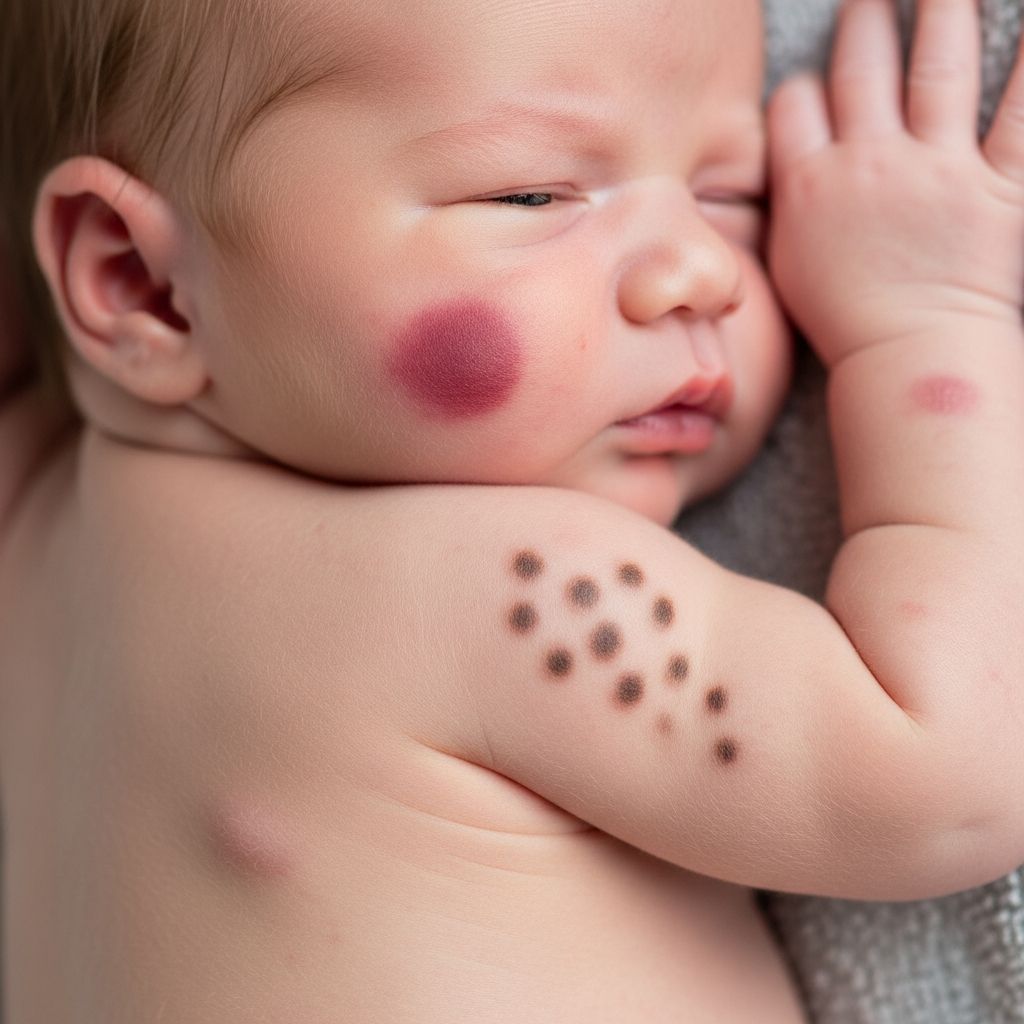
A birthmark is a skin discoloration or distinctive marking that appears at birth or shortly after delivery. These marks can vary significantly in size, shape, color, and texture, ranging from small, light patches to larger, more prominent spots. Birthmarks form due to localized differences in skin pigmentation or blood vessel development and are quite common in newborns. While the vast majority of birthmarks are completely harmless and pose no health risks, some individuals may choose to have them evaluated or treated for cosmetic reasons or if they change in appearance over time.
Types of Birthmarks
Birthmarks are classified into two primary categories based on their underlying causes: vascular birthmarks and pigmented birthmarks. Understanding which type you have is important for determining appropriate monitoring and treatment options.
Vascular Birthmarks
Vascular birthmarks develop due to abnormal formation or dilation of blood vessels beneath the skin’s surface. These birthmarks typically appear in shades of red, purple, or blue and can develop anywhere on the body. Several distinct types of vascular birthmarks exist:
Hemangiomas
Hemangiomas are raised, red or purple-colored birthmarks that often become more prominent during the first few months of a child’s life. These benign tumors of blood vessels characteristically grow initially and then gradually fade over time. Some hemangiomas may leave behind slight discoloration or excess skin tissue after fading. Most hemangiomas do not require treatment as they typically resolve on their own during childhood.
Port-Wine Stains (Nevus Flammeus)
Port-wine stains are flat, reddish-purple birthmarks caused by dilated or malformed capillaries in the dermis. Unlike hemangiomas, port-wine stains do not fade over time and may actually thicken or darken with age. These birthmarks can gradually develop a textured, bumpy appearance called nodularity. Port-wine stains are more likely to be associated with underlying conditions and may benefit from early intervention. Research indicates that the size and location of facial port-wine stains may help predict the risk of neurological complications in conditions such as Sturge-Weber syndrome, particularly when the birthmark involves the frontonasal distribution pattern, which suggests possible involvement of critical brain structures.
Salmon Patches (Stork Bites and Angel Kisses)
Salmon patches are light pink or reddish marks commonly found on the forehead, eyelids, upper lip, or back of the neck. These temporary vascular birthmarks typically fade as a child grows older, usually disappearing by age two or three. They result from temporary dilation of small blood vessels and are among the most common birthmarks seen in newborns.
Pigmented Birthmarks
Pigmented birthmarks develop due to an overconcentration of melanin, the pigment responsible for skin coloration. These birthmarks can range in color from light brown to dark brown or even bluish tones and may appear anywhere on the body.
Café-au-Lait Spots
Café-au-lait spots are light brown patches that can appear anywhere on the body. While having a few café-au-lait spots is entirely normal and common, the presence of multiple spots (typically six or more) may indicate an underlying genetic condition such as neurofibromatosis. If an individual has multiple café-au-lait spots, genetic evaluation may be recommended.
Dermal Melanocytosis (Mongolian Spots)
Dermal melanocytosis, formerly referred to as Mongolian spots, appears as bluish-gray patches commonly seen on the lower back or buttocks of infants. These marks are particularly common in individuals with darker skin tones and other non-Caucasian populations. These marks typically fade gradually over time, usually disappearing by early childhood.
Related Stories



Congenital Moles
Congenital moles, also known as congenital nevi, are moles present at birth. While most congenital moles remain benign, larger congenital moles may carry a slightly elevated risk of developing into melanoma later in life. For this reason, dermatologists recommend regular monitoring of congenital moles, particularly large ones, throughout a person’s lifetime.
Congenital Versus Acquired Birthmarks
Birthmarks can be classified by when they appear. Some birthmarks, such as congenital nevi and port-wine stains, are present at birth. Other birthmarks, including café-au-lait spots and certain hemangiomas, may develop later during childhood or even into adulthood. While congenital birthmarks typically remain relatively constant in appearance over time, acquired birthmarks can sometimes undergo changes, potentially darkening, lightening, or increasing in size. Understanding whether a birthmark is congenital or acquired can help guide appropriate medical monitoring and intervention decisions.
Causes of Birthmarks
The exact cause of most birthmarks remains incompletely understood, though researchers have identified several contributing factors. Birthmarks result from localized abnormalities in skin development during fetal growth. Vascular birthmarks occur when blood vessels fail to develop normally, resulting in clusters of dilated vessels. Pigmented birthmarks develop when melanocytes, the cells that produce skin pigment, concentrate in specific areas.
While genetic factors may play a role in birthmark development, most birthmarks are not hereditary and occur randomly. Prenatal factors, such as specific events during fetal development, likely contribute to birthmark formation, though the precise mechanisms are not fully understood. Importantly, birthmarks are not caused by anything the mother did during pregnancy, such as injuries, dietary choices, or exposure to specific stimuli.
When to See a Dermatologist
Most birthmarks are completely harmless and require no medical treatment or monitoring. However, certain situations warrant evaluation by a dermatologist to ensure proper assessment and appropriate management:
– Birthmarks that grow rapidly, change in shape, or develop irregular or jagged borders- Marks that cause discomfort, bleeding, itching, or oozing- Birthmarks located in sensitive areas such as near the eyes, mouth, or other facial features- Marks that appear alongside other skin abnormalities or health concerns- Birthmarks causing significant cosmetic concerns to the individual- Changes in color, texture, or appearance of an existing birthmark- Birthmarks that become increasingly prominent or thick over time
If a birthmark raises any medical or cosmetic concerns, professional evaluation can help determine whether treatment is advisable and which options would be most appropriate for your specific situation.
Birthmark Treatment and Removal Options
While many birthmarks fade naturally over time, others may remain permanent or become more noticeable as a person ages. Dermatologists offer various evidence-based treatment approaches tailored to the specific type, size, location, and individual characteristics of each birthmark.
Laser Therapy
Laser treatment is a widely used and highly effective option for vascular birthmarks, particularly port-wine stains and hemangiomas. Specialized lasers target the abnormal blood vessels that comprise these birthmarks, causing the vessels to contract and the discoloration to lighten. The laser energy is absorbed by the hemoglobin in the blood vessels without significantly damaging surrounding skin tissue. Most patients require multiple treatment sessions scheduled several weeks apart to achieve optimal results. Laser therapy typically produces minimal scarring and can be performed on an outpatient basis.
Topical Treatments
For certain types of birthmarks, topical medications may help reduce appearance or promote fading. These treatments are often used as adjunctive therapy or for birthmarks in sensitive locations where laser treatment may not be appropriate.
Surgical Removal
Surgical excision may be considered for birthmarks that are small, well-defined, and located in areas where excision would not cause significant scarring. Surgical removal is generally more appropriate for certain pigmented birthmarks than for extensive vascular birthmarks.
Medical Monitoring
For many birthmarks, particularly hemangiomas and salmon patches, the most appropriate approach is careful observation to monitor for changes over time. Many birthmarks fade naturally without any intervention, making watchful waiting a reasonable choice for asymptomatic birthmarks.
Birthmarks and Associated Conditions
While most birthmarks are isolated findings, some birthmarks can be associated with underlying medical conditions that warrant investigation. For example, the location and distribution of port-wine stains may indicate the risk of involvement in Sturge-Weber syndrome, a condition characterized by abnormal blood vessels in the brain, skin, and eyes. Specific patterns of port-wine stains, particularly those following the frontonasal distribution pattern, have been associated with higher risks of neurological complications including seizures, hemiparesis, visual field defects, and cognitive impairment.
Similarly, multiple café-au-lait spots may suggest neurofibromatosis type 1, a genetic condition affecting nerve development. Large congenital moles carry a slightly elevated lifetime risk of melanoma development. These associations underscore the importance of professional medical evaluation for certain birthmarks, particularly when they exhibit specific patterns or characteristics.
Living with Birthmarks
Many individuals choose to embrace their birthmarks as natural and distinctive features of their appearance. Birthmarks represent normal variations in human skin development and do not reflect any underlying health problem or parental action during pregnancy. However, for individuals concerned about cosmetic appearance or those with birthmarks in socially visible locations, various treatment options are available.
Modern dermatological techniques have made birthmark treatment safer and more effective than ever before. Whether you choose to treat a birthmark for cosmetic reasons or to monitor it for changes over time, a qualified dermatologist can provide personalized recommendations based on your individual circumstances and preferences.
Frequently Asked Questions About Birthmarks
Q: Are birthmarks dangerous or a sign of illness?
A: Most birthmarks are completely harmless and not indicative of any illness or health problem. However, some birthmarks may be associated with underlying conditions, which is why professional evaluation is important if you have concerns about a specific birthmark.
Q: Can birthmarks be prevented?
A: No, birthmarks cannot be prevented. They result from random variations in fetal skin development and are not caused by anything a mother does during pregnancy. Birthmarks are not hereditary in most cases and occur spontaneously.
Q: Will my child’s birthmark fade over time?
A: This depends on the type of birthmark. Some birthmarks, such as salmon patches and certain hemangiomas, typically fade naturally during childhood. Others, such as port-wine stains and many pigmented birthmarks, tend to remain relatively permanent, though they may change in appearance over time.
Q: At what age should birthmark treatment be considered?
A: The optimal timing for treatment depends on the specific type of birthmark and individual circumstances. Some vascular birthmarks benefit from early treatment, while others are best managed with observation. Your dermatologist can recommend the most appropriate timing for your specific situation.
Q: Will laser treatment leave scars?
A: Modern laser technology typically produces minimal scarring. Most laser treatments for birthmarks are performed in a way that targets the abnormal blood vessels while preserving the surrounding skin. However, any medical procedure carries some risk of complications, which your dermatologist will discuss with you.
Q: Can birthmarks turn into cancer?
A: Most birthmarks do not develop into cancer. However, large congenital moles carry a slightly elevated lifetime risk of melanoma, which is why regular monitoring is recommended for these birthmarks.
Q: Should I be concerned if a birthmark changes appearance?
A: Any significant change in a birthmark’s appearance, size, color, or texture warrants professional evaluation by a dermatologist to ensure no underlying concerns exist.
References
- Size of Facial Port-Wine Birthmark May Predict Neurological Complications in Sturge-Weber Syndrome — National Center for Biotechnology Information, U.S. National Library of Medicine. 2020-01-15. https://pmc.ncbi.nlm.nih.gov/articles/PMC6924278/
- Birthmarks: Types, Causes, & Treatment Options — Dermatology & Cutaneous Surgery Institute (DCSI). 2024. https://www.mydcsi.com/conditions/skin/birthmarks/
Similar Articles








Read full bio of Sneha Tete