Understanding Cholesterol: HDL vs LDL Explained
Learn the critical differences between HDL and LDL cholesterol and what your numbers really mean for heart health.
Understanding Cholesterol: The Essential Guide to HDL vs LDL
Cholesterol is a waxy, fat-like substance that plays a crucial role in your body’s function. While your body needs cholesterol to build cell membranes, produce hormones, and create vitamin D, too much of the wrong type can significantly increase your risk of heart disease and stroke. Understanding the difference between HDL and LDL cholesterol is one of the most important steps you can take toward managing your cardiovascular health.
Many people have heard the terms “good cholesterol” and “bad cholesterol,” but the distinction between these two types of lipoproteins is more nuanced than these simplified labels suggest. This guide will help you understand what cholesterol is, how it travels through your body, and what your numbers actually mean for your long-term health.
What Is Cholesterol and How Does It Move Through Your Body?
Cholesterol is a fatty substance that cannot travel through your bloodstream on its own. Since blood is water-based and cholesterol is fat-based, your body has developed an ingenious solution: it packages cholesterol and other lipids into tiny particles called lipoproteins, which consist of lipids surrounded by a protective protein coating. This allows cholesterol and other fats to dissolve in blood and travel throughout your body to where they’re needed.
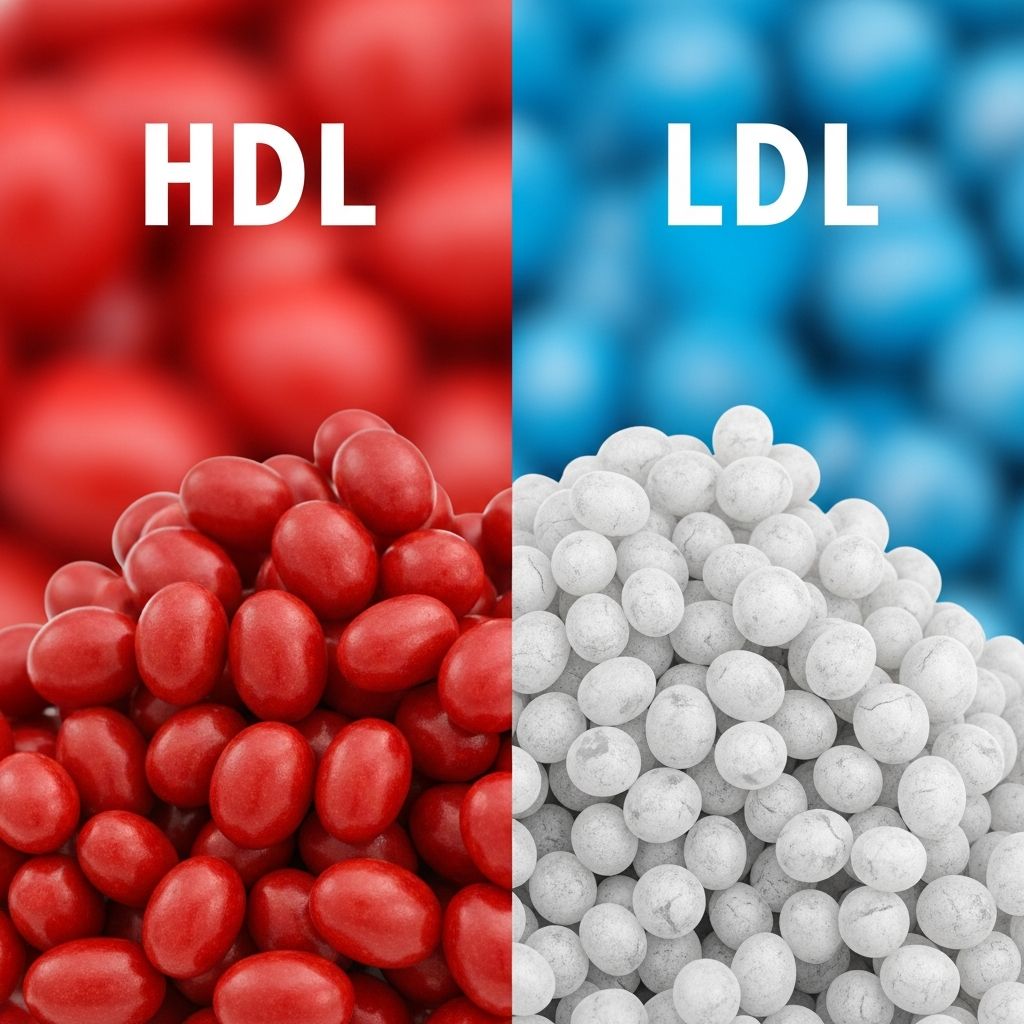
Two main types of lipoproteins carry cholesterol through your bloodstream: low-density lipoprotein (LDL) and high-density lipoprotein (HDL). Each plays a different role in your body, and understanding these roles is essential for maintaining cardiovascular health.
LDL Cholesterol: The “Bad” Cholesterol
LDL cholesterol has earned its reputation as “bad” cholesterol because it delivers cholesterol to tissues throughout your body, including your arteries. When LDL levels are too high, cholesterol can accumulate in artery walls, forming fatty deposits called plaque. This process, known as atherosclerosis, narrows the arteries and restricts blood flow, significantly increasing your risk of heart attacks and strokes.
The harmful effects of elevated LDL cholesterol have been extensively documented through numerous scientific studies. Research has consistently shown that lowering LDL through diet, exercise, and medications substantially reduces the risk of heart attacks and strokes. This is why medical professionals focus heavily on managing LDL levels as a primary strategy for preventing cardiovascular disease.
Why LDL Matters for Your Heart Health
LDL is considered a stronger predictor of cardiovascular disease risk than total cholesterol levels. When you have your cholesterol tested, your doctor pays particular attention to your LDL number because it directly reflects the amount of cholesterol being delivered to your arteries. High LDL levels mean more cholesterol is available to form the dangerous plaques that lead to heart disease.
The relationship between dietary cholesterol and blood LDL levels is well-established. Research shows that for every 100 mg per day increase in dietary cholesterol, LDL cholesterol concentration increases by approximately 1.90 to 4.58 mg/dL, depending on other dietary factors. This is why dietary modifications, particularly reducing saturated fat and dietary cholesterol intake, are often recommended as first-line treatments for high LDL.
Related Stories



HDL Cholesterol: The “Good” Cholesterol
HDL cholesterol has been called “good” cholesterol because it performs an important protective function: it carries LDL cholesterol away from your arteries and back to your liver, where it can be broken down and removed from your body. In theory, higher HDL levels should mean better cardiovascular protection.
However, the story of HDL is more complex than doctors initially believed. While it’s true that people with naturally high HDL levels tend to have fewer heart attacks and those with lower HDL values tend to have more, the relationship isn’t quite as straightforward as the simple “good” label suggests.
The HDL Paradox: Why Raising It Hasn’t Solved the Problem
One of the most surprising findings in recent cardiovascular research is that simply raising HDL cholesterol levels hasn’t led to the improved health outcomes that scientists expected. Despite numerous attempts to develop medications specifically designed to increase HDL, these interventions have largely failed to produce the cardiovascular benefits that theory would suggest.
This discovery has led researchers to reconsider HDL’s role in cardiovascular health. Rather than acting as an independent protective factor, HDL may function more as a marker for other underlying health factors that influence heart disease risk. In other words, HDL levels might reflect your overall metabolic health rather than being a direct cause of protection against cardiovascular disease.
What Low HDL Really Tells You
People with low HDL levels typically have other health problems closely linked to increased cardiovascular risk. These include abdominal obesity (excess fat around the midsection), high blood pressure, and prediabetes or diabetes. It’s likely that these associated conditions, rather than the low HDL itself, are the primary drivers of increased heart disease risk in these individuals.
This distinction is important because it shifts the focus from simply trying to raise HDL to addressing the underlying metabolic issues that cause both low HDL and increased cardiovascular risk. Managing weight, controlling blood pressure, and maintaining healthy blood sugar levels become the priorities, with HDL improvement following naturally as these conditions improve.
Triglycerides: The Third Component of Your Lipid Profile
Your complete cholesterol picture includes one more important element: triglycerides. Triglycerides are the most common type of fat found in your body and in your blood. Your body stores excess energy from food as triglycerides.
A high triglyceride level, especially when combined with high LDL cholesterol or low HDL cholesterol, is associated with fatty buildups within artery walls and increased risk of heart attack and stroke. This is why your doctor will examine your triglyceride levels along with your HDL and LDL cholesterol when assessing your cardiovascular risk.
Rethinking the HDL-LDL Balance
For many years, patients believed that maintaining a high “good” cholesterol level could counterbalance the effects of high “bad” cholesterol. This assumption has proven to be incorrect. Research consistently shows that people with high HDL should not assume this protects them if they also have high LDL cholesterol.
The primary goal of cholesterol management should be keeping LDL in a healthy range, regardless of your HDL level. While HDL does play some protective role, it cannot offset the damaging effects of elevated LDL cholesterol. Think of it this way: lowering the amount of harmful cholesterol being delivered to your arteries is far more important than increasing the amount being removed, especially if you’re only increasing removal by a small fraction of the total.
Understanding Your Cholesterol Numbers
When you receive your cholesterol test results, you’ll typically see four numbers: total cholesterol, LDL cholesterol, HDL cholesterol, and triglycerides. Here’s what each means:
| Cholesterol Type | Desirable Level | What It Means |
|---|---|---|
| Total Cholesterol | Less than 200 mg/dL | Combined measure of all cholesterol in your blood |
| LDL Cholesterol | Less than 100 mg/dL | “Bad” cholesterol that can build up in arteries |
| HDL Cholesterol | 60 mg/dL or higher | “Good” cholesterol that helps remove LDL from arteries |
| Triglycerides | Less than 150 mg/dL | Type of fat in blood; high levels increase heart disease risk |
Managing Cholesterol: Dietary and Lifestyle Approaches
The relationship between dietary cholesterol and blood cholesterol levels is more nuanced than once thought. While increasing dietary cholesterol does raise both LDL and HDL cholesterol, the ratio between them—which is an important marker of cardiovascular risk—often remains relatively stable. This means that dietary cholesterol’s impact on your overall cardiovascular risk depends on multiple factors, including the types of fats you consume alongside the cholesterol.
Key Dietary Strategies
The most effective dietary approach for managing cholesterol focuses on reducing saturated fat intake rather than cholesterol alone. Saturated fatty acids are much more likely to raise LDL cholesterol than dietary cholesterol itself. High-cholesterol foods that are also rich in saturated fat—such as untrimmed beef, natural cheese, and butter—pose a greater cardiovascular risk than foods with cholesterol but less saturated fat.
To effectively manage cholesterol through diet:
- Limit saturated fat intake to less than 7% of total daily calories
- Increase intake of soluble fiber from oats, beans, and fruits
- Choose lean proteins and plant-based options when possible
- Replace saturated fats with polyunsaturated and monounsaturated fats
- Reduce trans fat consumption by avoiding processed foods
Physical Activity and Weight Management
Regular exercise and maintaining a healthy weight are powerful tools for improving your cholesterol profile. Physical activity can help raise HDL cholesterol and lower triglycerides, while also supporting weight loss. Weight management, particularly reducing abdominal fat, is one of the most effective ways to address the underlying metabolic issues associated with low HDL and increased cardiovascular risk.
When Medication Is Necessary
For many people, lifestyle modifications alone aren’t sufficient to bring cholesterol to healthy levels. In these cases, medications—primarily statins—can be highly effective at lowering LDL cholesterol and reducing cardiovascular risk. Statins work by inhibiting the enzyme responsible for cholesterol synthesis in the liver, effectively reducing the amount of cholesterol your body produces.
The decision to start cholesterol medication depends on your individual risk factors, including your cholesterol levels, blood pressure, smoking status, diabetes status, and family history of heart disease. Your doctor can help determine whether medication is appropriate for your situation.
The Bottom Line: What You Should Know
Understanding cholesterol means appreciating that “good” and “bad” are useful but simplified labels. LDL cholesterol is genuinely harmful when elevated, and lowering it consistently reduces heart disease risk. HDL cholesterol is protective but appears to be more of a marker for overall metabolic health than an independent shield against cardiovascular disease.
Rather than focusing exclusively on balancing high and low cholesterol levels, concentrate on keeping LDL cholesterol in a healthy range through diet, exercise, weight management, and medication when necessary. Address underlying metabolic issues like excess weight, high blood pressure, and poor blood sugar control, which naturally improve your complete lipid profile.
Frequently Asked Questions
Q: Can a high HDL level offset the effects of high LDL cholesterol?
A: No. While HDL does provide some protective benefits, it cannot counterbalance the harmful effects of high LDL cholesterol. Your primary goal should be keeping LDL cholesterol in a healthy range, regardless of your HDL level. High HDL doesn’t give you permission to ignore elevated LDL.
Q: Is all dietary cholesterol harmful?
A: The relationship between dietary cholesterol and blood cholesterol is complex. While dietary cholesterol does raise blood cholesterol to some degree, the type of fat consumed alongside it matters significantly. Saturated fat has a much greater impact on raising LDL cholesterol than dietary cholesterol alone. Focus on reducing saturated fat intake rather than eliminating all dietary cholesterol.
Q: Why do doctors focus more on LDL than HDL?
A: Because LDL cholesterol is a direct cause of atherosclerosis and heart disease, while HDL appears to be more of a marker for overall health. Lowering LDL consistently reduces heart disease risk, whereas simply raising HDL hasn’t proven to provide significant cardiovascular benefits independent of other health improvements.
Q: How often should I have my cholesterol checked?
A: The American Heart Association recommends that adults age 20 and older have their cholesterol checked at least once every four to six years if levels are normal. Those with high cholesterol or risk factors for heart disease may need more frequent testing.
Q: Can exercise improve my cholesterol levels?
A: Yes. Regular aerobic exercise can help raise HDL cholesterol and lower triglycerides. Combined with weight loss, exercise is one of the most effective lifestyle interventions for improving your lipid profile and overall cardiovascular health.
References
- Should HDL Still Be Called the Good Cholesterol? — Harvard Health Publishing. 2018-04-12. https://www.health.harvard.edu/blog/understanding-cholesterol-hdl-vs-ldl-2018041213608
- HDL (Good), LDL (Bad) Cholesterol and Triglycerides — American Heart Association. 2024. https://www.heart.org/en/health-topics/cholesterol/hdl-good-ldl-bad-cholesterol-and-triglycerides
- Dietary Cholesterol and Cardiovascular Risk: A Science Advisory from the American Heart Association — American Heart Association. 2020. https://www.ahajournals.org/doi/10.1161/CIR.0000000000000743
- Dietary Cholesterol and the Lack of Evidence in Cardiovascular Disease — National Center for Biotechnology Information (NCBI). 2018. https://pmc.ncbi.nlm.nih.gov/articles/PMC6024687/
Similar Articles








Read full bio of Sneha Tete