DNA: Structure, Function & Role in Your Health
Discover how DNA works: the blueprint of life, genetic inheritance, and disease prevention.
Understanding DNA: The Blueprint of Life
DNA, or deoxyribonucleic acid, is the molecule that contains the instructions for building and maintaining every living organism. It serves as the master blueprint for your body, encoding the information needed to create proteins, regulate cellular functions, and pass traits from parents to offspring. Understanding DNA is fundamental to comprehending how your body works, why you inherit certain characteristics, and how genetic variations can influence your health and disease risk.
Your DNA is remarkably complex yet organized in a way that allows your cells to access and use the information they need to function properly. Every cell in your body (except red blood cells) contains a complete copy of your DNA, making it one of the most important molecules in existence. This intricate system has evolved over millions of years to ensure accurate transmission of genetic information while also allowing for the natural variations that make each person unique.
The Structure of DNA
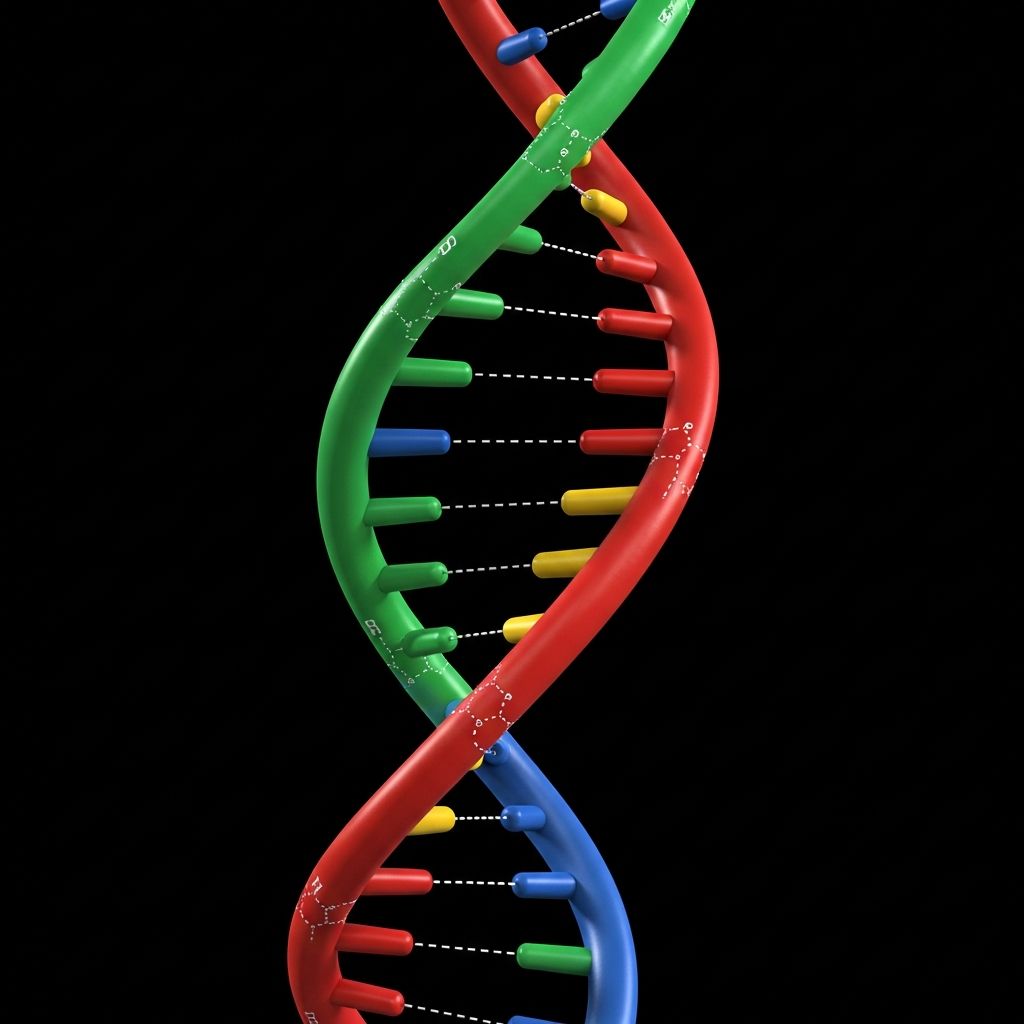
DNA is composed of four chemical bases: adenine (A), thymine (T), guanine (G), and cytosine (C). These bases pair in specific ways—adenine always pairs with thymine, and guanine always pairs with cytosine—creating the famous double helix structure discovered by Watson and Crick. This pairing pattern, called complementary base pairing, is crucial because it allows DNA to replicate itself accurately during cell division.
The DNA molecule is wrapped around proteins called histones, which help organize and compact the genetic material. These DNA-histone complexes form structures called nucleosomes, which are further coiled and wrapped around other proteins to create chromatin. This hierarchical packaging is essential because if all your DNA were stretched out in a straight line, it would measure approximately six feet long—far too long to fit inside a cell nucleus. By wrapping around proteins and coiling into chromosomes, your DNA is organized efficiently while remaining accessible to the cellular machinery that needs to read it.
The organization of DNA is remarkably similar to how a library is structured. Just as a library organizes books and books contain chapters, your DNA is organized into chromosomes, which contain genes. This hierarchical organization ensures that your cells can quickly locate and access the specific genetic instructions they need at any given moment.
How DNA Functions in Your Cells
DNA functions as a detailed instruction manual for your cells, telling them how to build proteins and perform essential functions. When a cell needs to make a protein, a process called transcription occurs. During transcription, an enzyme called RNA polymerase reads a segment of DNA and creates a temporary copy called messenger RNA (mRNA). This mRNA molecule carries the genetic instructions out of the cell nucleus to specialized structures called ribosomes.
Once the mRNA reaches a ribosome, translation begins. The ribosome reads the mRNA in groups of three letters, called codons. Each codon corresponds to a specific amino acid, the building blocks of proteins. The ribosome assembles amino acids in the precise order specified by the DNA code, creating a new protein with a specific structure and function. Some codons also signal the ribosome to start or stop making the protein. This elegant system ensures that proteins are made exactly as specified by your genetic code.
Different versions of the same gene can produce different proteins or proteins with slightly different structures. These variations, called alleles, are responsible for much of the genetic diversity among humans. Some genes have many different alleles in the population, while others have relatively few.
Related Stories



Genes and Genetic Information
A gene is a specific segment of DNA that codes for a particular protein or performs a specific function. Genes are the chapters in your biological book, containing detailed instructions for how proteins should be made and what roles they should play in your body. Your genes give specific instructions for individual traits and body functions—from the color of your eyes to how your immune system responds to infections.
Humans have approximately 20,000 to 25,000 genes distributed across 23 pairs of chromosomes. Typically, people have two copies of chromosomes 1 through 22 (called autosomes), inheriting one from each biological parent. The 23rd pair determines biological sex: people typically have either two X chromosomes (female) or one X and one Y chromosome (male).
Autosomes contain anywhere from 750 to 2,800 genes each. The X chromosome contains over 1,000 genes, while the Y chromosome contains far fewer genes and primarily functions in developing the male reproductive system. In females, your body deactivates all but one X chromosome in every cell through a process called X inactivation or Lyonization. This means that even though females have two X chromosomes, each cell only uses one of them, similar to males who have only one X chromosome.
Chromosomes: Organizing Your Genetic Material
Chromosomes are threadlike structures that organize your genes, which are made of DNA. You can think of a chromosome as a pearl necklace, with individual genes being the pearls. These structures are so small that they cannot be seen with the naked eye; a microscope is required to observe their squiggly line or worm-like appearance.
Having two copies of each chromosome serves important purposes. First, you generally need two copies of each set of instructions to live and function properly. Only in rare cases can someone survive with just one copy of an autosome. Second, having duplicate copies provides a safety mechanism: if something goes wrong with one copy of a gene, the other might be able to compensate. This genetic redundancy protects you from some diseases and ensures that essential proteins are produced in adequate amounts.
Sometimes chromosomes may be different in ways that cause health issues. These differences include duplications (extra copies of genetic material), deletions (missing genetic material), and inversions (reversed genetic material). Such chromosomal abnormalities can lead to various health conditions. For example, Down syndrome results from three copies of chromosome 21, and Turner syndrome involves a missing or incomplete X chromosome.
Genetic Mutations and Variations
A genetic mutation is a change to a gene’s DNA sequence that produces something different, creating a permanent change to that gene’s DNA sequence. Mutations can occur spontaneously due to errors during DNA replication or from exposure to certain environmental factors like radiation or chemicals. Some mutations are neutral and have no effect on health or function, while others can cause disease or provide advantages in certain environments.
Not all genetic variations are harmful. In fact, genetic variation is essential for human diversity and evolution. Natural selection acts upon these variations, favoring beneficial traits that help organisms survive and reproduce. However, some mutations do cause disease or significantly alter protein structure and function, leading to health problems ranging from sickle cell disease to cystic fibrosis to Alzheimer’s disease. When a mutation changes the expected structure of a protein, even by a single amino acid, the effects on your body can be significant.
Certain genes have been identified as carrying increased disease risk. For example, mutations in the BRCA genes significantly increase the risk of breast and ovarian cancer, while Lynch syndrome mutations increase the risk of colorectal cancer. Genetic testing can identify these high-risk mutations, allowing people to take preventive measures.
Heredity and Genetic Inheritance
DNA allows traits and health conditions to pass from parents to children through a process called heredity. You inherit one copy of each autosome from your mother and one from your father. This is why you might have your mother’s eye color and your father’s hair texture—you inherited the genes for these traits from each parent.
Inheritance patterns vary depending on whether a trait is controlled by dominant or recessive alleles. Dominant traits require only one copy of the gene to be expressed, while recessive traits require two copies. Some genetic disorders follow these predictable patterns, allowing healthcare providers and genetic counselors to predict the likelihood that children will inherit specific conditions.
Sex-linked traits follow different inheritance patterns because males have only one X chromosome. Males are more likely to express X-linked recessive conditions because they have no second X chromosome to mask the recessive allele. Females typically need two copies of an X-linked recessive allele to express the condition.
DNA Testing and Genetic Diagnosis
Genetic testing has become an invaluable tool in modern medicine for identifying disease-causing mutations and assessing disease risk. Cytogenetics is the study of chromosomes and how changes in chromosomes cause diseases. Cytogenetic tests, including fluorescence in situ hybridization (FISH), karyotyping, and microarray analysis, are used to look for chromosomal changes that can cause diseases.
Different genetic testing approaches are used depending on the clinical presentation and suspected diagnosis. Single-gene tests are used when a specific genetic disorder is suspected, while multigene panels test multiple genes associated with similar conditions. Exome sequencing analyzes all protein-coding genes and may be used when other testing approaches are inconclusive. Chromosomal microarray can detect large deletions and duplications across the entire genome.
In clinical practice, a tiered testing approach is often used, starting with the most cost-effective and commonly used tests. Multigene panels have high diagnostic rates for many conditions and are frequently the first choice for phenotype-driven testing. If initial testing is negative or indeterminate, exome sequencing may be offered as a second or third tier test. This strategic approach maximizes diagnostic accuracy while managing costs effectively.
The Role of DNA in Protein Production
Proteins are molecules made of amino acids that perform virtually every function in your body—from sending signals between cells to supporting digestion, helping your muscles move, and protecting you from infection. Your DNA serves as the instruction manual for protein production, ensuring that each protein is made in the correct sequence with the correct structure.
Proteins have four levels of structural organization, ranging from simple to complex. The primary structure is the sequence of amino acids, determined by the DNA code. The secondary structure involves local folding patterns like alpha helices and beta sheets. The tertiary structure is the overall three-dimensional shape of the protein. The quaternary structure involves multiple protein subunits assembling together. Each level of organization is determined by the genetic code.
Any changes to a protein’s expected structure can lead to health problems. Even a single amino acid substitution can sometimes dramatically alter protein function and cause disease. This is why genetic mutations that change the amino acid sequence of critical proteins often have significant health consequences.
DNA and Disease Prevention
Understanding your DNA can help identify disease risks and inform prevention strategies. Genetic testing can reveal mutations associated with increased disease susceptibility, allowing individuals to implement screening programs, make lifestyle modifications, or pursue preventive treatments. For hereditary cancer syndromes, knowing your genetic status can be life-saving because it enables early detection when treatment is most effective.
Many common diseases, including heart disease, diabetes, and certain cancers, have both genetic and environmental components. While you cannot change your genes, understanding your genetic predisposition can motivate you to modify controllable factors like diet, exercise, stress, and smoking to reduce your overall disease risk.
Fusion Genes and Chromosomal Rearrangements
Sometimes chromosomal abnormalities involve rearrangements where pieces of different chromosomes change places. A well-known example is the Philadelphia chromosome, a fusion gene formed when pieces of chromosome 9 and chromosome 22 break off and exchange places. This fusion gene causes certain types of leukemia. Modern cancer treatments specifically target this fusion gene, demonstrating how understanding chromosomal abnormalities leads to better therapies.
Frequently Asked Questions About DNA
Q: How many genes do humans have?
A: Humans have approximately 20,000 to 25,000 genes distributed across 23 pairs of chromosomes, with each gene coding for specific proteins or functions.
Q: Can DNA be modified or changed?
A: While your DNA sequence cannot be changed in your existing cells, new technologies like CRISPR gene editing offer potential for future therapeutic applications. Environmental factors and lifestyle choices cannot alter your genetic code but can influence gene expression through epigenetic changes.
Q: What is the difference between DNA and RNA?
A: DNA stores genetic instructions permanently in the cell nucleus, while RNA (specifically mRNA) is a temporary copy that carries instructions from DNA to ribosomes for protein synthesis. RNA is eventually degraded after its instructions are used.
Q: How accurate is genetic testing?
A: Modern genetic testing is highly accurate when performed by certified laboratories. Different testing methods have different strengths; multigene panels achieve diagnostic rates of 40-44% in various conditions, while exome sequencing identifies rare variants.
Q: Is genetic testing recommended for everyone?
A: Genetic testing is recommended for individuals with personal or family histories of genetic disorders, hereditary cancers, or unexplained medical conditions. Your healthcare provider can determine whether genetic testing is appropriate for your situation.
Q: Can I inherit DNA mutations from my parents?
A: Yes, you inherit one copy of each gene from your mother and one from your father. If a parent carries a disease-causing mutation, there is a chance you may inherit it, with the specific risk depending on whether the mutation is dominant or recessive.
References
- Renal Genetics Clinic: 3-Year Experience in the Cleveland Clinic — National Institutes of Health, National Center for Biotechnology Information. 2024-06-01. https://pmc.ncbi.nlm.nih.gov/articles/PMC9874141/
- Chromosomes: Definition, Structure & Function — Cleveland Clinic. 2024-11-15. https://my.clevelandclinic.org/health/body/chromosomes
- What Is a Gene? — Cleveland Clinic. 2024-11-10. https://my.clevelandclinic.org/health/body/gene
- What Is Cytogenetics? — Cleveland Clinic. 2024-10-20. https://my.clevelandclinic.org/health/articles/cytogenetics
- What Are Proteins? Definition, Types & Examples — Cleveland Clinic. 2024-11-05. https://my.clevelandclinic.org/health/body/proteins
- What Is a Genetic Mutation? Definition & Types — Cleveland Clinic. 2024-09-28. https://my.clevelandclinic.org/health/body/23095-genetic-mutations-in-humans
Similar Articles








Read full bio of medha deb