Drusen: 4 Types, Risks, And A Guide For Eye Health
Discover what drusen are, their types, risks for vision loss, detection methods, and steps for eye protection and monitoring.
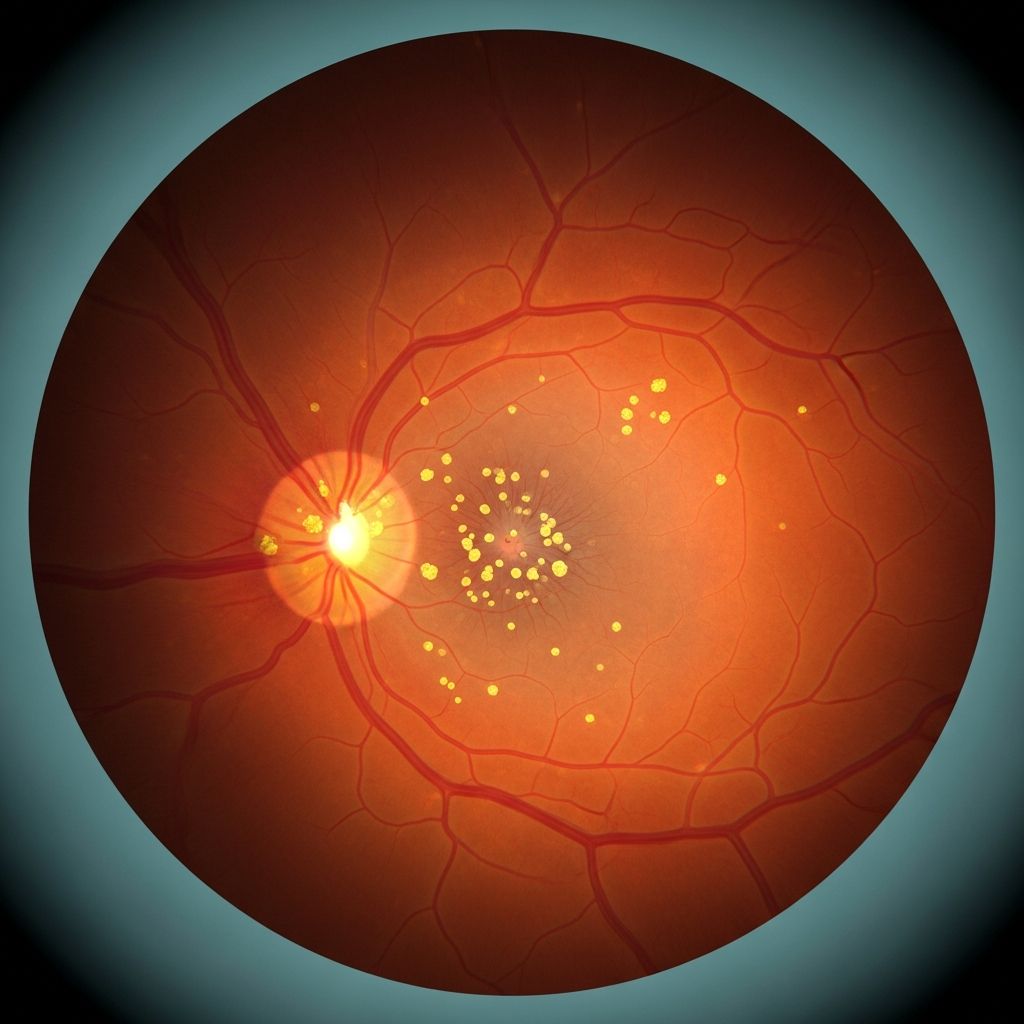
Drusen represent small accumulations of lipids, proteins, and other materials that form beneath the retina, often serving as an early indicator of age-related macular degeneration (AMD), a primary cause of vision impairment in older adults. These deposits vary in size, composition, and location, influencing their clinical significance and potential impact on visual function.
Defining Drusen and Their Formation
At their core, drusen consist of extracellular debris that builds up between the retinal pigment epithelium and Bruch’s membrane, a supportive layer in the eye. This buildup results from metabolic waste products that the retina fails to clear efficiently over time. While present in many healthy eyes, particularly as people age, certain characteristics elevate concern for disease progression.
- Composition: Primarily lipids and proteins, sometimes with calcium in optic nerve variants.
- Prevalence: Common after age 60, with soft forms more predictive of AMD.
- Locations: Predominantly macular region for retinal drusen; optic disc for a distinct subtype.
Hard drusen appear small, distinct, and crystalline, posing minimal risk alone. Soft drusen, larger with fuzzy edges, cluster and correlate strongly with intermediate AMD stages, potentially leading to central vision compromise if they evolve.
Types of Drusen and Associated Risks
Drusen classification hinges on appearance, size, and anatomical position, each carrying different implications for eye health.
| Type | Characteristics | Risk Level | Typical Outcome |
|---|---|---|---|
| Hard Drusen | Small (<63 microns), sharp borders, scattered | Low | Usually benign; monitor periodically |
| Soft Drusen | Large (>125 microns), indistinct edges, clustered in macula | High | Progression to AMD; central vision threat |
| Reticular Pseudodrusen | Subretinal, dot-like, above pigment epithelium | Elevated | Linked to geographic atrophy |
| Optic Disc Drusen | Calcified deposits in optic nerve head | Variable | Peripheral field defects possible |
Soft drusen merging can create pigment epithelial detachments, signaling advanced changes. Optic disc drusen, distinct from retinal forms, involve hyaline-like material and rarely cause symptoms unless field defects emerge.
Recognizing Visual Changes Linked to Drusen
Many individuals with drusen remain asymptomatic, discovering them incidentally during routine exams. When symptoms arise, they often relate to AMD progression rather than drusen directly.
- Blurred or wavy central vision.
- Difficulty transitioning between light levels.
- Central scotomas or blind spots.
- Colors appearing faded.
For optic disc drusen, transient visual obscurations or gradual peripheral loss affect up to 70% over time, though central acuity typically preserves. These signs warrant prompt evaluation to distinguish benign findings from treatable conditions like wet AMD.
Diagnostic Approaches for Accurate Detection
Eye specialists employ advanced imaging to confirm drusen presence, quantify risks, and track evolution. Early identification enables proactive management.
Related Stories



- Fundus Photography: Captures retinal color images highlighting yellow deposits.
- Optical Coherence Tomography (OCT): Provides cross-sectional views of retinal layers, measuring drusen volume and detecting fluid.
- Amsler Grid: Home test for distortion; lines should appear straight when focusing on center.
- Fluorescein Angiography: Dye-based imaging for vascular abnormalities in suspected wet AMD.
- Visual Field Testing: Maps defects, essential for optic disc cases.
OCT stands out for its non-invasive detail, revealing drusen position relative to critical structures. Comprehensive exams every 1-2 years suit low-risk cases; higher-risk patients need 6-12 month intervals.
Progression Pathways and Complications
Drusen themselves do not cause blindness, but soft varieties heighten AMD odds—the leading vision loss culprit over age 50. Dry AMD involves gradual atrophy; wet AMD features neovascularization with rapid deterioration.
- Dry AMD: Drusen growth leads to RPE atrophy and central thinning.
- Wet AMD: Abnormal vessels leak, causing scarring; demands urgent anti-VEGF injections.
- Optic Disc Risks: Rare complications like hemorrhage or nerve compression.
Risk escalates with numerous medium/large drusen plus pigmentary shifts, per AMD staging criteria. Lifestyle factors amplify progression: smoking triples risk, while obesity and hypertension contribute.
Management Strategies Without Cure
No therapy eliminates drusen, but interventions slow AMD advance and preserve function.
AREDS2 Supplements: Antioxidant formulas (vitamins C/E, zinc, lutein, zeaxanthin) reduce progression by 25% in intermediate cases. Consult providers before starting.
Lifestyle Modifications:
- Quit smoking immediately.
- Maintain healthy weight via diet/exercise.
- Control blood pressure and cholesterol.
- Protect eyes with UV-blocking sunglasses.
- Eat leafy greens, fish for omega-3s.
For wet AMD, intravitreal anti-VEGF agents like ranibizumab stabilize vision in 90% of cases, administered via treat-and-extend protocols. Laser or photodynamic therapy serves select scenarios.
Self-Monitoring Tools and Schedules
Empowerment comes through daily vigilance between visits.
- Use Amsler grid weekly per eye: report wavy lines or new spots.
- Devices like ForeseeHome detect changes via microperimetry.
- Exam frequency: 12-24 months for few small hard drusen; 6-12 months for intermediates; urgent for symptoms.
Sudden central distortion signals wet AMD—seek care within 24-48 hours.
Prevention: Proactive Steps for Retinal Wellness
While aging brings drusen inevitability, modifiable risks offer control. Population studies affirm that Mediterranean diets rich in antioxidants correlate with lower AMD incidence. Regular exercise enhances vascular health, indirectly safeguarding the retina.
Annual dilated exams post-50, or earlier with family history, catch issues asymptomatically. Genetic predispositions like CFH variants heighten vigilance needs, though testing remains non-routine.
FAQs on Drusen
Do drusen always lead to blindness?
No, most do not progress to severe vision loss. Hard drusen rarely advance; soft types require monitoring but respond to interventions.
Can diet reverse drusen?
Diet supports eye health but does not dissolve existing deposits. Nutrient-rich foods help prevent worsening.
Are optic disc drusen dangerous?
Typically benign, but 25-70% develop field defects. Regular perimetry tracks changes.
How often should I check my vision at home?
Daily or weekly with Amsler grid; note any alterations promptly.
Is treatment painful?
Anti-VEGF injections use numbing drops; discomfort is minimal and brief.
References
- The Expert Guide to Drusen and Macular Degeneration — Coloneye Institute. 2023. https://conloneyeinstitute.com/the-expert-guide-to-drusen-and-macular-degeneration/
- Guide to Drusen: What They Are & Why It Matters — NVISION Centers. 2024. https://www.nvisioncenters.com/conditions/drusen/
- Understanding Drusen: Causes, Symptoms, and Treatment Options — NW Eye Clinic. 2023. https://nweyeclinic.com/understanding-drusen-causes-symptoms-and-treatment-options/
- Optic Disc Drusen: Causes, Symptoms & Treatment — Cleveland Clinic. 2024-02-23. https://my.clevelandclinic.org/health/diseases/24994-optic-disc-drusen
- A Field Guide to Optic Disc Drusen — Ophthalmology Times Europe. 2023. https://europe.ophthalmologytimes.com/view/a-field-guide-to-optic-disc-drusen
Similar Articles








Read full bio of Sneha Tete