Understanding Egg Labels: A Complete Guide
Decode egg carton labels and learn what brown, organic, and graded eggs really mean.
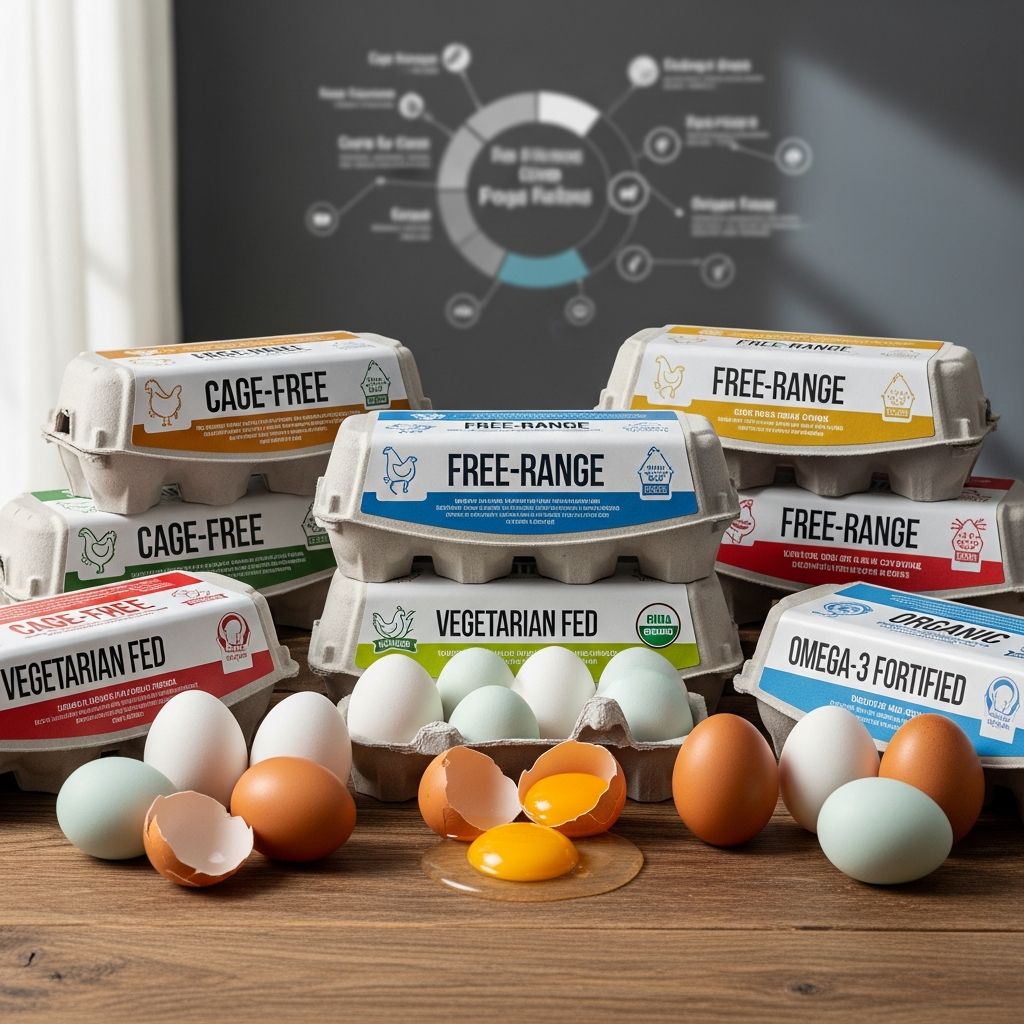
Understanding Egg Labels: A Complete Guide to Making Informed Choices
Navigating the egg aisle at your local grocery store can feel overwhelming. With labels proclaiming “organic,” “cage-free,” “brown,” and “Grade AA,” it’s challenging to understand what each designation truly means and whether the premium price is worth paying. Understanding egg labels empowers you to make choices aligned with your nutritional needs, budget, and values. This comprehensive guide breaks down the most common egg labels and what they indicate about the eggs you’re purchasing.
Egg Size and Nutritional Content
One of the first distinctions you’ll notice when shopping for eggs is the size. Eggs come in various sizes—small, medium, large, extra-large, and jumbo—and these size differences do affect nutritional content, though modestly.
The nutritional variations based on egg size are as follows:
- Calories: 50 to 90 calories
- Protein: 6 to 8 grams
- Fat: 3.5 to 6 grams
- Cholesterol: 140 to 235 milligrams
- Sodium: 55 to 90 milligrams
Most recipes are designed with large eggs in mind, making them the standard choice for baking and cooking. If you’re preparing meals for a household with specific nutritional requirements, understanding these variations can help you select the appropriate egg size.
Brown vs. White Eggs: Understanding the Difference
One of the most persistent myths about eggs concerns their color. Many consumers believe brown eggs are more nutritious or natural than white eggs, and some are willing to pay a premium for them. However, the reality is quite different.
The color of an eggshell is determined entirely by the breed of the chicken that laid it. Chickens with white feathers and white earlobes typically lay white eggs, while birds with reddish-brown feathers and red earlobes lay brown eggs. Interestingly, there are even chicken breeds that lay eggs with blue or speckled shells.
From a nutritional standpoint, there is no significant difference between brown and white eggs. The shell color does not influence the nutritional profile, taste, or quality of the egg inside. Although brown eggs tend to cost more at the grocery store, the eggs themselves provide identical nutritional benefits to their white counterparts.
Organic vs. Non-Organic Eggs
The “organic” label on egg cartons is one of the few designations with specific regulatory requirements behind it. The United States Department of Agriculture (USDA) has established strict guidelines that determine whether eggs can be labeled as organic.
For eggs to qualify as organic, they must meet the following requirements:
- Chickens must be fed foods that are free of pesticides, herbicides, and commercial fertilizers
- Hens must be given access to the outdoors year-round
- The farming operation must follow USDA National Organic Program standards
One common misconception about organic eggs involves hormones and antibiotics. Many egg cartons carry labels stating that the eggs come from birds not given hormones or antibiotics. However, this labeling requirement is somewhat misleading because these substances are not commonly added to chicken feed in the first place. Federal regulations prohibit the use of hormones in poultry production, making this label requirement a standard practice rather than a distinguishing feature.
Related Stories



From a nutritional perspective, organic eggs provide essentially the same nutritional benefits as conventional eggs. The primary difference lies in farming practices and environmental considerations rather than the nutritional content of the final product.
USDA Egg Grades: AA, A, and B
The grades printed on egg cartons—AA, A, or B—represent quality standards established by the USDA. These grades are based on specific quality criteria related to the egg’s structure and appearance.
It’s important to understand that egg grading is a voluntary process. Farmers choose to have their eggs graded by USDA inspectors, which is why some cartons display grades while others do not. When producers do opt for grading, their facilities are subject to USDA inspection to ensure proper egg handling procedures are followed.
The USDA evaluates eggs based on the following factors:
- Shell cleanliness and integrity
- Number of cracks or spots on the shell
- Size and quality of the yolk
- Quality and appearance of the egg white (albumen)
- Size of the air cell inside the egg
Grade AA eggs represent the highest quality and feature the thickest, most substantial whites. These eggs are excellent for baking and are ideal for applications where presentation matters, such as frying or poaching.
Grade A eggs are very close in quality to Grade AA and also perform well for baking and general cooking applications.
Grade B eggs allow for some imperfections on the shell but contain no cracks. These eggs are perfectly suitable for making hard-boiled eggs, scrambled eggs, and dishes where the overall presentation is less critical.
It’s worth noting that all eggs sold in the United States must meet at least Grade B standards. Inspectors compare grades and assign the lowest grade earned as the overall grade for the carton.
Understanding Lot Numbers and Facility Codes
The numbers printed on the side of egg cartons may seem cryptic, but they serve important tracking purposes. The USDA requires producers who participate in the grading and certification process to include specific numerical codes on their cartons.
These codes consist of two types:
Lot Numbers (Three-Digit Code): The three-digit number indicates the day of the year the eggs were packed. This numbering system runs sequentially throughout the calendar year, beginning with January 1 (coded as 001) and continuing through December 31 (coded as 365). This allows consumers and retailers to track the freshness and age of the eggs.
Facility or Plant Numbers (P-Four Digit Code): The letter “P” followed by four digits identifies the specific USDA-registered facility where the eggs were packed. This code allows for traceability should any food safety issues arise.
Nutritional Components Beyond Protein and Calories
While eggs are celebrated as an excellent protein source, they offer a broader nutritional profile than many people realize. In addition to protein, fat, and cholesterol, eggs contain valuable micronutrients and other beneficial compounds.
Eggs contain small amounts of 13 different vitamins and minerals, making them a nutrient-dense food choice. Additionally, eggs contain trace amounts of carbohydrates and provide a small quantity of omega-3 fatty acids, which are beneficial unsaturated fats associated with heart health.
Omega-3 Enriched Eggs: Some egg cartons are labeled as “enriched with omega-3 fatty acids.” These eggs come from chickens that have been fed diets rich in omega-3 sources, typically flax seeds or fish meal. The hens then pass increased amounts of omega-3 fatty acids into their eggs. If you’re looking to increase your omega-3 intake through your egg consumption, selecting omega-3 enriched eggs is an effective strategy.
According to USDA MyPlate guidelines, one egg counts as a one-ounce equivalent in the protein foods group, making eggs a convenient and portable protein option for meeting daily nutritional requirements.
Decoding Other Common Egg Labels
Beyond the main categories of size, color, grade, and organic status, egg cartons often display additional labels that describe farming practices or dietary specifications. Understanding these terms helps you evaluate whether they’re worth the premium price.
Cage-Free: Eggs labeled as cage-free come from chickens raised in large living spaces such as barns, rather than in individual cages. While this designation indicates more space for the birds, it doesn’t necessarily mean the chickens have outdoor access.
Free-Range: Free-range eggs come from chickens that have access to outdoor space, though the amount of outdoor access can vary significantly between producers.
Pasture-Raised: This label indicates that chickens spend significant time grazing on pasture, though specific standards may vary by certifier.
Non-GMO: Eggs bearing a non-GMO label come from hens that were not fed genetically modified grains or feed ingredients.
Vegetarian-Fed: This designation means the hens were fed a vegetarian diet without animal byproducts or meat-based supplements.
Soy-Free: These eggs come from hens fed diets that exclude soy products. However, the USDA has found no evidence that soy allergens transfer into eggs, making this premium primarily a marketing distinction rather than a health necessity.
Farm-Fresh and Natural: These terms lack regulatory definitions and don’t guarantee any specific farming practices. All eggs technically come from farms, making “farm-fresh” largely a marketing term. “Natural” simply means nothing was added to the eggs after production.
Third-Party Certifications
Beyond government labels, several third-party animal welfare organizations offer certifications that indicate higher standards for hen treatment:
Certified Humane: This certification indicates that eggs have passed three levels of certification with Humane Farm Animal Care, plus third-party auditing to verify cage-free, free-range, or pasture-raised compliance.
American Humane Certified: This certification from the American Humane Association audits egg producers to ensure flocks are truly cage-free, free-range, and pasture-raised as claimed.
Certified Animal Welfare Approved by AGW: Provided by A Greener World, this label signifies some of the highest standards of flock care among third-party certification processes.
Food Alliance Certified: This certification ensures that chickens ate no meat or animal byproducts in their feed and were raised cage-free.
The Bottom Line on Egg Nutrition
When evaluating egg purchases, it’s important to remember the key nutritional facts:
- There are no significant nutritional differences between brown and white eggs
- Organic and conventional eggs provide essentially equivalent nutritional value
- Egg grades indicate quality and appearance, not nutritional content
- Nutritional differences are most noticeable based on egg size
- The primary differences between eggs relate to farming practices and animal welfare, not nutrition
When making your egg purchasing decisions, consider your budget, personal values regarding animal welfare and environmental impact, and your specific nutritional needs. The most important thing is to include eggs in your diet, as they are an affordable, convenient, and nutrient-dense protein source regardless of which type you choose.
Frequently Asked Questions
Q: Are brown eggs more nutritious than white eggs?
A: No. The color of the eggshell is determined by the chicken breed and has no impact on nutritional content. Brown and white eggs provide identical nutrition.
Q: What do the three-digit numbers on egg cartons mean?
A: The three-digit code indicates the day of the year the eggs were packed, starting with 001 for January 1 and ending with 365 for December 31. This helps you assess freshness.
Q: Is it worth paying extra for organic eggs?
A: From a purely nutritional standpoint, organic and conventional eggs are equivalent. The decision depends on your values regarding pesticide use, environmental impact, and animal welfare practices.
Q: What’s the difference between Grade AA and Grade B eggs?
A: Grade AA eggs have the thickest whites and are best for baking and presentation-focused preparations. Grade B eggs allow some shell imperfections and work well for hard-boiled or scrambled eggs.
Q: Do “no hormones” labels on eggs matter?
A: Not particularly. Federal law prohibits the use of hormones in poultry production, so this label is true for all eggs, whether stated or not.
Q: Are omega-3 enriched eggs worth the premium price?
A: If you’re seeking to increase omega-3 intake through eggs, enriched eggs do contain higher amounts. However, all eggs contain some omega-3 fatty acids naturally.
References
- Understanding Egg Labels — Academy of Nutrition and Dietetics. 2025. https://www.eatright.org/health/wellness/nutrition-panels-and-food-labels/understanding-egg-labels
- Understanding Egg Carton Labels — Clean Eating Magazine. 2024. https://www.cleaneatingmag.com/clean-diet/food-health-news/decipher-egg-carton-labels/
- Know Your Label: Egg Nutrition Defined — Dining Alliance. 2024. https://diningalliance.com/blog/egg-nutrition-facts-egg-labels/
- How to Read Egg Label Cartons — Scratch & Peck Feeds. 2024. https://www.scratchandpeck.com/what-do-the-labels-on-egg-cartons-really-mean/
- Egg Labels, Decoded — EcoWatch. 2025. https://www.ecowatch.com/egg-labels-explained.html
- All About Egg Labels — Certified Humane. 2025. https://certifiedhumane.org/all-about-egg-labels/
Similar Articles








Read full bio of Sneha Tete