Understanding Fascia: Structure, Function and Health
Discover what fascia is, how it supports your body, and why keeping it healthy matters.
What Is Fascia?
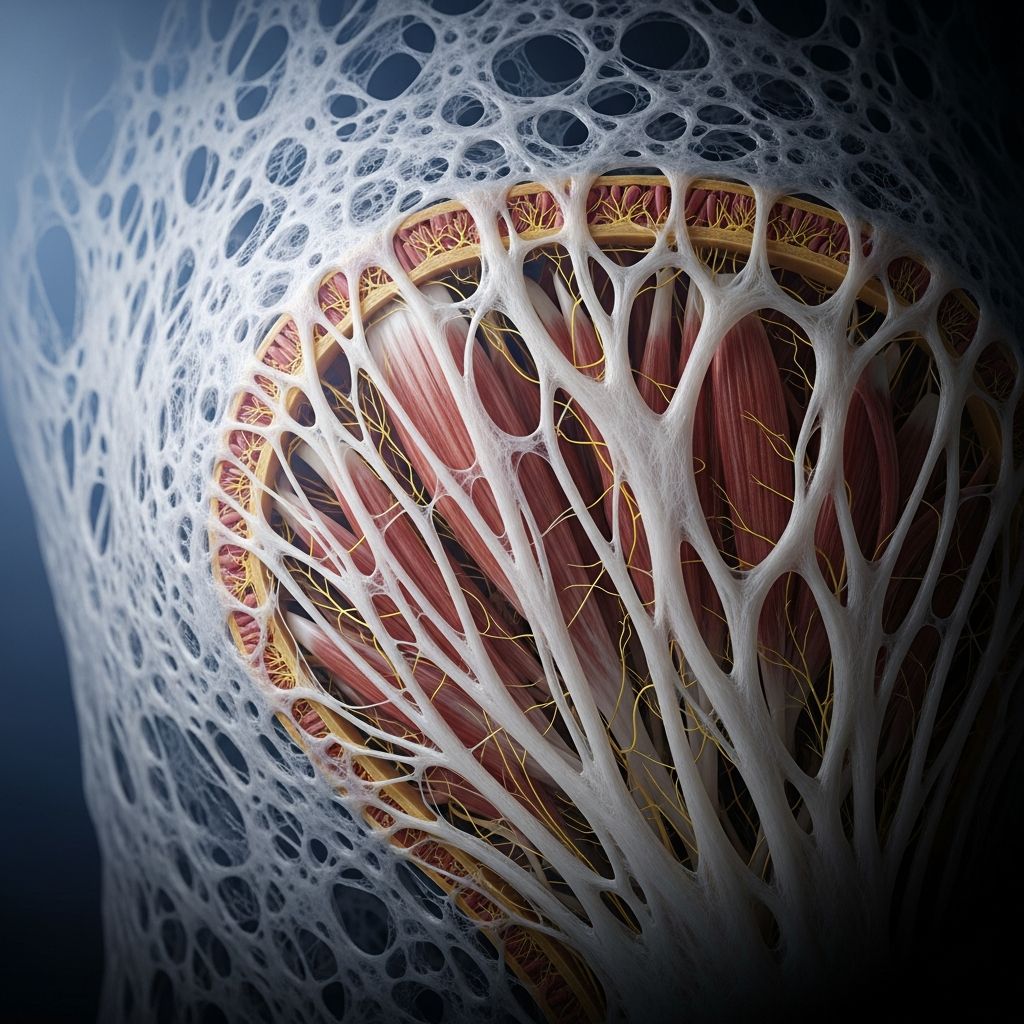
Fascia is a sheath of stringy connective tissue that surrounds every part of your body, providing essential support to your muscles, tendons, ligaments, tissues, organs, nerves, joints, and bones. When your fascia is healthy, it remains flexible and stretches with your body’s movements. However, when fascia tightens up, it can restrict movement and cause painful health conditions that affect your quality of life.
Scientists initially believed fascia only provided support to organs, muscles, and bones. Recent discoveries have expanded this understanding significantly. Researchers now recognize that fascia is part of a system-wide network that provides form and function to every part of your body. It represents a continuous layer of tissue that is flexible and able to resist tension, playing a crucial role in maintaining your body’s integrity.
Composition and Structure of Fascia
Fascia is composed primarily of collagen, a type of protein that provides both strength and flexibility. The tissue itself is soft, loose, and made up of multiple layers. Between each layer of fascia sits a liquid called hyaluronan, which facilitates stretching as you move throughout your day.
This delicate balance is easily disrupted. Inflammation and trauma can dry up the hyaluronan and damage your fascia, leading to restriction of movement and pain. When fascia tightens, it restricts the movement of your muscles and tissues, potentially causing pain and various health conditions. Understanding this composition is key to appreciating why maintaining fascia health is so important for overall well-being.
Primary Functions of Fascia
Fascia serves multiple critical functions throughout your body that are essential for optimal health and movement:
Structural Support and Stability: Fascia provides structure and support throughout your body by holding your muscles together, allowing them to contract and stretch properly. This tissue also stabilizes your body structures and gives your body overall strength.
Smooth Movement and Friction Reduction: Fascia provides a smooth surface for your muscles, joints, and organs to slide against each other without creating friction or tears. This frictionless movement is essential for comfortable, pain-free motion.
Tension Management and Separation: By separating your muscles and easing muscle tension, fascia helps maintain proper alignment and prevents muscles from adhering to one another inappropriately.
Joint Stability and Movement: Fascia helps with joint stability and movement while improving circulation throughout your body, ensuring that oxygen and nutrients reach all tissues efficiently.
Systemic Integration: Fascia provides an environment that enables all of your body systems to work together harmoniously, supporting comprehensive health rather than isolated functions.
Fascia vs. Tendons and Ligaments
While fascia shares similarities with tendons and ligaments, these structures differ in important ways. All three are made mostly of collagen, but their locations and functions are distinct:
| Structure | Composition | Function | Location |
|---|---|---|---|
| Fascia | Collagen-based tissue | Wraps around muscles and body parts, provides support | Throughout entire body |
| Tendons | Collagen-based tissue | Joins muscles to bones | Between muscles and skeletal system |
| Ligaments | Collagen-based tissue | Joins one bone to another bone | Between bones |
Related Stories



Understanding these distinctions helps clarify why different treatment approaches may be necessary for different connective tissue injuries.
Specific Examples of Fascia in Your Body
Several named fascia structures play important roles in specific body functions:
Thoracolumbar Fascia: This fascia surrounds your back muscles and divides them into compartments, providing structural organization and support for your spine and core.
Fascia Lata: Connected to a muscular band located in your thigh called the tensor fascia lata, the fascia lata helps this muscle provide balance to your pelvis while you’re walking, running, or standing. This structure is essential for lower body stability and movement.
Plantar Fascia: This fascia attaches to the fascia plantaris muscle behind your leg. Though you don’t use this muscle frequently, it helps you flex your ankle and knee joints, making it important for lower leg and foot function.
The Four Layers of Fascia
Your body contains four distinct layers of fascia, each serving specific functions and supporting different body systems:
Superficial Fascia: The outermost layer is located directly under your skin. Composed of layers of membranes, loosely packed interwoven collagen and elastic fibers, superficial fascia is thicker in your chest and back (torso) and gets thinner in your arms and legs. This layer sometimes contains muscle fibers, which help create certain structures in your body.
Deep Fascia: This layer surrounds your musculoskeletal system, covering your muscles, bones, tendons, cartilage, nerves, and blood vessels. Deep fascia is thicker than superficial fascia and more densely organized. It includes two important subtypes:
Visceral Fascia: This specialized layer surrounds the organs in your abdomen, lungs, and heart, providing protection and maintaining proper organ positioning.
Parietal Fascia: This layer lines the walls of certain body cavities, such as the area around your pelvis, providing structural support for internal spaces.
Common Fascia-Related Conditions
When fascia becomes damaged or dysfunctional, it can lead to various painful conditions that affect your ability to function normally:
Dupuytren’s Contracture: This condition occurs when the fascia underneath the skin of your palm and fingers thickens and tightens. The thickened fascia causes your fingers to curl or contract, significantly affecting your ability to perform daily tasks such as clapping your hands, gripping objects, or putting gloves on. This progressive condition requires early intervention to prevent permanent disability.
Frozen Shoulder (Adhesive Capsulitis): A painful condition in which your shoulder movement becomes severely limited, frozen shoulder occurs when the fascia surrounding your shoulder joint becomes thick, stiff, and inflamed. Lack of use causes your shoulder to thicken and become tight, making the shoulder even more difficult to move and creating a frustrating cycle of declining mobility.
How to Keep Your Fascia Healthy
Maintaining healthy fascia is essential for preventing pain, maintaining mobility, and supporting overall bodily function. Here are key strategies for fascia health:
Regular Movement: Consistent physical activity helps keep hyaluronan hydrated and fascia flexible. Movement promotes blood flow and prevents the tissue from becoming tight and restricted.
Stretching: Regular stretching routines help maintain fascia flexibility and prevent adhesions. Gentle, consistent stretching is more beneficial than intense, infrequent sessions.
Hydration: Proper hydration supports the health of hyaluronan, the lubricating fluid between fascia layers, helping maintain tissue flexibility.
Avoiding Prolonged Immobility: Remaining sedentary for extended periods can cause fascia to tighten and restrict movement. Taking regular movement breaks throughout the day is beneficial.
Managing Inflammation: Reducing inflammatory responses in your body through diet, stress management, and appropriate exercise helps prevent fascia damage and degeneration.
Understanding Your Fascia Network
Your fascia is truly a continuous, interconnected network that functions as a unified system. Rather than thinking of your body as separate, isolated parts, it’s more accurate to view it as an integrated whole where fascia plays a connecting role. When one area of fascia becomes restricted or damaged, it can create compensatory patterns throughout your entire body, potentially leading to pain and dysfunction in seemingly unrelated areas.
This interconnectedness means that addressing fascia health requires a whole-body approach rather than focusing only on areas where you experience pain. A comprehensive health strategy that supports fascia throughout your entire body will provide better long-term results than localized treatments alone.
Frequently Asked Questions
Q: What exactly is fascia made of?
A: Fascia is primarily made of collagen, a protein that provides strength and flexibility. Between each layer of fascia is a lubricating liquid called hyaluronan that allows the tissue to stretch smoothly as your body moves.
Q: Can fascia be repaired if it’s damaged?
A: Yes, fascia can heal with proper treatment and care. Avoiding re-injury, maintaining hydration, engaging in appropriate movement and stretching, and addressing inflammation can all support fascia repair and regeneration.
Q: How does fascia affect pain and movement?
A: When fascia is healthy and flexible, it allows smooth movement without pain. When it becomes tight, inflamed, or damaged, it restricts movement and can cause significant pain, as well as reducing your range of motion and functional abilities.
Q: Is fascia the same as muscle?
A: No, fascia is different from muscle tissue. Fascia is connective tissue that surrounds and supports muscles, allowing them to move smoothly. Muscles are contractile tissues that generate movement, while fascia provides the supportive framework.
Q: Can you see fascia on the body?
A: You cannot see fascia from the outside, as it lies beneath the skin. However, its effects are visible through your movement and flexibility, and damage to fascia becomes apparent through pain and restricted motion.
Q: Why is hyaluronan important for fascia?
A: Hyaluronan is the lubricating fluid between fascia layers that allows the tissue to stretch smoothly. When inflammation or trauma dries up this fluid, fascia becomes stiff and restricted, limiting movement and causing pain.
References
- Fascia Tissue Function — Cleveland Clinic. Accessed December 2025. https://my.clevelandclinic.org/health/body/23251-fascia
- Fascial Manual Medicine: A Continuous Evolution — National Center for Biotechnology Information (NCBI). 2024. https://pmc.ncbi.nlm.nih.gov/articles/PMC11472865/
- A Conservative Approach to Plantar Heel Pain — Cleveland Clinic Journal of Medicine. 1999. https://www.ccjm.org/content/ccjom/66/4/231.full.pdf
- Myofascial Release Therapy — Cleveland Clinic. Accessed December 2025. https://my.clevelandclinic.org/health/treatments/24011-myofascial-release-therapy
Similar Articles








Read full bio of Sneha Tete