Five Love Languages: 5 Practical Tips To Deepen Connection
Discover how the five love languages can strengthen your relationships and improve communication with your partner.
Understanding the Five Love Languages: A Guide to Better Relationships
Relationships thrive when partners feel understood, valued, and appreciated. Yet many couples struggle to communicate their affection effectively, often leaving their partners feeling unloved despite genuine efforts. The concept of the five love languages offers a practical framework for bridging this communication gap. Introduced in 1992 by marriage counselor Dr. Gary Chapman, the five love languages have become a cornerstone model for understanding how people give and receive love in romantic and platonic relationships alike.
The fundamental premise behind love languages is simple yet profound: just as people speak different verbal languages, they also have different emotional languages. Your partner may be expressing love in their primary love language, but if you don’t share that language, the message may go unnoticed or be misinterpreted entirely. Understanding and learning to speak your partner’s love language is not just about improving communication—research suggests it can significantly enhance relationship satisfaction and emotional connection.
What Are the Five Love Languages?
According to Dr. Chapman’s framework, there are five distinct emotional love languages through which people communicate and experience love. While most people use all five languages to some degree, each person typically has one or two primary love languages—the ways they most naturally give and receive affection. Identifying both your primary love language and your partner’s is the first step toward more meaningful communication.
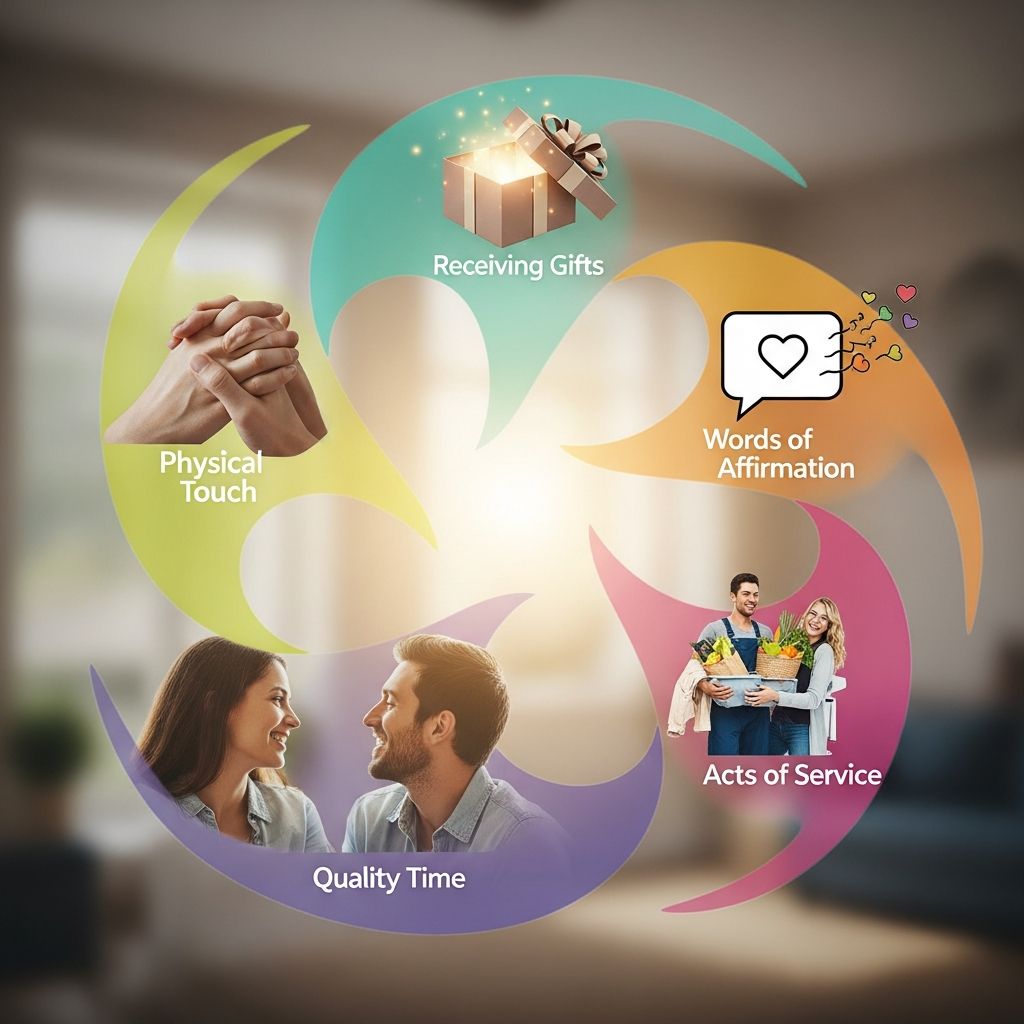
The five love languages are:
- Words of Affirmation — expressing love through verbal appreciation and encouragement
- Quality Time — demonstrating love through undivided attention and togetherness
- Physical Touch — communicating love through appropriate physical contact
- Acts of Service — showing love by doing helpful things for your partner
- Receiving Gifts — expressing love through meaningful presents and tokens
Love Language Characteristics and Recognition Chart
Understanding which love language resonates with you and your partner requires reflection on what makes you feel most loved and appreciated. Below is a comprehensive overview of each love language and how to identify it:
| Love Language | Core Meaning | Signs This Is Your Language | How to Speak It to Your Partner |
|---|---|---|---|
| Words of Affirmation | Verbal expressions of love, appreciation, and encouragement | You thrive on compliments; you like hearing “I love you” often; you feel valued when praised | Offer sincere, specific compliments; express appreciation regularly; share why you love them |
| Quality Time | Giving undivided attention and spending meaningful time together | You feel disconnected without regular togetherness; you value uninterrupted conversations; you prioritize shared activities | Put away distractions; plan date nights; engage in activities you both enjoy; have deep conversations |
| Physical Touch | Connection through appropriate physical contact (nonsexual or sexual) | You’re a “touchy-feely” person; you feel most loved when hugged or touched; physical intimacy matters to you | Hold hands; offer hugs and shoulder rubs; show affection through PDA; prioritize physical intimacy |
| Acts of Service | Showing love by doing helpful, practical things for your partner | You feel loved when your partner helps with tasks; you appreciate when others ease your burden; actions mean more than words | Help with chores; anticipate needs; take responsibilities off their plate; follow through on commitments |
| Receiving Gifts | Expressing love through thoughtful presents and symbolic tokens | You appreciate presents; gifts feel like tangible expressions of love; you remember gift-giving occasions | Give thoughtful, meaningful gifts; remember special occasions; choose presents that reflect their interests |
Words of Affirmation: The Power of Verbal Love
For individuals whose primary love language is words of affirmation, verbal expressions of love and appreciation have tremendous emotional impact. These individuals thrive when they receive compliments, words of encouragement, and direct affirmations of love.
If your partner’s love language is words of affirmation, consider these approaches:
- Tell them “I love you” frequently and mean it
- Provide specific, sincere compliments about their appearance, character, or accomplishments
- Express gratitude for the things they do—say “thank you” often
- Share why you love them, not just that you do
- Send encouraging messages via text or written notes
- Acknowledge their efforts and celebrate their successes
Related Stories



The key to speaking this language authentically is sincerity and specificity. Generic or hollow compliments may feel condescending rather than loving. Instead, take time to notice specific qualities and express genuine appreciation for them.
Quality Time: Presence as a Gift
Quality time as a love language emphasizes the value of undivided attention and meaningful togetherness. For people with this primary language, feeling loved means knowing their partner makes time for them and prioritizes their presence.
To speak quality time to your partner, focus on:
- Scheduling regular, uninterrupted time together
- Putting away phones and other distractions during conversations
- Planning activities you both enjoy
- Engaging in deep, meaningful conversations
- Creating shared experiences and memories
- Being fully present mentally and emotionally
Quality time doesn’t require expensive outings or elaborate plans. What matters is genuine connection and the message that your partner is worth your time and attention in a world full of competing demands.
Physical Touch: Communication Through Connection
Physical touch encompasses a spectrum of appropriate physical contact, from holding hands and hugging to shoulder rubs and sexual intimacy. For those with this primary love language, physical affection is essential for feeling loved and emotionally secure.
Ways to express this love language include:
- Holding hands regularly
- Offering hugs and embraces
- Sitting close together while watching movies or talking
- Giving shoulder or back massages
- Showing affection through appropriate public displays
- Prioritizing sexual intimacy if appropriate to your relationship
It’s important to understand that physical touch preferences vary widely and should always be consensual and comfortable for both partners. Regular, appropriate physical affection communicates care and strengthens emotional bonds.
Acts of Service: Love in Action
Acts of service involve demonstrating love through practical help and taking care of responsibilities that matter to your partner. People with this love language feel most appreciated when their partner eases their burden and anticipates their needs.
Examples of acts of service include:
- Helping with household chores or errands
- Cooking meals or preparing lunch for them
- Running errands or handling administrative tasks
- Taking care of car maintenance or home repairs
- Remembering and taking responsibility for important tasks
- Offering help before they have to ask
The emphasis here is on reliability and anticipating needs. When you follow through on commitments and actively work to make your partner’s life easier, you’re speaking their emotional language.
Receiving Gifts: Thoughtful Tokens of Love
For those whose primary love language is receiving gifts, presents represent tangible symbols of love and thoughtfulness. Gifts need not be expensive; what matters is that they’re chosen with care and reflect understanding of the recipient’s interests and preferences.
Meaningful gift-giving strategies include:
- Selecting gifts that align with their hobbies or interests
- Remembering important dates and occasions
- Presenting gifts with genuine care and explanation of your choice
- Giving unexpected gifts occasionally
- Creating personalized or handmade gifts
- Choosing gifts that have sentimental value or symbolize your relationship
The Science Behind Love Languages: What Research Shows
While the love languages framework originated from Dr. Chapman’s counseling observations, recent research has begun to validate key aspects of the model. A study found that couples with matching primary love languages reported greater relationship satisfaction and sexual satisfaction compared to couples with mismatched languages. Additionally, research discovered that men who demonstrated higher levels of empathy and perspective-taking were more likely to have a love language that matched their partner’s.
Importantly, research has also confirmed that knowing your partner’s primary love language is linked to greater relationship satisfaction—both in the present and predicted into the future. Furthermore, exposure to one’s preferred love language had a measurable effect on the autonomic nervous system, suggesting that receiving love in your primary language triggers positive physiological responses.
However, it’s worth noting that while evidence supports the value of learning your partner’s love language, the broader claim that “love languages are a thing” has limited scientific support. The concept remains more of a practical relationship tool than a rigorously validated psychological model.
Addressing Mismatched Love Languages
One of the most common relationship challenges occurs when partners have different primary love languages. You may be expressing love in your native language while your partner “speaks” a different emotional language, creating a communication gap where both people feel misunderstood despite genuine efforts.
When love languages don’t match, consider these strategies:
- Discuss your primary love languages openly and without judgment
- Explain why your language feels natural and important to you
- Learn and practice your partner’s primary love language intentionally
- Be patient with yourself as you develop this “secondary” language
- Appreciate efforts your partner makes to speak your language
- Recognize that mismatched languages don’t mean incompatibility—they require conscious effort
Dr. Chapman emphasizes that discovering and learning to speak your partner’s primary love language is key to a long-lasting, loving relationship. It requires effort and intentionality, but the payoff—deeper emotional connection and greater relationship satisfaction—is worth the investment.
Love Languages Beyond Romantic Relationships
While the framework was developed for romantic partnerships, love languages apply equally to platonic relationships, family bonds, and friendships. Understanding how your family members, friends, or colleagues prefer to receive affection can strengthen all types of relationships and improve communication across all contexts.
Frequently Asked Questions About Love Languages
Q: Can someone have more than one primary love language?
A: Yes. While most people have one dominant love language, some individuals have two equally strong primary languages. The key is identifying which language or languages make you feel most loved.
Q: Do love languages change over time?
A: It’s possible for love languages to shift, particularly during different life stages or circumstances. However, most people maintain relatively consistent primary languages throughout their lives.
Q: What if my partner refuses to learn my love language?
A: If your partner shows little interest in understanding your emotional needs, this may indicate a larger relationship issue. Consider couples counseling to address communication patterns and mutual respect in your relationship.
Q: How do I discover my child’s or teenager’s love language?
A: Observe how they naturally express affection and what makes them feel most happy or secure. You can also have age-appropriate conversations about what makes them feel loved and appreciated.
Q: Is it okay if my giving and receiving love languages are different?
A: Absolutely. Many people naturally express love in one way while preferring to receive it in another. Understanding this about yourself helps you recognize your partner’s efforts even when they differ from your instinctive expressions.
References
- Is There Science Behind the Five Love Languages? — Greater Good Science Center, UC Berkeley. 2024. https://greatergood.berkeley.edu/article/item/is_there_science_behind_the_five_love_languages
- There Are 5 Love Languages — Here’s How to Find Yours — Healthline Media. 2024. https://www.healthline.com/health/love-languages
- Know Your Love Language? Learn to Speak it Well Despite Chronic Illness — Chronic Pain Partners. 2024. https://www.chronicpainpartners.com/know-your-love-language-learn-to-speak-it-well-despite-chronic-illness/
- The 5 Love Languages and Their Influence on Relationships — HelpGuide. 2024. https://www.helpguide.org/relationships/social-connection/the-5-love-languages-and-their-influence-on-relationships
- Five Love Languages Part 1: Overview Guide For Beginners — Communicate and Connect. 2024. https://www.communicateandconnect.com/resources/love-languages/
- 5 Love Languages – Overview — Creative Solutions Online. 2024. https://creativesolutionsonline.org/love-languages-summary/
Similar Articles








Read full bio of Sneha Tete