Food Labels: A Comprehensive Guide To Decoding Nutrition Facts
Master the Nutrition Facts label to make smarter, healthier food choices every time you shop.
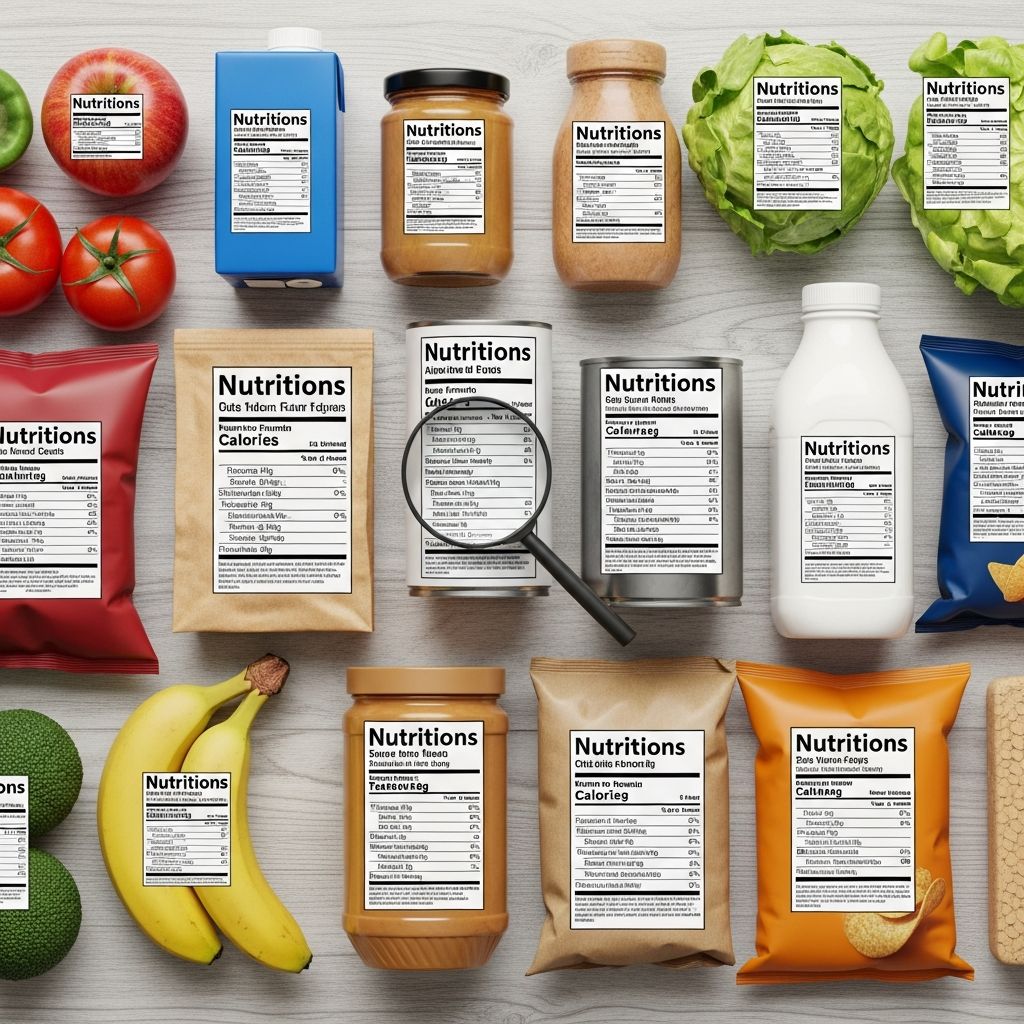
Understanding Food Labels
Food labels are essential tools for making informed dietary choices. The Nutrition Facts panel provides detailed information about serving sizes, calories, nutrients, and more, helping consumers compare products and align purchases with health goals.
The Basics of the Nutrition Facts Label
The Nutrition Facts label, mandated by the FDA, appears on most packaged foods and offers a standardized way to assess nutritional content. It includes calories, fats, carbohydrates, proteins, vitamins, and minerals based on a typical serving.
Step 1: Start with the Serving Size
At the top of every Nutrition Facts label, you’ll find the
serving size
—the amount people typically consume at one time—and thenumber of servings per package
. This is crucial because all nutrient values listed apply to one serving.- Compare your actual
portion size
(what you eat) to the listed serving size. For example, if the serving is 1 cup (about 40g) of cereal and you eat 2 cups, you’re consuming double the calories, fats, and nutrients shown. - Serving sizes are standardized based on national consumption data, not necessarily ideal portions for health.
- For ground meats like beef or turkey, labels must show nutrition for the raw form sold, with optional cooked values.
Misjudging serving sizes is common; always check to avoid unintentional overconsumption.
Step 2: Check Calories
Next, review the
calories per serving
andcalories from fat
(though this line was removed in updated labels). Calories indicate energy content, vital for weight management.- A 2,000-calorie daily diet is the reference; adjust based on your needs (e.g., active individuals may need 2,500+).
- Limit foods high in calories from added sugars or fats if managing weight.
Step 3: Review the Nutrients
The label breaks down
total fat
,saturated fat
,trans fat
,cholesterol
,sodium
,total carbohydrates
,dietary fiber
,total sugars
,added sugars
, andprotein
. PercentDaily Values (%DV)
show how much a serving contributes to a 2,000-calorie diet.| Nutrient | Low %DV (Aim Low) | High %DV (Aim High) |
|---|---|---|
| Saturated Fat, Trans Fat, Cholesterol, Sodium | ≤5% | ≥20% |
| Dietary Fiber, Vitamins (D, C), Minerals (Calcium, Iron, Potassium) | ≥20% | ≤5% |
Key takeaway: 5% DV or less is low; 20% or more is high. Prioritize high fiber and protein, low sodium and added sugars.
- **Added sugars** (newer requirement): Limit to <10% of daily calories; check for names like high-fructose corn syrup.
- **Protein**: Increasingly highlighted for muscle health and satiety.
- For meats, labels include vitamin D, calcium, iron, potassium per serving (raw or cooked).
Step 4: Understand % Daily Value (%DV)
%DV percentages help gauge a food’s contribution to daily nutrient needs. They’re based on 2,000 calories but scalable.
- If you need fewer calories, your nutrient DVs decrease proportionally.
- Use %DV for quick comparisons: e.g., two yogurts—one with 15% DV calcium, another 30%—the latter is better for bone health.
Ingredient Lists: What’s Really Inside?
Foods with multiple ingredients must list them in
descending order by weight
—largest amounts first. This transparency aids those with allergies, sensitivities, religious diets, or vegetarian preferences.- Scan for hidden sodium (e.g., sodium benzoate), sugars (sucrose, corn syrup), or allergens (milk, nuts).
- Short lists often mean less processing; avoid if first ingredients are sugars or unhealthy fats.
Ingredient lists complement Nutrition Facts, revealing quality not captured in nutrient totals.
Nutrition Claims and What They Mean
Manufacturers use claims like “low fat” or “high fiber,” regulated by FDA standards. Understand them to avoid misleading marketing.
| Claim | Meaning per Serving |
|---|---|
| Calorie-free | <5 calories |
| Low calorie | ≤40 calories |
| Fat-free | <0.5g fat |
| Low fat | ≤3g fat |
| Sugar-free | <0.5g sugars |
| Low sodium | ≤140mg sodium |
| Low cholesterol | ≤20mg cholesterol, ≤2g saturated fat |
| Reduced | ≥25% less of nutrient/calories than original |
| Good source of | 10-19% DV |
| High/Excellent source of | ≥20% DV |
| High fiber | ≥5g fiber |
These claims must be truthful; e.g., lean ground meat must state fat percentage (85% lean = 15% fat).
Special Labels: Meat and Major Cuts
Since 2012, ground/chopped meats (beef, pork, turkey) require Nutrition Facts. Major raw cuts (e.g., chicken breasts, pork chops) need labels or store signage.
- Info mirrors other foods: calories, fats, sodium, carbs, sugars, protein, key vitamins/minerals.
- Serving sizes for ground meat; “varied” for cuts.
- Raw nutrition primary; cooked optional.
Health and Structure/Function Claims
Beyond nutrient content, labels may have
health claims
linking nutrients to disease risk reduction (e.g., calcium & osteoporosis, fiber & heart disease) orstructure/function claims
(e.g., “builds strong bones”). FDA regulates both for accuracy.Daily Values Reference Table
Key DVs for a 2,000-calorie diet:
| Nutrient | %DV Goal |
|---|---|
| Total Fat | <78g (100%) |
| Saturated Fat | <20g |
| Cholesterol | <300mg |
| Sodium | <2,300mg |
| Total Carbs | 275g |
| Dietary Fiber | 28g |
| Added Sugars | <50g (10% calories) |
| Protein | 50g |
Frequently Asked Questions (FAQs)
What is the difference between serving size and portion size?
Serving size is the standardized amount on the label; portion size is what you actually eat. If label serving is ½ cup cereal but you eat ¾ cup, adjust nutrients accordingly.
How do I know if a food is healthy using %DV?
Low ≤5% for sodium/fats; high ≥20% for fiber/protein/vitamins. Compare across similar products.
Are Nutrition Facts labels required on fresh meat?
Yes for ground/chopped meats and 40 major raw cuts via label or signage.
What if I don’t eat 2,000 calories a day?
Scale %DV: half calories means half nutrient targets. Use FDA tools for personalization.
Why check the ingredient list?
It reveals order of ingredients by weight, helping spot added sugars, allergens, or undeclared items.
Integrate labels with Dietary Guidelines and MyPlate for holistic healthy eating.
References
- The Basics of the Nutrition Facts Label — Academy of Nutrition and Dietetics. 2023. https://www.eatright.org/health/wellness/nutrition-panels-and-food-labels/the-basics-of-the-nutrition-facts-label
- Use the Dietary Guidelines, MyPlate and Food Labels — Academy of Nutrition and Dietetics. 2023. https://www.eatright.org/health/wellness/nutrition-panels-and-food-labels/use-the-dietary-guidelines-myplate-and-food-labels-to-make-healthy-choices
- What Meat Nutrition Labels Mean — Academy of Nutrition and Dietetics. 2023. https://www.eatright.org/health/wellness/nutrition-panels-and-food-labels/what-meat-nutrition-labels-mean
- Get the Facts on Food Labels — University of California Agriculture and Natural Resources (.edu). 2010. https://ucanr.edu/sites/default/files/2010-05/4115.pdf (Authoritative FDA-aligned guide, remains relevant as core standards unchanged).
- Serving Size vs. Portion Size — Academy of Nutrition and Dietetics. 2023. https://www.eatright.org/health/wellness/nutrition-panels-and-food-labels/serving-size-vs-portion-size-is-there-a-difference
Similar Articles






Read full bio of medha deb