Understanding Fractures: Types, Causes, and Treatment
Learn about the different types of fractures, their causes, symptoms, and effective treatments.
What Are Fractures?
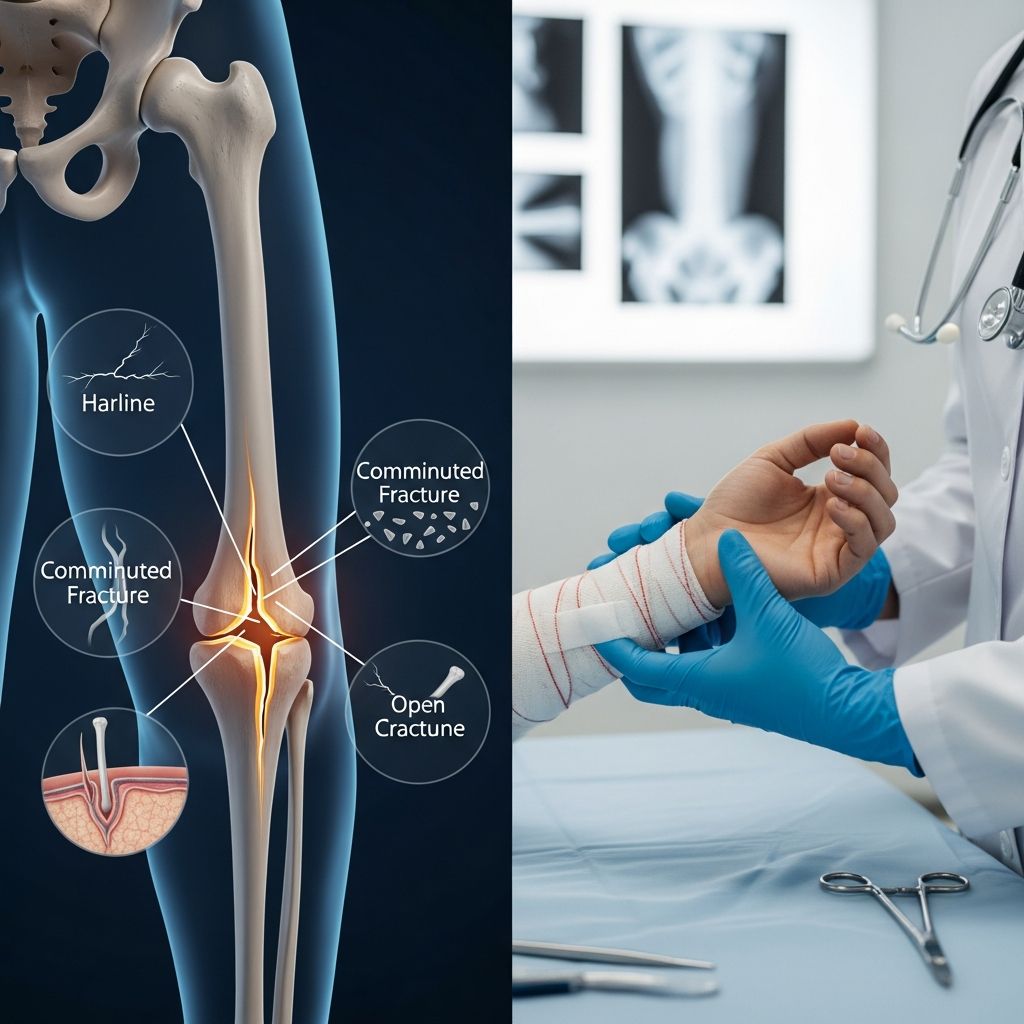
A fracture is a medical term for a broken bone. Fractures can range from a small crack to a complete break, and they can occur in any bone in the body. Fractures are common injuries that can result from trauma, falls, sports injuries, or underlying medical conditions such as osteoporosis.
Types of Fractures
Fractures can be classified into several types based on the nature and severity of the break. Understanding the different types of fractures is crucial for proper diagnosis and treatment.
Simple Fracture
- A simple fracture, also known as a closed fracture, occurs when the bone breaks but does not penetrate the skin.
- Symptoms include pain, swelling, and bruising at the site of the injury.
- Treatment typically involves immobilization with a cast or splint.
Compound Fracture
- A compound fracture, also known as an open fracture, occurs when the broken bone pierces the skin.
- This type of fracture is more serious and carries a higher risk of infection.
- Immediate medical attention is required, and treatment may involve surgery to clean the wound and stabilize the bone.
Stress Fracture
- A stress fracture is a small crack in the bone that develops over time due to repetitive stress or overuse.
- Common in athletes and individuals who engage in high-impact activities.
- Symptoms include gradual onset of pain that worsens with activity and improves with rest.
- Diagnosis may require imaging studies such as X-rays, bone scans, CT, or MRI.
- Treatment involves rest from the painful activity and may take 6 to 8 weeks to heal.
Compression Fracture
- A compression fracture occurs when a bone collapses, often in the vertebrae of the spine.
- Common in individuals with osteoporosis.
- Symptoms include sudden, severe back pain, but some fractures may not cause immediate symptoms.
- Treatment may involve pain management, bracing, and in severe cases, surgical intervention.
Greenstick Fracture
- A greenstick fracture is a partial break in the bone, where one side of the bone is broken and the other side is bent.
- Common in children due to the flexibility of their bones.
- Treatment typically involves immobilization with a cast or splint.
Comminuted Fracture
- A comminuted fracture occurs when the bone breaks into several pieces.
- This type of fracture is often the result of high-impact trauma.
- Treatment may require surgery to realign and stabilize the bone fragments.
Causes of Fractures
Fractures can be caused by a variety of factors, including:
- Trauma from falls, accidents, or sports injuries.
- Repetitive stress or overuse, leading to stress fractures.
- Underlying medical conditions such as osteoporosis, which weakens the bones.
- Age-related changes in bone density.
Symptoms of Fractures
The symptoms of a fracture can vary depending on the type and location of the injury. Common symptoms include:
- Pain at the site of the injury.
- Swelling and bruising.
- Deformity or abnormal alignment of the affected limb.
- Inability to move or bear weight on the injured area.
- Grating sensation when the bone is moved.
Related Stories



Diagnosis of Fractures
Diagnosing a fracture typically involves a combination of physical examination and imaging studies. The process may include:
- Medical history and physical examination to assess the injury.
- X-rays to visualize the bone and confirm the presence of a fracture.
- Additional imaging studies such as bone scans, CT, or MRI if the fracture is not visible on X-ray or if further detail is needed.
Treatment of Fractures
The treatment of fractures depends on the type, location, and severity of the injury. Common treatment options include:
- Immobilization with a cast or splint to keep the bone in place while it heals.
- Medications to manage pain and inflammation.
- Physical therapy to restore strength and mobility after the bone has healed.
- Surgery to realign and stabilize the bone in severe cases.
Prevention of Fractures
Preventing fractures involves maintaining strong and healthy bones. Strategies for fracture prevention include:
- Regular exercise to improve bone density and muscle strength.
- A balanced diet rich in calcium and vitamin D.
- Regular bone density screenings, especially for individuals at risk of osteoporosis.
- Using protective gear during sports and physical activities.
- Creating a safe environment to reduce the risk of falls, especially for older adults.
FAQs About Fractures
What is the difference between a simple and a compound fracture?
A simple fracture is a break in the bone that does not penetrate the skin, while a compound fracture involves the bone breaking through the skin, increasing the risk of infection.
How long does it take for a fracture to heal?
The healing time for a fracture varies depending on the type and severity of the injury. Simple fractures may heal in a few weeks, while more complex fractures can take several months.
Can stress fractures be prevented?
Yes, stress fractures can be prevented by gradually increasing the intensity of physical activities, using proper footwear, and ensuring adequate rest and recovery.
What are the risk factors for fractures?
Risk factors for fractures include age, gender, underlying medical conditions such as osteoporosis, and participation in high-impact sports or activities.
When should I seek medical attention for a suspected fracture?
You should seek medical attention if you experience severe pain, swelling, deformity, or inability to move the affected area after an injury.
References
References
- A Guide to Improving the Care of Patients With Fragility Fractures — Stephen L. Kates, Simon C. Mears. Geriatric Orthopaedic Surgery & Rehabilitation, 2011. https://pure.johnshopkins.edu/en/publications/a-guide-to-improving-the-care-of-patients-with-fragility-fracture
- Johns Hopkins All Children’s Sports Medicine – Stress Fracture — Dr. Paul Benfanti. Johns Hopkins All Children’s Hospital, 2013. https://www.youtube.com/watch?v=x1DSzNVB3a0
- Compression Fractures Johns Hopkins Medicine — Johns Hopkins Medicine. https://www.scribd.com/document/918905590/Compression-Fractures-Johns-Hopkins-Medicine
Similar Articles








Read full bio of medha deb