Understanding Glands: Types, Functions & The Endocrine System
Learn about glands and their vital role in regulating your body's hormones and functions.
What Are Glands?
Glands are specialized organs in your body that create and release important substances to keep you healthy and functioning properly. These substances include hormones, digestive juices, sweat, tears, and other essential compounds. Your body contains different types of glands, each with unique functions that contribute to your overall health and well-being.
There are two main categories of glands: endocrine glands and exocrine glands. Endocrine glands release hormones directly into your bloodstream, while exocrine glands release their substances through ducts to specific areas of your body. This article focuses primarily on endocrine glands and their crucial role in hormone regulation.
Understanding the Endocrine System
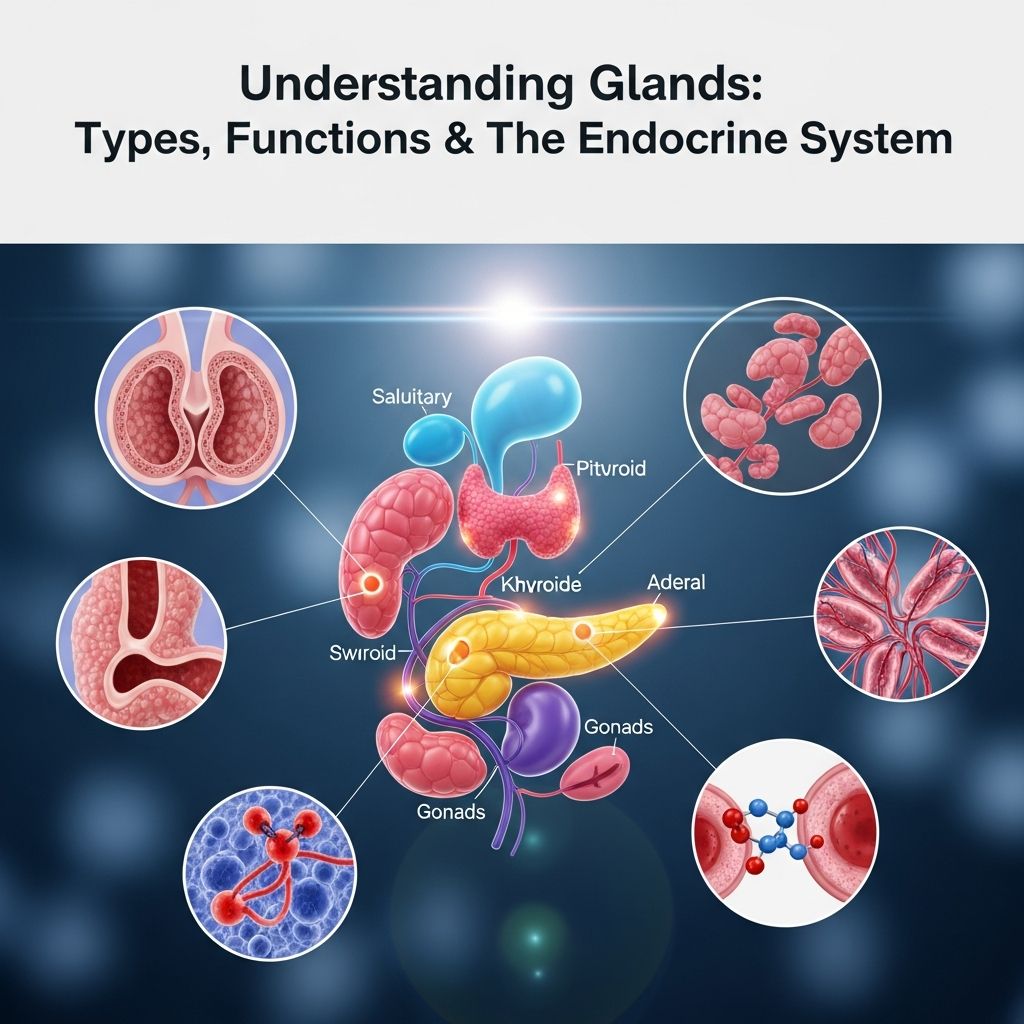
Your endocrine system is a network of glands and tissues throughout your body that work together to create and release hormones. These glands include your pituitary gland, thyroid, adrenal glands, parathyroid glands, pancreas, and reproductive glands. The endocrine system is responsible for regulating numerous bodily functions including metabolism, growth, reproduction, mood, and stress response.
Hormones are chemical messengers that travel through your bloodstream to deliver signals to various organs, tissues, and cells. Even tiny amounts of hormones can trigger significant responses and changes in your body. When your body produces too much or too little of any hormone, it can affect your health and cause noticeable symptoms that require medical attention.
How Hormones Work
Hormones function as your body’s communication system. When a gland produces a hormone, it is released directly into the bloodstream and travels to target cells and organs throughout your body. These target cells have special receptors that recognize and respond to specific hormones. This intricate system ensures that your body maintains balance and responds appropriately to internal and external changes.
Major Glands of the Endocrine System
The Pituitary Gland
Your pituitary gland is a small, pea-sized endocrine gland located at the base of your brain, just below your hypothalamus. It sits in a small chamber in the sphenoid bone called the sella turcica. Despite its tiny size, the pituitary gland is incredibly powerful and is often referred to as the “master gland” because it controls the function of many other endocrine system glands.
The pituitary gland consists of two distinct lobes: the anterior pituitary (front lobe) and the posterior pituitary (back lobe). The anterior pituitary is the larger of the two lobes and produces six different hormones that regulate various bodily processes including growth, reproduction, and metabolism. The posterior pituitary stores and releases hormones produced by the hypothalamus.
The Thyroid Gland
Your thyroid is a butterfly-shaped endocrine gland located in the lower front of your neck. The thyroid’s main job is to control your metabolism—how your body uses energy. It produces thyroid hormones that affect nearly every cell in your body, influencing how fast your heart beats, how quickly you burn calories, and your body temperature. Proper thyroid function is essential for maintaining healthy energy levels and overall metabolic balance.
Related Stories



The Adrenal Glands
Your adrenal glands, also known as suprarenal glands, are small, triangle-shaped glands located on top of each of your two kidneys. These glands are part of your endocrine system and produce many important hormones, including cortisol, aldosterone, and adrenaline. The adrenal hormones help regulate several crucial bodily functions including metabolism, blood pressure, and your body’s response to stress.
The adrenal glands are composed of two distinct parts: the cortex (outer region) and the medulla (inner part). Each part produces different hormones with different functions. The cortex produces steroid hormones like cortisol and aldosterone, while the medulla produces catecholamines like adrenaline and noradrenaline that prepare your body for “fight or flight” responses.
The Parathyroid Glands
Your parathyroid glands are four pea-sized endocrine glands embedded within the back side of your thyroid gland in your neck. Most people have four parathyroid glands, though some individuals have fewer or more than four. These glands have one primary job: making and releasing parathyroid hormone (PTH), which is responsible for controlling blood calcium levels and bone health.
Together, PTH and another hormone called calcitonin tightly control the levels of calcium in your bloodstream. Having too much or too little calcium in your blood can be associated with various health issues. Sometimes, parathyroid glands are located in unusual places like along the esophagus or in the chest, which healthcare providers call ectopic locations. Around 16% of people have ectopic parathyroid glands, which usually aren’t a cause for concern unless they malfunction.
The Pancreas
Your pancreas is both an endocrine and exocrine gland located behind your stomach. As an endocrine gland, it produces hormones including insulin and glucagon that regulate blood sugar levels. These hormones are crucial for maintaining proper energy levels and preventing blood sugar imbalances that could lead to serious health conditions.
How Glands Are Controlled
Your endocrine glands don’t work in isolation; they are regulated by a complex system of communication involving your brain and nervous system. The hypothalamus, a small area of your brain involved in hormonal regulation, produces corticotropin-releasing hormone (CRH) and antidiuretic hormone (ADH, or vasopressin). These hormones trigger your pituitary gland to release corticotropin, also known as adrenocorticotropic hormone (ACTH), which then stimulates your adrenal glands to produce essential corticosteroids like cortisol and aldosterone.
Your kidneys also play an important role in regulating hormone production, particularly in causing your adrenal glands to produce more or less aldosterone depending on your body’s needs. Additionally, your sympathetic nervous system regulates the release of adrenaline and noradrenaline from your adrenal glands in response to stress or danger.
Essential Hormones Produced by Glands
Your endocrine glands produce numerous hormones that are essential for everyday bodily functions:
- Cortisol – Manages stress response and metabolism
- Aldosterone – Regulates blood pressure and electrolyte balance
- Adrenaline – Triggers the fight-or-flight response
- Thyroid Hormones – Control metabolism and energy production
- Parathyroid Hormone – Maintains blood calcium levels
- Insulin – Regulates blood sugar levels
- Growth Hormone – Promotes growth and development
- Sex Hormones – Support reproduction and secondary sexual characteristics
Common Gland-Related Conditions
When your glands don’t function properly, it can lead to various health conditions. Hormone imbalances can cause symptoms ranging from mild to severe. Common gland-related disorders include thyroid disease, adrenal insufficiency, hyperthyroidism, hypothyroidism, and parathyroid disorders.
If your body has too little or too much of a particular hormone, it affects your health and often causes noticeable symptoms. These may include fatigue, weight changes, mood alterations, temperature sensitivity, or changes in appetite. If you experience any gland-related symptoms or have risk factors for developing an endocrine condition, it’s important to talk with your healthcare provider.
The Hypothalamus: Your Brain’s Hormonal Control Center
The hypothalamus is a small but vital region of your brain that acts as the command center for your endocrine system. It connects your nervous system to your endocrine system through the pituitary gland. The hypothalamus monitors your body’s internal conditions and releases hormones that trigger the pituitary gland to regulate the function of other endocrine glands throughout your body.
Gland Disorders and Treatment
Various conditions can affect gland function and hormone production. Some people may experience hormone overproduction, while others may not produce enough hormones. Treatment depends on the specific condition and may include medications, lifestyle changes, or in rare cases, surgical intervention. Although it’s uncommon, you can have both of your adrenal glands surgically removed (adrenalectomy) to treat certain adrenal conditions. People who undergo this surgery need to take certain medications for life to replace the adrenal gland hormones.
Maintaining Healthy Gland Function
To support optimal gland and endocrine system function, maintain a healthy lifestyle including regular exercise, balanced nutrition, adequate sleep, and stress management. Regular medical check-ups can help identify potential hormone imbalances before they become serious problems. If you suspect you have a gland-related condition, your healthcare provider can perform blood tests and other diagnostic procedures to evaluate your hormone levels.
When to See a Healthcare Provider
You should consult with your healthcare provider if you experience symptoms that may indicate a gland disorder, such as unexplained fatigue, significant weight changes, mood swings, temperature sensitivity, or changes in hair, skin, or nail appearance. Additionally, if you have a family history of endocrine disorders or other risk factors, it’s wise to discuss screening options with your doctor.
Frequently Asked Questions
Q: What is the difference between endocrine and exocrine glands?
A: Endocrine glands release hormones directly into your bloodstream, while exocrine glands release their substances through ducts to specific areas of your body, such as sweat glands and salivary glands.
Q: How many hormones does the human body produce?
A: The human body produces dozens of different hormones, each with specific functions. Major endocrine glands collectively produce hormones including cortisol, insulin, thyroid hormones, growth hormone, and sex hormones, among many others.
Q: Can gland disorders be cured?
A: Many gland disorders can be managed effectively with appropriate treatment, which may include medications, lifestyle modifications, or surgery in some cases. Treatment depends on the specific condition and its severity. Your healthcare provider can discuss the best treatment options for your situation.
Q: What happens if you have both adrenal glands removed?
A: If both adrenal glands are surgically removed to treat certain conditions, individuals must take replacement medications for life to replace the essential hormones normally produced by these glands.
Q: How does stress affect your glands?
A: Stress triggers your adrenal glands to release adrenaline and cortisol, preparing your body for a “fight or flight” response. Chronic stress can lead to prolonged elevation of these hormones, which may negatively impact your health over time.
Q: Are ectopic parathyroid glands dangerous?
A: Ectopic parathyroid glands, which are located in abnormal positions like the esophagus or chest, usually aren’t a cause for concern. However, if they malfunction and need to be removed, healthcare providers may have difficulty locating them initially.
References
- Adrenal Gland: What It Is, Function, Symptoms & Disorders — Cleveland Clinic. 2024. https://my.clevelandclinic.org/health/body/23005-adrenal-gland
- Endocrine System: What It Is, Function, Organs & Diseases — Cleveland Clinic. 2024. https://my.clevelandclinic.org/health/body/21201-endocrine-system
- Pituitary Gland: What It Is, Function & Anatomy — Cleveland Clinic. 2024. https://my.clevelandclinic.org/health/body/21459-pituitary-gland
- Parathyroid Glands: What They Are, Function & Location — Cleveland Clinic. 2024. https://my.clevelandclinic.org/health/body/parathyroid-gland
- Anterior Pituitary (Adenohypophysis): What It Is & Function — Cleveland Clinic. 2024. https://my.clevelandclinic.org/health/body/22214-anterior-pituitary
- Hormones: What They Are, Function & Types — Cleveland Clinic. 2024. https://my.clevelandclinic.org/health/articles/22464-hormones
Similar Articles








Read full bio of Sneha Tete