Understanding Goosebumps: Science Behind the Bumpy Skin
Discover why your skin bumps up when cold and how it connects to hair growth.
Understanding Goosebumps: The Complete Science Behind Bumpy Skin
Have you ever wondered why your skin suddenly becomes covered in small bumps when you’re cold, frightened, or even listening to inspiring music? This common physiological response, known medically as piloerection, affects nearly everyone and has puzzled humans for centuries. What was once thought to be merely a vestigial reflex—a leftover from our evolutionary past—has turned out to be far more complex and fascinating than previously understood. Recent groundbreaking research from Harvard University has revealed that goosebumps serve a much more significant purpose than simply making us look like a plucked chicken.
What Are Goosebumps and How Do They Form?
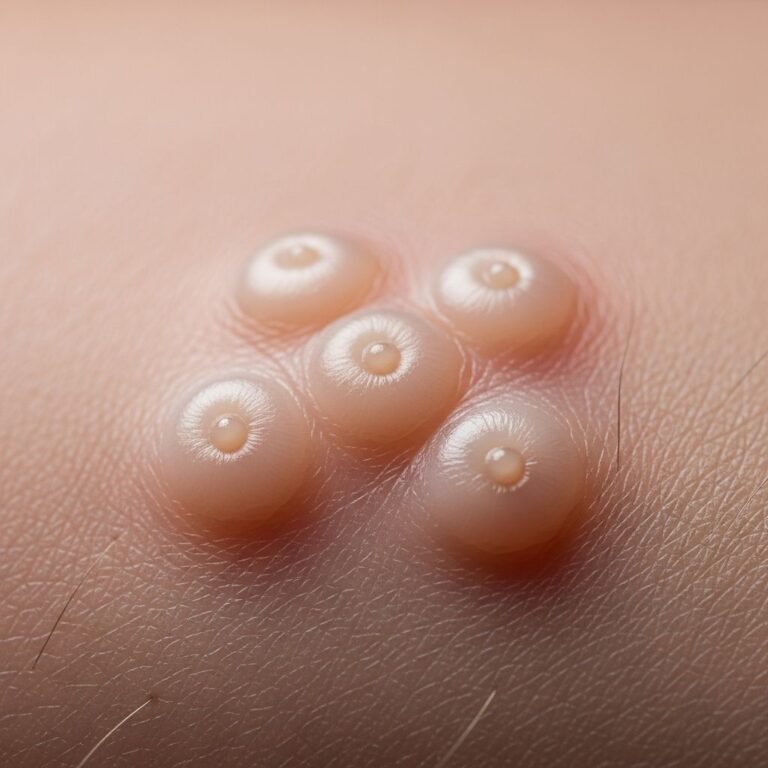
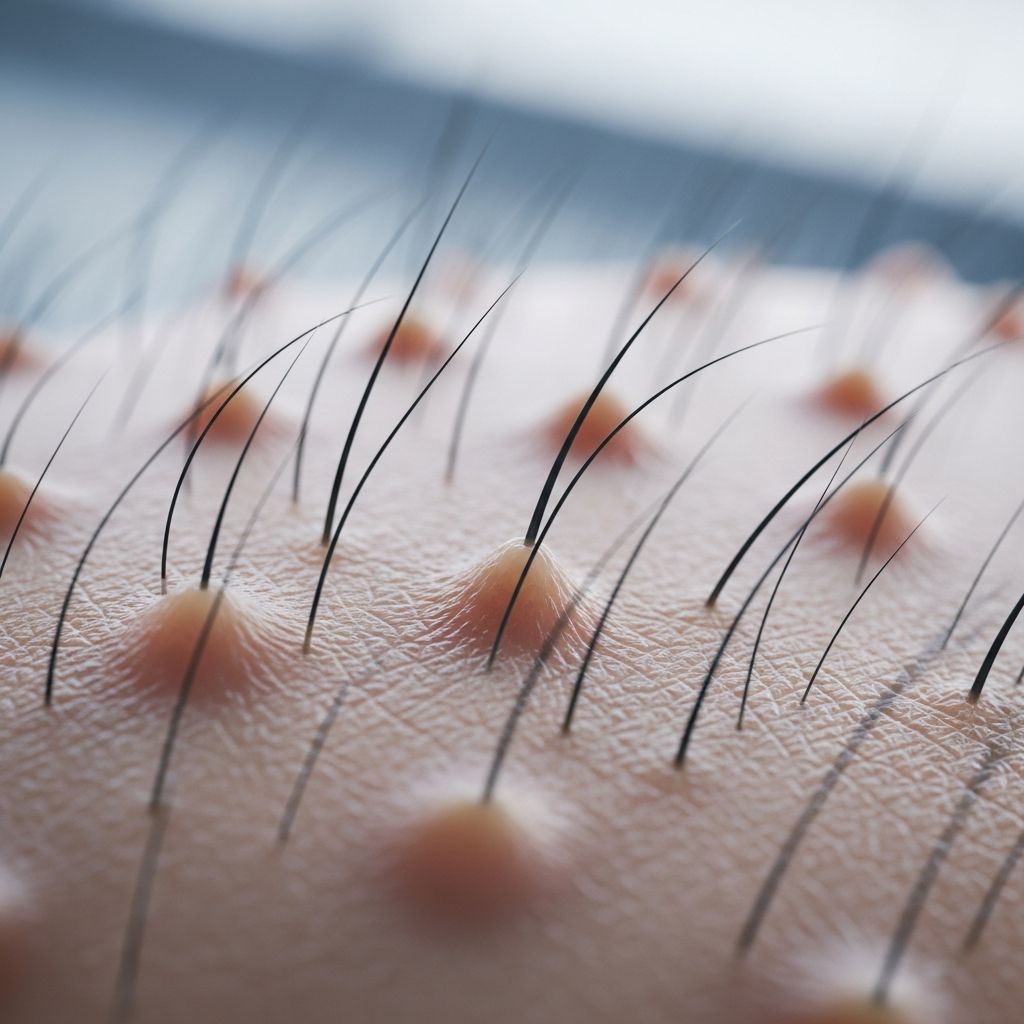
Goosebumps are small, raised bumps that appear on the skin in response to various stimuli. The technical term for this phenomenon is piloerection, which comes from the Latin words for hair and erection. These bumps form when tiny muscles at the base of each hair follicle, called arrector pili muscles, contract suddenly. Each hair follicle in your skin is connected to one of these microscopic muscles, and when they tense up, they pull the hair upright, creating the characteristic bumpy appearance on the skin’s surface.
The process begins with a trigger—typically cold temperature, fear, or strong emotion. Your sympathetic nervous system, which controls your fight-or-flight response, sends signals to these arrector pili muscles, causing them to contract involuntarily. This automatic response happens without conscious effort, making it a true reflex action. While the physical sensation might feel uncomfortable, the process is entirely natural and occurs in all humans, regardless of age, gender, or ethnicity.
The Traditional Understanding: An Evolutionary Relic
For many years, scientists believed goosebumps were simply a remnant of our evolutionary past. They theorized that when our ancient ancestors were covered in thick body hair, making their hair stand on end would make them appear larger and more intimidating to potential predators. Additionally, fluffing up body hair would create an insulating layer of air, helping to retain body heat during cold periods. This explanation seemed logical and was widely accepted in textbooks and scientific literature.
However, modern humans have relatively little body hair compared to our ancestors, raising an important question: if goosebumps were primarily designed to make us look bigger or to insulate us through body hair, why do we still experience them so prominently today? This paradox led researchers to investigate whether goosebumps might serve an additional, more relevant biological purpose in contemporary humans. The answer proved to be remarkably surprising and far more profound than anyone had anticipated.
The Breakthrough Discovery: Goosebumps and Hair Growth
In 2020, researchers at Harvard University published a groundbreaking study in the journal Cell that fundamentally changed our understanding of goosebumps. Led by Ya-Chieh Hsu, an associate professor of stem cell and regenerative biology, the research team discovered that the same cellular mechanisms responsible for creating goosebumps also regulate hair growth and stem cell activation in hair follicles.
The study revealed that the sympathetic nerve fibers associated with the arrector pili muscles form direct connections not only with the muscles themselves but also with hair follicle stem cells (HFSCs). Using advanced electron microscopy, the researchers observed that these nerve fibers wrap around the hair follicle stem cells like ribbons, forming synapse-like structures that allow direct communication between the nervous system and these important regenerative cells.
Related Stories



This discovery has profound implications for understanding how environmental factors influence tissue regeneration. The body appears to have evolved a sophisticated system that couples physical responses to environmental changes—like cold temperature—with cellular processes that prepare the body for long-term adaptation.
The Two-Layer Response System
Understanding the complete mechanism of goosebumps requires recognizing that this response operates on two distinct timescales, each serving different but complementary purposes.
Short-Term Response: Immediate Goosebumps
When you encounter cold or experience fear, your sympathetic nervous system activates at an elevated level. This immediately triggers the arrector pili muscles to contract, causing your hair to stand on end and creating visible goosebumps on your skin. This quick response happens within seconds and represents the classic, well-known goosebump reaction. While the practical benefit of this response in modern humans with minimal body hair is debatable, the mechanism itself remains efficient and reliable.
Long-Term Response: Hair Growth Activation
What makes the Harvard research truly revolutionary is the discovery of what happens when cold exposure persists. When subjected to prolonged cold conditions, the sympathetic nervous system remains activated at elevated levels for extended periods. This sustained activation causes increased release of the neurotransmitter norepinephrine at the connections between nerve fibers and hair follicle stem cells.
The elevated norepinephrine levels bind to receptors on hair follicle stem cells, triggering a cascade of cellular events. The stem cells receive a signal that environmental conditions have changed significantly, prompting them to exit their resting state and become activated. This activation initiates the hair growth cycle, leading to the generation of new hair follicles and increased hair production. In laboratory studies, mice exposed to cold began producing new hairs from their stem cells in less than two weeks, demonstrating the efficiency of this system.
The Critical Role of Arrector Pili Muscles
Beyond simply contracting to create the bumpy appearance, the arrector pili muscles serve a crucial structural function in this sophisticated biological system. Research revealed that these muscles act as a vital bridge connecting the sympathetic nerve fibers to the hair follicle stem cells.
When researchers removed the arrector pili muscles in experimental models, something unexpected happened: the sympathetic nerve fibers retracted away from the hair follicles, and the direct connections to the hair follicle stem cells were lost. Without this muscular bridge, the nerve could not maintain its proximity to the stem cells, effectively breaking the communication pathway. This demonstrated that the muscle tissue is not merely a mechanical component but serves a fundamental structural and regulatory role.
The hair follicle itself appears to participate in establishing this relationship. During hair follicle development, the follicle secretes proteins that regulate the formation of the smooth muscle tissue surrounding it. This protein signal attracts the sympathetic nerve fibers, establishing the nerve-muscle-stem cell connection during development. In adulthood, this relationship reverses in function, with the nerve and muscle together working to regulate hair follicle stem cell regeneration.
Molecular Mechanisms and Neurotransmitter Signaling
The communication between sympathetic nerve fibers and hair follicle stem cells relies on sophisticated molecular mechanisms. The primary neurotransmitter involved is norepinephrine, which is released from sympathetic nerve endings and binds to specific receptors on the hair follicle stem cells.
Research identified that the beta-2 adrenergic receptor (ADRB2) plays a critical role in this process. When norepinephrine binds to ADRB2 receptors on hair follicle stem cells, it triggers cellular changes that promote stem cell activation and proliferation. Studies showed that depleting ADRB2 in hair follicle stem cells inhibited their activation, while increasing ADRB2 activity promoted stem cell growth. Remarkably, when researchers added compounds that activate ADRB2 to cultured human hair follicle stem cells, the cells demonstrated increased growth, suggesting this pathway functions similarly in humans as in the laboratory mouse models.
Implications for Hair Loss and Skin Health
The discovery of goosebumps’ role in regulating hair growth has significant implications for understanding and potentially treating hair loss conditions. Male pattern baldness, the most common form of hair loss in men, involves loss of hair in specific scalp regions. Interestingly, research has documented that men experiencing male pattern baldness often lack well-developed arrector pili muscles in the affected areas of their scalp.
Without these muscles, the sympathetic nerve cannot maintain its connection to hair follicle stem cells in those regions. This disruption of the nerve-muscle-stem cell communication pathway may contribute to the failure of hair follicles to regenerate properly, resulting in hair loss. Understanding this mechanism opens new possibilities for therapeutic interventions that could potentially restore or enhance this communication pathway in affected areas.
Beyond hair loss, this research has broader implications for understanding how the body heals damaged skin and regenerates tissue. Wound healing involves the coordinated regeneration of multiple tissue types, and the sympathetic nervous system appears to play a regulatory role in orchestrating this process. Future research may reveal ways to optimize this natural healing mechanism for more effective treatment of injuries and skin conditions.
Goosebumps and Your Health
Natural Stress Response
Goosebumps triggered by emotional responses—such as fear, awe, or moving music—represent a natural manifestation of your sympathetic nervous system’s activation. This response is completely normal and indicates that your nervous system is functioning properly. Far from being a sign of weakness or abnormality, experiencing goosebumps demonstrates that your body can appropriately respond to emotional and environmental stimuli.
Temperature Regulation
While the temperature-regulating function of goosebumps may be less significant in modern humans with minimal body hair, the response itself remains a useful indicator of your body’s thermoregulation systems. When you experience goosebumps in response to cold, your body is actively attempting to conserve heat through multiple mechanisms, including muscle contraction and nervous system activation.
Indicator of Nervous System Health
The ability to produce goosebumps in response to appropriate stimuli can serve as a simple indicator of nervous system function. Your sympathetic nervous system should activate in response to cold or fear and deactivate once the threat or stressor passes. This dynamic regulation is essential for maintaining homeostasis and responding appropriately to your environment.
Frequently Asked Questions
Q: Why do we still get goosebumps if we don’t have enough body hair for them to be useful?
A: While humans have evolved to have relatively little body hair, goosebumps persist because they serve additional biological functions beyond their original evolutionary purposes. Most importantly, the mechanisms that create goosebumps also regulate hair growth by activating stem cells in hair follicles. Additionally, goosebumps represent an important reflex controlled by the sympathetic nervous system and can indicate emotional responses and nervous system health.
Q: Can goosebumps help treat hair loss?
A: Understanding the connection between goosebumps and hair growth has revealed important insights into hair loss conditions. Some forms of hair loss, including male pattern baldness, appear to involve disruption of the nerve-muscle connections that regulate hair follicle stem cells. This knowledge may eventually lead to new therapeutic approaches, though current treatments still rely on existing methods. Researchers are actively investigating how to restore or enhance these natural regulatory mechanisms.
Q: Are goosebumps different in different people?
A: While the basic mechanism of goosebumps is consistent across all humans, the intensity and frequency of goosebump responses can vary between individuals. This variation reflects differences in sympathetic nervous system sensitivity, emotional responsiveness, and individual thresholds for cold or fear. Some people experience very pronounced goosebumps easily, while others notice them less frequently or with less intensity.
Q: Do goosebumps serve any purpose in warm environments?
A: While cold-induced goosebumps are the most commonly discussed, goosebumps can also be triggered by emotional responses, music, or fear regardless of ambient temperature. In these cases, the primary function appears to be related to nervous system activation and emotional expression rather than temperature regulation. The underlying mechanisms remain the same, involving sympathetic nerve activation and arrector pili muscle contraction.
Q: How does this research change what we know about skin regeneration?
A: This research reveals that the sympathetic nervous system plays a direct regulatory role in skin tissue regeneration, not just in hair growth. The nerve-muscle-stem cell communication system discovered in goosebump research likely plays broader roles in various regenerative processes in the skin. This suggests that future treatments for various skin conditions and injuries might benefit from approaches that optimize sympathetic nervous system function.
The Future of Goosebump Research
The Harvard study represents just the beginning of understanding how goosebumps and the underlying nerve-muscle-stem cell system contribute to human health. Researchers plan to continue investigating how external environmental factors influence stem cell behavior in the skin, both during normal homeostasis and in repair situations such as wound healing.
Understanding these mechanisms could eventually lead to new therapeutic strategies for hair loss, improved wound healing treatments, and better comprehension of how the nervous system coordinates with tissue regeneration throughout the body. As our understanding deepens, goosebumps—once dismissed as a mere evolutionary curiosity—may prove to be a window into fundamental biological processes essential for maintaining healthy skin and hair throughout life.
References
- The hair-raising reason for goosebumps is revealed — Harvard Gazette. 2020-07-01. https://news.harvard.edu/gazette/story/2020/07/the-hair-raising-reason-for-goosebumps-is-revealed/
- What goosebumps are for — National Institutes of Health (NIH). 2020. https://www.nih.gov/news-events/nih-research-matters/what-goosebumps-are
- Cell types promoting goosebumps form a niche to regulate hair follicle stem cells — PubMed Central/National Center for Biotechnology Information. 2020. https://pmc.ncbi.nlm.nih.gov/articles/PMC7540726/
- Getting goose bumps could boost hair growth — Tech Explorist. 2020-07-10. https://www.techexplorist.com/getting-goose-bumps-boost-hair-growth/19327/
Similar Articles








Read full bio of Sneha Tete