Understanding Hand, Foot & Mouth Disease
Learn about causes, symptoms, treatment, and prevention of hand, foot and mouth disease.
Understanding Hand, Foot, and Mouth Disease: Causes, Symptoms, Treatment, and Prevention
Hand, foot, and mouth disease (HFMD) is a common viral infection that affects millions of people each year, particularly young children. Despite its name, this condition is not limited to just the hands, feet, and mouth—it can appear on various parts of the body. While HFMD typically causes mild symptoms that resolve within a week or two, understanding this disease is crucial for parents, caregivers, and healthcare providers to manage it effectively and prevent its spread.
What Is Hand, Foot, and Mouth Disease?
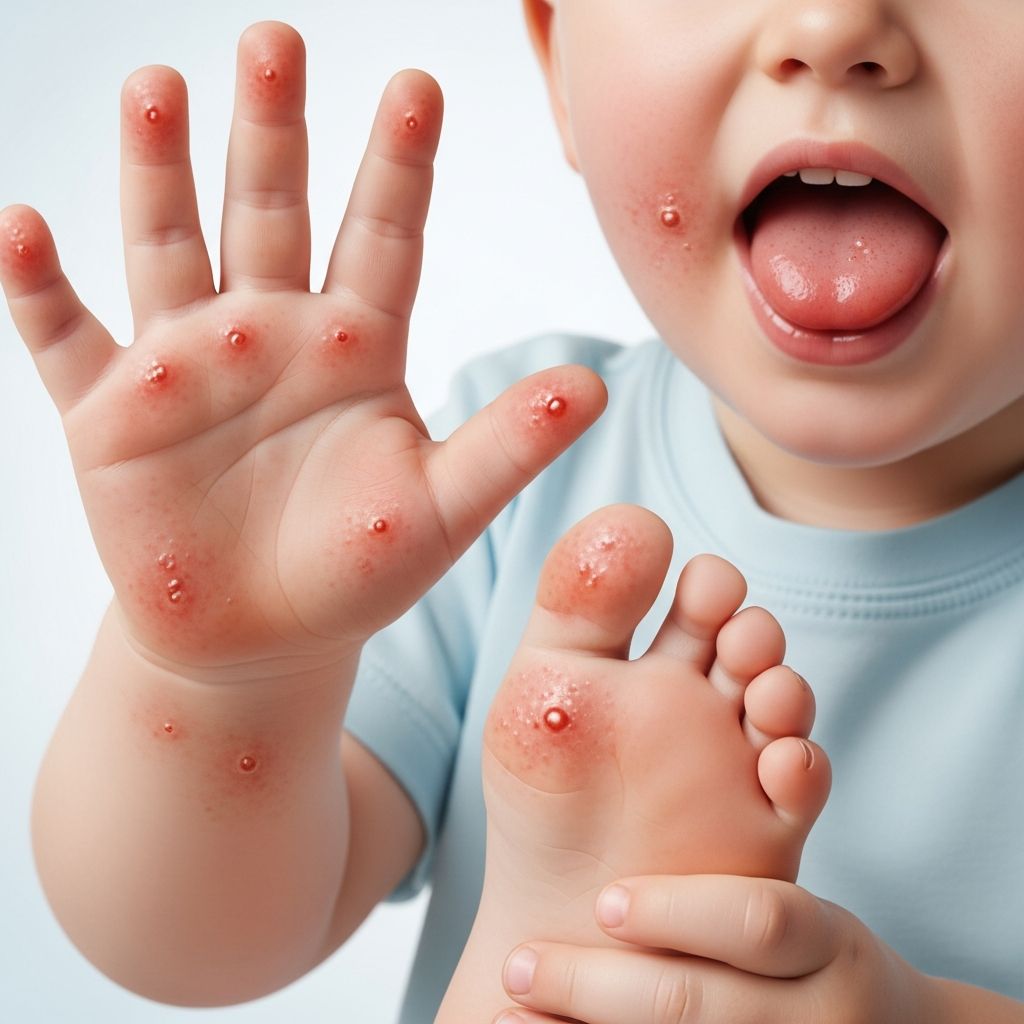
Hand, foot, and mouth disease is a highly contagious viral illness that is usually mild in nature. The condition gets its distinctive name from the characteristic symptoms it produces: painful blisters and sores that develop in the mouth and a blister-like rash that appears on the hands and feet. However, the rash can appear anywhere on the body, including the chest, back, arms, legs, genitals, and buttocks.
The disease is particularly common in infants and children younger than five years old, though it can affect people of any age, including adults. Most people recover completely within seven to ten days without requiring specific medical treatment.
Causes of Hand, Foot, and Mouth Disease
HFMD is caused by viruses belonging to the enterovirus and coxsackievirus families. The most common culprit is coxsackievirus A16, though other strains of coxsackieviruses and enteroviruses can also cause the infection. Enterovirus 71 is another significant causative agent, particularly in certain geographic regions.
These viruses reside in a person’s digestive tract and can be found in various secretions and bodily fluids. The virus spreads from person to person through direct contact with infected individuals or contaminated surfaces.
How the Virus Spreads
The disease is highly contagious and spreads through multiple routes:
- Contact with unwashed hands of infected individuals
- Fecal matter from infected persons
- Saliva and respiratory secretions
- Fluid from blisters
- Contaminated surfaces and shared objects
The virus can survive on objects and surfaces for several days, making it easy for the infection to spread in environments where children gather, such as daycare centers, preschools, and elementary schools.
Who Is at Risk?
While anyone can contract hand, foot, and mouth disease, certain populations are at higher risk:
- Children under five years old are most susceptible
- Infants and very young children may take longer to recover from the infection
- Children in daycare and school settings face higher exposure risk
- Individuals in close contact with infected persons
- Those with compromised immune systems
The disease spreads rapidly in group settings where children have frequent close contact with one another.
Symptoms and Signs of Hand, Foot, and Mouth Disease
Initial Symptoms
The symptoms of HFMD typically begin mildly and progress over a few days. Initial signs often include:
Related Stories



- Mild fever
- Poor appetite
- Sore throat
- General feeling of malaise
Characteristic Mouth Sores
Within one to two days of initial symptoms, painful blisters and sores develop in the mouth. These oral lesions are typically:
- Red with a small bubble of fluid on top
- Extremely painful, making eating and drinking difficult
- Located on the buccal mucosa (inside cheeks), tongue, and soft palate
- Prone to peeling and forming ulcers with reddish bases
The mouth sores can be particularly uncomfortable for young children, often causing them to resist eating or drinking, which may lead to dehydration concerns.
Characteristic Rash
The distinctive rash appears on various parts of the body:
- Most commonly on the soles of the feet and palms of the hands
- Can appear as flat red spots or red blisters
- May also develop on the chest, back, arms, legs, genitals, and buttocks
- The rash may be itchy or uncomfortable for some children
Overall Course of Illness
Most children experience mild symptoms that last seven to ten days. However, infants and children younger than two years may take longer for their bodies to clear the virus completely.
Diagnosis of Hand, Foot, and Mouth Disease
Hand, foot, and mouth disease is primarily diagnosed clinically based on the characteristic presentation of symptoms. Healthcare providers look for the combination of:
- Low-grade fever
- Painful mouth ulcerations
- Maculopapular or papulovesicular rash on hands and feet
If the diagnosis is unclear, additional testing may be performed, including serologic tests and polymerase chain reaction (PCR) studies to detect enterovirus or coxsackievirus. These tests can help confirm the specific virus causing the infection.
Treatment Options for Hand, Foot, and Mouth Disease
No Specific Antiviral Treatment
There is no specific medication or cure for hand, foot, and mouth disease. Antibiotics are ineffective because they only work against bacterial infections, not viral ones. Instead, treatment focuses on managing symptoms and allowing the body’s immune system to fight the infection naturally.
Symptomatic Treatment Measures
While waiting for the virus to run its course, several measures can help ease discomfort:
- Over-the-counter pain relievers such as acetaminophen or ibuprofen to reduce fever and pain
- Topical anesthetics for mouth sores to reduce pain when eating or drinking
- Adequate hydration—offer cool, non-acidic beverages
- Soft foods that don’t irritate the mouth sores
- Rest to help the body recover more quickly
At-Home Care
Most people recover in a week or two with minimal at-home care. Parents and caregivers should:
- Monitor the child’s temperature and comfort level
- Ensure adequate fluid intake to prevent dehydration
- Provide soft, cool foods and drinks
- Keep the child comfortable and allow for adequate rest
- Avoid foods that are spicy, acidic, or hard that could irritate mouth sores
Complications of Hand, Foot, and Mouth Disease
Complications from HFMD are rare in most cases. However, in uncommon situations, more serious complications can occur, particularly when enterovirus infections affect the central nervous system. These rare complications may include:
- Aseptic meningitis
- Encephalitis
- Polio-like syndrome
- Acute transverse myelitis
- Guillain-Barré syndrome
- Benign intracranial hypertension
- Acute cerebellar ataxia
Most children with HFMD do not experience these serious complications and recover without any long-term effects.
Prevention of Hand, Foot, and Mouth Disease
Hand Hygiene Practices
The most effective prevention strategy is frequent and thorough hand washing. Everyone should wash their hands well and often, especially:
- After using the toilet or changing a diaper
- Before preparing or eating food
- After contact with an infected person
- After touching contaminated surfaces
Environmental Cleaning
In daycare centers, schools, and other group settings, shared surfaces and toys should be cleaned frequently with a disinfectant. Since many viruses can survive on objects for several days, regular cleaning is essential to reduce transmission risk.
Isolation Measures
To prevent the spread of HFMD, children should stay home from school and childcare while they have a fever or open blisters on the skin and in the mouth. This helps protect other children and adults from becoming infected.
Avoiding Close Contact
When possible, avoid close contact with people who are sick. This includes avoiding sharing personal items such as utensils, cups, and towels with infected individuals.
Virtual Medical Visits
If you know your child has been exposed to the virus, alert their healthcare provider before scheduling an in-person exam. Your provider may want to conduct a virtual visit and make treatment suggestions over the phone or computer to prevent exposing other patients.
Distinguishing HFMD from Similar Conditions
HFMD vs. Mpox
Hand, foot, and mouth disease and mpox (formerly called monkeypox) are both viral infections that can cause flu-like symptoms and a rash. However, they are caused by different viruses. A virus in the orthopoxvirus family causes mpox, whereas a virus in the coxsackievirus family causes HFMD. The specific characteristics of the rash and other symptoms help healthcare providers differentiate between these two conditions.
HFMD vs. Herpangina
Both hand, foot, and mouth disease and herpangina are caused by viruses in the coxsackievirus family. The key difference is that herpangina causes blisters or sores to form in the mouth and throat only, without producing a rash on the hands and feet. Herpangina also typically presents with a sudden high fever and, rarely, seizures.
Frequently Asked Questions
How long does hand, foot, and mouth disease last?
Most people recover from HFMD within seven to ten days. However, infants and children younger than two years may take slightly longer for their bodies to completely clear the virus.
Is hand, foot, and mouth disease serious?
HFMD is usually mild and not serious. While complications are rare, it’s important to monitor your child and seek medical attention if symptoms worsen or unusual signs develop.
Can adults get hand, foot, and mouth disease?
Yes, while HFMD primarily affects children under five, adults can also contract the virus. Adults typically experience milder symptoms than children.
Is there a vaccine for hand, foot, and mouth disease?
Currently, there is no vaccine available for HFMD. Prevention relies on good hygiene practices and avoiding contact with infected individuals.
When should I call a doctor about hand, foot, and mouth disease?
Contact your healthcare provider if your child experiences severe symptoms, signs of dehydration, unusually high fever, or if symptoms don’t improve after ten days.
References
- Hand, Foot & Mouth Disease (HFMD): Symptoms & Causes — Cleveland Clinic. 2024. https://my.clevelandclinic.org/health/diseases/11129-hand-foot-and-mouth-disease
- About Hand, Foot, and Mouth Disease — Centers for Disease Control and Prevention (CDC). 2024. https://www.cdc.gov/hand-foot-mouth/about/index.html
- Hand, Foot, and Mouth Disease — StatPearls, National Library of Medicine (NIH). 2024. https://www.ncbi.nlm.nih.gov/books/NBK431082/
- Hand, Foot, and Mouth Disease — Nemours KidsHealth. 2024. https://kidshealth.org/en/parents/hfm.html
- Hand-foot-and-mouth disease — Symptoms & causes — Mayo Clinic. 2024. https://www.mayoclinic.org/diseases-conditions/hand-foot-and-mouth-disease/symptoms-causes/syc-20353035
- Hand-Foot-and-Mouth Disease: Rapid Evidence Review — American Academy of Family Physicians (AAFP). 2019. https://www.aafp.org/pubs/afp/issues/2019/1001/p408.html
Similar Articles








Read full bio of medha deb