Understanding HbA1c Testing for Diabetes
Complete guide to HbA1c blood tests for diabetes diagnosis and management
What Is the HbA1c Test?
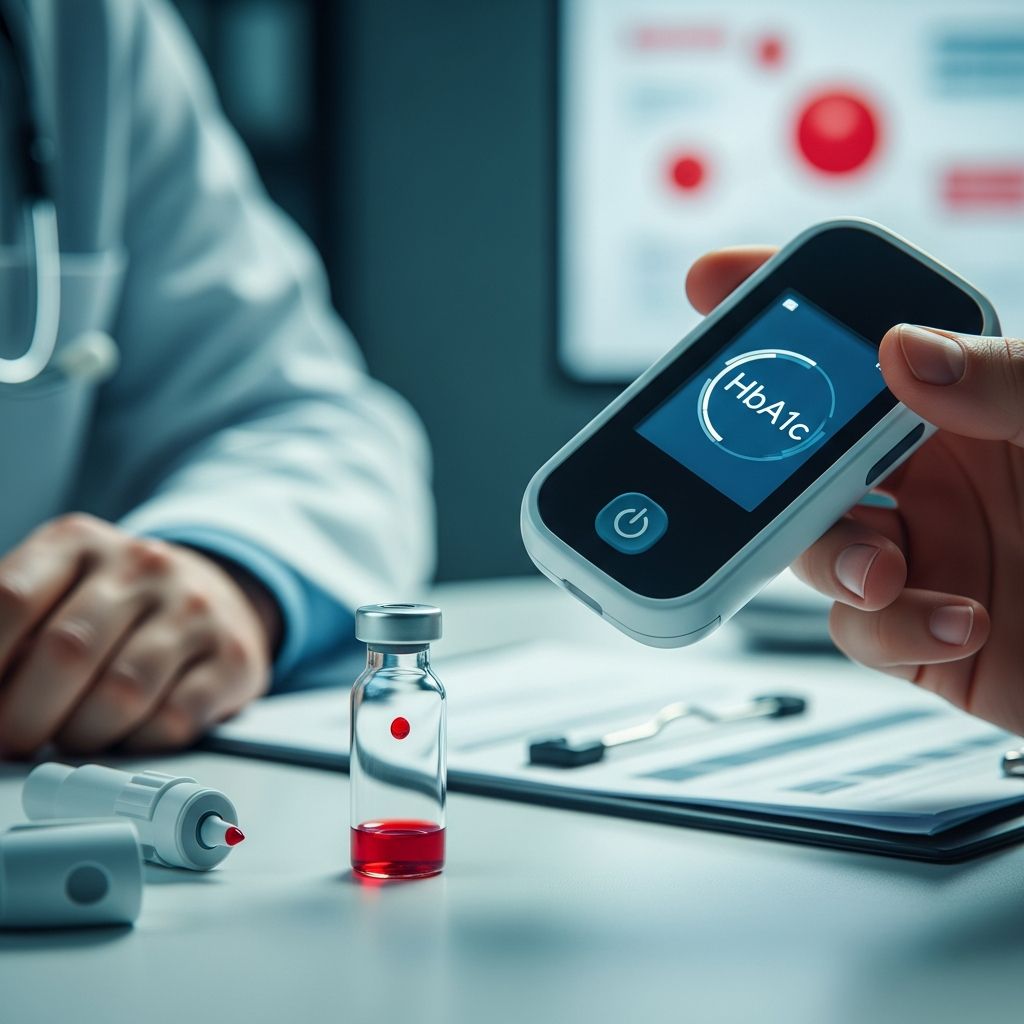
The hemoglobin A1c test (also called HbA1c or A1C test) is a simple blood test that provides insight into your average blood glucose levels over an extended period. Unlike daily blood sugar readings that capture a snapshot of your glucose at a specific moment, the HbA1c test reveals the bigger picture of your blood sugar control over approximately two to three months.
This measurement is possible because of how glucose interacts with red blood cells. When glucose enters your bloodstream from the food you consume, it attaches to hemoglobin, a protein in red blood cells responsible for carrying oxygen throughout your body. This combination of glucose and hemoglobin is called “glycated hemoglobin.” The HbA1c test measures the percentage of your red blood cells that have glucose attached to them.
Since red blood cells typically live for approximately three months, the test results reflect your average blood glucose concentration during that timeframe. A higher percentage indicates that more glucose was circulating in your blood during the past several months, suggesting less effective blood sugar control.
How the HbA1c Test Works
The testing procedure itself is straightforward and requires minimal preparation. A healthcare provider draws a small blood sample, typically from a vein in your arm, though a finger prick may also be used in some cases. No fasting is required before the test, and no special preparation is necessary. The sample is then sent to a laboratory where it is analyzed to determine the percentage of glycated hemoglobin in your blood.
The results are reported as a percentage, representing the proportion of red blood cells with glucose attached to hemoglobin. The timeframe captured by the test reflects the lifespan of your red blood cells, which is why it provides such reliable long-term data.
Key Functions of HbA1c Testing
Diagnosing Diabetes and Prediabetes
One of the primary uses of HbA1c testing is to identify individuals with diabetes or those at risk of developing it. According to international health organizations, an HbA1c level of 6.5% (48 mmol/mol) or higher indicates diabetes. This threshold is based on research examining sensitivity and specificity data from multiple studies.
Additionally, the test can identify prediabetes, a condition in which blood sugar levels are elevated but not yet at diabetic levels. People with HbA1c results between 5.7% and 6.4% are considered to have increased risk for developing diabetes in the future. Identifying prediabetes is valuable because it allows individuals to take preventive action through lifestyle modifications before the condition progresses to type 2 diabetes.
Monitoring Diabetes Management
For individuals already diagnosed with diabetes, the HbA1c test serves as a critical tool for assessing how well their condition is being managed. By tracking HbA1c levels over time, healthcare providers can evaluate whether current treatment strategies—including medications, dietary choices, and exercise routines—are effectively controlling blood sugar.
Related Stories



If HbA1c results indicate poor blood sugar control, adjustments may be made to treatment plans. This might involve modifying medication dosages, changing medication types, or recommending lifestyle adjustments. Regular testing helps ensure that treatment remains optimized for each individual’s needs.
Assessing Diabetes Risk
Even for people without a diabetes diagnosis, HbA1c testing can reveal whether they are at elevated risk of developing the condition. Elevated HbA1c levels may indicate metabolic changes that warrant attention and preventive measures. This allows for early intervention before diabetes develops.
Understanding HbA1c Results
| HbA1c Level (Percentage) | HbA1c Level (mmol/mol) | Classification | Interpretation |
|---|---|---|---|
| Below 5.7% | Below 39 | Normal | Blood sugar control is within healthy range |
| 5.7% to 6.4% | 39 to 46 | Prediabetes | Increased risk of developing diabetes; lifestyle changes recommended |
| 6.5% and higher | 48 and higher | Diabetes | Indicates diabetes diagnosis; medical treatment typically required |
The relationship between HbA1c results and diabetes risk is important to understand. Higher HbA1c levels are associated with increased risk of complications related to diabetes, including cardiovascular disease, kidney damage, nerve damage, and eye problems. This is why maintaining lower HbA1c levels through effective blood sugar management is crucial for long-term health.
Screening Recommendations
Who Should Be Screened
The Centers for Disease Control and Prevention (CDC) recommends that all adults age 45 and older receive an HbA1c test to assess their risk for prediabetes or diabetes. Additionally, individuals younger than 45 who are overweight or have risk factors for diabetes should also be tested.
Risk factors that may warrant earlier testing include:
- Being overweight or having obesity
- Having a parent or sibling with type 2 diabetes
- Being sedentary or physically inactive
- Having a history of gestational diabetes
- Having polycystic ovary syndrome (PCOS)
Testing Frequency
The frequency of HbA1c testing varies depending on your results and health status. People with normal HbA1c levels in the healthy range should be retested every three years. Those identified with prediabetes should undergo testing every one to two years. For individuals with a diabetes diagnosis, testing should occur at least twice per year if they are meeting their treatment goals. If treatment goals are not being met or if treatment plans are being modified, more frequent testing may be necessary.
Advantages of HbA1c Testing
The HbA1c test offers several advantages over other glucose monitoring methods:
- Long-term perspective: Provides average glucose levels over several months rather than a single moment in time
- No fasting required: Can be performed without prior fasting, making it more convenient than some alternatives
- Dual purpose: Can be used for both diagnosing and monitoring diabetes, simplifying the testing process
- Standardized measurement: Offers consistent, reliable results that are comparable over time
- Less daily variation: Not influenced by single meals or daily blood sugar fluctuations
Factors That Can Affect HbA1c Results
While HbA1c testing is generally reliable, certain medical conditions and factors can affect the accuracy of results. Healthcare providers should be aware of these potential influences when interpreting test results:
- Sickle cell anemia and thalassemia (genetic blood disorders)
- Various forms of anemia
- Kidney failure or liver disease
- Cirrhosis
- Enlarged spleen
- Recent blood transfusions or significant blood loss
- High triglyceride levels
- Recent organ transplantation
- Pregnancy
- Alcohol use disorder
- Vitamin B12 deficiency
If you have any of these conditions, inform your healthcare provider before HbA1c testing, as alternative testing methods may be more appropriate.
HbA1c Testing vs. Other Blood Sugar Tests
The HbA1c test is one of several methods used to assess blood glucose levels. Unlike daily finger-stick tests that measure blood sugar at a specific moment, the HbA1c test provides historical data spanning months. This makes it particularly valuable for understanding overall control rather than moment-to-moment fluctuations.
To confirm a diabetes diagnosis, healthcare providers may order two A1C tests or combine an A1C test with another glucose test, such as a fasting blood glucose test. This redundancy ensures accuracy and helps eliminate false positives or false negatives.
Frequently Asked Questions About HbA1c Testing
How often do I need an HbA1c test?
Testing frequency depends on your results and health status. Those with normal results should be tested every three years. People with prediabetes need testing every one to two years. Those with diabetes typically need testing at least twice yearly, though more frequent testing may be necessary if goals aren’t being met.
Do I need to fast before an HbA1c test?
No, fasting is not required before an HbA1c test. You can eat and drink normally before your appointment, and no special preparation is needed.
What does a high HbA1c level mean?
A high HbA1c level indicates that your average blood sugar has been elevated over the past two to three months. This suggests your blood sugar is not well-controlled and increases your risk of diabetes-related complications. Your healthcare provider may recommend adjustments to your treatment plan.
Can I have HbA1c testing if I’m pregnant?
Pregnancy can affect HbA1c results, and alternative screening methods may be more appropriate during pregnancy. Consult your healthcare provider about the best testing approach for your specific situation.
How accurate is the HbA1c test?
The HbA1c test is highly reliable and standardized, with results being comparable over time and between laboratories. However, certain medical conditions can affect accuracy, which is why your healthcare provider should be aware of your complete medical history.
What to Expect After Your HbA1c Test
Results from an HbA1c test are typically available within one to two weeks. Your healthcare provider will review the results with you and explain what they mean for your health. If results indicate prediabetes or diabetes, your provider will discuss treatment options, lifestyle modifications, and monitoring plans with you. If you already have diabetes and your results show your condition is well-controlled, your provider may maintain your current treatment plan or suggest minor adjustments based on other health considerations.
Taking Control of Your Blood Sugar
Understanding your HbA1c test results empowers you to take an active role in managing your health. Whether the test reveals normal levels, prediabetes, or diabetes, this information provides a foundation for working with your healthcare team to develop an effective health strategy. Regular HbA1c testing combined with lifestyle modifications—including balanced nutrition, regular physical activity, stress management, and adequate sleep—can help you maintain healthy blood sugar levels and reduce your risk of serious complications.
References
- The HbA1c Test: Diagnosing, Monitoring, and Preventing Diabetes — YouTube. https://www.youtube.com/watch?v=v45v8gG_LeY
- Hemoglobin A1C Test (for Parents) — Nemours KidsHealth / Barbara Bush Children’s Hospital. https://kidshealth.org/BarbaraBushChildrens/en/parents/blood-test-hba1c.html
- Hemoglobin A1C Test | Fact Sheets — Yale Medicine. https://www.yalemedicine.org/conditions/hemoglobin-a1c-test-hba1c-test-blood-sugar
- HBA1C – Overview: Hemoglobin A1c, Blood — Mayo Clinic Laboratories. https://www.mayocliniclabs.com/test-catalog/overview/82080
- A1C Test — Mayo Clinic. https://www.mayoclinic.org/tests-procedures/a1c-test/about/pac-20384643
- A1C Test for Diabetes and Prediabetes — Centers for Disease Control and Prevention (CDC). https://www.cdc.gov/diabetes/diabetes-testing/prediabetes-a1c-test.html
- Hemoglobin A1C (HbA1c) Test — MedlinePlus, National Library of Medicine. https://medlineplus.gov/lab-tests/hemoglobin-a1c-hba1c-test/
- Understanding A1C Test — American Diabetes Association (ADA). https://diabetes.org/about-diabetes/a1c
Similar Articles








Read full bio of Sneha Tete