Understanding and Improving Core Strength
Strengthen your core with targeted exercises and proven techniques for better health.
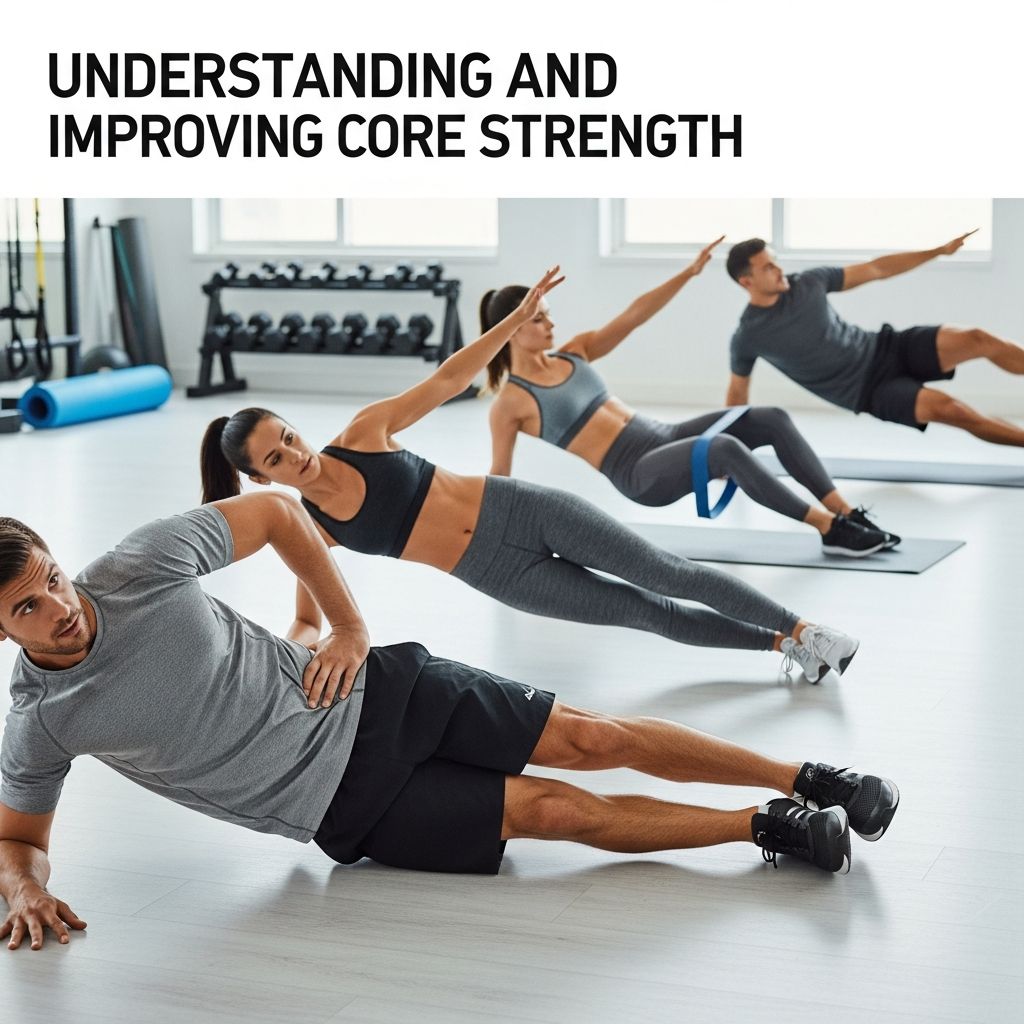
Your core is much more than just your abdominal muscles or “six-pack” that you see in fitness magazines. The core encompasses a complex group of muscles that work together to stabilize your spine, pelvis, and hips, providing the foundation for almost every movement your body makes. Understanding what core strength truly means and how to improve it is essential for maintaining a healthy, functional body and preventing injuries.
Core strength has become a buzzword in fitness and health circles, but many people misunderstand what it really means. Rather than focusing solely on getting visible abdominal muscles, true core strength is about developing the stability and endurance of the deep muscles that support your entire body. This comprehensive guide explores what core strength is, why it matters, and how you can effectively improve it through targeted exercises and proper training methods.
What Exactly Is Core Strength?
Core strength refers to the ability of the muscles in your abdomen, lower back, pelvis, and hips to work together to support and stabilize your spine and pelvis during movement and at rest. The core is not a single muscle but rather a group of muscles that function as an integrated system.
The Muscles That Make Up Your Core
Understanding the different muscles that comprise your core is important for targeting your training effectively. The main muscles include:
- Rectus Abdominis: The most superficial abdominal muscle that runs down the front of your abdomen, often called the “six-pack” muscle. While important, it is just one component of core strength.
- Transverse Abdominis: The deepest abdominal muscle that wraps around your torso like a corset. This muscle plays a crucial role in stabilizing your spine and maintaining good posture.
- External Obliques: Located on the sides and front of your abdomen, these muscles help with rotation and lateral flexion movements.
- Internal Obliques: Positioned deeper than the external obliques, these muscles also assist with rotational movements and provide spinal stability.
- Multifidus: Deep back muscles that run along the spine and provide segmental stability to individual vertebrae.
- Erector Spinae: Muscles along the back of your spine that extend the spine and help maintain upright posture.
- Pelvic Floor Muscles: Often overlooked, these muscles support the organs in your pelvis and contribute to core stability.
Why Is Core Strength Important?
A strong core is fundamental to overall health and fitness. Beyond the aesthetic appeal of visible abdominal muscles, core strength provides numerous functional benefits that impact daily life and athletic performance.
Benefits of Core Strength
- Improved Posture: A strong core helps maintain proper alignment of the spine, reducing the tendency to slouch and promoting better posture throughout the day.
- Back Pain Prevention: Many cases of chronic back pain are related to weak core muscles. Strengthening your core can help prevent and alleviate lower back pain.
- Enhanced Balance and Stability: A stable core improves your balance, reducing the risk of falls and injuries, particularly as you age.
- Better Athletic Performance: Whether you’re running, playing sports, or performing daily activities, a strong core provides the foundation for more efficient and powerful movements.
- Injury Prevention: Core strength helps protect your spine and joints by providing proper support during movement and exercise.
- Improved Functional Movement: Daily activities like lifting, bending, and reaching all depend on core stability and strength.
- Enhanced Breathing and Digestion: Core muscles work with your respiratory and digestive systems, and proper core engagement supports better breathing and digestive function.
Related Stories



Common Misconceptions About Core Strength
Many people have misconceptions about what it takes to build a strong core. Understanding and avoiding these myths can help you train more effectively:
- Myth: More Crunches Equal a Stronger Core: Endless crunches primarily work the rectus abdominis and can actually create muscle imbalances. True core strength requires engaging all the core muscles, not just the superficial ones.
- Myth: Core Strength Is Only About Abdominal Muscles: Your core includes back, hip, and pelvic muscles. A well-rounded core training program addresses all these areas.
- Myth: You Need Equipment to Strengthen Your Core: Many of the most effective core exercises use only your body weight and can be performed anywhere.
- Myth: Core Training Is Separate From Overall Fitness: Core strength should be integrated into your overall fitness routine rather than treated as an isolated component.
Effective Core Strengthening Exercises
Building a strong core requires consistent, targeted training. Here are some of the most effective exercises that engage multiple core muscles:
Foundational Core Exercises
- Plank: Hold your body in a straight line from head to heels, supported by your forearms and toes. This isometric exercise engages your entire core. Start with 20-30 seconds and work up to 60 seconds or longer.
- Modified Plank: For beginners, perform a plank on your knees rather than your toes to reduce intensity while still building strength.
- Side Plank: This exercise targets the obliques and lateral core muscles. Hold for 20-30 seconds on each side and increase duration over time.
- Dead Bug: Lying on your back, extend opposite arm and leg while keeping your lower back pressed to the floor. This exercise develops coordination and deep core stability.
- Bird Dog: Starting on hands and knees, extend opposite arm and leg while maintaining a neutral spine. This exercise improves core stability and coordination.
- Bridges: Lying on your back with knees bent, lift your hips toward the ceiling to engage your glutes and core. Hold for 2-3 seconds and repeat.
- Abdominal Bracing: Lie on your back and practice consciously tightening your abdominal muscles while maintaining normal breathing. This teaches muscle activation and control.
Intermediate Core Exercises
- Stability Ball Exercises: Performing exercises on an unstable surface like a stability ball requires greater core engagement to maintain balance.
- Pallof Press: Using a cable machine or resistance band, press weight away from your body while resisting rotation. This improves rotational stability.
- Mountain Climbers: In a plank position, alternately bring knees toward chest in a controlled manner, engaging core muscles dynamically.
- Leg Raises: Lying on your back, raise your legs while keeping your lower back pressed to the floor. Control is more important than height.
- Russian Twists: Seated with knees bent, rotate your torso side to side, engaging the oblique muscles.
Designing Your Core Training Program
An effective core training program should be progressive, balanced, and integrated with your overall fitness routine. Here are key principles to follow:
Program Principles
- Progressive Overload: Gradually increase the difficulty of exercises by holding longer, adding resistance, or trying more challenging variations.
- Frequency: Include core exercises 3-5 times per week for optimal results. Rest days allow for muscle recovery and adaptation.
- Balance: Train all core muscles, including front, back, and lateral muscles. Avoid overemphasizing any single area.
- Integration: Incorporate core work into functional movements and compound exercises rather than isolating core muscles exclusively.
- Quality Over Quantity: Focus on proper form and controlled movements rather than rushing through exercises with poor technique.
- Consistency: Regular, consistent training is more important than occasional intense sessions.
Common Core Training Mistakes to Avoid
Understanding common mistakes can help you train more efficiently and avoid setbacks:
- Poor Form: Maintaining proper alignment and engaging the correct muscles is essential. Consider working with a trainer to ensure correct technique.
- Holding Your Breath: Proper breathing is crucial during core exercises. Continue breathing naturally throughout your workout.
- Neglecting the Back: Many people focus on front abdominal exercises while neglecting back muscles, creating imbalances.
- Training Too Hard, Too Often: Overtraining can lead to fatigue and injury. Allow adequate recovery time between sessions.
- Ignoring Flexibility: Core training should be complemented with flexibility and mobility work to prevent tightness and maintain functional movement.
Core Strength and Posture
Proper posture is fundamentally connected to core strength. When your core muscles are weak, your body compensates by adopting poor postural patterns, which can lead to pain and dysfunction. Strong core muscles help maintain the natural curves of your spine and support upright posture throughout the day. This not only looks better but also reduces strain on your joints and improves your overall health.
Nutrition and Recovery for Core Development
Building core strength requires more than just exercise. Adequate nutrition and recovery are essential components of a successful training program. Ensure you consume sufficient protein to support muscle development, stay hydrated, and get adequate sleep to allow your muscles to recover and adapt to training. Additionally, incorporating stretching and foam rolling into your routine can enhance recovery and reduce muscle soreness.
When to Seek Professional Guidance
If you experience pain during core exercises, have a history of back problems, or are new to exercise, consider working with a physical therapist or certified fitness professional. They can assess your individual needs, identify muscle imbalances, and design a personalized program to help you build core strength safely and effectively.
Frequently Asked Questions
Q: How long does it take to build core strength?
A: Most people begin noticing improvements in core strength and stability within 4-6 weeks of consistent training. However, significant strength gains typically take 8-12 weeks or longer, depending on your starting fitness level and training consistency.
Q: Can I get core strength without doing crunches?
A: Absolutely. In fact, exercises like planks, bridges, and dead bugs are often more effective for building functional core strength than traditional crunches. Many people successfully build strong cores without ever doing a single crunch.
Q: Is it necessary to do core exercises every day?
A: No. Core muscles benefit from rest and recovery just like any other muscles. Training core 3-5 times per week is generally sufficient for most people, with at least one rest day between sessions.
Q: Can core exercises help with back pain?
A: Yes, strengthening your core can help prevent and alleviate back pain by providing better support for your spine. However, if you have existing back pain, consult with a healthcare provider or physical therapist before beginning an exercise program.
Q: Do I need special equipment to train my core?
A: No. While equipment like resistance bands and stability balls can be helpful, many effective core exercises require only your body weight and can be performed anywhere, making core training highly accessible.
Q: Can I lose belly fat by training my core?
A: Core exercises alone won’t reduce belly fat. However, they build and strengthen the muscles beneath the fat. Combined with cardio exercise and a healthy diet, core training contributes to overall body composition improvements.
Q: What’s the best time of day to do core exercises?
A: The best time is whenever you can be consistent with your training. Whether morning or evening, the most important factor is maintaining a regular schedule and performing exercises when your energy levels are adequate.
References
- Core Stability: Functional Anatomy and Physiology — American Council on Exercise. 2023. https://www.acefitness.org
- The Role of Core Stability in Athletic Performance and Injury Prevention — Journal of Athletic Training, National Athletic Trainers’ Association. 2022. https://www.nata.org/publications
- Low Back Pain and Core Stability — Mayo Clinic. 2023-11. https://www.mayoclinic.org/diseases-conditions/lower-back-pain
- Exercise and Spine Health: A Patient’s Guide — American Academy of Orthopaedic Surgeons. 2023. https://orthoinfo.aaos.org
- Progressive Core Strengthening in Rehabilitation — Physiotherapy Canada Journal. 2022. https://physiotherapy.ca/publications
Similar Articles








Read full bio of Sneha Tete