Understanding Macular Pucker: Causes, Symptoms, and Care
Learn how scar tissue affects central vision and when treatment becomes necessary.
What Exactly Is a Macular Pucker?
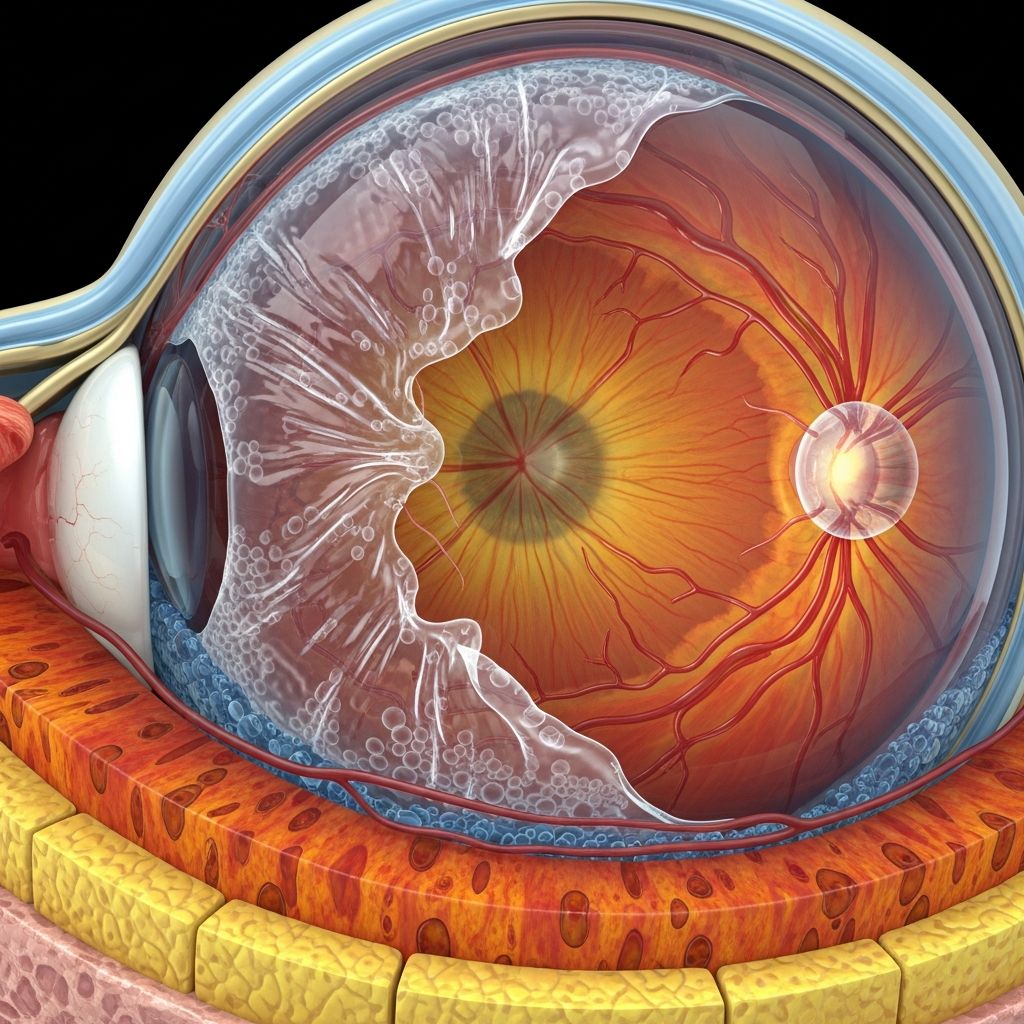
A macular pucker is an eye condition characterized by the formation of scar tissue on the surface of the macula, the critical central region of the retina responsible for sharp, detailed vision. This abnormal tissue creates a wrinkled or puckered appearance on the retina, leading to visual disturbances that can range from mild to significant. The condition is also known by several alternative names in medical literature, including epiretinal membrane (ERM), cellophane maculopathy, and surface wrinkling retinopathy. These terms all refer to the same underlying pathology: a thin, cellophane-like membrane that develops on the retinal surface and contracts over time.
The macula is an extraordinarily important anatomical structure within the eye. Measuring only about the size of a pinhead, this specialized area contains millions of light-sensing cells concentrated in an exceptionally dense arrangement. Its primary function is to facilitate our ability to see fine details, recognize faces, read written text, and perform tasks requiring visual precision. When scar tissue forms on the macula’s surface and contracts, it physically distorts the underlying retinal architecture, preventing light from focusing properly on the photoreceptors beneath.
How Does This Condition Develop?
The development of a macular pucker typically involves the formation of an epiretinal membrane, a thin layer of fibrous tissue that adheres to the macula’s surface. This membrane grows gradually and possesses the ability to contract, much like scar tissue elsewhere in the body. As it shrinks and tightens, it literally pulls and warps the macula underneath, creating the characteristic puckered appearance that gives the condition its descriptive name.
One of the most common mechanisms behind macular pucker formation relates to changes in the vitreous, the clear gel substance that fills the eye’s interior. As individuals age, the vitreous naturally shrinks and typically separates cleanly from the retina in a process called vitreous detachment. However, sometimes the vitreous remains partially adhered to the retinal surface, particularly at the macula. When this occurs, the contracting vitreous exerts persistent traction or pulling forces on the macular tissue, gradually causing it to wrinkle and distort. This age-related process is the most frequent cause of macular pucker, affecting a significant portion of the aging population.
Identifying Risk Factors and Vulnerable Populations
While macular pucker can develop in anyone, certain groups face substantially elevated risk. Age stands as the predominant risk factor, with the condition occurring far more frequently in individuals over 50 years old. Research indicates that macular pucker affects between 18.8% and 34.1% of Americans, with prevalence increasing significantly with each passing decade.
Beyond age-related factors, several medical conditions and eye-related events increase susceptibility to macular pucker development:
- Previous eye surgery, particularly cataract removal procedures, where post-surgical inflammation can trigger membrane formation
- Retinal tears or detachment, which create inflammatory responses leading to scar tissue development
- Diabetic retinopathy, a complication of diabetes that damages retinal blood vessels
- Eye inflammation or uveitis, which causes internal swelling and healing processes that promote scar tissue formation
- High myopia (severe nearsightedness), which significantly increases risk of macular puckers and other retinal complications
- Retinal vein occlusions, where blood vessels become blocked
- Previous eye trauma or injury from accidents
- Posterior vitreous detachment that remains incomplete or partially adherent to the macula
Understanding these risk factors helps individuals recognize when they might benefit from more frequent eye examinations and closer monitoring by their optometrist or ophthalmologist.
Recognizing Symptoms and How They Progress
The symptoms of macular pucker vary considerably among affected individuals, ranging from completely unnoticeable to significantly vision-impairing. In many cases, the condition develops insidiously, with changes occurring so gradually that a person may not immediately recognize something has changed in their vision.
The most characteristic symptom is metamorphopsia, a medical term describing the perception that straight lines appear wavy, bent, or curved. When reading text, the letters may seem to slope or ripple. Looking at a building’s edge or a door frame might reveal waviness rather than the expected straightness. This distortion occurs because the puckered macula no longer processes light uniformly across its surface.
Related Stories



Additional symptoms that individuals may experience include:
- Blurred or fuzzy central vision that doesn’t improve with glasses or contact lenses
- Difficulty reading fine print or performing detailed visual tasks
- Reduced ability to distinguish fine details and sharp contrast
- Double vision or diplopia, though this occurs in rarer cases
- Apparent size difference between images from each eye
- Increased difficulty with tasks requiring sustained near vision, such as sewing or detailed crafts
- Challenges with driving, particularly in low-light conditions or nighttime
- Difficulty viewing digital screens for extended periods
- Sensitivity to glare and harder time in low-contrast visual environments
It’s important to note that floaters (small spots or squiggly lines that drift across the visual field) are not directly caused by macular pucker itself, but they frequently appear alongside it and may indicate associated retinal conditions warranting investigation.
The Course of the Condition
The progression pattern of macular pucker varies significantly between individuals. Some people experience stable vision for years without noticeable worsening, while others may see gradual deterioration as the membrane continues to contract and tighten. Most individuals maintain stable vision, with symptoms that develop slowly or remain stationary over extended periods. Importantly, spontaneous improvement without treatment is uncommon, and the distortions typically don’t resolve on their own.
One notable aspect of macular pucker is that it usually affects only one eye, though bilateral involvement does occasionally occur. When both eyes are affected, one typically experiences more significant symptoms than the other. The unaffected eye may compensate so effectively that a person doesn’t immediately notice changes, which is why regular comprehensive eye examinations remain crucial for early detection and monitoring.
Diagnostic Evaluation and Medical Assessment
An eye care professional can diagnose macular pucker through several examination techniques. During a comprehensive eye examination, the ophthalmologist or optometrist will evaluate visual acuity, assess how well you perceive detail, and examine the retina through dilated pupil examination using specialized viewing instruments.
Advanced imaging technology plays a crucial role in modern macular pucker diagnosis. Optical coherence tomography (OCT) provides cross-sectional images of the retina with remarkable detail, allowing the physician to visualize the epiretinal membrane and its relationship to the underlying macular tissue. This imaging capability enables precise assessment of membrane thickness and contraction severity, helping guide treatment decisions.
Fundus photography and other retinal imaging techniques may also be employed to document the condition and monitor changes over time. These diagnostic tools help differentiate macular pucker from similar-appearing conditions, most importantly from a macular hole, which is a completely different condition requiring different management approaches.
Distinguishing Macular Pucker from Macular Holes
A critical distinction exists between macular pucker and macular holes, conditions that can superficially seem similar but differ fundamentally in nature and treatment. A macular pucker involves scar tissue forming on the surface of the macula, wrinkling the underlying tissue. A macular hole, by contrast, is an actual full-thickness defect or opening in the macula itself. These conditions present with different symptoms, require different diagnostic approaches, and demand different treatment strategies.
Fortunately, while macular pucker can in rare cases eventually lead to macular hole development, the two conditions remain distinct. Understanding this distinction helps patients grasp why their eye care professional may recommend specific monitoring protocols and imaging studies.
Treatment Approaches and Management Strategies
The treatment of macular pucker depends primarily on how significantly the condition affects your daily life and visual function. Because many individuals with macular pucker maintain relatively stable, mild symptoms, observation without intervention remains a reasonable approach for many cases.
Observation and Monitoring: For mild cases causing minimal visual disruption, regular monitoring with periodic eye examinations may be all that’s necessary. Many people adapt well to their visual changes and continue normal activities without requiring surgery. Your eye care professional will recommend appropriate intervals for follow-up examinations based on your specific condition.
Surgical Intervention: When macular pucker significantly impairs vision and interferes with daily activities such as reading, driving, or work, surgical treatment becomes an appropriate consideration. The primary surgical procedure for macular pucker is vitrectomy combined with membrane peeling.
During this procedure, an ophthalmologist removes the vitreous gel from the eye, carefully identifies and extracts the epiretinal membrane from the macular surface, and potentially removes any internal limiting membrane tissue that may contribute to contraction. The eye’s vitreous cavity is then refilled with a clear saline solution or gas bubble that gradually absorbs and is replaced by the eye’s natural fluids. This surgical approach allows the macula to flatten and resume a more normal configuration, potentially improving visual clarity and reducing metamorphopsia.
Vitrectomy with membrane peeling has evolved considerably with advances in microsurgical techniques and instrumentation, offering improved safety profiles and outcomes. However, like any surgical procedure, it carries potential risks that should be discussed thoroughly with your retinal specialist before proceeding.
Important Considerations Regarding Vision and Correction
A fundamental characteristic of macular pucker-related vision loss is that it cannot be corrected with glasses, contact lenses, or other refractive aids. The distortion results from physical warping of the retinal tissue itself, not from errors in how the eye focuses light. No lens prescription will straighten wavy lines or improve detail perception compromised by macular puckering. This distinction is important for patients to understand, as it explains why their optometrist cannot improve their vision through stronger or different prescriptions.
Frequently Asked Questions
Is macular pucker hereditary?
While macular pucker itself is not typically inherited as a genetic condition, age-related vitreous changes affecting everyone eventually are universal. Some underlying conditions that increase macular pucker risk, such as high myopia, do have genetic components.
Will my macular pucker definitely get worse?
No. Many individuals with macular pucker experience stable vision over years or decades. While some cases gradually worsen as the membrane continues contracting, others remain unchanged indefinitely.
Can macular pucker be prevented?
Since age-related vitreous changes are inevitable, complete prevention is not possible. However, protecting eyes from trauma, managing systemic conditions like diabetes carefully, and maintaining regular eye examinations may help with early detection.
What is the success rate of macular pucker surgery?
Vitrectomy with membrane peeling successfully improves or stabilizes vision in the majority of cases where it’s performed. Success rates exceed 80% in many series, though individual outcomes vary based on disease severity and other factors.
How long is recovery from macular pucker surgery?
Visual recovery typically progresses over weeks to months following surgery, with gradual improvement as inflammation resolves and retinal function normalizes. Most patients notice some improvement within days, with continued gains over several months.
When to Seek Eye Care
Contact your eye care provider promptly if you notice sudden changes in your vision, including the development of wavy lines, sudden floaters, a new shadow in your peripheral vision, or significant changes in visual clarity. While many vision changes turn out to be non-threatening, prompt evaluation ensures timely diagnosis of any conditions requiring intervention.
Regular comprehensive eye examinations become increasingly important as you age, allowing early detection of macular pucker and other age-related eye conditions before they significantly impact your quality of life.
References
- Macular Pucker — National Eye Institute, National Institutes of Health. 2024. https://www.nei.nih.gov/eye-health-information/eye-conditions-and-diseases/macular-pucker
- Macular Pucker: What It Is, Symptoms & Treatment — Cleveland Clinic. 2024. https://my.clevelandclinic.org/health/diseases/14207-macular-pucker
- Macular Pucker Treatment — Wills Eye Hospital. 2024. https://www.willseye.org/macular-pucker/
- Macular Pucker & Edema — Retina Specialty. 2024. https://www.retinaspecialty.com/macular-pucker-edema/
- Macular Pucker: Causes, Symptoms, and Your Treatment Options — Louisiana Retina. 2024. https://louisianaretina.com/macular-pucker-causes-symptoms-and-treatment-options/
Similar Articles








Read full bio of medha deb