Understanding Metastasis: What Is Metastatic Cancer?
Learn how cancer spreads, its impact on the body, and the latest treatment options for metastatic disease.
What Is Metastasis?
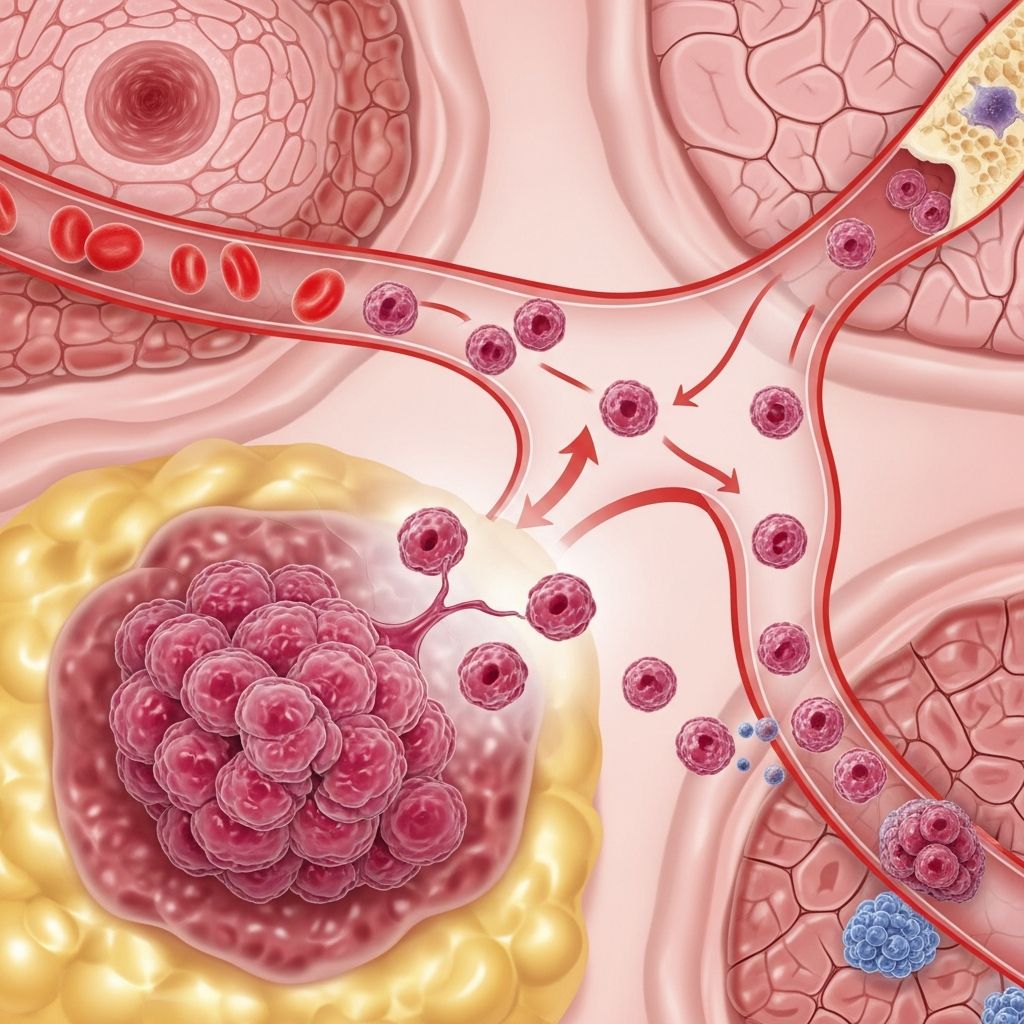
Metastasis is the process by which cancer cells break away from the original (primary) tumor, travel through the bloodstream or lymphatic system, and form new tumors in other parts of the body. When cancer spreads in this way, it is called metastatic cancer, stage IV cancer, or secondary cancer. The new tumors are made up of the same type of cancer cells as the original tumor. For example, if breast cancer spreads to the liver, the cancer cells in the liver are still breast cancer cells, not liver cancer cells.
How Does Metastasis Happen?
Cancer metastasis is a complex process that involves several steps:
- Local invasion: Cancer cells invade nearby healthy tissue.
- Intravasation: Cancer cells enter the bloodstream or lymphatic system.
- Circulation: Cancer cells travel through the blood or lymph to other parts of the body.
- Arrest and extravasation: Cancer cells stop in capillaries and move into new tissue.
- Colonization: Cancer cells grow and form new tumors in the new location.
Common Sites of Metastasis
Metastasis can occur in almost any part of the body, but some sites are more common than others. The most frequent sites include:
- Lungs
- Bones
- Liver
- Brain
The likelihood of metastasis to a particular site depends on the type of cancer. For example, breast cancer often spreads to the bones, lungs, liver, and brain, while thyroid cancer commonly spreads to the lungs and bones1.
Diagnosing Metastatic Cancer
Diagnosing metastatic cancer involves several steps:
- Imaging tests: CT scans, MRI, PET scans, and bone scans can help locate metastatic tumors.
- Biopsy: A sample of tissue from the suspected metastatic site is examined under a microscope to confirm the presence of cancer cells.
- Blood tests: Certain blood markers can indicate the presence of metastatic disease.
- Physical examination: Healthcare providers check for signs of cancer spread, such as enlarged lymph nodes or organ enlargement.
Treatment Options for Metastatic Cancer
Treatment for metastatic cancer depends on several factors, including the type of cancer, the location of metastasis, and the patient’s overall health. Common treatment options include:
- Systemic therapy: Chemotherapy, targeted therapy, and immunotherapy are used to treat cancer throughout the body.
- Local therapy: Surgery or radiation therapy may be used to treat specific metastatic tumors.
- Hormone therapy: For cancers that are hormone-sensitive, such as breast and prostate cancer.
- Supportive care: Pain management, nutritional support, and psychological counseling are important for improving quality of life.
Survival Rates and Prognosis
Survival rates for metastatic cancer vary widely depending on the type of cancer, the extent of spread, and the effectiveness of treatment. For example, the 20-year survival rate for thyroid cancer is over 90%, but this drops to about 50% for those with distant metastasis1. Older patients, those with multiple sites of metastasis, and those with certain cancer types (such as follicular thyroid cancer) tend to have a poorer prognosis.
Can Metastasis Be Prevented?
While it is not always possible to prevent cancer from spreading, early detection and treatment can reduce the risk of metastasis. Common strategies include:
Related Stories



- Regular screening: Routine cancer screenings can help detect cancer at an early stage.
- Adjuvant therapy: After initial treatment, adjuvant therapies such as chemotherapy, targeted therapy, and immunotherapy can help prevent recurrence and metastasis.
- Healthy lifestyle: Maintaining a healthy weight, eating a balanced diet, and avoiding tobacco and excessive alcohol can reduce cancer risk.
Latest Advances in Metastatic Cancer Treatment
Recent advances in cancer research have led to new and more effective treatments for metastatic cancer. Some of the latest developments include:
- Personalized cell therapy: Tumor-infiltrating lymphocyte (TIL) therapy uses a patient’s own immune cells to attack cancer cells. This treatment has shown promise for metastatic melanoma and is being studied for other cancers2.
- Targeted therapies: Drugs that target specific genetic mutations in cancer cells are improving outcomes for patients with metastatic disease.
- Immunotherapy: Treatments that boost the body’s immune system to fight cancer are becoming more widely used.
- Research on the tumor microenvironment: Scientists are studying how cancer cells interact with their surroundings, including immune cells, to develop new strategies for preventing and treating metastasis3.
FAQs About Metastatic Cancer
What is the difference between primary and metastatic cancer?
Primary cancer is the original tumor that develops in a specific organ or tissue. Metastatic cancer is when cancer cells from the primary tumor spread to other parts of the body and form new tumors.
Can metastatic cancer be cured?
In some cases, metastatic cancer can be controlled for a long time, but it is often not curable. Treatment focuses on managing symptoms, slowing the progression of the disease, and improving quality of life.
What are the symptoms of metastatic cancer?
Symptoms depend on the location of the metastatic tumors. Common symptoms include pain, fatigue, weight loss, and changes in organ function.
How is metastatic cancer diagnosed?
Metastatic cancer is diagnosed through imaging tests, biopsies, blood tests, and physical examinations.
What are the latest treatments for metastatic cancer?
The latest treatments include personalized cell therapy, targeted therapies, immunotherapy, and research on the tumor microenvironment.
References
- Metastases from differentiated thyroid cancer – the Cleveland Clinic. ASCO Publications. https://ascopubs.org/doi/10.1200/JCO.2016.34.15_suppl.e17546
- Cell Therapy to Treat Unresectable or Metastatic Melanoma. Cleveland Clinic. https://consultqd.clevelandclinic.org/tumor-infiltrating-lymphocytes-therapy-now-available-for-treating-unresectable-or-metastatic-melanoma
- This lab investigates breast cancer brain metastasis by following how cancer travels and changes across the body. Cleveland Clinic. https://www.lerner.ccf.org/news/article/?title=This+lab+investigates+breast+cancer+brain+metastasis+by+following+how+cancer+travels+and+changes+across+the+body+&id=b8cbdf360136254d441c8ae3b9156343e2972f87
Similar Articles








Read full bio of Sneha Tete