Understanding Milia: Skin Cysts Explained
Discover the causes, types, treatments, and prevention strategies for milia, the common small white bumps affecting skin around the eyes and face.
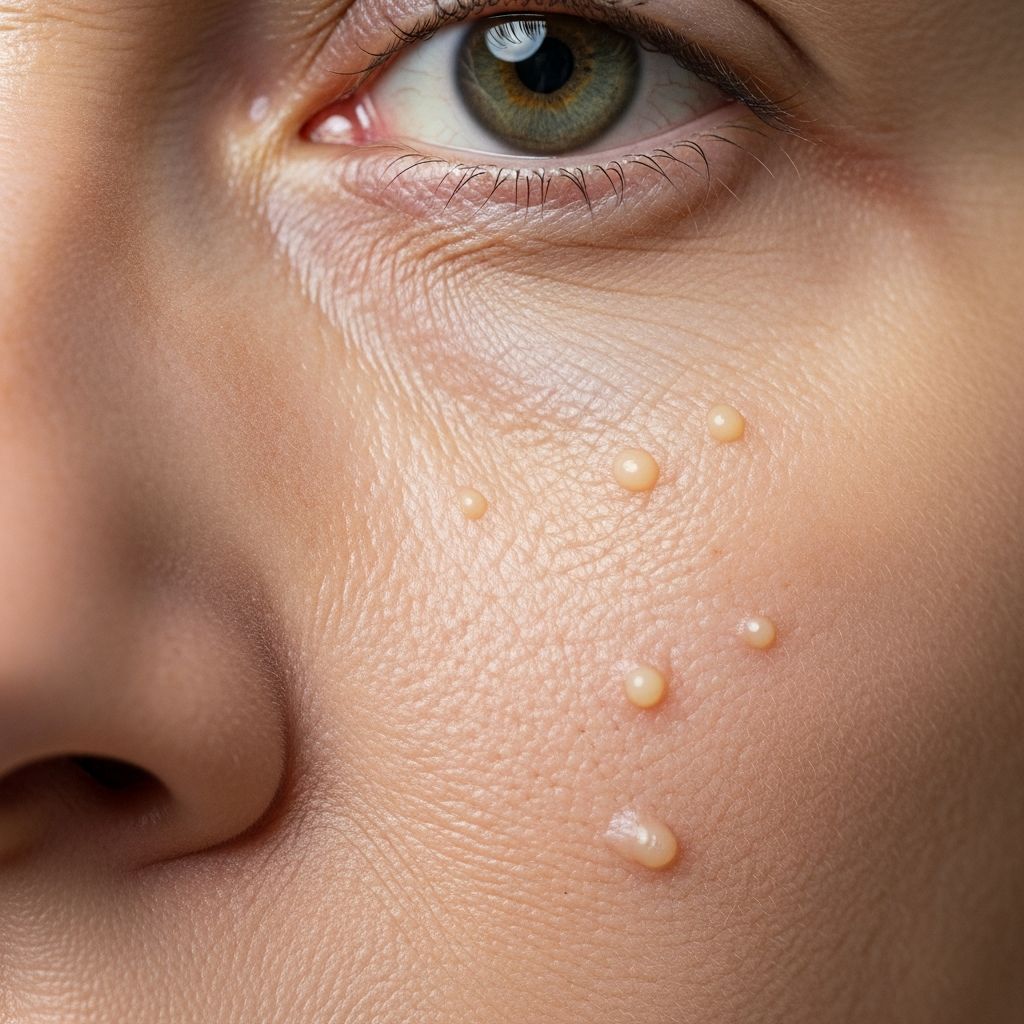
Milia are small, white or yellowish cysts that form just beneath the skin’s surface, commonly appearing on the face, particularly around the eyes, cheeks, nose, and forehead. These benign growths consist of trapped keratin, a protein essential for skin, hair, and nails, and affect people of all ages from newborns to adults. Unlike acne, milia are not inflamed or painful, but their persistent presence can be cosmetically bothersome.
Formation and Characteristics of Milia
Milia develop when dead skin cells fail to shed naturally, becoming encased under new skin layers and hardening into tiny cysts, typically 1-2 mm in diameter. This process disrupts the skin’s normal exfoliation cycle, where old cells slough off to make room for fresh ones. The result is a cluster of pearly white bumps that feel firm to the touch and are most visible in areas with thin skin.
These cysts are harmless and non-contagious, often resolving spontaneously, especially in infants. However, in adults, they may persist without intervention due to factors like sun damage or skincare habits.
Common Locations and Who Gets Them
Milia frequently cluster on the face—eyelids, under eyes, cheeks, and nose—but can also appear on the trunk, arms, or genitals. In newborns, known as neonatal milia or ‘milk spots,’ they affect 40-50% of U.S. infants and typically vanish within weeks. Adults and older children experience them more persistently, with no bias toward skin type or gender.
Types of Milia: From Common to Rare Variants
Milia are classified into primary and secondary types, each with subtypes based on onset, cause, and presentation.
Primary Milia
These occur without an underlying trigger and include:
- Neonatal Milia: Present at birth on a baby’s nose, cheeks, or chin; self-resolve by 1-3 months.
- Juvenile or Primary Adult Milia: Appear on eyelids, forehead, or genitals in children or adults; may last months but often regress naturally.
Secondary Milia
Triggered by external factors or conditions:
- Trauma-Induced: From skin injuries, dermabrasion, burns, or prolonged sun exposure, leading to leathery skin that traps cells.
- Disease-Linked: Associated with blistering disorders like epidermolysis bullosa or bullous pemphigoid.
- Medication-Related: From long-term use of steroid creams or fluorouracil.
Rare Forms
- Milia en Plaque: Clustered into a raised, quarter-sized patch on eyelids, ears, or cheeks; more common in middle-aged women.
- Multiple Eruptive Milia: Crops of itchy bumps emerging over weeks on arms, trunk, or face.
| Type | Description | Common Sites | Typical Age Group |
|---|---|---|---|
| Neonatal | Harmless newborn spots | Nose, cheeks | Infants |
| Primary Adult | Spontaneous cysts | Eyelids, forehead | Children/Adults |
| Secondary/Trauma | Post-injury | Anywhere injured | All ages |
| Milia en Plaque | Clustered plaque | Eyelids, ears | Middle-aged women |
Main Causes and Risk Factors
The primary cause is keratin entrapment due to impaired exfoliation. Key aggravators include:
- Sun Damage: Thickens skin, hindering cell turnover.
- Heavy Skincare: Oil-based creams, lanolin, or thick makeup clog pores.
- Skin Conditions: Eczema, rosacea, or dermatitis increase risk.
- Procedures: Lasers or peels can trigger secondary milia.
Related Stories



Genetic syndromes like basal cell nevus rarely contribute.
Home Remedies and Prevention Strategies
Gentle daily care promotes natural resolution, especially for persistent adult milia.
Exfoliation Techniques
Remove dead cells safely:
- Use mild chemical exfoliants like low-dose lactic or glycolic acid for sensitive skin; salicylic or retinol for oilier types.
- Physical scrubs sparingly (2-3x/week for oily skin, once/week for sensitive).
- Apply gently for 30 seconds, follow with moisturizer.
Skincare Routine Essentials
- Cleanse twice daily with mild soap.
- Moisturize to maintain barrier without oils.
- Apply broad-spectrum sunscreen daily, even indoors.
- Steam face to open pores before cleansing.
- Avoid steroids and comedogenic products.
Results appear in weeks; patience is key. Never squeeze milia, as it risks scarring or infection.
Professional Treatment Options
For stubborn cases, dermatologists offer quick, effective procedures.
- Cryotherapy: Freezes with liquid nitrogen; minor blistering resolves fast.
- Extraction (De-roofing/Curettage): Needle or blade removes cyst after numbing; cauterized for healing.
- Laser or Chemical Peels: Ablates surface to release contents.
- Dermabrasion: Sands top layer.
These are unsuitable for newborns; consult a pro for eyelid milia to avoid eye damage.
When to Consult a Dermatologist
Seek care if milia:
- Persist beyond 3 months.
- Cluster unusually or itch.
- Accompany symptoms like pain or redness.
- Appear post-procedure or with skin disease.
Rule out rare associations like genetic disorders.
Frequently Asked Questions (FAQs)
Are milia dangerous?
No, they are benign and painless.
Do milia go away on their own?
Yes, especially in babies; adults may need help.
Can I pop milia at home?
No—risks infection and scarring; professional extraction is safer.
What skincare ingredients fight milia?
Glycolic, lactic, salicylic acids, and retinoids.
Does sunscreen prevent milia?
Yes, by protecting against sun-thickened skin.
Long-Term Management for Clear Skin
Consistent habits yield lasting results. Track progress with photos, adjust routines seasonally, and pair with a balanced diet rich in antioxidants for skin health. Milia, though common, are manageable with knowledge and care.
References
- How to Get Rid of Milia: Treatment and Images — GoodRx. 2023. https://www.goodrx.com/health-topic/dermatology/how-to-get-rid-of-milia
- How to Get Rid of Milia: The Complete Guide to Clearer Skin — Eminence Organics. 2023. https://eminenceorganics.com/us/blog/skincare/clear-away-milia-your-smoothest-skin.html
- Everything You Need to Know About Milia — Pine Belt Dermatology. 2023. https://www.pinebeltderm.com/everything-you-need-to-know-about-milia-types-causes-prevention-and-treatment
- Milia (Milk Spots): Causes & Treatment — Cleveland Clinic. 2023-10-12. https://my.clevelandclinic.org/health/diseases/17868-milia
- Milia 101: Removing those unsightly facial blemishes — SINY Derm. 2023. https://www.sinyderm.com/blog/milia-101-removing-those-unsightly-facial-blemishes
- Milia – StatPearls — NCBI Bookshelf – NIH. 2023-08-08. https://www.ncbi.nlm.nih.gov/books/NBK560481/
Similar Articles








Read full bio of medha deb