Understanding Nevi: Types, Causes, and Management
Complete guide to skin nevi: what they are, how they develop, and when to seek care
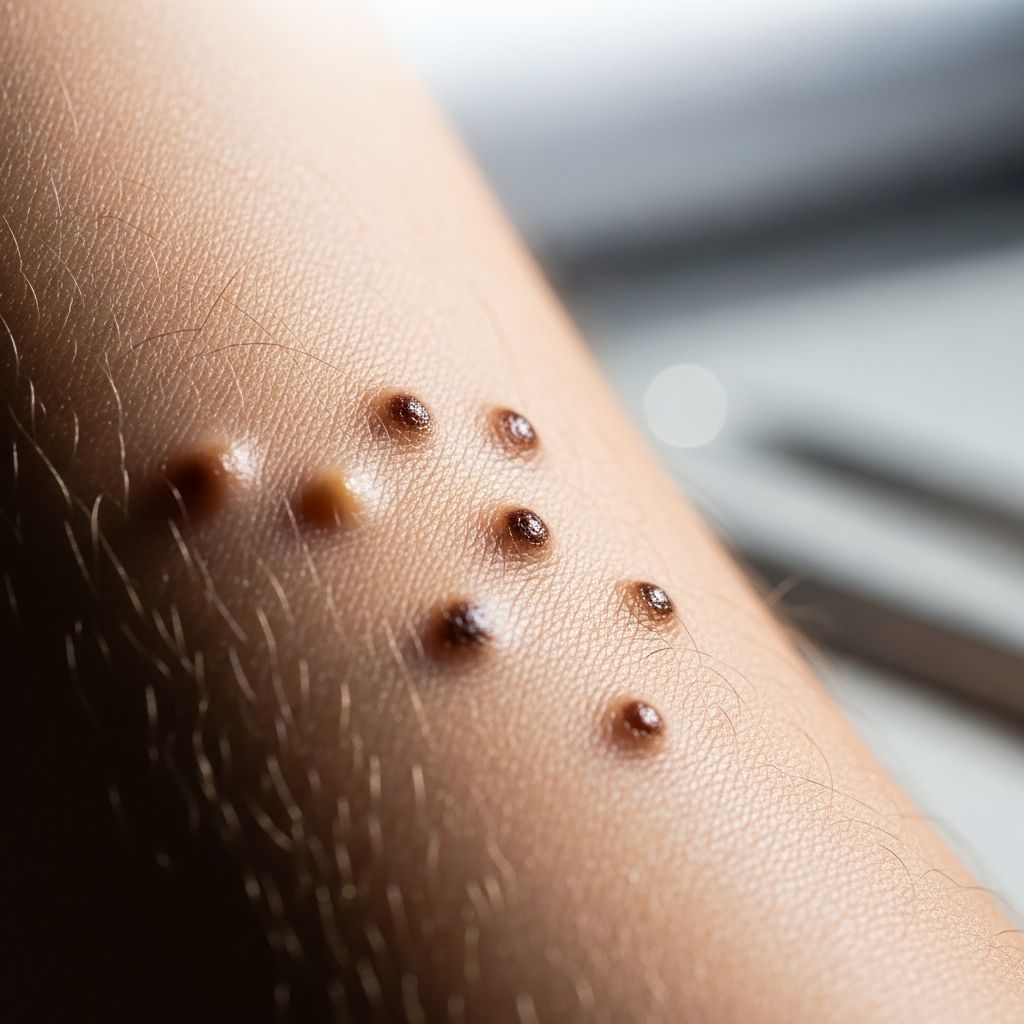
Nevi, commonly known as moles, represent some of the most frequently encountered skin lesions in dermatological practice. These benign growths affect nearly everyone at some point in their lives, with most individuals developing between 10 and 40 nevi throughout their lifetime. While the vast majority of nevi pose no health risk, understanding their characteristics, classification, and when professional evaluation is warranted remains essential for maintaining skin health and detecting potentially concerning changes.
Defining Nevi and Their Fundamental Characteristics
A nevus is defined as a visible, circumscribed, and chronic lesion of the skin or neighboring mucous membranes. The term derives from the Latin word “naevus,” meaning birthmark, though nevi can develop either at birth or throughout an individual’s lifetime. Despite their common name as moles, the term “nevus” encompasses a broader range of skin conditions than popular terminology suggests.
Medically speaking, nevi represent benign growths formed by clusters of melanocytes—specialized cells that produce melanin, the pigment responsible for skin coloration. These lesions are classified as either melanocytic or epidermal in origin, with each category displaying distinct characteristics and clinical presentations. The distinction between these types is crucial for proper diagnosis and determining appropriate management strategies.
What distinguishes nevi from other skin conditions is their relatively stable nature. Unlike rapidly evolving lesions, nevi are long-lasting skin conditions that maintain consistent characteristics over time, though certain types may gradually increase in size or undergo subtle changes in appearance. This stability makes them generally predictable and manageable, though vigilant monitoring remains important.
Classification and Distinctive Types of Nevi
Nevi are classified into two primary categories based on their cellular composition and origin: melanocytic nevi and epidermal nevi. Understanding these classifications helps in recognizing different types and determining appropriate clinical management.
Melanocytic Nevi
Melanocytic nevi, the most common type encountered in clinical practice, are benign neoplasms composed of pigment-producing nevus cells derived from melanocytes. These lesions manifest in several distinct forms, each with unique characteristics and clinical significance.
Common Acquired Melanocytic Nevi represent the typical mole that develops in most individuals. These lesions arise from clusters of melanocytic nevus cells distributed throughout the epidermis and dermis, presenting as uniformly pigmented lesions. Commonly appearing as small brown, tan, or pink spots, these nevi typically develop during childhood and adolescence, though they may continue to appear throughout adulthood, particularly with sun exposure. On clinical examination, these nevi display well-demarcated borders with even pigmentation, and they rarely exceed one centimeter in diameter.
Junctional Nevi are characterized by their location at the dermal-epidermal junction, presenting as well-demarcated, evenly pigmented brown macules and patches. These lesions tend to be relatively flat and uniform in color, making them easily distinguishable from other nevus types.
Intradermal Nevi display a different clinical presentation, typically appearing as flesh-colored or slightly pigmented raised nodules. These lesions are located deeper within the dermis and often lose pigmentation compared to junctional varieties, presenting a more elevated appearance on the skin surface.
Atypical Nevi, also termed dysplastic nevi, represent a distinct category requiring closer monitoring. These lesions display features resembling melanoma, including irregular borders, color variation, and larger size compared to typical moles. The presence of atypical nevi may indicate increased risk for melanoma development and warrants regular dermatological surveillance.
Related Stories



Specialized Melanocytic Variants include blue nevi, composed of deeply pigmented melanocytes that create a distinctive blue appearance, and Spitz nevi, which may require histopathological evaluation to exclude melanoma. Halo nevi represent another variant characterized by a surrounding ring of depigmented skin.
Epidermal Nevi
Epidermal nevi constitute a distinct category of cutaneous hamartomas resulting from hyperplasia of the epidermis and associated skin structures. These lesions typically manifest at birth or during early childhood and present different clinical and management considerations compared to melanocytic variants.
Nevus Sebaceous is recognized as a common congenital epidermal nevus, typically manifesting as a single asymptomatic lesion. These growths arise from sporadic gene mutations rather than inherited factors and generally remain stable throughout life. In typical presentations, nevus sebaceous appears as a hairless, yellowish lesion, commonly located on the scalp or face. Although generally benign, rare cases may develop into secondary malignancies, warranting periodic monitoring.
Becker Nevus represents an asymptomatic pigmented hamartoma frequently accompanied by hair growth. Located predominantly on the trunk or upper extremities, these lesions appear as light brown macules or patches with irregular, well-demarcated borders and often display a smooth, elevated verrucous surface. Unlike melanocytic nevi, Becker nevus typically emerges during adolescence or early adulthood rather than in childhood.
Inflammatory Linear Verrucous Epidermal Nevus (ILVEN) constitutes a rare inflammatory variant with an unknown genetic cause, occurring in approximately 1-3 per 1,000 live births. These lesions present as linear, erythematous, and scaly plaques with verrucous surfaces, typically appearing on extremities along natural skin tension lines known as Blaschko’s lines. ILVEN lesions frequently cause pruritus and demonstrate chronic, intermittent inflammation.
Developmental Patterns and Etiology
Understanding how nevi develop and the factors influencing their appearance provides valuable context for managing these lesions throughout life.
Nevi originate through a process of genetic mosaicism, wherein clusters of skin cells undergo mutations affecting their growth patterns. Congenital nevi—those present at birth—result from genetic events occurring during fetal development. These lesions may be quite small initially but can enlarge over months to years, occasionally achieving significant size. Congenital nevi represent a smaller proportion of total nevus burden in most individuals.
Acquired nevi develop throughout childhood, adolescence, and adulthood, with peak development occurring during teenage years and early adulthood. Sun exposure plays a documented role in nevus development, explaining the increased incidence of new lesions in sun-exposed body areas and in individuals with extensive sun exposure histories. Interestingly, nevi are not limited to any particular demographic group; they occur commonly regardless of age, gender, or ethnicity.
The underlying mechanism involves proliferation and organization of melanocytes into distinct nests within skin layers. As these lesions mature, they typically progress from junctional variants (located at the dermal-epidermal junction) to compound forms (present in both epidermis and dermis) to intradermal types (confined to deeper dermis). This progression represents a natural maturation process without pathological significance.
Clinical Presentation and Recognition
Recognizing typical nevus characteristics helps distinguish benign lesions from concerning skin changes requiring professional evaluation.
Melanocytic nevi typically present as circumscribed lesions measuring less than one centimeter in diameter, though some congenital variants may exceed this size significantly. Colors range from flesh tone to tan, brown, or occasionally pink-red hues. The lesions may be completely flat or gently raised, with some displaying hair growth, particularly as they age and mature.
A key feature of typical nevi is their symmetry and uniform appearance. The borders are generally well-demarcated and regular, the color is relatively homogeneous throughout the lesion, and the lesion remains stable in size and appearance over time. These characteristics collectively distinguish benign nevi from dysplastic variants or melanoma, which display irregular borders, color variation, and changing characteristics.
Epidermal nevi present distinct clinical features based on their specific type. Nevus sebaceous appears as a hairless, yellowish to skin-colored lesion with a slightly waxy or bumpy surface. Becker nevus displays hyperpigmentation with associated hair growth, while ILVEN presents inflammatory characteristics with erythema and scaling.
Diagnostic Evaluation and Clinical Assessment
Professional evaluation of nevi employs systematic approaches to distinguish benign lesions from potentially concerning changes requiring intervention.
Clinical Examination remains the foundation of nevus diagnosis. Dermatologists perform comprehensive skin examinations using visual inspection and palpation to assess lesion characteristics including size, color, border definition, surface texture, and symmetry. This systematic evaluation identifies concerning features warranting further investigation.
Dermoscopy enhances diagnostic accuracy by providing magnified visualization of lesion characteristics using specialized equipment. This non-invasive technique reveals subtle patterns and features not visible to the naked eye, helping differentiate benign nevi from atypical or malignant lesions.
Histopathological Examination provides definitive diagnosis through tissue analysis. When diagnostic uncertainty exists or atypical features are identified, full-thickness excisional biopsy allows microscopic evaluation of cellular composition and architecture. This technique proves particularly valuable for atypical nevi or lesions with features concerning for melanoma.
When Professional Evaluation Is Essential
While most nevi require no intervention, certain circumstances warrant prompt dermatological assessment.
Evaluation should be sought if any existing mole demonstrates changing characteristics, including:
- Increase in size or change in shape over weeks to months
- Color variation or development of multiple distinct colors
- Irregular, asymmetrical, or notched borders
- Bleeding, oozing, or other surface changes
- Associated pruritus or pain
- Development of a halo of lighter skin around the lesion
Additionally, individuals with numerous atypical nevi, family history of melanoma, or personal history of skin cancer require regular professional surveillance to detect early changes. Dermatologists should also evaluate lesions in patients with diagnostic uncertainty or those requiring management for cosmetic or symptomatic reasons.
Management Strategies and Treatment Approaches
Management of nevi varies based on lesion type, characteristics, and individual preferences.
Observation and Monitoring represents appropriate management for the majority of benign nevi. Most lesions require no treatment and remain stable throughout life. However, periodic self-examination and professional surveillance help identify any concerning changes warranting further investigation.
Removal and Excision may be performed for several indications, including diagnostic purposes to exclude malignancy, symptomatic concerns, or cosmetic preferences. Excisional biopsy provides both diagnostic confirmation and complete lesion removal. For lesions with diagnostic uncertainty, biopsy remains essential to confirm benignity and exclude melanoma or other malignancies.
Laser and Procedural Options offer alternative approaches for specific nevus types, particularly when cosmetic concerns are primary. Dermatologists may recommend laser therapy for certain epidermal nevi like Becker nevus when patients desire cosmetic improvement. These approaches require careful patient selection and should be performed by experienced dermatologists.
Risk Factors and Prognostic Considerations
While benign nevi carry minimal malignancy risk, certain factors influence individual risk profiles.
Atypical nevi represent an important prognostic consideration, as these lesions display features resembling melanoma and may indicate increased melanoma risk. Individuals with multiple atypical nevi, fair skin, significant sun exposure history, or family history of melanoma warrant more intensive surveillance. However, even in these higher-risk populations, the absolute malignancy risk associated with individual nevi remains relatively low.
Epidermal nevi rarely develop into malignancy, though specific variants like nevus sebaceous carry rare risk of secondary tumor development. Becker nevus malignancy is exceptionally uncommon, with excellent long-term prognosis.
Frequently Asked Questions About Nevi
- Are all moles nevi?
- Not all skin growths are nevi. While “mole” commonly refers to nevi, other skin lesions may superficially resemble moles. Professional evaluation helps distinguish nevi from other conditions.
- Can nevi become cancerous?
- While the vast majority of benign nevi never develop into melanoma, atypical nevi carry slightly elevated risk compared to typical nevi. Regular monitoring and prompt evaluation of changing lesions helps detect concerning changes early.
- Do nevi require removal?
- Most benign nevi do not require removal and remain stable throughout life. Removal may be recommended for diagnostic purposes, symptomatic concerns, or cosmetic preferences.
- What is the difference between congenital and acquired nevi?
- Congenital nevi are present at birth, resulting from genetic events during fetal development, while acquired nevi develop throughout childhood and adulthood, often influenced by sun exposure.
- How often should nevi be evaluated by a dermatologist?
- Individuals with typical nevi and no concerning features may undergo routine skin checks during annual physical examinations. Those with atypical nevi, numerous lesions, or personal/family history of melanoma require more frequent professional surveillance.
Summary and Key Takeaways
Nevi represent common benign skin lesions affecting nearly all individuals throughout their lives. These lesions are classified into melanocytic and epidermal types, each displaying distinct characteristics and management considerations. While the vast majority of nevi remain benign and stable, understanding their characteristics, recognizing concerning changes, and seeking appropriate professional evaluation when indicated remains essential for optimal skin health.
Regular self-examination combined with periodic professional dermatological assessment provides the most effective approach to managing nevi and detecting any changes warranting intervention. Modern dermatological techniques including clinical examination, dermoscopy, and histopathological evaluation enable accurate diagnosis and appropriate management tailored to individual circumstances and preferences.
References
- What is a nevus? A proposed definition — PubMed/National Center for Biotechnology Information (NCBI). 1994. https://pubmed.ncbi.nlm.nih.gov/8589475/
- Nevus — AMBOSS Medical Reference. 2025. https://www.amboss.com/us/knowledge/nevus/
- Nevus — Merck Manual Professional Edition. 2024. https://www.merckmanuals.com/professional/dermatologic-disorders/benign-skin-tumors-growths-and-vascular-lesions/nevi-moles
- Definition of nevus — National Cancer Institute (NCI) Dictionary of Cancer Terms. 2024. https://www.cancer.gov/publications/dictionaries/cancer-terms/def/nevus
- Nevus: Definition, Common Types, Photos, Diagnosis — Healthline Media. 2024. https://www.healthline.com/health/nevus
- Moles — MedlinePlus, National Library of Medicine. 2024. https://medlineplus.gov/moles.html
Similar Articles








Read full bio of Sneha Tete