Understanding Phantom Pain: Causes and Management
Explore the neurological basis of phantom pain and evidence-based treatment approaches for relief.
What Is Phantom Pain?
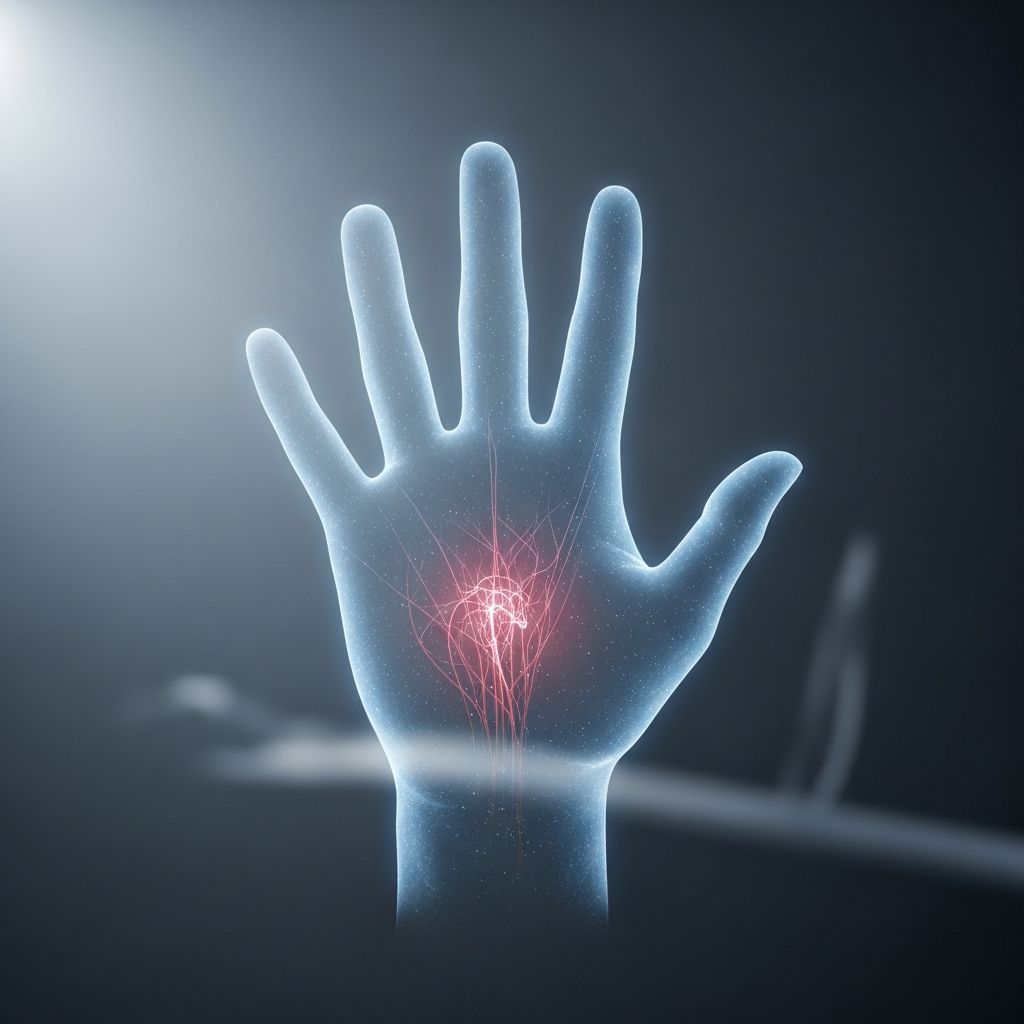
Phantom pain refers to the perception of pain or discomfort in a body part that no longer exists. This condition most commonly occurs following surgical or traumatic amputation of a limb, though it can also develop after the removal of organs such as the gallbladder or breast, or even after loss of teeth or eyes. The sensation typically manifests as nerve-type pain, characterized by burning sensations, electric shock-like feelings, pins and needles sensations, or shooting and stabbing pain.
The phenomenon is not merely psychological but represents a genuine neurological occurrence that affects a significant proportion of individuals who have undergone amputation. The pain can range from mild and intermittent to severe and persistent, substantially impacting quality of life and daily functioning.
Frequency and Demographics
Phantom pain presents differently across various populations. Research indicates that the condition occurs more frequently in older adults compared to individuals who experienced amputation at an earlier age or those born with congenital limb deficiency. Additionally, individuals with a prior history of chronic pain, anxiety, or depression demonstrate a higher likelihood of developing phantom pain compared to those without these psychological risk factors.
Certain pre-amputation conditions increase susceptibility to phantom pain. Patients who experienced pain in the limb before amputation, those dealing with stump pain following surgery, and individuals wearing poorly fitting prosthetic devices show elevated risk levels. Furthermore, high levels of emotional stress or psychological distress before or after surgery can increase the probability of developing this condition.
The Neurological Mechanisms Behind Phantom Pain
Central Nervous System Involvement
Modern neuroscience has moved away from older theories attributing phantom pain solely to nerve endings at the amputation site. Contemporary research reveals that phantom pain involves complex interactions between the peripheral nervous system, spinal cord, and brain. Imaging studies utilizing MRI and PET scans demonstrate measurable activity in brain regions associated with the amputated limb when patients report experiencing phantom pain, confirming central nervous system involvement.
Peripheral Mechanisms
When a limb is amputated or removed, injured nerve endings at the stump site often develop abnormal growths called neuromas. These neuromas exhibit increased sodium channel expression and can spontaneously generate abnormal electrical signals. This heightened neural activity, particularly involving pain-transmission fibers, contributes to phantom pain sensations. However, research has demonstrated that pain persists even after neuromas cease firing or when peripheral nerves are treated with conduction-blocking agents, indicating that peripheral mechanisms alone cannot fully explain the phenomenon.
The remaining nerve endings near the amputation site, known as neuromas, can become hypersensitive and may send exaggerated signals to the brain, further contributing to phantom pain perception. Importantly, damaged nerve endings and scar tissue at the amputation site work in conjunction with central mechanisms to generate pain signals.
Spinal Cord Changes
Following peripheral nerve injury, significant neurochemical changes occur within the spinal cord’s dorsal horn. When C fibers degenerate after injury, adjacent A fibers branch into the same region, fundamentally altering pain signal processing. Substance P, a neurotransmitter typically involved in pain transmission by specific fiber types, becomes expressed by different fiber populations following nerve damage, leading to spinal cord hyperexcitability.
This heightened excitability causes previously non-noxious stimuli to be interpreted as painful sensations, a process termed central sensitization. Additionally, increased expression of glutamate and NMDA neurotransmitters, combined with decreased inhibition from GABAergic neurons, further amplifies pain signal transmission. The loss of descending inhibitory fibers following nerve restructuring reduces the spinal cord’s natural pain-suppressing capacity, compounding the problem.
Related Stories



Brain Reorganization
One of the most significant discoveries in phantom pain research involves cortical reorganization—the brain’s remarkable ability to reassign neural territory. When a limb is lost, the area of the cerebral cortex that previously processed sensory information from that limb becomes available for reallocation. Neighboring brain regions expand into this space, causing a fundamental reorganization of the somatosensory and motor cortices.
Remarkably, research has identified a correlation between the extent of cortical reorganization and the intensity of pain patients experience, suggesting that the degree of brain rewiring directly influences symptom severity. This brain restructuring explains why stimulation of the remaining stump area can trigger pain sensations perceived as originating from the missing limb—the brain’s sensory map has been redrawn.
The Neuromatrix Theory
Contemporary neuroscience increasingly recognizes the neuromatrix theory as central to understanding phantom pain. According to this framework, the brain maintains a genetically predetermined network specific to each body part, modified throughout life by sensory inputs to create a unique neural signature called a neurosignature. This neurosignature determines how the brain consciously perceives each body part.
After limb amputation, alterations to the neuromatrix and its associated neurosignature may directly cause phantom pain localization to the lost limb. The neuromatrix theory incorporates input from somatosensory, limbic, and thalamocortical systems, providing a comprehensive framework for understanding how multiple neural systems contribute to phantom pain perception.
Environmental and Emotional Triggers
Phantom pain rarely occurs continuously; instead, it typically emerges in response to specific triggers. Pressure on the remaining limb frequently provokes phantom sensations, as the brain misinterprets signals from the stump area. Temperature changes can activate phantom pain, with some patients reporting increased symptoms during cold weather or when exposed to temperature variations.
Emotional stress represents another significant trigger, capable of amplifying phantom pain perception. Anxiety and depression can heighten pain sensation intensity, particularly in individuals who experienced psychological trauma associated with limb loss. For many amputees, the loss of a limb represents a profound traumatic experience, and associated psychological strain can substantially magnify pain perception.
Risk Factors for Phantom Pain Development
While not all individuals who undergo amputation develop phantom pain, certain factors significantly increase susceptibility:
- Pre-amputation chronic pain in the affected limb
- Advanced age at time of amputation
- History of anxiety, depression, or other mood disorders
- High levels of emotional distress or stress before or after surgery
- Development of stump pain following amputation
- Poorly fitting prosthetic devices
- Significant cortical reorganization in the brain
Distinguishing Phantom Pain from Related Conditions
| Condition | Location | Cause | Characteristics |
|---|---|---|---|
| Phantom Pain | Missing body part | Brain/spinal cord changes | Nerve-type sensations, variable intensity |
| Stump Pain | Remaining amputation site | Neuromas, scar tissue, inflammation | Localized to visible residual limb |
| Referred Pain | Different body area than source | Brain rewiring of sensory signals | Pain felt in alternate location due to neural reorganization |
Management and Treatment Approaches
Pharmacological Interventions
Various medications have demonstrated efficacy in managing phantom pain symptoms. Medications targeting nerve pain, such as gabapentin and pregabalin, work by modulating abnormal neural signaling. Topical treatments applied to the stump area may provide localized relief, while systemic medications address broader neurological dysfunction.
Psychological and Behavioral Strategies
Since emotional factors significantly influence phantom pain, psychological interventions prove valuable. Cognitive-behavioral therapy helps individuals develop coping strategies and address trauma associated with limb loss. Stress reduction techniques, mindfulness meditation, and relaxation training can diminish pain perception by reducing emotional triggers.
Physical and Rehabilitative Approaches
Mirror therapy represents an innovative technique where individuals view the reflected image of their intact limb in a mirror, creating the illusion of the missing limb’s movement. This visual feedback can help recalibrate the brain’s perception and reduce phantom pain. Prosthetic fitting, when properly designed and fitted, may reduce stump pain and decrease overall phantom sensation intensity.
Advanced Therapeutic Options
Specialized treatments including transcranial magnetic stimulation, spinal cord stimulation, and targeted nerve blocks offer additional options for individuals with treatment-resistant phantom pain. These approaches work by modulating neural activity at various levels of the nervous system.
Frequently Asked Questions
Is phantom pain real?
Yes, phantom pain is a genuine neurological condition confirmed by imaging studies and supported by extensive scientific research. Brain scans show actual neural activity in regions associated with the missing limb during phantom pain episodes.
Why do some amputees experience phantom pain while others don’t?
Genetic factors, age at amputation, pre-existing psychological conditions, and the extent of cortical reorganization all influence whether individuals develop phantom pain. Not all individuals experience identical neural changes following amputation.
Can phantom pain develop years after amputation?
While most phantom pain develops soon after amputation, delayed onset or recurrence can occur, particularly following emotional stress or other triggers that activate underlying neurological changes.
Does phantom pain eventually resolve?
For some individuals, phantom pain naturally diminishes over time as the brain adapts. Others experience persistent symptoms requiring ongoing management. Treatment response varies considerably among patients.
How does phantom pain differ from other post-amputation pain?
Phantom pain occurs in the missing body part and results from central nervous system changes. Stump pain, conversely, develops in the remaining amputation site and typically results from local tissue irritation or neuroma formation.
Conclusion
Phantom pain represents a complex neurological phenomenon resulting from interactions between peripheral nerve endings, spinal cord restructuring, and brain reorganization. Understanding that phantom pain originates from genuine neural mechanisms rather than psychological factors has revolutionized treatment approaches and improved outcomes for affected individuals. While the exact mechanisms remain an active area of research, evidence increasingly supports multi-modal treatment strategies addressing both physiological and psychological components of the condition. Continued investigation into cortical reorganization and neuromatrix functioning promises additional therapeutic options for those experiencing this challenging condition.
References
- Phantom pain — Wikipedia. Accessed February 2026. https://en.wikipedia.org/wiki/Phantom_pain
- What is phantom pain? Examples, cause, and treatment — Medical News Today. https://www.medicalnewstoday.com/articles/what-is-phantom-pain
- Phantom Limb Pain: Causes and Treatments — Physician’s Orthopedic Society of Medicine (POSM). https://posm.org/phantom-limb-pain-causes-and-treatments/
- Causes of Phantom Pain — Orthopedic Surgery Consultants. https://www.osc-ortho.com/blog/what-causes-phantom-limb-pain/
- Phantom Limb Pain – StatPearls — National Center for Biotechnology Information (NCBI) Bookshelf. https://www.ncbi.nlm.nih.gov/books/NBK448188/
- Phantom Limb Pain after Amputation: Signs, Causes & Treatment Options — ProMed East. https://promedeast.com/phantom-limb-pain/
- Is Phantom Pain a Real Medical Condition? — Physical Therapy and Certification Organizations Association (PTCOA). https://www.ptcoa.com/is-phantom-pain-a-real-medical-condition
Similar Articles








Read full bio of Sneha Tete