Understanding Scars: Types, Treatment, and Prevention
Learn about scar formation, types, and effective treatment options to minimize scarring.
What Are Scars?
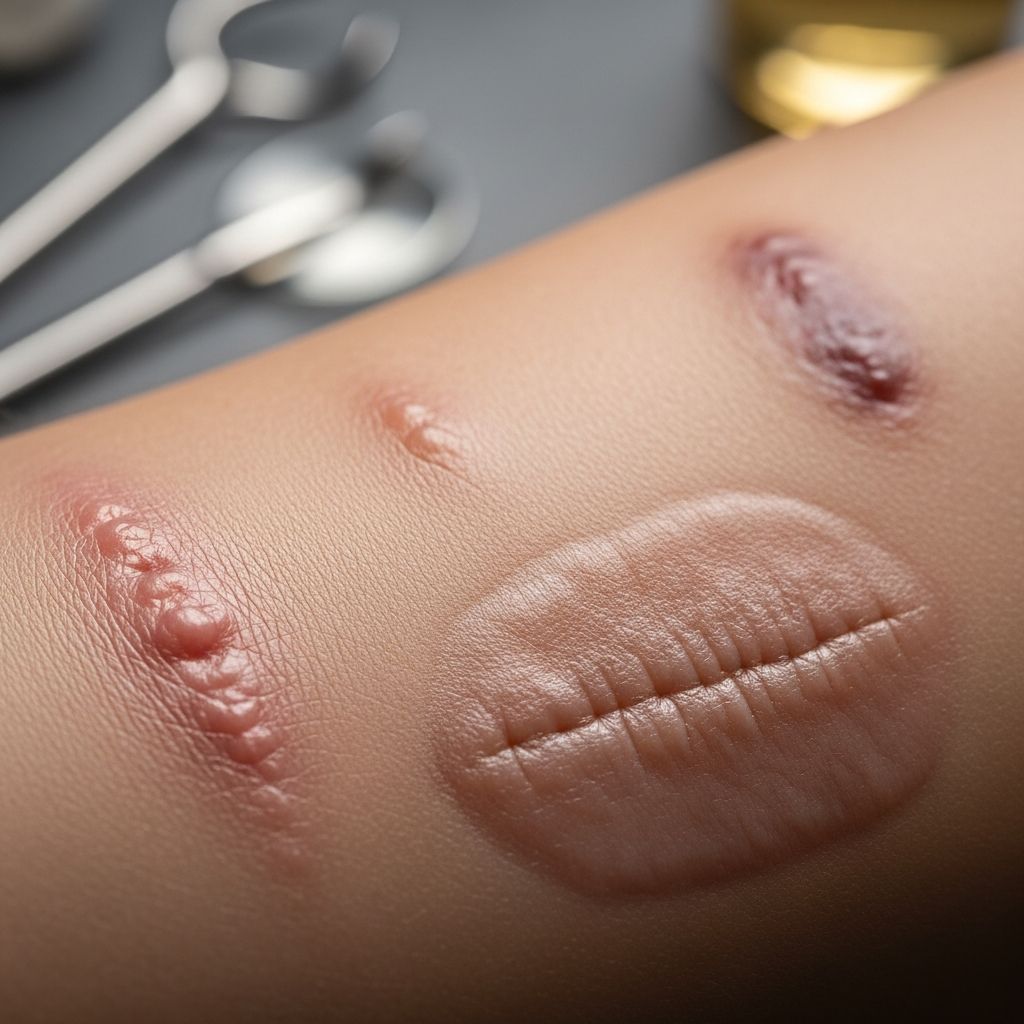
Scars are marks that remain on the skin after a wound has healed. They form as a natural part of the body’s healing process and are unavoidable when the skin has been injured, whether through surgery, trauma, burns, or other skin conditions. While scarring is a normal and necessary part of healing, the appearance and characteristics of scars can vary widely depending on factors such as the depth and severity of the wound, the location on the body, age, genetics, and skin type.
Understanding scars is essential for managing expectations about wound healing and exploring available treatment options. Although it is a common misconception that scars can be completely eliminated, modern medical techniques can significantly improve their appearance and make them less noticeable by helping them blend into surrounding skin.
How Do Scars Form?
The formation of scars is an intricate process that occurs in several distinct stages of wound healing. When skin is injured, the body immediately begins working to repair the damage through a coordinated series of biological events.
The Wound Healing Process
The wound healing process consists of four primary phases: hemostasis, inflammation, proliferation, and remodeling. During the hemostasis phase, the body forms blood clots to stop bleeding. The inflammatory phase follows, during which the body removes dead tissue and bacteria from the wound site. The proliferation phase involves the formation of new tissue, including collagen deposition. Finally, during the remodeling phase, the body reorganizes and strengthens the new tissue over months or even years.
Scars develop because the new tissue formed during healing has a different structure and composition than the original skin. The collagen produced during wound repair is arranged differently than in uninjured skin, resulting in a visible mark. In most cases, scars fade and become less noticeable over time as the body continues to remodel the tissue and as the scar matures.
Types of Scars
Not all scars look or behave the same way. Different types of scars form depending on various factors, and understanding these distinctions is important for determining appropriate treatment options.
Atrophic Scars
Atrophic scars appear as depressions or indentations in the skin, sitting below the level of surrounding skin. These scars are commonly seen following severe acne, chickenpox, or other conditions that cause deep tissue damage. They result from insufficient collagen production during the healing process, leaving a sunken appearance that can be particularly noticeable on the face.
Hypertrophic Scars
Hypertrophic scars are raised, firm, and often reddened marks that remain within the boundaries of the original wound. These scars result from excessive collagen production during the healing process and are more common in individuals with darker skin types (Fitzpatrick skin types IV–VI). Hypertrophic scars may be accompanied by itching or discomfort. Unlike keloids, hypertrophic scars typically do not extend beyond the original injury site and may improve over time without intervention, though this can take months or years.
Keloid Scars
Keloid scars are a more pronounced form of raised scarring that extend beyond the boundaries of the original wound, growing progressively over time. These scars are composed of excessive collagen and can become quite large and disfiguring. Keloids are particularly common in individuals with darker skin and can occur even from minor injuries such as ear piercings or small cuts. Unlike hypertrophic scars, keloids do not typically regress on their own and usually require professional treatment.
Related Stories



Contracture Scars
Contracture scars occur when significant portions of skin are lost, such as from severe burns. These scars involve tightening of the skin as it heals, which can restrict movement and function, particularly if they develop over joints. Contracture scars may require surgical intervention to restore mobility and function.
Stretch Marks
Stretch marks are a specialized type of scar that forms when the skin stretches rapidly due to pregnancy, rapid weight gain, or growth during adolescence. These marks typically appear as lines on the abdomen, breasts, thighs, or other areas and often fade from red or purple to silver or white over time.
Prevention of Scarring
While some scarring is inevitable when skin is injured, several strategies can help minimize the appearance of scars during the healing process.
Proper Wound Care
Immediately after an injury, proper wound care is crucial. Clean the wound gently, keep it moist with antibiotic ointment, and cover it with a bandage to promote healing. Avoid picking at scabs or allowing the wound to dry out completely, as this can increase scarring. Following healthcare provider instructions for wound care significantly impacts final scar appearance.
Sun Protection
Protecting healing wounds and scars from sun exposure is essential, as ultraviolet radiation can darken scars and make them more noticeable. Use sunscreen with at least SPF 30 on healing wounds for at least one year after injury to prevent hyperpigmentation.
Surgical Planning
When surgery is planned, the surgeon can help minimize visible scarring by placing incisions in natural skin creases, behind hairlines, or within natural folds of the skin where scars are less noticeable. This strategic planning during the initial procedure can significantly impact long-term aesthetic outcomes.
Early Intervention
Using topical treatments, steroid injections, and other early interventions during the first few weeks and months after wound closure can help minimize excessive scar formation. Starting treatment early, before excessive collagen accumulation occurs, often yields better results.
Non-Surgical Scar Treatment Options
Multiple non-surgical approaches are available for improving scar appearance, particularly for hypertrophic and keloid scars in patients with all skin types.
Topical Treatments
Various topical products can help improve scar appearance. Silicone-based products, available as gels or sheets, have been shown to flatten and soften scars by hydrating the scar tissue. Onion extract products and other over-the-counter creams may provide modest improvements. These treatments are most effective when started early and used consistently.
Corticosteroid Injections
Corticosteroid injections are considered the first-line treatment for raised scars, particularly hypertrophic and keloid scars. These injections work by decreasing local inflammation, dampening fibroblast proliferation, and inhibiting collagen production. Multiple injections spaced several weeks apart are typically required, and results improve progressively with each treatment. Corticosteroids have been shown to reduce scar volume significantly and decrease associated symptoms such as itching and pain.
Laser Treatments
Laser therapy has become an increasingly popular option for scar revision, offering non-invasive or minimally invasive approaches to improving scar appearance. Different types of lasers target various scar characteristics.
Non-Ablative Lasers
Non-ablative lasers work beneath the skin surface without removing the outer layer, making them suitable for treating redness, pigmentation changes, and promoting collagen remodeling. These lasers are generally safe across all skin types and require minimal downtime.
Ablative and Fractional Ablative Lasers
Ablative laser technology, including CO₂ and erbium-based lasers, removes the outer layer of skin to promote healing and collagen remodeling. Fractionally ablative lasers, which treat only a fraction of the skin at a time, have emerged as the preferred option as they offer reduced recovery time and lower risk of complications compared to fully ablative approaches. These treatments are particularly effective for depressed or atrophic scars.
Multimodal Laser Therapy
Combining multiple laser types and treatment modalities has gained increasing traction in scar management. Using several complementary approaches simultaneously or sequentially addresses multiple characteristics of scars, including dense collagen, blood vessel involvement, and pigmentation changes. Multimodal therapy often produces superior results compared to single-modality treatment, with improved patient satisfaction and fewer adverse effects.
Dermal Fillers
Injectable fillers can temporarily improve the appearance of depressed or atrophic scars by raising the scar tissue to the level of surrounding skin. While results are temporary, typically lasting six months to a year, fillers offer a non-surgical option with immediate results and no downtime. Fillers work best for shallow, depression-type scars.
Microdermabrasion and Chemical Peels
These techniques remove the outer layers of skin to improve texture and appearance. Microdermabrasion uses fine crystals to gently abrade the skin surface, while chemical peels use acids to dissolve the outer layers. These treatments can help fade surface scarring and improve overall skin texture but are most effective for mild surface scars.
Surgical Scar Revision
When non-surgical options are insufficient, surgical scar revision can significantly improve scar appearance. Several surgical techniques are available depending on the scar characteristics.
Scar Excision and Closure
The most common surgical approach involves carefully removing the scar tissue and reclosing the wound with meticulous technique. While this creates a new scar, the surgeon uses refined closing methods to create a thinner, more aesthetically pleasing line that blends better with surrounding skin. This approach is particularly effective for wide or prominent scars.
Scar Revision Timing
The timing of scar revision surgery is important for optimal results. New scars continue to change and mature for up to one year or more after the initial injury. Most surgeons prefer to wait until scars have fully matured before performing revision surgery, as operating on immature scars can potentially worsen the final appearance. However, some newer scars may benefit from early laser treatment or other interventions.
Tissue Expansion
For large scars or those in cosmetically sensitive areas, tissue expansion techniques may be used. This involves placing an inflatable device under the skin near the scar, gradually expanding it over weeks or months. Once sufficient skin has been generated, the expanded skin is used to replace the scarred tissue.
Skin Grafting
In cases of severe scarring with significant tissue loss or contracture, skin grafting may be necessary. Healthy skin from another part of the body is transplanted to the scarred area, improving both function and appearance. This approach is often used for extensive burn scars or large traumatic injuries.
Scar Considerations for Darker Skin Types
Individuals with darker skin types (Fitzpatrick skin types IV–VI) are at higher risk for developing hypertrophic and keloid scars and require specialized treatment approaches. These populations face unique challenges in scar management, including increased predisposition to abnormal scarring patterns and higher risk of post-inflammatory hyperpigmentation with certain treatments. Treatment plans must be individualized, with careful attention to technique modifications to minimize adverse effects while maximizing scar improvement. Combination therapies tailored specifically for darker skin types have shown success with minimal complications.
Timeline for Scar Maturation
Understanding scar maturation is crucial for setting realistic expectations. Most scars continue to improve and fade over 12 to 24 months following the injury. During this maturation period, scars typically become flatter, lighter, and softer. However, residual scarring is permanent, and complete elimination is not possible. Patience and realistic expectations are essential components of scar management.
Frequently Asked Questions
Q: Can scars be completely removed?
A: No, scars cannot be completely removed, but their appearance can be significantly improved through various treatment options. Modern techniques focus on making scars less noticeable and helping them blend with surrounding skin rather than eliminating them entirely.
Q: How long after injury should I wait before treating a scar?
A: Most healthcare providers recommend waiting 12 to 18 months for scars to fully mature before pursuing surgical revision, though some treatments like laser therapy or steroid injections may be started earlier during the healing phase.
Q: Are scars more common in certain skin types?
A: Yes, individuals with darker skin types have a higher predisposition to hypertrophic and keloid scars. Treatment approaches may need to be modified for these populations to achieve optimal results and minimize adverse effects.
Q: What is the difference between keloid and hypertrophic scars?
A: Keloid scars grow beyond the original wound boundaries and do not regress on their own, while hypertrophic scars remain within the original injury site and may improve with time. Hypertrophic scars often respond better to treatment.
Q: Is scar revision covered by insurance?
A: Coverage depends on whether the scar is cosmetic or functional. Scars affecting function or resulting from injury may be covered, while purely cosmetic scar revision is typically not covered by insurance.
Q: What can I do to prevent scarring immediately after an injury?
A: Proper wound care, sun protection, keeping the wound moist, avoiding picking at scabs, and following healthcare provider instructions can help minimize scarring. Starting topical treatments or steroid injections early may also help prevent excessive scar formation.
References
- A Comprehensive Review of Non-Surgical Treatments for Hypertrophic and Keloid Scarring — National Center for Biotechnology Information (NCBI). 2024-06-15. https://pmc.ncbi.nlm.nih.gov/articles/PMC11193462/
- Face and Neck Scar Revision: What You Need to Know — Johns Hopkins Medicine. 2015-10-19. https://www.hopkinsmedicine.org/health/conditions-and-diseases/scars
- Burn Scar Treatment Q&A — Johns Hopkins Medicine. 2023-10-17. https://www.youtube.com/watch?v=prMbU9V–q4
Similar Articles








Read full bio of medha deb