Understanding Secondary Hypertension: Causes and Treatment
Learn what secondary hypertension is, its causes, and how doctors diagnose and treat it effectively.
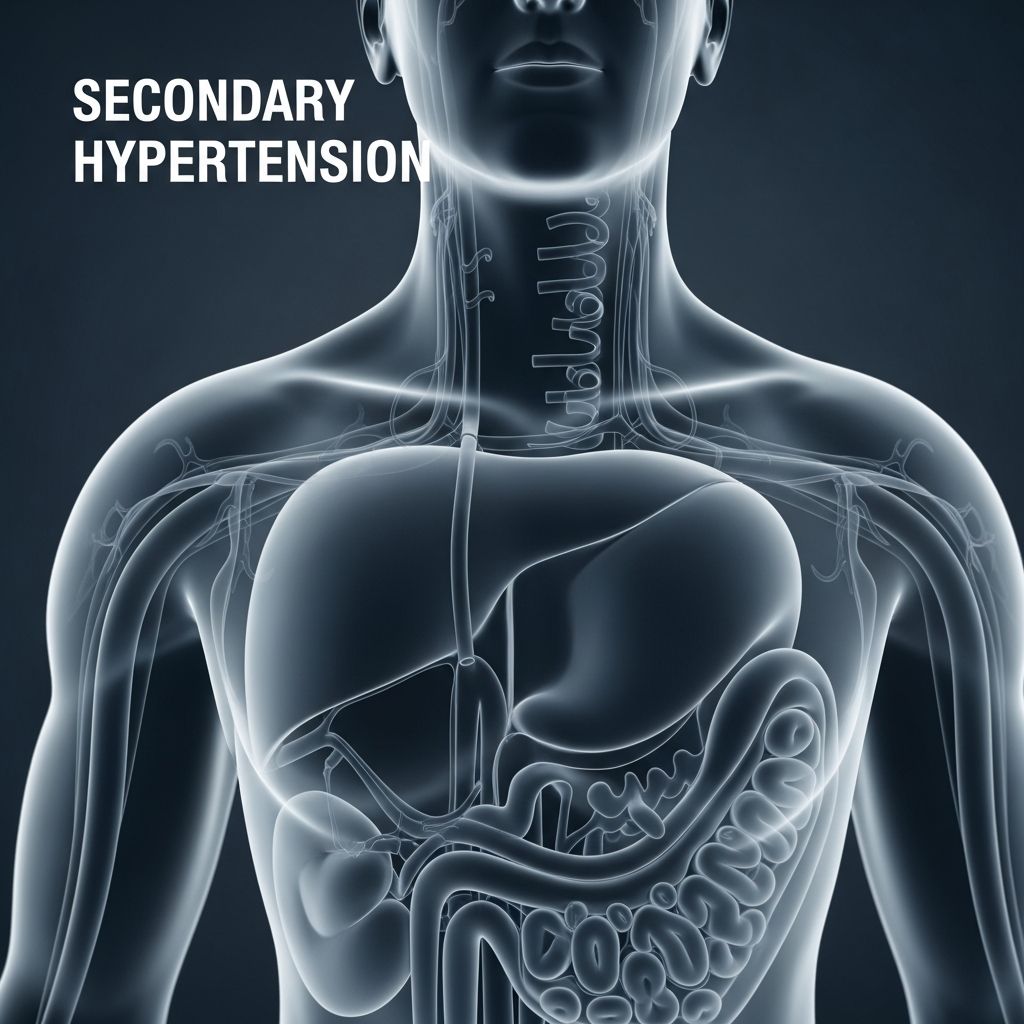
Understanding Secondary Hypertension
High blood pressure affects millions of people worldwide, but not all hypertension is created equal. While most cases of elevated blood pressure develop gradually over time without a clear identifiable cause—a condition known as primary or essential hypertension—approximately 10% of hypertension cases stem from specific, identifiable underlying conditions. This type of hypertension is called secondary hypertension, and understanding its causes and management is crucial for effective treatment and long-term cardiovascular health.
Secondary hypertension represents a distinct clinical challenge because it often responds differently to treatment than primary hypertension. In many cases, addressing the underlying cause can substantially reduce or even eliminate high blood pressure entirely. This makes accurate diagnosis and appropriate evaluation essential components of comprehensive hypertension management.
What is Secondary Hypertension?
Secondary hypertension is defined as persistently elevated blood pressure caused by a specific, identifiable underlying medical condition, medication, or substance. Unlike primary hypertension, which develops gradually and involves multiple contributing factors, secondary hypertension typically has a clear cause that, when treated, may lead to significant blood pressure improvement or resolution.
The key distinction between primary and secondary hypertension lies in their presentation and course. Secondary hypertension often develops abruptly, may be unusually severe, and frequently occurs in younger patients who would not typically be expected to develop hypertension. Recognition of these distinguishing features helps healthcare providers identify patients who warrant further investigation for underlying causes.
Common Causes of Secondary Hypertension
Secondary hypertension can result from various medical conditions affecting different body systems. Understanding these causes helps guide appropriate diagnostic evaluation and treatment strategies.
Kidney Disease and Renal Conditions
The kidneys play a central role in blood pressure regulation, so kidney disease frequently causes secondary hypertension. Chronic kidney disease, renal artery stenosis (narrowing of arteries supplying the kidneys), and polycystic kidney disease are common renal causes. These conditions impair the kidneys’ ability to regulate sodium and fluid balance, ultimately increasing blood pressure.
Endocrine Disorders
Primary aldosteronism has emerged as a more common cause of secondary hypertension than previously recognized. Modern research indicates that primary aldosteronism affects 5% to 10% of patients with hypertension and up to 20% to 30% of patients with resistant hypertension. This condition involves excessive production of aldosterone, a hormone that causes sodium and fluid retention.
Other endocrine conditions causing secondary hypertension include:
- Hyperthyroidism and thyroid dysfunction
- Cushing syndrome (excess cortisol production)
- Pheochromocytoma (catecholamine-secreting tumor)
- Acromegaly (growth hormone excess)
- Hyperparathyroidism
Vascular Conditions
Aortic coarctation, a congenital narrowing of the aorta, and renovascular disease cause secondary hypertension through hemodynamic mechanisms. Fibromuscular dysplasia affecting renal arteries represents another important vascular cause requiring specific evaluation and potential intervention.
Obstructive Sleep Apnea
Sleep-disordered breathing, particularly obstructive sleep apnea (OSA), significantly contributes to hypertension. The repetitive oxygen desaturation and sympathetic nervous system activation during apneic episodes lead to sustained blood pressure elevation. OSA treatment often results in meaningful blood pressure reduction.
Related Stories



Obesity and Metabolic Syndrome
Severe obesity represents a significant contributor to secondary hypertension through multiple mechanisms including increased sympathetic activity, salt sensitivity, and insulin resistance. Weight loss through lifestyle modification or bariatric surgery can substantially improve or resolve obesity-related hypertension.
Medications and Substances That Raise Blood Pressure
Numerous medications and substances can elevate blood pressure or worsen existing hypertension. Recognition of these agents is essential during the evaluation of any patient with hypertension.
| Medication/Substance Class | Examples | Mechanism |
|---|---|---|
| Nonsteroidal anti-inflammatory drugs (NSAIDs) | Ibuprofen, naproxen, indomethacin | Inhibit prostaglandin-mediated vasodilation |
| Sympathomimetic agents | Decongestants, stimulants | Direct sympathetic activation |
| Corticosteroids | Prednisone, dexamethasone | Sodium retention, sympathetic activation |
| Oral contraceptives | Estrogen-containing pills | Renin-angiotensin system activation |
| Stimulants | Cocaine, amphetamines | Sympathetic stimulation |
| Angiogenesis inhibitors | Bevacizumab, tyrosine kinase inhibitors | Endothelial dysfunction |
Careful medication review during the initial evaluation of hypertension patients helps identify potentially offending agents that can be discontinued or substituted with alternatives.
Diagnostic Evaluation and Testing
Identifying secondary hypertension requires a systematic approach combining clinical history, physical examination, and appropriate laboratory and imaging studies.
Clinical Assessment
The evaluation begins with a thorough history focusing on:
- Age at hypertension onset (secondary hypertension often develops before age 30 or after age 60)
- Abruptness of blood pressure elevation
- Severity of hypertension (unusually high readings suggest secondary causes)
- Family history of hypertension and kidney disease
- Symptoms suggesting specific underlying conditions
- Complete medication and supplement review
- Substance use history including cocaine and amphetamines
Physical examination should include assessment of postural vital signs, evaluation of arterial bruits suggesting vascular disease, palpation of the abdomen for kidney masses or bruits, and careful examination of peripheral pulses and extremities.
Laboratory and Imaging Studies
Initial laboratory evaluation typically includes basic metabolic panel, urinalysis, and electrocardiogram. Further testing is guided by clinical suspicion and may include:
- Plasma renin and aldosterone measurements for primary aldosteronism screening
- 24-hour urine free cortisol for Cushing syndrome evaluation
- Plasma metanephrines and urine catecholamines for pheochromocytoma
- Renal ultrasound or CT angiography for renovascular disease
- Sleep study for obstructive sleep apnea
- Thyroid function tests
Selection of appropriate testing depends on the patient’s presentation, age, severity of hypertension, and specific clinical clues suggesting particular diagnoses.
Who Should Be Evaluated for Secondary Hypertension?
Not all hypertension patients require extensive secondary cause evaluation. However, certain clinical scenarios warrant investigation:
- Resistant hypertension: Persistent elevation despite three or more antihypertensive medications including a diuretic
- Young age at onset: Hypertension developing before age 30 years
- Abrupt onset: Sudden development in previously normotensive or well-controlled patients
- Unusually severe hypertension: Blood pressure significantly elevated at initial presentation
- Specific clinical features: Symptoms or signs suggesting particular underlying conditions
- Hypertension with adrenal incidentaloma: Imaging findings of adrenal masses
- Associated conditions: Hypertension with atrial fibrillation, coronary artery disease, or unexplained hypokalemia
Current guidelines have evolved to recommend screening for secondary causes, particularly primary aldosteronism, in expanded populations beyond those with resistant hypertension alone. Early detection is particularly important because duration of hypertension and severity of hormonal elevation may influence treatment outcomes.
Treatment of Secondary Hypertension
Treatment approaches depend fundamentally on the underlying cause and whether the condition is potentially remediable.
Addressing Underlying Causes
When a specific treatable cause is identified, treatment focuses on the underlying condition. For example:
- Renal artery stenosis: May benefit from revascularization procedures
- Primary aldosteronism: Surgical adrenalectomy or medical management with aldosterone antagonists
- Cushing syndrome: Treatment addresses the source of excess cortisol
- Pheochromocytoma: Surgical removal after appropriate pharmacologic preparation
- Obstructive sleep apnea: CPAP or other airway management improves blood pressure
- Obesity: Weight loss through lifestyle modification or bariatric surgery
In some cases, addressing the secondary cause may lead to complete blood pressure normalization and medication discontinuation.
Pharmacologic Management
Even when underlying causes are identified and treated, antihypertensive medication is frequently required. The choice of medications depends on the specific condition, the patient’s other medical conditions, and response to therapy. Medications should be selected carefully to avoid agents that may worsen the underlying condition or interfere with diagnostic testing.
Lifestyle Modifications
Regardless of the underlying cause, lifestyle modifications remain important adjuncts to treatment, including sodium restriction, weight management, regular physical activity, stress reduction, and limitation of alcohol consumption.
Prognosis and Outcomes
The prognosis for secondary hypertension varies depending on the underlying cause, the duration of hypertension before diagnosis, and the effectiveness of treatment. Early recognition and intervention offer the best opportunity for favorable outcomes. Untreated or inadequately controlled secondary hypertension, particularly primary aldosteronism, carries increased risk for cardiovascular and renal complications including coronary artery disease, stroke, heart failure, and atrial fibrillation.
When to Refer to a Specialist
Referral to a cardiologist or hypertension specialist is appropriate when:
- Secondary hypertension is suspected but diagnosis is unclear
- Blood pressure remains uncontrolled despite appropriate medical therapy
- Complex diagnostic testing or interpretation is required
- Specialized interventional procedures may be beneficial
- Questions arise regarding optimal management strategies
Specialist consultation can help optimize the diagnostic approach, identify potentially remediable causes, and guide appropriate intervention decisions.
Frequently Asked Questions
Q: Is secondary hypertension common?
A: Secondary hypertension accounts for approximately 10% of all hypertension cases. However, certain forms like primary aldosteronism are more common than historically appreciated, affecting 5% to 10% of hypertension patients and 20% to 30% of those with resistant hypertension.
Q: Can secondary hypertension be cured?
A: Many cases of secondary hypertension can be substantially improved or cured through treatment of the underlying cause. Success depends on the specific condition, how early it is identified, and how effectively the underlying cause is treated.
Q: Should all young patients with hypertension be evaluated for secondary causes?
A: Current guidelines recommend expanded evaluation for secondary causes in younger patients, particularly those with resistant hypertension, abrupt onset, unusual severity, or clinical features suggesting specific underlying conditions.
Q: What should I do if I suspect I have secondary hypertension?
A: Discuss your concerns with your primary care physician. Be prepared to describe when your hypertension began, any recent changes in blood pressure control, current medications and supplements, and any symptoms that might suggest an underlying condition.
Q: How long does it take to diagnose secondary hypertension?
A: Diagnosis timelines vary depending on the condition suspected and the diagnostic tests required. Some conditions can be identified relatively quickly through laboratory tests, while others require more extensive imaging or monitoring.
References
- Secondary Causes of Hypertension — Mayo Clinic. 2024. https://mayoclinic.elsevierpure.com/en/publications/secondary-causes-of-hypertension/
- When to Reconsider Secondary Hypertension Evaluations — American Heart Association Journal: Hypertension. 2024. https://www.ahajournals.org/doi/10.1161/HYPERTENSIONAHA.123.21730
- Evaluation of Secondary Hypertension — Harvard Medical School Continuing Education. 2022-04-01. https://www.youtube.com/watch?v=-a4z_siFBv0
- Secondary hypertension as a cause of treatment resistance — Scandinavian Cardiovascular Journal. 2023. https://www.tandfonline.com/doi/full/10.1080/08037051.2023.2224898
- Secondary hypertension in young adults — Medicine Today. 2024-12. https://medicinetoday.com.au/mt/2024/december/journal-watch/secondary-hypertension-young-adults
Similar Articles








Read full bio of medha deb