Understanding Shingles: Causes, Symptoms, and Treatment
A comprehensive guide to recognizing and managing herpes zoster infection
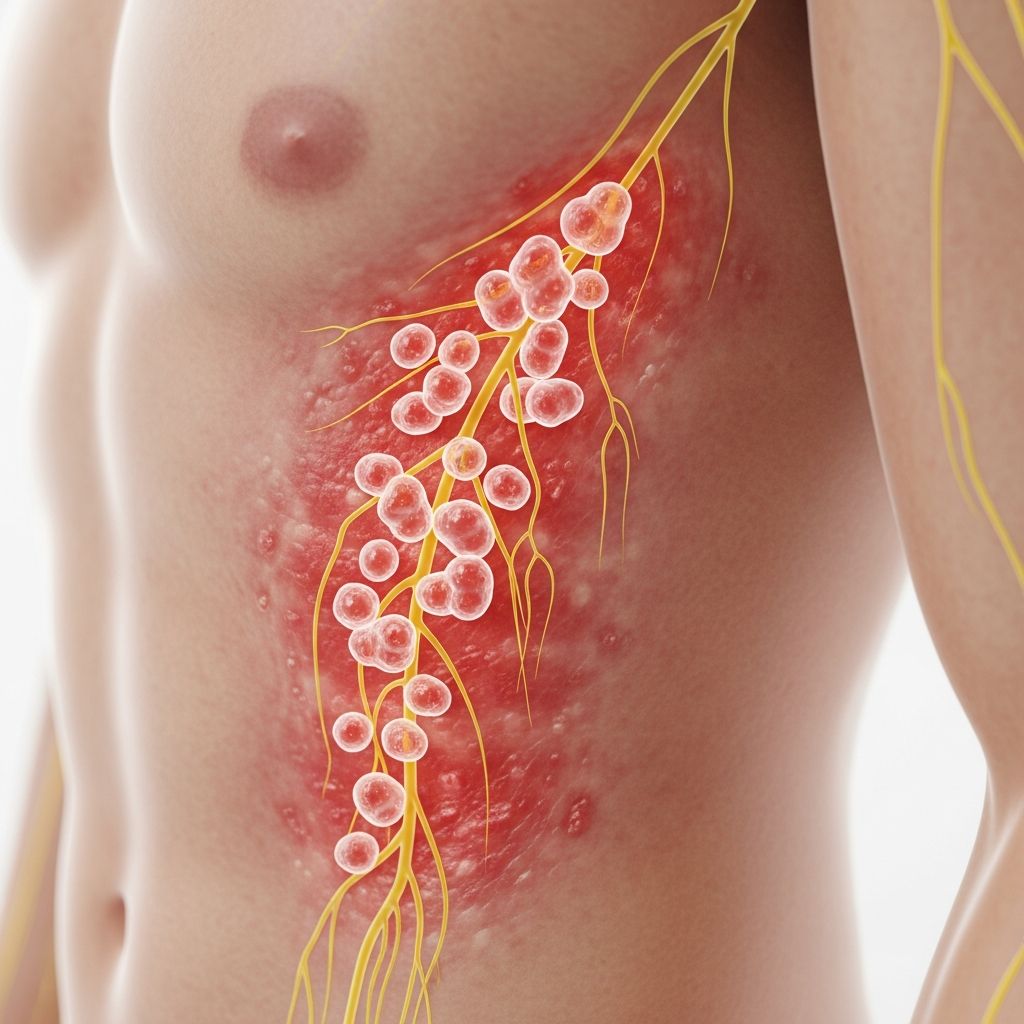
Shingles, medically known as herpes zoster, is a painful viral infection that emerges when the varicella-zoster virus reactivates within nerve tissue years after an initial chickenpox infection. This condition represents a significant health concern affecting approximately 1 million individuals annually in the United States alone, with incidence increasing substantially with advancing age. Unlike chickenpox, which spreads through airborne particles and affects multiple body regions, shingles characteristically manifests as a localized, unilateral rash confined to a specific dermatome—the area of skin supplied by a single nerve root.
The Viral Foundation: From Chickenpox to Shingles
The relationship between chickenpox and shingles stems from a single pathogen: the varicella-zoster virus (VZV). When an individual contracts chickenpox during childhood or adolescence, the immune system successfully suppresses the acute infection, resolving the characteristic widespread rash within one to two weeks. However, the virus does not completely disappear from the body. Instead, it establishes itself in a dormant state within sensory nerve ganglia—clusters of nerve cells associated with spinal and cranial nerves.
This dormant phase can persist indefinitely. For some individuals, the virus never reactivates, and no shingles infection ever occurs. For others, decades may pass before the virus unexpectedly awakens and begins replicating within neural tissue. When reactivation happens, the virus travels along nerve fibers to the skin surface, triggering the characteristic painful rash of shingles. This delayed presentation explains why shingles predominantly affects older adults rather than children, despite chickenpox being more common in younger populations.
Recognizing Risk Factors and Vulnerable Populations
Certain individuals face significantly elevated probabilities of developing shingles during their lifetime. The most substantial risk factor is advancing age, particularly after age 50. Immunological changes associated with aging reduce the body’s ability to suppress VZV replication, allowing dormant virus to reactivate more readily.
Beyond age-related immune decline, individuals with compromised immune systems face heightened susceptibility. This includes:
- Persons living with HIV/AIDS and those with low CD4 counts
- Individuals undergoing chemotherapy or radiation therapy for cancer
- Organ transplant recipients taking immunosuppressive medications
- Patients receiving systemic corticosteroids or biologic immunosuppressants
- People with rheumatologic conditions managed with immune-modifying drugs
Cell-mediated immunity plays a particularly crucial role in controlling VZV and maintaining its dormant state. Any condition or medication that impairs T-cell function substantially increases shingles risk. Additionally, psychological stress, major illness, or other acute infections that temporarily overwhelm immune capacity can trigger viral reactivation in susceptible individuals.
The Progressive Stages of Shingles Development
Understanding the distinctive stages of shingles helps patients recognize the infection early and seek timely medical intervention. The condition progresses through three relatively predictable phases, each with characteristic clinical presentations.
Stage One: The Pre-Rash Period
Shingles frequently begins with a prodromal phase lasting 1 to 4 days before any visible skin changes appear. During this initial stage, patients typically experience localized symptoms in the area where the rash will eventually develop. Common symptoms include tingling sensations, burning pain, stabbing discomfort, and shooting electric-like sensations affecting one side of the body or face. Some individuals also report more generalized symptoms such as malaise, headache, mild fever, and sensitivity to light.
Related Stories



Many patients misinterpret these early symptoms as muscle strain, nerve irritation, or other benign conditions, delaying recognition of shingles. The absence of visible skin manifestations during this phase can make diagnosis challenging, though awareness of this prodromal period helps clinicians maintain appropriate clinical suspicion.
Stage Two: The Acute Rash Phase
Within 3 to 5 days after symptom onset, the characteristic rash emerges in the affected dermatome distribution. This eruptive phase represents the most visually distinctive and potentially most contagious period of shingles. The rash typically progresses through several identifiable substages:
Initial appearance: Red, purple, or brown patches and bumps develop in a band-like or sunray pattern, typically affecting the trunk or one side of the torso, though facial involvement can occur when cranial nerves are affected.
Blister formation: Within days, fluid-filled vesicles develop within the discolored skin patches. These blisters characteristically contain clear lymphatic fluid, though some may contain purulent material in cases of secondary bacterial infection. The vesicular stage represents maximum contagiousness, as the fluid contains viable viral particles capable of transmitting chickenpox to susceptible individuals.
Crusting and scabbing: Beginning around day 5 to 7, blisters begin drying and forming protective crusts, typically within 48 to 96 hours of initial appearance. Crusting indicates viral replication is declining and contagiousness is decreasing, though the crusts should remain undisturbed to prevent secondary infection.
The acute phase typically persists for 2 to 4 weeks. During this period, pain intensity usually peaks, and patients experience heightened sensitivity to touch and environmental stimuli in the affected region. Importantly, treating shingles within the first 3 days of rash appearance with antiviral medications can substantially reduce symptom duration and decrease the likelihood of developing chronic complications.
Stage Three: The Chronic Phase and Potential Complications
Not all patients progress to this final stage, particularly those receiving early treatment. When chronic shingles develops, patients continue experiencing significant symptoms despite visible rash resolution. This phase can persist for 12 months or longer in some cases. Symptoms during this period include postherpetic neuralgia (persistent burning and neuropathic pain), continued tingling sensations, and numbness in the affected distribution.
Additionally, the healing rash may leave cosmetic consequences, particularly in individuals with darker skin tones who develop postinflammatory hyperpigmentation—darkened discoloration that can take months to resolve.
Localized Manifestations: Where Shingles Appears
The distribution of shingles follows the anatomical pathways of infected sensory nerves. Most commonly, the rash appears on the trunk, typically affecting only one side of the body in a wrapping, belt-like pattern. However, shingles can potentially develop anywhere on the body depending on which nerve ganglia contain reactivating virus.
One particularly concerning location involves the ophthalmic division of the trigeminal nerve, potentially causing herpes zoster ophthalmicus (HZO)—a serious condition affecting ocular structures. When the frontal branch of the ophthalmic nerve is affected, characteristic findings may include Hutchinson’s sign—vesicular eruption along the side of the nose within the nasociliary nerve distribution—which portends ocular involvement. Complications can include corneal infection (affecting 65% of HZO cases), conjunctivitis, sclera inflammation, acute retinal necrosis, and vision loss. These ocular complications can persist for days to months, substantially impacting quality of life.
The Pain Component: From Acute to Chronic
Pain represents the most distressing feature of shingles for many patients. During the acute eruptive phase, pain typically reaches maximum intensity, with patients describing stabbing, burning, or throbbing sensations. The affected skin becomes exquisitely sensitive to even light touch, and some patients experience allodynia—pain from stimuli that normally wouldn’t trigger pain sensation.
In some individuals, pain persists long after the rash has completely healed. This chronic pain condition, called postherpetic neuralgia (PHN), can continue for 30 days to more than 6 months following rash resolution. PHN occurs more frequently in women and immunocompromised individuals. The mechanism involves destruction of nerve tissue from viral replication within neural ganglia, creating persistent neuropathic pain that can be remarkably resistant to standard pain management approaches.
Beyond localized pain, shingles can trigger systemic symptoms including chronic fatigue, loss of appetite, weight loss, difficulty concentrating, and depression. The combination of persistent pain and these systemic effects can substantially impact functional capacity and quality of life, potentially rendering affected individuals inactive or unable to perform occupational and social roles.
Transmission and Contagiousness: What You Need to Know
A common misconception suggests that shingles is directly contagious to other individuals with shingles or chickenpox immunity. In reality, you cannot catch shingles from someone currently experiencing shingles infection. The varicella-zoster virus in shingles blisters can potentially cause chickenpox in susceptible individuals never previously infected with VZV, but this transmission requires direct contact with blister fluid and occurs in susceptible persons without prior chickenpox immunity.
The virus is not transmitted through respiratory droplets or casual contact. Individuals with active shingles should simply avoid direct contact with blister fluid if they interact with persons known to lack chickenpox immunity or vaccination history. Once crusting occurs, contagiousness decreases substantially.
Distinguishing Features in Different Populations
While shingles demonstrates consistent clinical features across populations, symptom severity and presentation can vary. Children typically experience less severe symptoms compared to adults, though they can still develop significant complications. Older adults often report more intense pain and higher rates of chronic postherpetic neuralgia. Immunocompromised individuals may present with atypical rash distributions, more extensive skin involvement, or more severe systemic symptoms.
Individuals with darker skin tones often develop more pronounced postinflammatory hyperpigmentation during healing, with darkened patches persisting for extended periods. This cosmetic consequence warrants consideration during counseling about expected outcomes and healing timelines.
When Rash Patterns Suggest Immune Problems
While typical shingles remains confined to a single dermatome, certain atypical presentations warrant investigation for underlying immune dysfunction. Having numerous blisters appearing outside the expected dermatome distribution or blisters persisting beyond 2 weeks suggests the immune system may not be functioning optimally and warrants further medical evaluation.
Frequently Asked Questions About Shingles
Can I get shingles if I’ve already had chickenpox?
Yes. Shingles represents reactivation of the same virus causing chickenpox. After chickenpox infection resolves, the virus remains dormant in nerve tissue, allowing shingles to develop years or decades later.
Is shingles contagious to others?
Shingles itself is not contagious to other shingles patients. However, the virus in blister fluid can cause chickenpox in susceptible individuals who have never had chickenpox and lack vaccination.
How long does shingles typically last?
The acute rash phase typically persists 2 to 4 weeks, with crusting occurring within 48 to 96 hours. However, pain and other symptoms can persist much longer, particularly in older adults.
What’s the difference between shingles and chickenpox?
Chickenpox spreads through respiratory droplets and affects multiple body areas. Shingles represents the same virus reactivating years later, typically affecting a single dermatome in a localized distribution.
References
- Shingles: A Complete Guide for Clinicians — Clinical Advisor. Accessed February 2026. https://www.clinicaladvisor.com/features/shingles-a-complete-guide-for-clinicians/
- What Does Shingles Look Like? Rash Stages With Pictures — GoodRx. Accessed February 2026. https://www.goodrx.com/conditions/shingles/shingles-rash-stages
- Shingles – Infections – Merck Manual Consumer Version — Merck Manual. Accessed February 2026. https://www.merckmanuals.com/home/infections/herpesvirus-infections/shingles
- Shingles: An In-Depth Guide for Healthcare Professionals and Patients — MySEMG. Accessed February 2026. https://mysemg.com/media/health-tips-and-wellness/shingles-an-in-depth-guide-for-healthcare-professionals-and-patients
- What doctors wish patients knew about the shingles virus — American Medical Association. Accessed February 2026. https://www.ama-assn.org/public-health/prevention-wellness/what-doctors-wish-patients-knew-about-shingles-virus
- About Shingles (Herpes Zoster) — Centers for Disease Control and Prevention. Accessed February 2026. https://www.cdc.gov/shingles/about/index.html
Similar Articles








Read full bio of Sneha Tete