Understanding Sustainability Labels on Restaurant Menus
Decode sustainability claims on restaurant menus and make informed eco-friendly dining choices.
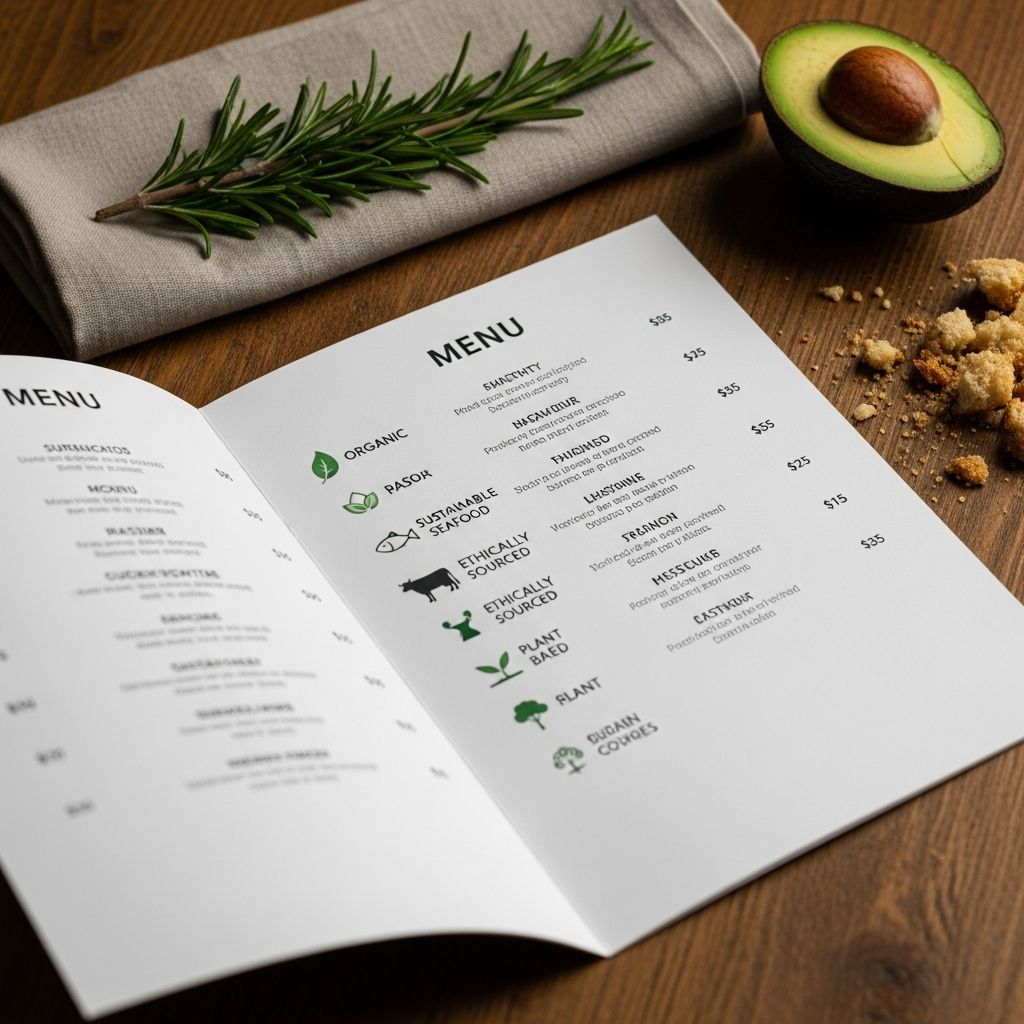
As environmental awareness continues to grow, many consumers are seeking ways to make more sustainable food choices when dining out. Restaurants are responding to this demand by incorporating sustainability-related labels and terms on their menus to highlight climate-friendly offerings. However, the landscape of sustainability labeling remains complex and often confusing, with varying approaches, inconsistent language, and a lack of comprehensive regulation across the industry.
Food systems contribute significantly to global greenhouse gas emissions—gases that trap heat in the atmosphere and accelerate climate change. With rising consumer interest in protecting the environment and supporting companies with genuine sustainable practices, restaurants are increasingly exploring ways to minimize their environmental impact while communicating these efforts to diners. Understanding these labels is essential for making informed dining decisions that align with your environmental values.
The Role of Food Systems in Climate Change
Food systems play a critical role in total greenhouse gas emissions worldwide. From agricultural production to transportation, processing, and preparation, every stage of the food supply chain contributes to a product’s environmental footprint. Restaurants are now evaluating their carbon footprint across their entire supply chain, examining how and where food is grown, harvested, processed, and transported before reaching the restaurant.
This comprehensive approach recognizes that sustainability extends beyond just what ends up on the plate. It encompasses responsibility across the entire value chain, including proper care for animals raised for food, minimization of deforestation in supply chains, support for reputable food providers, and the purchase of locally grown or raised products to reduce emissions from long-distance transportation.
Sourcing Sustainably
Sustainable sourcing has become a cornerstone of environmentally responsible restaurant operations. Many establishments are now implementing practices that go beyond surface-level marketing. Key sustainable sourcing strategies include:
- Properly caring for animals raised for food to ensure ethical and humane treatment
- Minimizing deforestation commonly caused by certain supply chains, particularly in regions where agriculture drives land conversion
- Supporting food providers by purchasing from reputable, verified sources that meet sustainability standards
- Buying locally grown or raised products to significantly reduce emissions from long-distance transportation
- Utilizing lesser-known or leftover animal parts to minimize waste
- Using vegetable scraps and food byproducts to reduce waste going to landfills
These practices demonstrate a commitment to comprehensive sustainability that benefits both the environment and local communities.
Menu Offerings and Climate-Friendly Choices
In response to growing environmental concerns, many restaurants are now featuring plant-based and plant-forward menu items as climate-friendly offerings. Plant-based options contain no animal products, while plant-forward dishes feature animal products in smaller quantities, emphasizing vegetables and plant proteins as the main components.
Beyond dietary choices, restaurants are also implementing creative solutions to reduce their environmental impact. Some establishments utilize less common or leftover parts of animals and vegetable scraps, transforming what might otherwise become waste into valuable menu items. This approach not only reduces the carbon footprint of the restaurant but also demonstrates innovation and resourcefulness in the kitchen.
Related Stories



Common Sustainability Claims and Labels
The Federal Trade Commission (FTC) has identified 14 categories of environmental marketing claims through its Green Guides, though these span all industries. Some of the most common food-related claims include general environmental benefit claims and carbon offset claims.
General Environmental Benefit Claims
These broad claims include terms such as:
- “Eco-friendly”
- “Green”
- “Saves the planet”
- “Environmentally responsible”
While these terms convey a sense of environmental consciousness, they often lack specific measurable criteria and can be subjective in their interpretation.
Carbon Offset and Emissions Claims
Companies increasingly use claims not currently included in the FTC’s Green Guides, particularly emissions-related language such as:
- “Net zero”
- “Carbon neutral”
- “Low climate impact”
- “Carbon negative”
These claims indicate the amount of greenhouse gas emissions, primarily carbon, that are released into the atmosphere during the creation of a menu item. Some restaurants have implemented carbon labeling programs that display precise emissions data in kilograms of CO2 equivalents (CO2e) for each dish, allowing customers to make quantitative comparisons.
Origin Claims
Origin-based sustainability claims highlight the source and production methods of ingredients, including:
- “Locally grown”
- “Locally sourced”
- “Farm-to-table”
- “Regional ingredients”
These claims emphasize the reduction of transportation distances and support for local agricultural communities.
Animal Welfare Claims
These claims speak to the ethical treatment and production methods of animal-based products:
- “Humanely raised”
- “Raised without antibiotics or hormones”
- “Grass-fed”
- “Free-range”
- “Pasture-raised”
The United States Department of Agriculture (USDA) regulates and defines certain animal welfare claims for products falling under its jurisdiction, such as meat and poultry products. Because these definitions are regulated rather than optional tools or guidance, compliance and interpretation of these claims are generally more clear and consistent across the industry.
Regulated vs. Voluntary Sustainability Labels
A critical distinction exists between regulated sustainability claims and voluntary labeling initiatives. Regulated claims, particularly those overseen by the USDA for meat and poultry products, provide consistent definitions and mandatory compliance standards. This regulatory framework ensures that when you see certain claims on a menu, they meet specific, legally defined criteria.
In contrast, many sustainability labels and emissions claims are voluntary and unregulated. Companies choose to adopt these labels and may use varying methodologies to calculate or determine their validity. This lack of standardization can create confusion for consumers trying to make informed choices.
Industry-Specific Certification Programs
Several organizations have developed comprehensive certification and recognition programs to help restaurants and consumers navigate sustainability claims more effectively.
The Coolfood Meals Program
The World Resources Institute, a global research organization that creates sustainable solutions for various sectors, developed the Coolfood Meals menu program. This initiative flags menu items that fall below a specific emissions threshold, helping diners identify genuinely climate-friendly options. To earn the Coolfood Meals badge, a meal’s carbon footprint must align with thresholds established to meet emission reduction goals set in the global Paris Agreement on climate change. For example, in the United States, a breakfast item carrying the badge must have carbon emissions of 3.81 kilograms or less per portion. Organizations participating in this pledge collectively serve 2.1 billion meals annually.
Green Restaurant Certification
Some certification programs use a points-based system to evaluate and recognize restaurants’ sustainability efforts. Under such systems, restaurants earn points across different sustainability categories. For instance, a restaurant might earn one point for growing greens or herbs on-site, while utilizing seafood recommended by organizations like Seafood Watch and Ocean Wise can earn 15 points. Once restaurants accumulate sufficient points across various categories, they can become Certified Green Restaurants. Higher point totals lead to elevated certification levels and additional badges for achievements such as reaching near-zero waste status or using environmentally safe chemicals.
Marine Stewardship Council (MSC) Certification
Seafood products bearing the distinctive blue fish label have been certified by the Marine Stewardship Council, the most recognized seafood certification globally. You’ll encounter this label on restaurant menus and in grocery stores. Sustainable fisheries meeting the MSC Fisheries Standard maintain sufficient fish populations for reproduction, manage their environmental impact minimally and carefully, follow applicable regulations, and can respond quickly to industry changes. The standards are developed and regularly reviewed in collaboration with scientists, industry experts, and conservation groups. Independent surveillance audits and DNA testing verify that seafood comes from sustainable sources.
Rainforest Alliance Certification
The Rainforest Alliance’s distinctive blue frog logo appears on products and restaurant menus to indicate that a company prioritizes social, economic, and environmental sustainability in its supply chain. Organizations must meet the Rainforest Alliance Sustainable Agriculture Standard, which commits to protecting forests, climate stability, human rights, and farmers’ livelihoods. For farms, this means creating safe, fair working conditions and enriching land through regenerative agricultural practices such as avoiding tillage and synthetic fertilizers. For other businesses, it means committing to “responsible business practices and transparency from farm to shelf.”
Challenges in Menu Label Interpretation
Despite the proliferation of sustainability labels and certifications, several challenges persist in the landscape:
- Lack of consistent regulations: The absence of comprehensive regulatory frameworks for most sustainability claims means that standards vary significantly from one restaurant to another.
- Inconsistent language: Different organizations and restaurants use varying terminology to describe similar sustainability practices, making direct comparison difficult.
- Varying methodologies: Different approaches to calculating environmental impact mean that identical menu items might receive different labels at different establishments.
- Consumer confusion: The multitude of labels, acronyms, and symbols can overwhelm diners attempting to make informed choices.
- Lack of standardized data: Without consistent data collection and analysis methods, it’s challenging to verify the claims restaurants make about their sustainability practices.
Making Informed Dining Decisions
When evaluating sustainability labels on restaurant menus, consumers should approach them thoughtfully. If you encounter a label or claim whose meaning is unclear, consider reaching out directly to the restaurant for clarification. Restaurant staff can often explain the basis for their sustainability claims and provide details about sourcing practices, certification affiliations, and environmental impact measurements.
Additionally, look for labels backed by well-established third-party certifications or industry organizations. Claims supported by recognized certifying bodies such as the Marine Stewardship Council, Rainforest Alliance, or the USDA generally provide greater assurance of validity than unattributed claims.
When reviewing menu items, consider the combination of claims rather than relying on a single label. An item that is locally sourced, plant-based, and carries a recognized certification may represent a more comprehensive commitment to sustainability than an item with a single vague claim.
Frequently Asked Questions
Q: What is the difference between plant-based and plant-forward menu items?
A: Plant-based menu items contain no animal products whatsoever, relying entirely on vegetables, grains, legumes, and other plant-derived ingredients. Plant-forward items, conversely, contain animal products but feature them in smaller quantities, emphasizing plants as the primary component of the dish.
Q: Are all sustainability claims on restaurant menus regulated?
A: No. While certain claims such as USDA-regulated animal welfare claims have specific legal definitions, most sustainability claims on restaurant menus are voluntary and unregulated. This variability makes it important to research what specific labels mean or ask restaurant staff for clarification.
Q: What does the Marine Stewardship Council (MSC) blue fish label indicate?
A: The MSC blue fish label certifies that seafood comes from sustainable fisheries that maintain adequate fish populations for reproduction, manage environmental impact carefully, follow relevant laws, and use independent surveillance audits and DNA testing to verify sustainability claims.
Q: How can I verify if a restaurant’s sustainability claims are legitimate?
A: Look for third-party certifications from recognized organizations such as the Marine Stewardship Council, Rainforest Alliance, or the USDA. You can also ask the restaurant directly about their sourcing practices, certification affiliations, and the methodologies they use to calculate environmental impact. Many restaurants are transparent about their sustainability efforts and happy to discuss them.
Q: What is the Coolfood Meals program?
A: Developed by the World Resources Institute, the Coolfood Meals program identifies menu items that meet specific carbon emissions thresholds aligned with global climate goals established in the Paris Agreement. Items earning the badge have carbon footprints below established limits, such as 3.81 kilograms of CO2e for breakfast items in the United States.
Q: Why is local sourcing considered more sustainable?
A: Locally sourced ingredients require less transportation from farm to restaurant, which reduces the carbon emissions associated with long-distance shipping. Supporting local producers also strengthens regional food systems and economies while reducing the overall environmental footprint of the supply chain.
Conclusion
Sustainability labels on restaurant menus represent an important tool for consumers seeking to make environmentally conscious dining choices. However, the landscape remains complex due to inconsistent regulations, varying methodologies, and the proliferation of unverified claims. By understanding the distinction between regulated and voluntary claims, familiarizing yourself with recognized third-party certifications, and asking restaurants directly about their sustainability practices, you can make more informed decisions that align with your environmental values. As consumer demand for sustainable dining options continues to grow, restaurants and certification organizations will likely continue refining these labeling systems to provide greater clarity and consistency, ultimately making it easier for everyone to dine in ways that support both personal health and planetary health.
References
- Understanding Sustainability Labels on Restaurant Menus — Academy of Nutrition and Dietetics. 2024. https://www.eatright.org/food/planning/food-security-and-sustainability/sustainability-labels-on-restaurant-menus
- Menu Carbon Labelling — Future Green Global. 2024. https://futuregreen.global/our-services/communications-and-marketing/menu-carbon-labelling/
- What Makes a ‘Sustainable’ Restaurant? Labels to Look For — Triple Pundit. 2024. https://triplepundit.com/2024/sustainable-restaurant-certifications/
- Northeastern Puts Sustainability on the Menu with New Climate-Friendly Labels — Northeastern University. 2024. https://pref.northeastern.edu/climate-friendly-labels/
- Ecolabels and the Healthfulness and Carbon Footprint of Restaurant Food Choices — National Center for Biotechnology Information. 2024. https://pmc.ncbi.nlm.nih.gov/articles/PMC12322791/
Similar Articles








Read full bio of Sneha Tete