Pathology Report: 6 Key Sections To Understand Your Results
A comprehensive guide to interpreting your pathology report and understanding diagnostic findings.
Understanding the Pathology Report
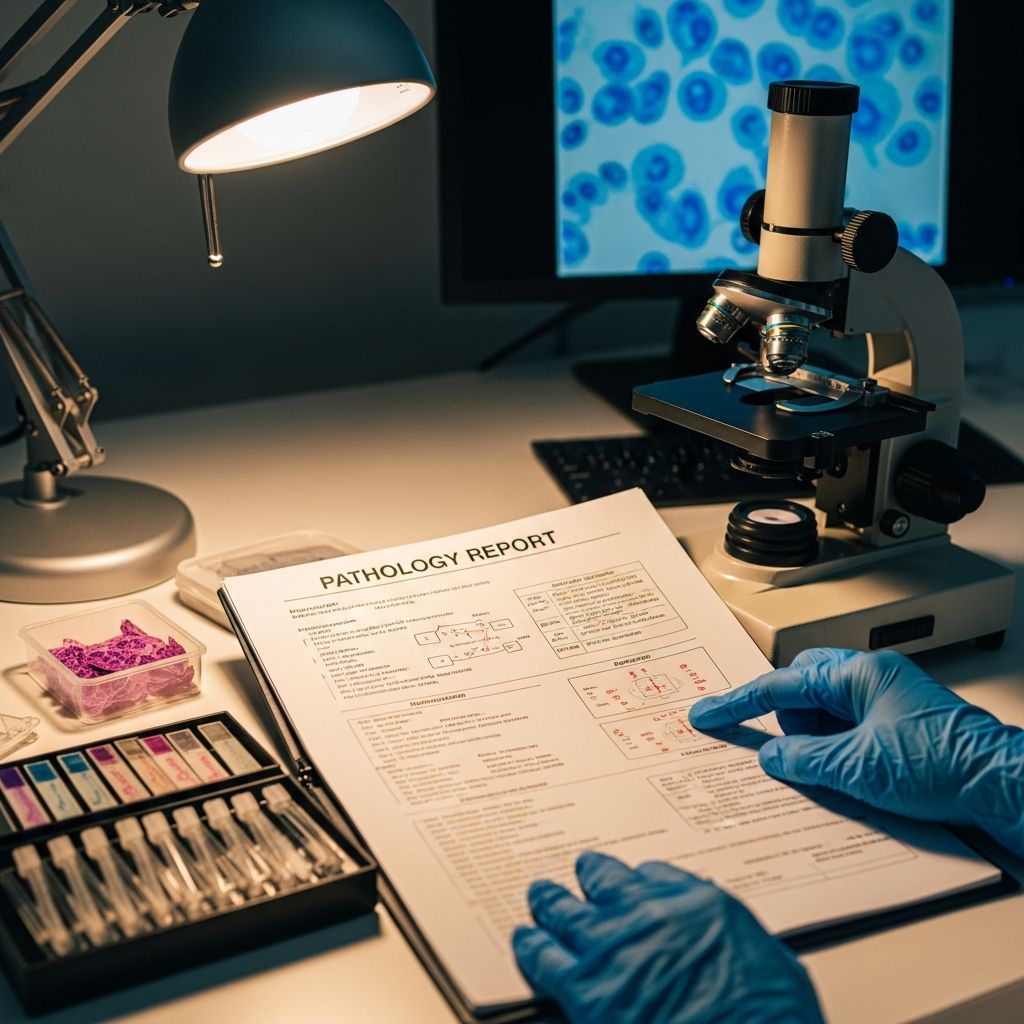
A pathology report is a detailed medical document created by a pathologist—a physician who specializes in diagnosing diseases by examining tissue samples, body fluids, and other specimens under a microscope. This report plays a crucial role in confirming a diagnosis, determining the severity of disease, and guiding treatment decisions. Whether you have undergone a biopsy, had tissue removed during surgery, or provided a fluid sample for analysis, understanding your pathology report is essential to comprehending your health status and the next steps in your care.
What Is a Pathology Report?
A pathology report is a comprehensive document that contains the findings of a pathologist’s examination of tissue or body fluid samples. The pathologist uses specialized equipment and techniques, including microscopic examination and various laboratory tests, to analyze the specimen and provide detailed information about what was found. This report serves as a critical communication tool between the laboratory and your healthcare provider, translating complex microscopic and molecular findings into clinical information that guides diagnosis and treatment planning.
The pathology report is distinct from other medical tests because it involves direct examination of cells and tissues rather than imaging or blood chemistry analysis. This microscopic evaluation allows pathologists to identify abnormalities, classify diseases, and provide prognostic information that is often unavailable through other diagnostic methods.
Why You Might Need a Pathology Report
There are numerous clinical situations that warrant pathology testing and reporting. Understanding when and why a pathology report is needed helps patients appreciate the importance of this diagnostic tool:
- Suspected cancer or abnormal cell growth
- Biopsies of skin lesions, lumps, or other suspicious areas
- Tissue removed during surgical procedures
- Analysis of body fluids including cerebrospinal fluid, ascites, or pleural fluid
- Evaluation of infectious disease or inflammatory conditions
- Assessment of organ transplant rejection
- Evaluation of bone marrow or blood disorders
- Gynecological specimen analysis, including cervical biopsies
The Process: From Sample Collection to Report
Understanding how a pathology report is created provides insight into its reliability and comprehensiveness. The process involves multiple steps and quality controls to ensure accuracy.
Sample Collection and Preparation
The first step begins when your healthcare provider collects a tissue or fluid sample. This may occur during a biopsy, surgical procedure, or routine screening. The sample is placed in a special preservative solution and labeled with patient information to ensure proper tracking and identification. Proper collection and preservation are critical because they affect the quality of the sample and the accuracy of the pathological examination.
Microscopic Examination
Once the sample arrives at the laboratory, the pathologist prepares it for microscopic evaluation. For tissue samples, this typically involves cutting thin sections and staining them with special dyes that highlight different cellular components. The pathologist then examines these prepared slides under a microscope, looking for abnormalities in cell structure, organization, and appearance. This examination forms the foundation of the pathological diagnosis.
Specialized Testing
Beyond basic microscopic examination, pathologists often employ specialized testing techniques to provide additional diagnostic information. Immunohistochemistry uses antibodies to identify specific proteins in cells, helping to classify tumors and identify their origin. Next-generation sequencing analyzes genetic material to detect mutations and chromosomal abnormalities that may have treatment implications. Flow cytometry evaluates cell populations, particularly useful in diagnosing blood cancers and immune disorders. These advanced techniques enhance diagnostic accuracy and provide prognostic and predictive information.
Related Stories



Report Synthesis and Finalization
The pathologist synthesizes findings from microscopic examination and specialized testing into a comprehensive written report. This report includes detailed descriptions of what was observed, diagnostic conclusions, and relevant clinical correlations. The report is reviewed for accuracy, signed by the pathologist, and transmitted to the ordering physician.
Understanding Key Sections of Your Pathology Report
Most pathology reports follow a standard format, though specific sections may vary depending on the type of specimen and clinical indication. Familiarity with these sections helps you understand what information is being communicated.
Patient Information and Specimen Details
The report begins with patient demographics including name, medical record number, and date of birth. It identifies the type of specimen examined (tissue biopsy, surgical specimen, fluid), the anatomical site from which it was obtained, and the date of collection. The clinical history section describes the reason for testing, providing context for the pathologist’s examination.
Gross Description
The gross description documents what the pathologist observed with the naked eye before microscopic examination. This includes specimen size, color, consistency, and any visible abnormalities. For surgical specimens, it may describe tissue margins and whether the lesion appears to be completely removed.
Microscopic Findings
This section contains the detailed microscopic description of what was observed under the microscope. The pathologist describes cell types present, tissue architecture, and any abnormalities identified. The level of detail varies depending on the complexity of the case and the number of slides examined.
Special Stains and Studies
When specialized staining techniques or immunohistochemical studies are performed, results are reported in this section. Each study is identified by name, and results are described as positive, negative, or showing a particular pattern. These findings often help confirm or refine the diagnosis.
Impression or Diagnosis
The impression section contains the pathologist’s final diagnostic conclusion. This may be a specific disease diagnosis, a descriptive diagnosis of observed abnormalities, or a diagnosis that requires clinical correlation. For malignancies, this section typically includes tumor type, grade, and stage when applicable.
Comments and Additional Information
Many reports include a comments section where the pathologist provides additional context, explains diagnostic reasoning, or highlights clinically significant findings. This section may also include recommendations for additional testing or follow-up evaluation.
Interpreting Common Findings
Pathology reports contain terminology that may seem unfamiliar or concerning. Understanding what common findings mean helps reduce anxiety and improves communication with your healthcare provider.
Benign versus Malignant
Benign findings indicate the presence of abnormal but non-cancerous tissue. These lesions do not spread to other body parts and typically do not threaten life, though they may require monitoring or removal for symptomatic relief. Malignant findings indicate cancer, with cells demonstrating characteristics of aggressive growth, invasion, and potential spread.
Grading and Staging
For cancers, grading describes how abnormal the cancer cells appear compared to normal cells. Lower grades indicate more differentiated cancer with better prognosis, while higher grades indicate poorly differentiated cancer with more aggressive behavior. Staging describes the extent of disease, indicating whether cancer is localized to the biopsy site or has spread to lymph nodes or distant organs. Both grading and staging provide prognostic information and guide treatment recommendations.
Margins
For surgical specimens, the pathologist evaluates the margins—the edges where the tissue was cut. If margins are “negative” or “clear,” the lesion appears to be completely removed with no disease at the cut edges. “Positive” margins indicate disease extends to the edge of the specimen, suggesting incomplete removal. “Close” margins indicate disease is very near the edge, raising concern for incomplete excision.
Additional Molecular and Genetic Testing
Modern pathology increasingly incorporates molecular and genetic testing that provides information about specific mutations or genetic alterations in the tissue. These tests may identify mutations that predict treatment response, indicate prognosis, or influence hereditary cancer risk. Common molecular tests include testing for specific mutations like EGFR in lung cancer, HER2 in breast cancer, or mismatch repair deficiency in colorectal cancer. Genetic counseling may be recommended based on results suggesting hereditary cancer syndromes.
What to Do With Your Pathology Report
Receiving your pathology report is an important milestone in your diagnostic process. Taking appropriate action ensures you benefit from the information it contains.
- Request a copy for your personal medical records
- Schedule a follow-up appointment to discuss results with your physician
- Bring the report to subsequent medical appointments
- Ask your physician to explain any terminology you don’t understand
- Clarify next steps in diagnosis or treatment planning
- Inquire about any recommended additional testing or follow-up
- If you have genetic testing results, ask about genetic counseling
Frequently Asked Questions
Q: How long does it take to receive a pathology report?
A: Standard pathology reports are typically available within 3-5 business days. Complex cases, those requiring special studies or immunohistochemistry, may take 7-10 days or longer. Your physician’s office can provide a more specific timeline based on your particular case.
Q: Can a pathology report be wrong?
A: While pathology is highly accurate, errors can occasionally occur. If you have concerns about your report, discuss them with your physician. In some cases, second opinions from other pathologists can be obtained, and tissue can be re-examined or additional studies performed.
Q: What should I ask my doctor about my pathology report?
A: Ask for clarification of any medical terminology, what the diagnosis means for your health, whether additional testing is needed, what treatment options are recommended, and what follow-up care is advised. Understanding the implications for your specific situation is essential.
Q: Do I need a second opinion on my pathology report?
A: Second opinions are often valuable, particularly for cancer diagnoses or complex cases. They can be requested through your physician or directly from another institution. Many patients find second opinions reassuring and helpful in confirming diagnosis and treatment decisions.
Q: What does “benign” mean on a pathology report?
A: Benign indicates the tissue is not cancerous. While benign lesions may require monitoring or removal for symptomatic reasons, they do not spread to other body parts and are not life-threatening in the way cancer is.
Q: How do pathologists decide what tests to perform?
A: The clinical history and initial microscopic findings guide which additional tests are appropriate. The pathologist selects tests most likely to confirm diagnosis, provide prognostic information, or guide treatment decisions. Your physician can discuss with the pathologist whether additional testing is appropriate for your case.
Conclusion
A pathology report represents the expertise of highly trained specialists who examine tissue and fluid samples to provide critical diagnostic information. Understanding what your pathology report contains, how it was created, and what it means for your health empowers you to participate actively in your medical care. Don’t hesitate to ask your healthcare provider to explain any aspect of your report, as clear communication and understanding are essential components of quality patient care. Your pathology report is a valuable tool that, combined with clinical examination and other diagnostic tests, helps your physician provide you with accurate diagnosis and optimal treatment recommendations.
References
- The Johns Hopkins Department of Pathology Novel Organizational Structure and Functional Alignments: 25 Year Experience — Johns Hopkins Department of Pathology. 2018. https://pmc.ncbi.nlm.nih.gov/articles/PMC6238201/
- The Pathologist’s Role – Brain Tumor — Johns Hopkins Pathology. 2024. https://pathology.jhu.edu/brain-tumor/pathologists-role
- Johns Hopkins Medicine Department of Pathology — Johns Hopkins Medicine. 2024. https://pathology.jhu.edu
- Pathology Report FAQs — Johns Hopkins Pathology. 2024. https://pathology.jhu.edu/patient-care/pathology-report-faqs
- College of American Pathologists (CAP) Guidelines on Synoptic Reporting — College of American Pathologists. 2023. https://www.cap.org/
Similar Articles








Read full bio of Sneha Tete