Urachal Cyst Pathology: Clinical Guide And Key Insights
Detailed pathology of urachal cysts: from embryology and histology to clinical presentation, diagnosis, and management strategies.
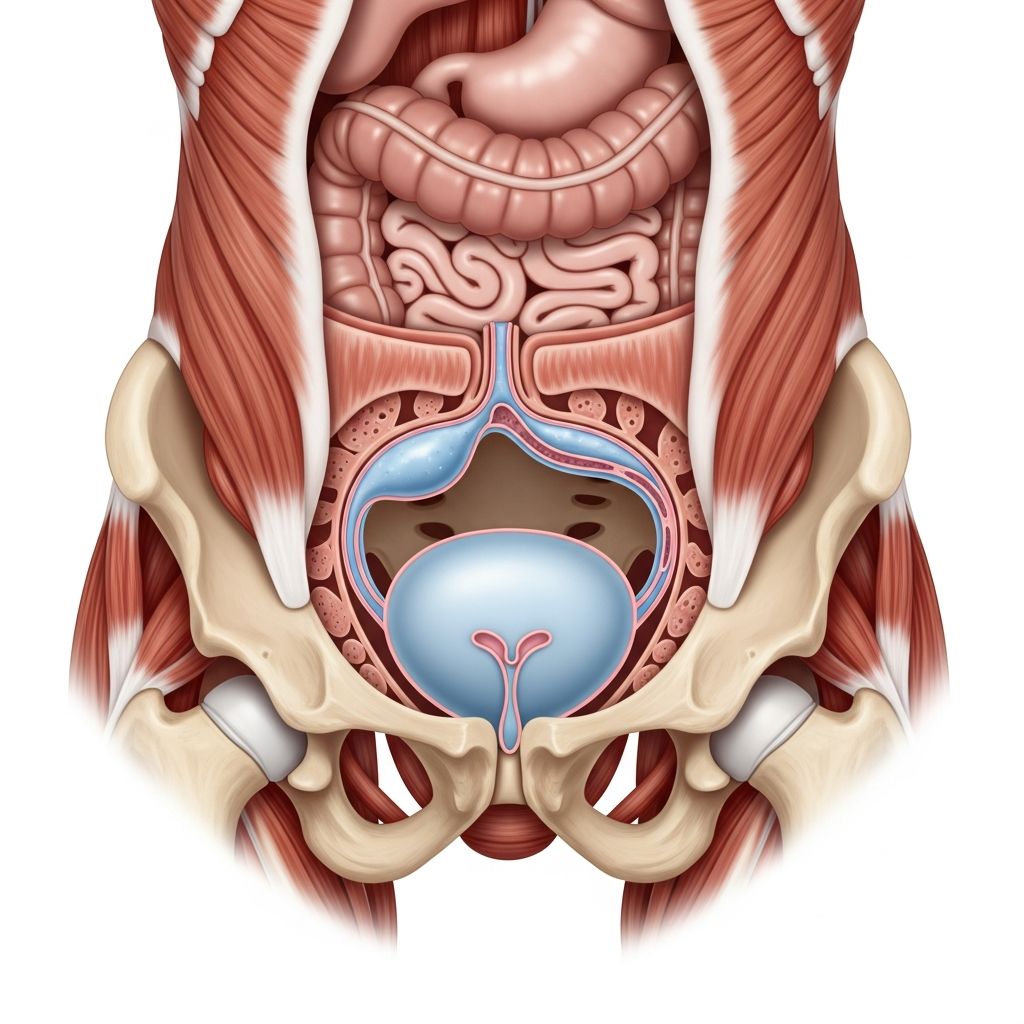
Urachal cysts are rare congenital anomalies resulting from incomplete obliteration of the urachus, the embryonic structure connecting the umbilicus to the bladder. These cysts are typically asymptomatic until infected or complicated, presenting diagnostic challenges due to their location in the lower abdominal wall. Understanding their pathology is crucial for accurate diagnosis and management, preventing complications such as peritonitis or malignancy.
Embryology
The urachus originates from the allantois, an extra-embryonic structure that initially communicates the cloaca (future bladder) with the umbilicus during fetal development. By the 4th to 5th week of gestation, the allantois involutes, forming the urachus—a fibrous cord typically 3–10 cm long and 8–10 mm in diameter running from the bladder dome to the umbilicus, sandwiched between the transverse fascia anteriorly and the peritoneum posteriorly.
Complete regression occurs in approximately 90% of individuals by birth, obliterating the urachal lumen into a fibrous remnant. Incomplete closure leads to urachal anomalies, with cysts being the most common in adults (about 35–50% of cases). These anomalies include:
- Patent urachus: Persistent lumen allowing urine leakage from the umbilicus.
- Urachal cyst: Midline cystic dilation without communication to umbilicus or bladder.
- Urachal sinus: Blind-ending tract from umbilicus.
- Urachal diverticulum: Blind-ending pouch from bladder dome.
Histologically, the normal obliterated urachus comprises three layers: an inner transitional epithelium resembling urothelium, a middle fibroconnective layer, and an outer smooth muscle layer continuous with the detrusor muscle.
Clinical features
Urachal cysts are often incidental findings in children but present symptomatically in adults, primarily due to infection. Common presentations include:
- Lower abdominal or suprapubic pain, sometimes mimicking acute appendicitis.
- Fever, chills, and systemic sepsis in infected cases.
- Umbilical discharge (purulent, bloody, or urinary).
- Palpable midline mass between umbilicus and pubis.
- Painful urination, hematuria, or urinary tract infection symptoms.
In children, presentation peaks at 2–4 years with infection; adults may present later with complications. A case report described a 45-year-old woman with suprapubic pain radiating to the right iliac fossa, obesity, and history of miscarriages, revealing a 6.4 × 6.1 cm infected cyst on imaging.
Rarely, cysts harbor calculi or undergo malignant transformation to adenocarcinoma (risk ~1–3%), necessitating vigilance.
Pathology
Microscopic features
Urachal cysts are lined by urothelium (transitional epithelium), cuboidal, flattened, or atrophic epithelium, distinguishing them from enteric remnants like omphalomesenteric duct cysts, which show small bowel or gastric mucosa. The wall includes fibroconnective tissue and smooth muscle. Inflammation in infected cysts features acute suppurative response with neutrophils, abscess formation, and granulation tissue. Chronic cases show fibrosis and lymphoid aggregates.
The cyst can locate anywhere along the urachal tract, most commonly midline between umbilicus and bladder dome. Rupture leads to peritonitis; fistula formation connects to bladder, umbilicus, or bowel.
Related Stories



Cytology
Not typically diagnostic; fluid may show inflammatory cells or urothelial cells if aspirated, but biopsy or excision is preferred due to infection risk.
Diagnosis
Diagnosis combines clinical suspicion, imaging, and histopathology, as cysts are extraperitoneal masses in the umbilical region.
Imaging
Ultrasound (USS) is first-line, especially in children:
| Modality | Non-infected cyst | Infected cyst |
|---|---|---|
| USS | Smooth-edged cystic lesion in lower abdominal wall | Thick irregular wall, mixed echogenicity |
| CT | Thin-walled, homogeneous non-enhancing cyst between transverse fascia and peritoneum | Thickened irregular wall, heterogeneous attenuation |
| MRI | Well-defined thin-walled cyst; sagittal views show umbilicus-bladder tract | Similar but with enhancement and surrounding inflammation |
CT or MRI confirms midline location, differentiates from other masses (e.g., appendiceal abscess). Fistulography or cystography aids patent urachus.
Differential diagnosis
- Omphalomesenteric duct remnant: Enteric mucosa vs. urothelium.
- Appendicitis, diverticulitis, ovarian cyst, Meckel’s diverticulum.
- Umbilical hernia, abscess, or tumors.
Treatment
Infection requires initial antibiotics (IV for sepsis), possible drainage. Definitive treatment is surgical excision of the cyst and involved urachus to prevent recurrence (risk ~10–30% without surgery).
- Open excision: For complex cases with abscess or bladder involvement; may require partial cystectomy or bowel resection.
- Laparoscopic/robotic: Minimally invasive for uncomplicated cysts; shorter recovery (1–2 days hospital stay).
Observation suffices for asymptomatic cysts in children if small, but excision is recommended due to malignancy risk. Post-op complications include wound infection (<10%), treated with antibiotics.
Frequently Asked Questions
Q: What is a urachal cyst?
A: A congenital cyst from incomplete urachus closure, forming a fluid-filled sac between umbilicus and bladder, often asymptomatic until infected.
Q: How common are urachal cysts?
A: Rare; found in ~1% at autopsy, symptomatic in <1:5000 adults/children.
Q: Can urachal cysts cause cancer?
A: Yes, rare adenocarcinoma; excision recommended to mitigate risk.
Q: Is surgery always necessary?
A: For symptomatic/infected cysts yes; asymptomatic may be monitored, but excision prevents complications.
Q: What are symptoms of infected urachal cyst?
A: Abdominal pain, fever, umbilical discharge, mass; may mimic acute abdomen.
Prognosis
Excellent post-excision; recurrence rare with complete removal. Untreated infections risk sepsis, fistula, or peritonitis.
References
- An infected urachal cyst presenting as an acute abdomen — International Journal of Surgery Case Reports (PMC). 2013-05-15. https://pmc.ncbi.nlm.nih.gov/articles/PMC3679436/
- Urachal cyst — Wikipedia (informational, primary sources cited). 2023-01-01. https://en.wikipedia.org/wiki/Urachal_cyst
- Omphalomesenteric duct remnant pathology — DermNet NZ. 2024-06-10. https://dermnetnz.org/topics/omphalomesenteric-duct-remnant-pathology
- Urachal Abnormalities — UCSF Department of Urology (.edu). 2023-11-20. https://urology.ucsf.edu/patient-info/children/urachal-abnormalities
- Urachal cyst pathology image — DermNet NZ. 2024-01-05. https://dermnetnz.org/imagedetail/18764-urachal-cyst-pathology
Similar Articles








Read full bio of Sneha Tete