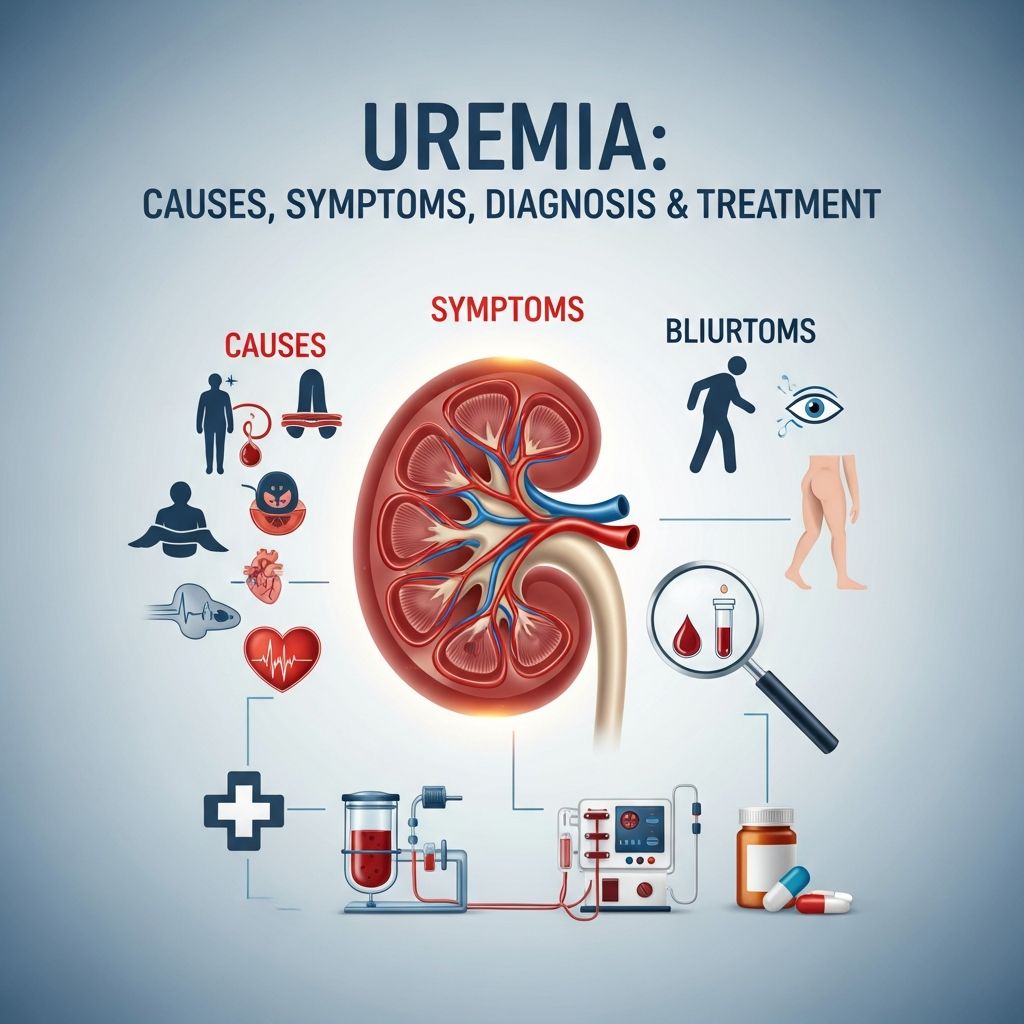
Uremia: Causes, Symptoms, Diagnosis & Treatment
Understanding uremia: waste buildup in blood from kidney failure and treatment options.
Understanding Uremia: A Comprehensive Guide
Uremia is a serious medical condition that develops when waste products accumulate in your bloodstream as a result of untreated kidney failure. The term “uremia” literally means “urine in the blood,” reflecting the buildup of uremic toxins that normally would be filtered out by healthy kidneys. This condition represents one of the most critical complications of advanced kidney disease and requires prompt medical intervention to prevent life-threatening complications. Without appropriate treatment, uremia can be fatal, making early recognition and management essential for patient survival and quality of life.
What is Uremia?
Uremia occurs when your kidneys lose their ability to filter waste products and excess fluid from your blood effectively. The kidneys are responsible for removing urea, creatinine, and other metabolic waste products, along with maintaining proper fluid and electrolyte balance. When kidney function deteriorates significantly, these waste products cannot be eliminated from the body and instead accumulate in the bloodstream, causing widespread physiological dysfunction. Most commonly, uremia develops in patients with chronic kidney disease or end-stage renal disease, though it can also occur in acute kidney injury when kidney function declines rapidly.
Causes of Uremia
Uremia develops as a direct consequence of kidney failure, but several underlying conditions can lead to kidney dysfunction severe enough to cause uremia. Understanding these causes is important for prevention and early intervention.
Primary Causes of Kidney Failure
– Diabetes mellitus (the leading cause of kidney disease)- Chronic hypertension (high blood pressure)- Chronic glomerulonephritis (inflammation of kidney filtering units)- Polycystic kidney disease (inherited condition causing fluid-filled cysts)- Chronic pyelonephritis (recurrent kidney infections)- Lupus and other autoimmune diseases- Prolonged urinary tract obstruction- Recurrent kidney stones- Chronic use of certain medications (NSAIDs, aminoglycosides)- Chronic substance abuse- Repeated exposure to toxic substances
Symptoms and Signs of Uremia
The symptoms of uremia develop gradually as kidney function declines, though in cases of acute kidney injury, symptoms may appear suddenly. Symptomatic uremia typically occurs when creatinine clearance drops below 10 to 20 mL/min, though individual variation exists depending on the rate of kidney function decline.
Common Uremic Symptoms
Patients experiencing uremia may present with diverse clinical manifestations affecting multiple body systems:
– Nausea and vomiting- Persistent fatigue and weakness- Decreased appetite (anorexia)- Unintentional weight loss- Dysgeusia (altered or bad taste in mouth)- Difficulty concentrating or mental confusion- Muscle cramps and spasms- Restless leg syndrome- Itching (pruritus), often severe- Easy bruising or spontaneous bleeding- Shortness of breath (dyspnea)- Chest pain or palpitations- Headaches- Muscle weakness
Neurological Complications
Uremia can profoundly affect the central nervous system, leading to uremic encephalopathy with increasingly severe manifestations. These neurological effects range from subtle cognitive changes to life-threatening complications, including confusion, memory problems, seizures, stupor, and in severe cases, coma. Additional nervous system manifestations may include asterixis (a distinctive hand tremor), polyneuritis, hyperreflexia, and myoclonus (involuntary muscle jerking).
Diagnosis of Uremia
Diagnosing uremia involves a comprehensive evaluation combining clinical assessment, laboratory testing, and imaging studies to confirm kidney failure and assess its severity.
Laboratory Tests
Blood tests are fundamental in diagnosing uremia and evaluating kidney function:
–
Serum Creatinine:
Measures kidney’s ability to filter waste; elevated levels indicate reduced kidney function-Blood Urea Nitrogen (BUN):
Measures another waste product; elevated BUN levels correlate with uremic symptoms-Estimated Glomerular Filtration Rate (eGFR):
Calculated from creatinine levels to estimate how much blood your kidneys can filter per minute; uremia typically occurs when eGFR is near or below 15-Hemoglobin and Hematocrit:
Assesses for anemia common in kidney disease-Electrolyte Panel:
Measures potassium, sodium, bicarbonate, and calcium levels-Phosphate and Parathyroid Hormone (PTH):
Evaluates bone metabolism abnormalities-Albumin:
Assesses nutritional statusRelated Stories



Urinalysis
Your doctor will take a sample of your urine to examine for abnormalities that indicate kidney dysfunction, including blood cells, protein, or other substances that shouldn’t be present in healthy urine.
Imaging Studies
If initial tests suggest kidney disease or uremia, additional imaging may be ordered:
–
Kidney Ultrasound:
Measures kidney size and shape, detects scarring, and identifies blockages such as kidney stones or structural injuries-CT Scan of the Brain:
Warranted for patients with significant mental status changes; particularly important in uremic patients with elevated BUN levels (>150-200 mg/dL) who face increased risk of spontaneous subdural hematomas-Abdominal CT Scan:
Helps identify causes of hydronephrosis and other structural abnormalitiesComplications of Untreated Uremia
Without appropriate treatment, uremia can lead to severe, life-threatening complications affecting multiple organ systems:
| System | Potential Complications |
|---|---|
| Cardiovascular | Heart failure, arrhythmias, myocardial infarction, pericarditis |
| Neurological | Seizures, coma, uremic encephalopathy, subdural hematoma |
| Hematologic | Severe anemia, bleeding disorders, spontaneous hemorrhage |
| Metabolic | Severe electrolyte imbalances, acidosis, bone disease |
| Pulmonary | Pulmonary edema, respiratory failure |
Treatment Options for Uremia
Dialysis Therapy
Dialysis is the most common treatment when kidneys fail and uremia develops. This life-sustaining treatment removes waste products and excess fluid from your blood that your kidneys can no longer eliminate.
Hemodialysis: In this most common form of dialysis, your blood is pumped through a machine containing a special filter that removes waste products and excess water. The cleaned blood is then returned to your body. Hemodialysis typically requires treatment three times per week at a medical center, with each session lasting several hours. However, some patients may receive in-home hemodialysis, which offers greater flexibility.
Peritoneal Dialysis: This alternative method uses the peritoneal membrane lining your abdomen as a natural filter. A special fluid is introduced into your abdominal cavity through a catheter, where it absorbs waste products and excess fluid. This treatment can be performed at home and offers greater independence for many patients.
Kidney Transplantation
Kidney transplant surgery offers another treatment option for uremia, providing patients with a donor kidney that can function more naturally than dialysis. Transplantation can improve quality of life and longevity compared to dialysis, though it requires compatible donor kidney and lifelong immunosuppressive medications.
Fluid and Electrolyte Management
Careful control of fluid and electrolyte intake is essential in managing uremia, particularly restricting water, sodium, and potassium consumption based on individual kidney function and laboratory values.
Dietary Modifications
Specialized renal diets low in protein, phosphorus, potassium, and sodium help reduce the accumulation of uremic toxins and manage electrolyte imbalances.
When to Seek Medical Care
If you experience symptoms suggesting uremia or have risk factors for kidney disease, consult a healthcare provider promptly. Seek immediate medical attention if you develop severe symptoms such as confusion, seizures, severe shortness of breath, or chest pain, as these may indicate life-threatening complications. If you have poor kidney function, a healthcare provider may refer you to a nephrologist (kidney specialist) for specialized management. In cases of severe symptoms, hospital admission may be necessary for urgent treatment.
Prevention and Management
While uremia itself cannot be prevented once kidney failure develops, progression to uremia can be slowed or delayed through appropriate management of underlying kidney disease. Controlling blood pressure, managing diabetes, avoiding nephrotoxic medications, and regular monitoring of kidney function can help preserve remaining kidney function and delay the onset of uremia.
Frequently Asked Questions
Q: What is the difference between uremia and acute kidney injury?
A: While both involve kidney dysfunction, acute kidney injury involves sudden loss of kidney function that may be reversible, whereas uremia typically develops from chronic kidney disease or end-stage renal disease and represents the accumulation of uremic toxins in the bloodstream.
Q: Is uremia reversible?
A: Uremia itself cannot be reversed once it develops, but kidney transplantation can restore kidney function. Otherwise, treatment focuses on managing symptoms and preventing complications through dialysis.
Q: Can uremia be fatal if untreated?
A: Yes, untreated uremia is fatal. The accumulation of uremic toxins causes progressive organ damage affecting the heart, brain, and other vital systems.
Q: How often do patients need dialysis?
A: Most patients receiving hemodialysis require treatment three times per week for 3-5 hours per session, though this varies based on individual kidney function and body size.
Q: What lifestyle changes help manage uremia?
A: Following a renal diet (low protein, phosphorus, and potassium), restricting fluid intake, avoiding nephrotoxic medications, controlling blood pressure and diabetes, and adhering to dialysis schedules are critical lifestyle modifications.
References
- Uremia – StatPearls — National Center for Biotechnology Information (NCBI), National Institutes of Health. 2024. https://www.ncbi.nlm.nih.gov/books/NBK441859/
- Uremia and Uremic Syndrome: Symptoms, Diagnosis, Treatment — WebMD. 2024. https://www.webmd.com/a-to-z-guides/uremia-uremic-syndrome
- Uremia: Causes, Symptoms, Diagnosis & Treatment — Cleveland Clinic. 2024. https://my.clevelandclinic.org/health/diseases/21509-uremia
- Treatment of Uremia — Cleveland Clinic Journal of Medicine. 1955. https://www.ccjm.org/content/ccjom/18/3/145.full.pdf
- Acute Kidney Injury: A Guide to Diagnosis and Management — American Academy of Family Physicians (AAFP). 2012. https://www.aafp.org/pubs/afp/issues/2012/1001/p631.html
Similar Articles








Read full bio of medha deb