Ureteroscopy: Minimally Invasive Treatment for Kidney Stones
Learn about ureteroscopy, a minimally invasive procedure for diagnosing and treating kidney and ureteral stones.
What is Ureteroscopy?
Ureteroscopy is a minimally invasive surgical procedure used to diagnose and treat conditions affecting the upper urinary tract, particularly kidney and ureteral stones. The procedure involves the insertion of a small, telescope-like instrument called a ureteroscope through the urethra and bladder, advancing it up the ureter to reach the affected area. Unlike more invasive surgical approaches, ureteroscopy does not require any surgical incisions or cuts on the body. Instead, it utilizes natural anatomical pathways to access the urinary system, making it an attractive option for many patients who need stone treatment or urinary tract evaluation.
The ureteroscope functions as both a diagnostic and therapeutic tool, allowing urologists to visualize the interior of the urinary tract and simultaneously treat identified problems. This dual capability makes ureteroscopy particularly valuable in modern urology practice, as it combines diagnostic accuracy with immediate therapeutic intervention.
How Ureteroscopy Works
The ureteroscopy procedure involves several carefully orchestrated steps to ensure patient safety and procedure success. Understanding how the procedure works can help patients feel more comfortable and prepared before undergoing the treatment.
Accessing the Urinary Tract
Once the patient is under general anesthesia, a urologist carefully inserts the flexible ureteroscope through the opening of the urethra. The instrument is then gently advanced through the bladder and into the ureter, progressing toward the kidney or the location where the stone is identified. The design of the ureteroscope allows it to navigate the natural curves and passages of the urinary system without causing significant trauma to surrounding tissues.
Locating and Visualizing Stones
The ureteroscope is equipped with a small camera that provides real-time visualization of the urinary tract. This allows the urologist to precisely locate the kidney stone or other urinary tract abnormalities. The camera transmits images to a monitor in the operating room, enabling the surgical team to maintain clear visibility throughout the procedure and make informed decisions about treatment.
Stone Fragmentation and Removal
Once the stone is located, the urologist has several options for treatment depending on the stone’s size and composition. For small stones, the urologist may use a basket device, also called an endoscopic grasper, to snare and extract the stone whole from the ureter. This approach is particularly effective when stones are small enough to be removed without fragmentation.
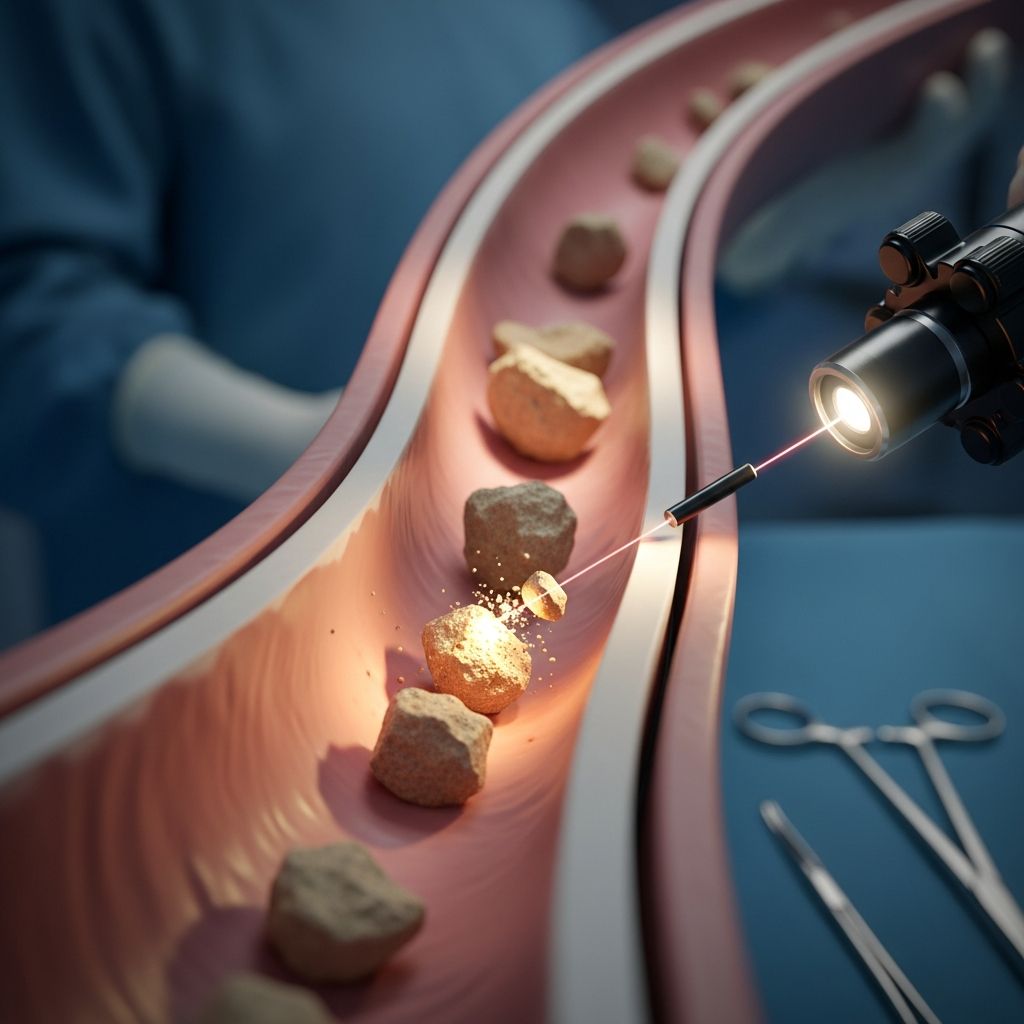
For larger stones or those with a diameter too large for the ureter, the stone must be fragmented into smaller pieces before removal. This fragmentation is typically accomplished using laser technology. The laser fiber, inserted through the ureteroscope’s shaft, delivers precise energy to break the stone into tiny fragments. Once the stone is broken into manageable pieces, these fragments are systematically removed from the patient’s urinary system, either through extraction with baskets or graspers, or by allowing them to pass naturally in the urine.
Types of Stones Treated
Ureteroscopy can effectively treat various types of kidney and ureteral stones. The procedure’s success depends on several factors including stone size, composition, and location within the urinary tract. Urologists typically recommend ureteroscopy for stones that fall between certain size parameters—generally those that are too large to pass naturally but not so massive that they require more invasive surgical intervention.
Related Stories



For very small stones, non-invasive shock wave lithotripsy may be preferred. For extremely large or complex stones exceeding 2 centimeters, percutaneous nephrolithotomy (PCNL), which involves a small incision in the back, may be recommended. Ureteroscopy is particularly effective for ureteral stones and moderately sized kidney stones ranging from approximately 1 to 2 centimeters.
Benefits of Ureteroscopy
Ureteroscopy offers numerous advantages compared to alternative treatment approaches for kidney stones and other urinary tract conditions.
- Minimally Invasive: No surgical incisions or cuts are required, reducing tissue trauma and promoting faster healing
- High Success Rates: Ureteroscopy demonstrates superior stone-free outcomes compared to shock wave lithotripsy, particularly for ureteral stones
- Direct Visualization: Real-time camera imaging allows precise stone location and treatment, improving accuracy and effectiveness
- Immediate Treatment: The procedure combines diagnosis and treatment in a single intervention, eliminating the need for staged procedures in many cases
- Reduced Hospital Stay: Most patients can be discharged the same day or after a brief overnight observation
- Lower Complication Rates: The minimally invasive nature results in fewer complications compared to open surgical approaches
- Suitable for Multiple Scenarios: Can treat stones in various locations and is appropriate for patients taking anticoagulation medications who cannot safely stop them
Risks and Complications
While ureteroscopy is generally a safe procedure, patients should be aware of potential risks and complications that can occur.
- Ureteral Perforation: Rarely, the ureteroscope may perforate the ureter wall, though this is usually minor and heals without intervention
- Infection: Post-procedural infections can occur but are typically managed with antibiotics
- Bleeding: Minor bleeding is normal and usually self-limited; significant bleeding is uncommon
- Stent-Related Discomfort: The temporary stent placed after the procedure can cause urinary urgency, frequency, or discomfort
- Incomplete Stone Removal: Some patients may require staged procedures if stones are particularly large or complex
- Elevated Intrarenal Pressure: High pressure within the kidney can occur during the procedure if excessive fluid irrigation is used
- Anesthesia Risks: General anesthesia carries inherent risks, though serious complications are rare in healthy patients
Pre-Procedure Preparation
Proper preparation is essential for a successful ureteroscopy procedure. Patients should follow their urologist’s specific instructions, which typically include:
- Fasting for 6-8 hours before the procedure (nothing to eat or drink)
- Informing the medical team of all current medications, especially anticoagulants or antiplatelet agents
- Arranging for a responsible adult to drive home after the procedure
- Wearing loose, comfortable clothing on the day of surgery
- Removing jewelry, piercings, and other metal items
- Discussing any allergies, particularly to medications or contrast dyes
- Completing any pre-operative blood work or imaging studies as requested
What to Expect During the Procedure
Understanding the procedural steps can help reduce anxiety and prepare patients mentally for their ureteroscopy.
Upon Arrival: Patients check in at the surgical facility and complete registration. The anesthesia team reviews medical history and discusses anesthesia options, typically recommending general anesthesia for optimal patient comfort and surgical conditions.
Anesthesia Administration: Once in the operating room, an IV line is established. General anesthesia is administered, and the patient falls asleep before the procedure begins.
Instrument Insertion: The urologist carefully inserts the ureteroscope through the urethra. Special positioning and gentle technique minimize trauma to urinary tissues.
Stone Location and Treatment: The camera provides visualization as the urologist advances the scope to locate the stone. Treatment—whether extraction, laser fragmentation, or both—is performed under direct visualization.
Stent Placement: After stone treatment, a temporary ureteral stent is typically placed to ensure proper kidney drainage and promote healing.
Recovery: The ureteroscope is removed, and the patient is transferred to recovery as anesthesia wears off. Most patients wake within 30 minutes to an hour.
Recovery and Aftercare
Recovery from ureteroscopy is typically quick due to the minimally invasive nature of the procedure. Most patients experience mild discomfort rather than significant pain.
Immediate Post-Operative Period
In the recovery room, nursing staff monitors vital signs and pain levels. Patients receive pain medication as needed and may experience mild grogginess as anesthesia wears off. Most patients are discharged within a few hours, though some may stay overnight depending on procedure complexity or individual factors.
At-Home Recovery
For the first few days following ureteroscopy, patients should:
- Rest and avoid strenuous activity for 3-5 days
- Drink plenty of water to promote urine flow and stone fragment passage
- Take prescribed pain medication as directed, typically for 2-3 days
- Expect some discomfort related to the temporary stent, which usually improves within a few days
- Monitor for signs of infection (fever, chills, or unusual symptoms)
- Avoid heavy lifting and intense exercise for one week
- Continue prescribed antibiotics if provided
Stent Removal
The temporary ureteral stent placed during the procedure is removed approximately 5-10 days after ureteroscopy during a brief office visit. This removal procedure is quick and causes minimal discomfort.
When Ureteroscopy is Recommended
Your urologist may recommend ureteroscopy in various clinical scenarios:
- Kidney stones causing pain or obstruction that cannot pass naturally
- Ureteral stones that failed conservative management
- Stones in patients who cannot safely undergo shock wave lithotripsy
- Large or complex stones requiring fragmentation
- Recurrent stone formers needing complete stone clearance
- Diagnostic evaluation of hematuria or other urinary tract abnormalities
- Treatment of urethral strictures or other upper urinary tract obstructions
Ureteroscopy vs. Other Treatment Options
| Treatment Option | Invasiveness | Success Rate | Recovery Time | Best For |
|---|---|---|---|---|
| Ureteroscopy | Minimally invasive | 85-95% | 3-7 days | Ureteral and moderate kidney stones |
| Shock Wave Lithotripsy | Non-invasive | 70-80% | 1-2 days | Small kidney stones |
| Percutaneous Nephrolithotomy | Surgical incision | 90-95% | 2-4 weeks | Large or complex stones |
| Conservative Management | Non-invasive | 50-70% | Variable | Small passable stones |
Frequently Asked Questions
Q: How long does a ureteroscopy procedure take?
A: Most ureteroscopy procedures take between 30 minutes to 1.5 hours, depending on stone size, location, and complexity. Laser fragmentation procedures may take slightly longer than simple extraction procedures.
Q: Will I need time off work after ureteroscopy?
A: Most patients can return to light activities within 2-3 days and resume normal activities within one week. Time off work depends on job demands; desk jobs may allow return in 2-3 days, while physically demanding jobs may require a full week off.
Q: Is ureteroscopy painful?
A: The procedure itself is not painful because you are under anesthesia. Post-operatively, discomfort is usually mild to moderate and well-controlled with prescribed pain medication. The temporary stent may cause urinary urgency and frequency discomfort.
Q: What is the success rate of ureteroscopy for stone removal?
A: Ureteroscopy has a high success rate, typically ranging from 85-95% for complete stone removal on the first procedure. Success rates are particularly high for ureteral stones, which are often completely cleared in a single procedure.
Q: Can stones come back after ureteroscopy?
A: While ureteroscopy effectively removes existing stones, it does not prevent new stone formation. Approximately 10-15% of patients experience stone recurrence within 5 years. Your urologist may recommend dietary modifications, increased hydration, or medications to reduce recurrence risk.
Q: Are there any restrictions after ureteroscopy?
A: Yes, you should avoid strenuous exercise and heavy lifting for about one week. Also, avoid swimming or bathing until your urologist confirms the stent has been removed. You can usually shower after the first post-operative day.
Q: Will I have a scar after ureteroscopy?
A: No, ureteroscopy does not require external incisions, so there will be no visible scars. This is one of the major advantages of the minimally invasive approach.
Q: What happens if the stone cannot be completely removed in one procedure?
A: For very large stones (typically over 2 cm) or complex cases, a staged approach may be necessary. Your urologist may schedule a second procedure after allowing time for healing and swelling to subside, usually 2-4 weeks later.
References
- Ureteroscopy for Treatment of Upper Urinary Tract Stones in Children — National Center for Biotechnology Information (PubMed). 2014. https://pubmed.ncbi.nlm.nih.gov/24658833/
- Johns Hopkins Urology: Ureteroscopy Video Tutorial — Johns Hopkins Medicine YouTube Channel. 2024. https://www.youtube.com/watch?v=qTnWGtJES7Y
- What is Ureteroscopy and How Does It Help in Treating Kidney Stones? — Boston Scientific. 2024. https://news.bostonscientific.eu/what-is-ureteroscopy-and-how-does-it-help-in-treating-kidney-stones
- Laser Lithotripsy Procedure Information — Sidney Regional Medical Center Urology Department. 2024. https://www.sidneyrmc.com/services/specialty-clinic/urology/lithotripsy-eswl-laser-pcnl/
- Ureteroscopy vs. Shock Wave Lithotripsy: Advances Spell Positive Future for Both — Urology Times. 2024. https://www.urologytimes.com/view/ureteroscopy-vs-shock-wave-lithotripsy-advances-spell-positive-future-both
- Ureteroscopy: Peri-operative and Post-operative Care — BackTable Urology. 2024. https://www.backtable.com/shows/urology/topics/procedure/ureteroscopy
Similar Articles








Read full bio of Sneha Tete