Urinary Catheter: Purpose, Types, Placement & Complications
Complete guide to urinary catheters: types, insertion procedures, and effective management strategies.
What Is a Urinary Catheter?
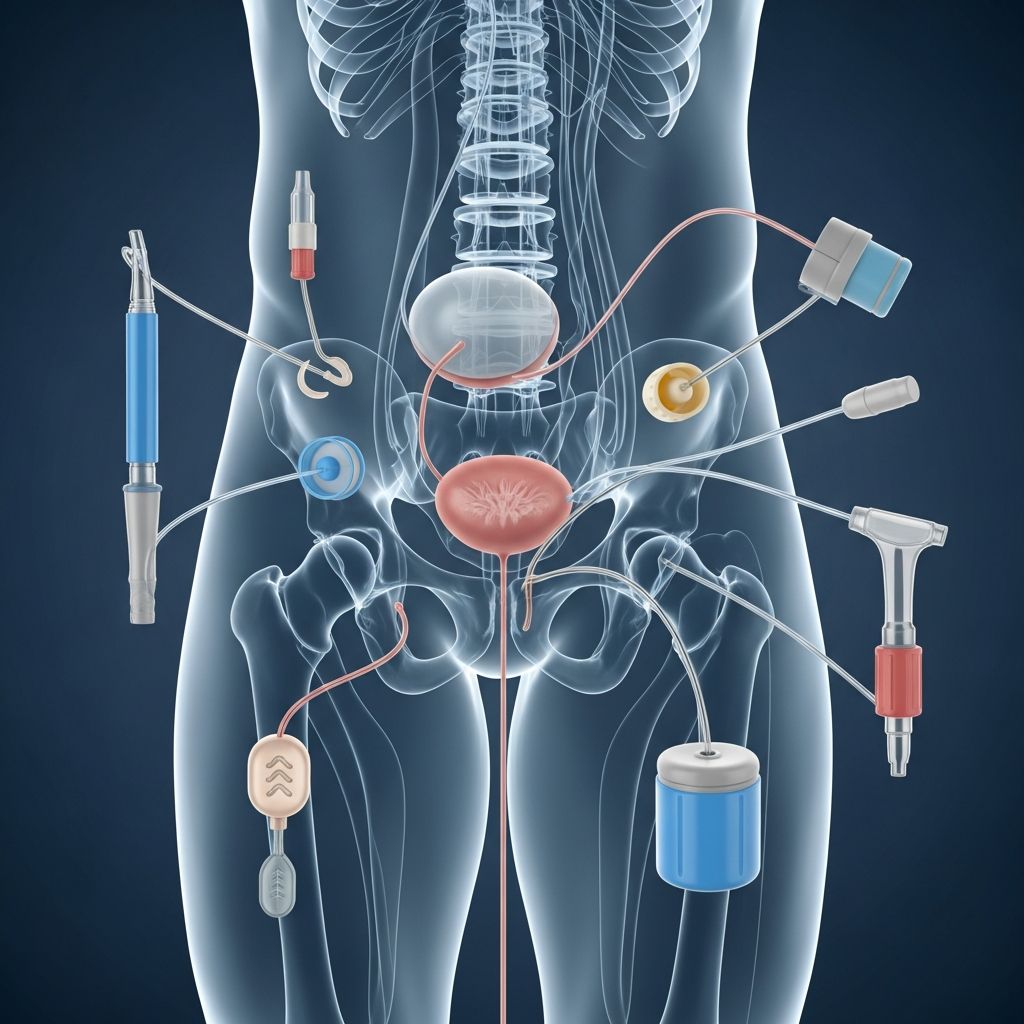
A urinary catheter is a medical device designed to drain urine from your bladder when you cannot do so naturally. These flexible tubes come in various sizes and shapes, making them suitable for patients of all ages and body types. The primary function of a urinary catheter is to collect and remove urine from your bladder, directing it into a collection bag that you can wear discreetly under your clothing.
Urinary catheters serve as essential medical tools that help reduce the risk of infections and prevent damage to your bladder and kidneys. For many patients, using a catheter can be uncomfortable—it may feel unusual if it’s placed in your urethra, and wearing a collection bag might feel awkward. However, healthcare providers understand these concerns and can address all of your questions and worries about catheter use.
Types of Urinary Catheters
Understanding the different types of urinary catheters available can help you work with your healthcare provider to choose the best option for your specific situation.
Indwelling Catheters
An indwelling catheter remains in your bladder for an extended period, typically requiring a change every month. This type of catheter continuously collects urine in a collection bag that you wear under your clothes. The most common type of indwelling catheter is the Foley catheter, which enters your body through your urethra.
Foley catheters typically have two pathways running along their entire length. The first pathway serves as a drainage port, allowing urine to flow from your bladder into a collection bag. The second pathway connects to a small balloon at the tip of the tube inside your bladder. Healthcare providers use this channel to inflate the balloon with sterile water, which keeps the catheter securely in place.
Some Foley catheters feature three pathways instead of two. Providers use the third pathway when they need to flush your bladder with sterile saline solution through continuous bladder irrigation or when they need to deliver medication directly to your bladder.
Suprapubic Catheters
A suprapubic catheter is an alternative type of indwelling catheter that enters your body through a small incision in your lower abdomen rather than through the urethra. This approach is beneficial for patients who have difficulty with traditional urethral catheterization or who require long-term catheter use.
The suprapubic catheter also features a small balloon at its tip that is inflated with sterile water to keep it securely positioned within your bladder. Like Foley catheters, suprapubic catheters drain urine into a collection bag worn under your clothing.
Straight Catheters (Intermittent Catheters)
Straight catheters, also known as intermittent catheters, are used temporarily to drain your bladder when you cannot urinate naturally. Unlike indwelling catheters, straight catheters are inserted only when needed and removed immediately after your bladder is empty. Patients may need to use a straight catheter multiple times throughout the day, typically for just a few minutes each time, while recovering from a treatment or medical condition.
Related Stories



Common Uses for Urinary Catheters
Healthcare providers may recommend urinary catheters for various medical reasons:
– Post-surgical recovery: Patients often require catheterization while healing from surgery affecting the urinary tract or nearby structures- Urinary retention: When the bladder cannot empty completely or at all due to nerve damage or other conditions- Spinal cord injuries: Individuals with limited or no bladder control due to spinal cord damage- Chronic medical conditions: Patients with progressive neurological diseases or chronic urinary issues- Monitoring urine output: Critically ill patients in hospital settings require accurate measurement of urine production- Bladder irrigation: Flushing the bladder with sterile saline solution to remove blood clots or debris- Medication delivery: Direct administration of medications into the bladder through the third pathway (when available)
Catheter Placement Procedure
Preparing for Foley Catheter Insertion
Before catheter placement, your healthcare provider will prepare the area to ensure your safety and comfort. They will clean your genital area with an antiseptic solution to help prevent infection. Following this cleaning, they’ll apply a numbing gel or cream—such as lidocaine—and lubricant to reduce any discomfort during insertion.
Once the numbing medication has taken effect, your provider will carefully insert the Foley catheter through your urethra. As the catheter enters your bladder, urine will begin draining into the collection bag. Your provider will then secure the catheter in place by filling the balloon at its tip with sterile water. Finally, they’ll use adjustable straps to secure the catheter tube and collection bag to your leg, allowing for some slack in the tubing to prevent pulling or discomfort.
Suprapubic Catheter Insertion
Suprapubic catheter placement requires a slightly different approach. Before the procedure, your healthcare provider will take imaging tests such as X-rays or ultrasound to map your bladder and surrounding areas. This imaging is crucial to ensure it’s safe to place the catheter, as sometimes loops of your small intestine rest between your bladder and abdominal wall.
Your provider will then clean the skin of your lower abdomen with an antiseptic, like iodine or alcohol, to prevent infection. They’ll apply a local anesthetic to numb the area so you won’t feel significant pain. In some cases, they may administer general anesthesia so you remain asleep during the procedure.
Once you’re properly anesthetized, your provider will make a small incision in your skin and place the suprapubic catheter directly into your bladder. Once positioned, urine will drain through the catheter into a collection bag. Your provider will use approximately one stitch to help keep the catheter in place and will apply a bandage around the incision to help prevent infection. They’ll also inflate the small balloon at the catheter’s tip with sterile water to keep it securely positioned within your bladder.
Duration of Catheter Use
The length of time you need to use a urinary catheter depends on the type of catheter and the reason you need it. Some patients only require a catheter several times daily for a few minutes while recovering from a treatment or condition. Others may need to keep the catheter in place for hours, days, or even months at a time.
In some cases, patients may need to use a catheter permanently. Your healthcare provider will explain what to expect regarding the duration of your catheter use and will provide guidance on long-term management if necessary.
Benefits of Urinary Catheter Use
Urinary catheters provide several important medical benefits. The primary benefit is the ability to drain your bladder continuously, preventing urine from accumulating in your system. Not being able to fully empty your bladder can lead to serious complications, including:
– Urinary tract infections (UTIs)- Bladder damage from overdistension- Kidney damage and infection (pyelonephritis)- Urinary reflux into the ureters and kidneys- Bladder stones formation
Risks and Complications
Urinary Tract Infections
The primary risk associated with using a urinary catheter is developing a urinary tract infection. The longer you use a Foley catheter, the higher your risk of developing a UTI. Catheters should not be used longer than three months without careful medical oversight, as the risk increases substantially with extended use.
Other Potential Complications
While UTIs are the most common complication, other potential issues may arise:
– Trauma or bleeding from catheter insertion- Catheter obstruction or kinking- Catheter encrustation from mineral deposits- Bladder spasms and discomfort- Allergic reactions to catheter materials- Accidental catheter displacement or removal
Catheter Care and Management
Proper care of your urinary catheter is essential to prevent infections and complications. Your healthcare provider will teach you how to care for your catheter as part of your treatment plan. For indwelling catheters like Foley catheters, you should change them every month as recommended.
Daily hygiene around the catheter insertion site is crucial. Clean the area gently with soap and water, dry it thoroughly, and inspect it regularly for signs of infection such as redness, swelling, or discharge.
Ensure your collection bag is emptied regularly to prevent overfilling and backup of urine into your catheter. Most collection bags should be emptied when they reach about two-thirds full. Additionally, maintain proper hydration to help flush your urinary system naturally and reduce infection risk.
Living with a Urinary Catheter
Using a urinary catheter may require some lifestyle adjustments, but it shouldn’t prevent you from participating in many of your normal activities. With proper education and support from your healthcare provider, you can continue working, bathing, swimming, traveling, and even having sexual intercourse.
It may take some time to adjust to catheter use, and it’s completely normal to feel nervous about hurting yourself or accidentally pulling it out while going about your daily life. Healthcare providers understand these concerns and are available to answer your questions and help put you at ease. Your provider will teach you how to insert and care for the catheter if you’re using an intermittent catheter, ensuring you can maintain your independence and quality of life.
Frequently Asked Questions
Q: How often do I need to change my indwelling catheter?
A: Indwelling catheters should typically be changed every month. Your healthcare provider will give you specific instructions based on your individual situation and the type of catheter you’re using.
Q: Can I shower or bathe with a urinary catheter?
A: Yes, you can bathe or shower with a urinary catheter in most cases. You should keep the catheter insertion site clean and dry. Your healthcare provider will provide specific instructions on how to protect the area while bathing.
Q: What are the signs of a urinary tract infection related to catheter use?
A: Signs of a UTI may include cloudy or bloody urine, strong odor, fever, chills, back pain, or abdominal discomfort. Contact your healthcare provider immediately if you experience these symptoms.
Q: How long can I safely use a Foley catheter?
A: Generally, you shouldn’t use a Foley catheter longer than three months without careful medical supervision. Prolonged use increases the risk of complications, particularly urinary tract infections.
Q: Can I sleep with a urinary catheter?
A: Yes, you can sleep with an indwelling catheter. Your collection bag can be attached to a leg strap or placed in a night bag with larger capacity designed for sleeping. Make sure the tubing isn’t kinked to allow proper drainage.
Q: Is catheter insertion painful?
A: Your healthcare provider will use numbing gel or cream and lubricant to minimize discomfort. While you may feel pressure or slight discomfort during insertion, the procedure should not be severely painful.
Q: Can I have sexual intercourse with a urinary catheter?
A: Yes, in most cases you can have sexual intercourse with an indwelling catheter. You may want to secure the catheter and collection bag or use a night bag during intimate activities. Discuss specific concerns with your healthcare provider.
References
- Urinary Catheter: Purpose, Types, Placement & Complications — Cleveland Clinic. 2024. https://my.clevelandclinic.org/health/treatments/catheter
- Suprapubic Catheter: Changing, Flushing & Recovery — Cleveland Clinic. 2024. https://my.clevelandclinic.org/health/treatments/25028-suprapubic-catheter
- Foley Catheter: Purpose, Insertion & Care — Cleveland Clinic. 2024. https://my.clevelandclinic.org/health/treatments/foley-catheter
- Guidelines for the Management of Adults with Hospital-Acquired and Ventilator-Associated Pneumonia: 2016 Update — American Thoracic Society. PubMed. https://pubmed.ncbi.nlm.nih.gov/27128642/
- Catheter-Associated Urinary Tract Infection (CAUTI) — Centers for Disease Control and Prevention (CDC). 2025. https://www.cdc.gov/hai/ca_uti/uti.html
- Prevention of Catheter-Associated Urinary Tract Infections in Acute Care Hospitals — National Institute for Health and Care Excellence (NICE). 2015. https://www.nice.org.uk/guidance/qs61
Similar Articles








Read full bio of medha deb