Understanding the Urinary System: Anatomy, Function & Health
Comprehensive guide to urinary system anatomy, how it works, and common conditions affecting urinary health.
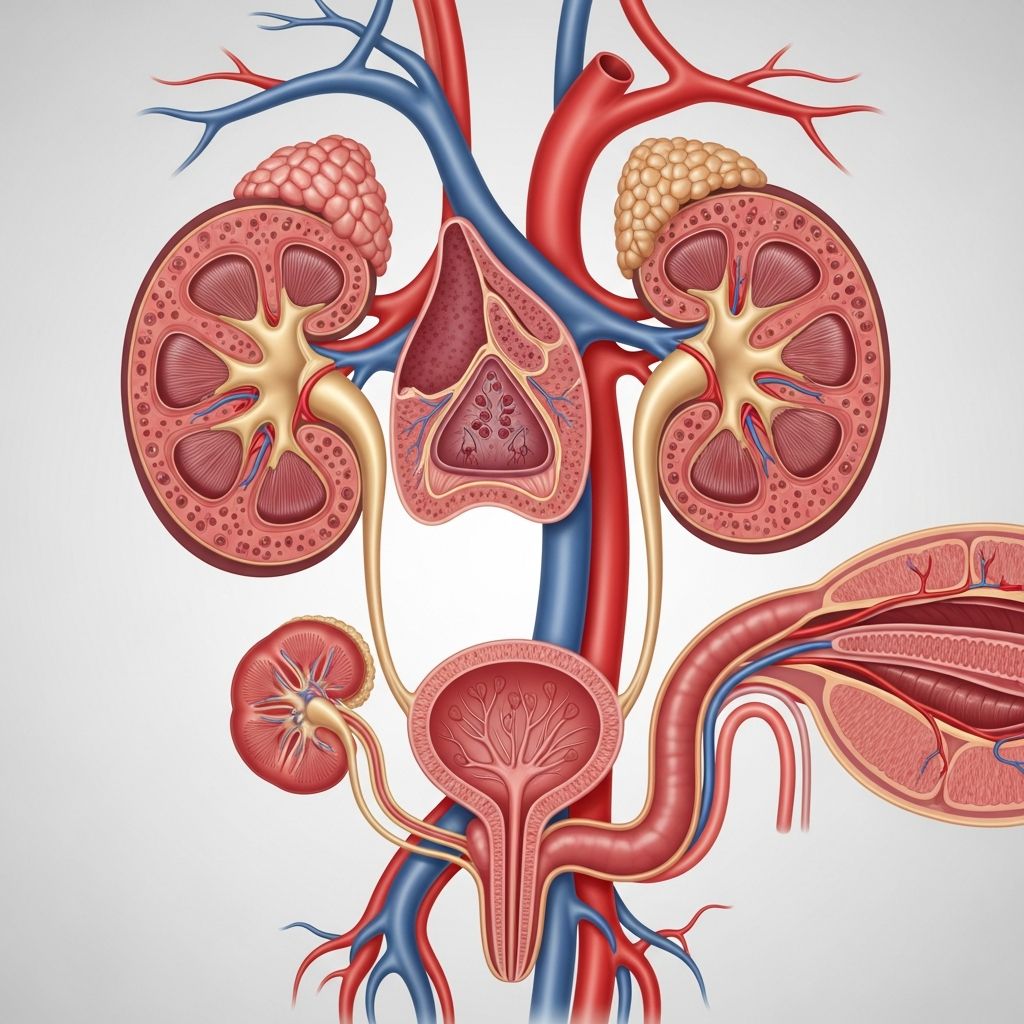
Understanding Your Urinary System
The urinary system, also known as the renal system or urinary tract, is a vital collection of organs and structures that work together to filter your blood, remove waste products, and maintain proper fluid balance in your body. This sophisticated system produces, stores, and eliminates urine—a liquid waste product containing water, urea, creatinine, and other substances your body doesn’t need. Without a properly functioning urinary system, waste products would accumulate in your bloodstream, leading to serious health complications. Understanding how your urinary system works and recognizing potential problems can help you maintain better overall health and catch issues early.
The Main Components of the Urinary System
Your urinary system consists of four primary organs and structures that work in coordinated harmony to process and eliminate waste:
The Kidneys
Your kidneys are the workhorses of your urinary system. These bean-shaped organs are approximately the size of your fist and are situated on either side of your spine, just below your ribcage. Most people have two kidneys, though the body can function with just one. The kidneys perform the critical task of filtering your blood. Each kidney contains approximately one million tiny functional units called nephrons. As blood flows through your kidneys, the nephrons filter out waste products, excess water, and other impurities. These waste materials eventually become urine. Simultaneously, your kidneys help regulate blood pressure, produce hormones that control red blood cell production, and maintain the balance of electrolytes and minerals in your body.
The Ureters
Once your kidneys produce urine, it must travel to your bladder through the ureters. These are small, muscular tubes—approximately 10 to 12 inches long—that connect each kidney to your urinary bladder. The ureters don’t simply allow urine to flow downward passively through gravity. Instead, they contract in waves called peristalsis, which actively propel urine toward your bladder. This muscular action ensures efficient transport of urine and helps prevent backward flow.
The Urinary Bladder
Your bladder is a hollow, stretchy organ located in the lower part of your abdomen. Think of it as a sophisticated storage tank for urine. The bladder is pink or dark pink in color and measures approximately 2 inches when empty but can expand to about 6 inches when completely full. For most people, the bladder can hold between 400 and 600 milliliters of urine—roughly equivalent to two cups. As urine accumulates, the bladder’s walls stretch to accommodate the volume. When your bladder contains approximately 200 to 350 milliliters of urine, specialized nerves send signals to your brain, creating the urge to urinate.
The Urethra
The urethra is a hollow tube through which urine exits your body when you urinate. In females, the urethra is relatively short, measuring approximately 1.5 inches. In males, the urethra is significantly longer—about 8 inches—and passes through the prostate gland and penis. The urethra contains two types of sphincter muscles: the internal sphincter, located where the urethra meets the bladder, and the external sphincter, located in the pelvic floor muscles. These sphincters work together to control the flow of urine and maintain continence.
How Your Urinary System Works
Understanding the process of urine formation and elimination helps you appreciate the complexity and importance of your urinary system.
Blood Filtration in the Nephrons
The process begins in your kidneys’ nephrons. Blood enters the nephron through a specialized structure called the glomerulus, a network of tiny blood vessels. As blood passes through the glomerulus, water, small molecules like glucose and urea, and ions are filtered out, while larger molecules like proteins and blood cells remain in the bloodstream. This initial filtration produces a fluid called glomerular filtrate.
Tubular Reabsorption
As the filtered fluid moves through the renal tubule, your kidneys perform selective reabsorption. Useful substances—including glucose, amino acids, water, and certain electrolytes like sodium—are reabsorbed back into the bloodstream. Different portions of the renal tubule have different permeabilities for various solutes and water. Approximately 99 percent of the filtered water is reabsorbed, allowing your body to maintain proper hydration. The remaining 1 percent combines with waste products to form urine.
Related Stories



Tubular Secretion
Additional waste products and excess ions are actively secreted from the blood into the renal tubule. This process helps fine-tune the composition of urine and maintains the pH and electrolyte balance of your blood. Hormones like aldosterone and antidiuretic hormone (ADH) regulate this process.
Urine Storage and Elimination
Once formed, urine collects in the kidney’s collecting ducts and drains into the renal pelvis. From there, urine moves through the ureters via peristalsis into your bladder, where it’s stored. Most people produce approximately 950 to 1,900 milliliters of urine daily. When you decide to urinate, muscles in your bladder contract while the sphincter muscles in your urethra relax, allowing urine to flow out of your body.
Bladder Anatomy and Structure
Your bladder’s unique structure enables it to perform its storage function effectively. The bladder consists of four primary anatomical parts:
The Four Structural Layers
The bladder wall contains three main tissue layers. The innermost layer is the urothelium, a specialized epithelium that protects bladder tissue from urine. The middle layer, called the detrusor muscle, is smooth muscle that contracts during urination. The outer layer is the serosa, which covers the superior portion of the bladder. Additionally, the bladder features internal folds called rugae that allow it to expand as it fills with urine and return to normal when empty.
Gender Differences in Bladder Position
In females, the bladder sits in front of the vagina and below the uterus. In males, the bladder rests between the pubic bone in front and the rectum behind, above the prostate gland. These anatomical differences can influence the types of urinary conditions that develop and how symptoms present.
Key Physiological Functions
Your urinary system performs several essential functions beyond simply removing waste:
Waste Elimination
Your kidneys filter various waste products generated through normal metabolism, including urea (a byproduct of protein metabolism), creatinine (produced by muscle metabolism), and uric acid (from nucleic acid breakdown). These substances are removed from your bloodstream and excreted in urine.
Fluid Balance Regulation
Your kidneys maintain proper hydration by controlling water reabsorption. When you’re well-hydrated, more water is excreted in urine. When you’re dehydrated, your kidneys reabsorb more water, producing more concentrated urine. This regulation prevents dehydration and maintains proper blood volume and pressure.
Electrolyte and Mineral Balance
Your kidneys carefully regulate sodium, potassium, calcium, phosphorus, and other electrolytes essential for nerve function, muscle contraction, and heart rhythm. The balance between reabsorption and secretion of these substances maintains blood chemistry within narrow, healthy ranges.
Blood Pressure Regulation
By controlling fluid volume and sodium reabsorption, your kidneys influence blood pressure. They also produce renin, an enzyme that activates the renin-angiotensin-aldosterone system, a crucial mechanism for blood pressure regulation.
Hormone Production
Your kidneys produce erythropoietin, a hormone that stimulates red blood cell production in bone marrow. They also produce calcitriol, an active form of vitamin D essential for calcium absorption and bone health. Additionally, kidneys release prostaglandins that help regulate blood flow and fluid balance.
The Urothelium: Your Urinary System’s Protective Barrier
The urothelium is a specialized epithelial lining that covers your bladder, ureters, and portions of the urethra. This remarkable tissue serves as a crucial barrier protecting your urinary tract from bacteria and preventing urine components from damaging underlying tissues. The urothelium consists of three distinct layers: the superficial layer containing large umbrella cells that can stretch and flatten as your bladder fills, the intermediate layer, and the basal layer. The umbrella cells are unique because a single umbrella cell can cover multiple cells in the intermediate layer beneath it, forming a tight barrier that prevents bacterial adherence and invasion.
Common Urinary System Conditions
Several conditions can affect your urinary system’s function and health:
Urinary Tract Infections (UTIs)
Bacterial infections can affect any part of the urinary tract, causing pain during urination, urgency, frequency, and cloudy or bloody urine. These infections are more common in women than men due to anatomical differences.
Kidney Stones
Hard mineral deposits can form in your kidneys and cause severe pain as they pass through the urinary tract. Risk factors include dehydration, certain dietary patterns, and family history.
Chronic Kidney Disease
Progressive loss of kidney function can result from diabetes, high blood pressure, or other conditions. Early detection and management are crucial for slowing disease progression.
Urinary Incontinence
Involuntary urine leakage affects millions of people, particularly women and older adults. Various types exist, including stress incontinence, urge incontinence, and overflow incontinence.
Bladder Problems
Conditions like overactive bladder, interstitial cystitis, and bladder dysfunction can cause urinary frequency, urgency, pain, and other uncomfortable symptoms.
Maintaining Urinary System Health
Several lifestyle strategies support optimal urinary system function:
Stay Hydrated
Drinking adequate water helps dilute urine and promotes regular urination, which flushes bacteria from your urinary tract. Most experts recommend drinking enough water so your urine appears light yellow or colorless.
Maintain a Healthy Diet
Reduce sodium intake, limit processed foods, and consume adequate fruits and vegetables. For kidney health, moderate protein intake and manage phosphorus and potassium if advised by your healthcare provider.
Exercise Regularly
Regular physical activity supports cardiovascular health and helps maintain healthy blood pressure and weight, all of which benefit kidney and urinary function.
Avoid Bladder Irritants
Certain beverages like caffeine, alcohol, and acidic drinks can irritate your bladder. Spicy foods may also trigger symptoms in sensitive individuals.
Practice Good Hygiene
Proper genital hygiene helps prevent bacterial infections. Women should wipe from front to back, and both men and women should urinate shortly after sexual activity.
When to Seek Medical Attention
Contact your healthcare provider if you experience painful urination, frequent urges to urinate, blood in urine, lower back or side pain, fever, nausea, or difficulty urinating. These symptoms may indicate infections, stones, or other conditions requiring professional evaluation and treatment.
Frequently Asked Questions
Q: How much urine does the average person produce daily?
A: Most adults produce approximately 950 to 1,900 milliliters (about two quarts) of urine daily, though this varies based on fluid intake, diet, medications, and health conditions.
Q: Can you live with one kidney?
A: Yes, people can live a normal lifespan with one functioning kidney. The remaining kidney typically increases its filtration capacity to compensate for the missing kidney.
Q: What causes dark yellow urine?
A: Dark yellow or amber-colored urine typically indicates dehydration. Drinking more water should return your urine to a lighter color. However, certain medications and medical conditions can also affect urine color.
Q: How often should a healthy person urinate?
A: Healthy adults typically urinate 4 to 10 times daily, with most people urinating 6 to 8 times. Frequency depends on fluid intake, diet, and individual physiology.
Q: What foods are bad for kidney health?
A: High-sodium processed foods, excessive protein, certain cured meats, and foods high in phosphorus and potassium can strain kidney function, particularly in people with existing kidney disease.
Q: Can stress affect urinary function?
A: Yes, stress and anxiety can trigger or worsen urinary urgency and frequency. Stress management techniques like meditation and exercise may help reduce these symptoms.
References
- Bladder: Anatomy, Location, Function & Related Conditions — Cleveland Clinic. 2023-05-24. https://my.clevelandclinic.org/health/body/25010-bladder
- Chapter 8 Renal and Urinary System Alterations — National Center for Biotechnology Information, U.S. National Library of Medicine. https://www.ncbi.nlm.nih.gov/books/NBK613065/
- Ureters: Anatomy, Location, Function & Conditions — Cleveland Clinic. https://my.clevelandclinic.org/health/body/ureters
- Urothelium: Anatomy, Function, Conditions & Disorders — Cleveland Clinic. https://my.clevelandclinic.org/health/body/22205-urothelium
- Urethra: Location, Anatomy, Function & Conditions — Cleveland Clinic. https://my.clevelandclinic.org/health/body/23002-urethra
- Kidneys: Location, Anatomy, Function & Health — Cleveland Clinic. https://my.clevelandclinic.org/health/body/21824-kidney
- Urinary System Structures — Visible Body. https://www.visiblebody.com/learn/urinary/urinary-system-structures
Similar Articles








Read full bio of Sneha Tete