Urinary Tract Mechanics: Essential Guide To Function & Health
Discover the intricate workings of your urinary system, from blood filtration to waste expulsion, and how it maintains vital body balance.
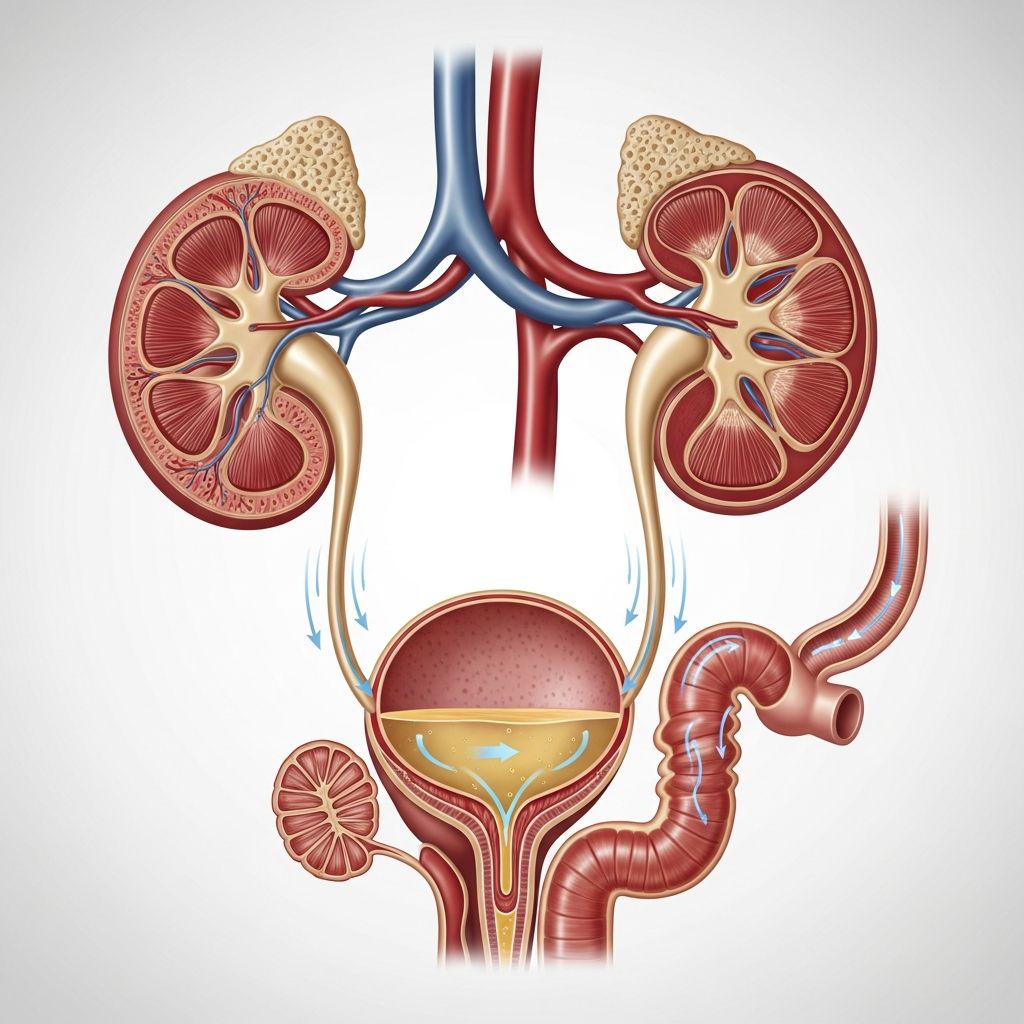
The urinary tract serves as the body’s primary filtration and drainage network, processing blood to eliminate waste while preserving essential fluids and electrolytes. This system ensures homeostasis by continuously monitoring and adjusting blood composition through a series of specialized organs working in unison.
Foundational Role in Body Homeostasis
Maintaining internal balance is the cornerstone of urinary tract operations. The system filters approximately 180 liters of blood plasma daily, reabsorbing vital nutrients and expelling excess water, salts, urea, and other byproducts. This process prevents toxic buildup and stabilizes pH levels, blood pressure, and volume.
Beyond waste removal, the urinary tract contributes to hormone production. Kidneys synthesize erythropoietin to stimulate red blood cell formation and activate vitamin D for calcium regulation. These multifaceted roles underscore its importance in overall physiology.
Kidneys: The Filtration Powerhouses
Positioned retroperitoneally against the posterior abdominal wall, the two bean-shaped kidneys are encased in protective adipose tissue to maintain alignment and facilitate unobstructed urine flow. Each kidney contains over a million nephrons, the microscopic functional units responsible for filtration.
Nephrons operate through a two-stage process: glomerular filtration followed by tubular reabsorption and secretion. Blood enters via the renal artery, passes through the glomerulus—a capillary tuft—where pressure forces fluid into Bowman’s capsule. This filtrate then travels the renal tubule, where 99% of water, glucose, and ions are reclaimed, leaving concentrated urine.
Urine collects in minor calyces, merging into major calyces, then the renal pelvis—a funnel-like structure at the kidney’s hilum—before entering the ureter. This hierarchical drainage ensures efficient transport without stagnation.
- Glomerular filtration rate (GFR): Measures kidney efficiency, typically 125 mL/min in healthy adults.
- Key adaptations: Juxtamedullary nephrons enable urine concentration during dehydration.
- Protective barriers: Endothelium, basement membrane, and podocytes selectively filter molecules.
Ureters: Conduit for Continuous Flow
Narrow, muscular tubes extend from each renal pelvis to the bladder, propelled by peristaltic waves every 10-15 seconds. These contractions prevent urine reflux, reducing infection risk. Ureteral walls feature transitional epithelium and smooth muscle layers for elasticity and propulsion.
At the bladder junction, ureters penetrate obliquely through the detrusor muscle, creating a valve-like mechanism against backflow. Stagnant urine in ureters heightens pyelonephritis risk, emphasizing the need for rhythmic motility.
Bladder: Dynamic Storage Reservoir
A triangular, hollow organ in the pelvic cavity, the bladder expands to hold up to 500 mL of urine, supported by ligaments anchoring it to pelvic bones. Its wall comprises detrusor muscle—smooth muscle bundles that relax during filling and contract during voiding.
Three internal angles, or trigones, mark key anatomical zones, with the posterior often prone to persistent infections due to bacterial harboring. Stretch receptors in the wall trigger the micturition reflex at around 300 mL, signaling the brain via spinal pathways.
| Bladder Capacity Stages | Description | Physiological Response |
|---|---|---|
| Empty (<50 mL) | Contracted, folded mucosa | Minimal neural activity |
| Filling (150-300 mL) | Expansion, mucosa smoothing | First urge sensation |
| Full (400-500 mL) | Maximum stretch | Strong micturition reflex |
Related Stories



Sphincters: Guardians of Continence
Two sphincter sets maintain urinary control. The internal urethral sphincter, smooth muscle at the bladder neck, operates involuntarily. The external sphincter, striated muscle intertwined with pelvic floor, allows voluntary hold.
During storage, both remain contracted; internal via sympathetic tone, external via somatic nerves. Urination relaxes them sequentially: brain signals release internal first, then external, coordinated with detrusor contraction.
Urethra: The Final Pathway
This tube varies by sex. In females, the 3-5 cm urethra traverses the pelvic floor, lined by stratified squamous epithelium distally, promoting continence via mucosal elasticity influenced by estrogen.
Males feature a longer 20 cm urethra, transitioning from transitional to stratified squamous epithelium, passing through prostate and penis. Both employ sphincters for control, but anatomical differences affect infection susceptibility—shorter female urethra heightens UTI risk.
Micturition Reflex: Orchestrated Expulsion
Voiding integrates autonomic and somatic controls. Bladder filling activates parasympathetic afferents to the sacral spinal cord, building tension until threshold triggers efferent outflow: detrusor contracts, internal sphincter relaxes.
Cortical centers permit voluntary external sphincter relaxation. Success relies on synchronized signals; disruptions cause incontinence or retention. Frequency depends on production rate and capacity—typically 6-8 times daily.
Sex-Specific Anatomical Variations
Female urinary tract prioritizes brevity for efficiency but vulnerability. Urethra’s proximity to vagina and anus facilitates bacterial ascent. Male prostate encircles bladder neck, influencing flow dynamics and adding potential obstruction sites.
- Female advantages: Easier voiding, less retention risk.
- Male challenges: Prostate enlargement common post-50, narrowing urethra.
- Shared vulnerabilities: Aging weakens sphincters, increasing leakage.
Regulatory Hormones and Neural Oversight
Antidiuretic hormone (ADH) concentrates urine by enhancing water reabsorption; aldosterone retains sodium. Renin-angiotensin system modulates pressure. Neural input: sympathetic inhibits voiding, parasympathetic promotes it.
Pudendal nerve governs external sphincter; pelvic nerves handle detrusor. Pontine micturition center coordinates spinal reflexes with higher brain input for social timing.
Common Disruptions and Maintenance
Infections thrive in stagnant areas; hydration promotes flushing. Stones form from supersaturated solutes, obstructing flow. Neurological issues impair signaling, causing overactive bladder or retention.
Preventive strategies include adequate fluids (2-3L/day), voiding post-intercourse, and pelvic exercises. Early symptoms like dysuria warrant medical attention to avert complications.
FAQs
How often should you urinate daily?
Typically 6-8 times, varying with intake and health. Persistent changes signal issues.
What triggers the urge to urinate?
Stretch receptors at 300 mL initiate micturition reflex.
Why do women face more UTIs?
Shorter urethra allows easier bacterial entry.
Can diet affect urinary health?
Yes; excess salt or protein burdens kidneys, while cranberries may prevent adhesion.
How does aging impact the system?
Reduced elasticity, weaker muscles increase incontinence risk.
References
- Anatomy Lecture Notes Section 6: The Renal (Urinary) System — San Diego Miramar College. 2024-05. https://sdmiramar.edu/sites/default/files/2024-05/%2313%20Renal%20System%20Lect%20Notes.pdf
- The Urinary Tract & How It Works — National Institute of Diabetes and Digestive and Kidney Diseases (NIDDK). 2024. https://www.niddk.nih.gov/health-information/urologic-diseases/urinary-tract-how-it-works
- Urinary System Anatomy and Function — Cincinnati Children’s Hospital. 2024. https://www.cincinnatichildrens.org/health/u/urinary-system
- Anatomy and Function of the Urinary System — Stanford Children’s Health. 2024. https://www.stanfordchildrens.org/en/topic/default?id=anatomy-and-function-of-the-urinary-system-85-P01468
- Urinary system: Organs, anatomy and clinical notes — Kenhub. 2024. https://www.kenhub.com/en/library/anatomy/urinary-system
- Women – Urinary Tract System — Wellspect. 2024. https://www.wellspect.us/education/articles/women-urinary-tract-system/
Similar Articles








Read full bio of Sneha Tete