Urine Flow Test: Purpose, Procedure & Results
Complete guide to urine flow testing: Learn how this diagnostic procedure evaluates bladder and urinary tract function.
Understanding the Urine Flow Test
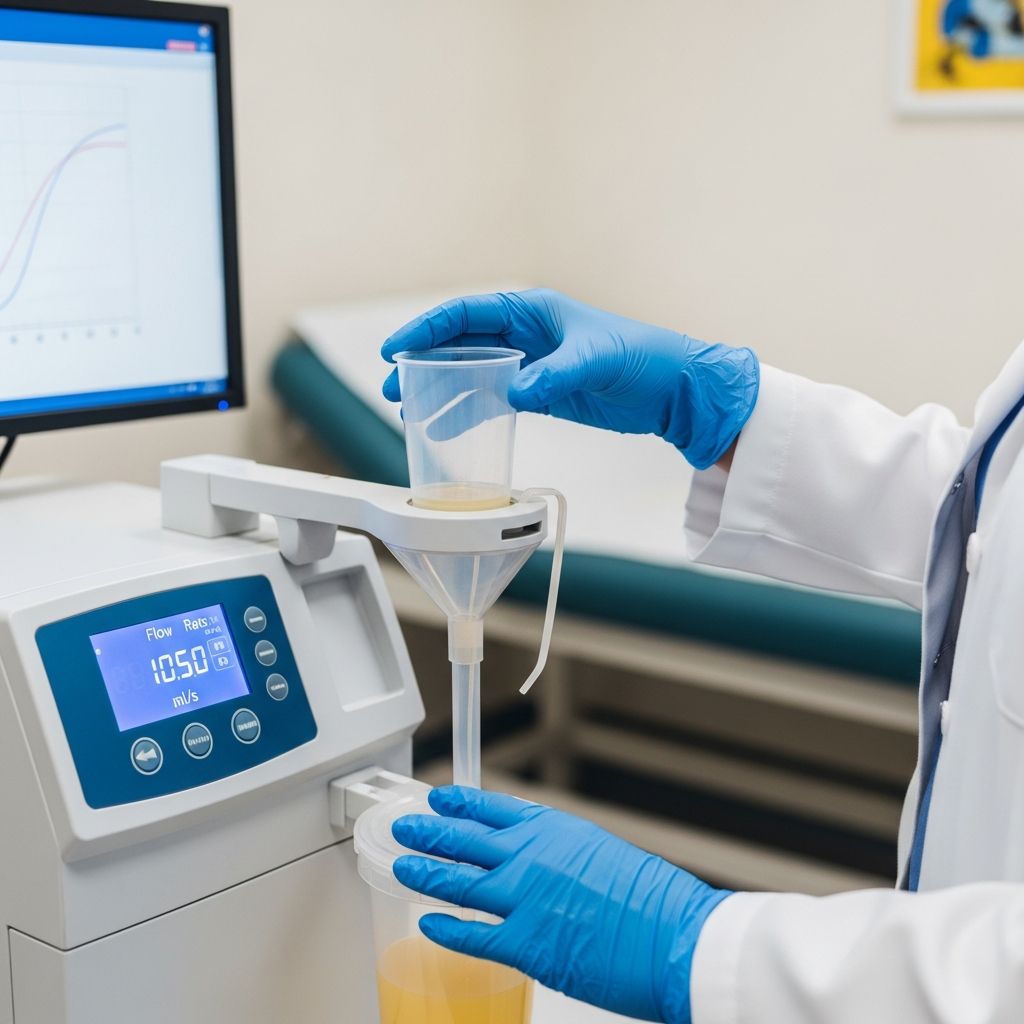
A urine flow test, also known as uroflowmetry, is a diagnostic procedure designed to measure how quickly and efficiently urine flows from your body during urination. This non-invasive test evaluates the speed at which urine is released, the total volume expelled, and the duration of the urination process. By analyzing these measurements, healthcare providers can assess how well your bladder and urinary sphincter muscles are functioning and identify potential obstructions or abnormalities in your lower urinary tract.
The test is particularly valuable because it provides objective data about your urinary system’s performance without requiring any invasive procedures or injections. The information gathered during a urine flow test helps your doctor understand the overall health of your urinary tract and can guide treatment decisions if problems are identified.
What Does the Urine Flow Test Measure?
The urine flow test captures several important measurements that collectively provide insight into your urinary system’s function:
- Flow rate: How fast urine exits your body, typically measured in milliliters per second (mL/sec)
- Total volume: The complete amount of urine released during the test
- Duration: The total time taken to completely empty your bladder
- Flow pattern: Whether your stream is continuous or starts and stops intermittently
- Maximum flow: The peak velocity achieved during urination
- Average flow: The calculated average speed throughout the urination process
These measurements are automatically recorded by a specialized computer and presented as a graph that shows the complete flow pattern during urination. Healthcare providers analyze this graph along with your age and gender to determine whether your results fall within normal ranges.
Why Your Doctor May Order a Urine Flow Test
Your healthcare provider may recommend a urine flow test for various reasons related to urinary tract function and health. This test is particularly useful when evaluating symptoms or conditions that affect how your urinary system stores and releases urine.
Common reasons for ordering this test include:
- Evaluation of slow or weak urine stream
- Assessment of urinary symptoms such as hesitancy or intermittent flow
- Investigation of suspected bladder outlet obstruction
- Diagnosis of enlarged prostate in men
- Evaluation of bladder function after spinal cord injury
- Assessment of urinary retention or incomplete emptying
- Follow-up monitoring of previous urinary tract conditions
- Evaluation of overactive bladder symptoms
- Investigation of recurrent urinary tract infections
The test is particularly valuable for identifying whether urinary symptoms are caused by obstruction, weak bladder muscles, or other functional problems in the lower urinary tract.
How Normal Urine Flow Works
Understanding normal urination helps explain what healthcare providers look for during a urine flow test. During a typical urination process, your urine flow follows a predictable pattern:
Initially, as you begin urinating, the urine stream starts slowly. Within a few seconds, the flow rapidly increases to its maximum velocity as bladder muscle contractions build. The urine continues flowing at a relatively steady maximum rate while your bladder empties. As your bladder approaches empty, the flow rate gradually decreases until it finally stops as the last urine is expelled.
Related Stories



This bell-shaped flow pattern is what healthcare providers expect to see on a normal urine flow test graph. The entire process typically takes between 15 to 45 seconds for complete bladder emptying, though this varies based on the total volume of urine present.
Abnormal Flow Patterns
When urinary tract obstruction or other problems are present, this normal flow pattern becomes disrupted. In people with urinary tract blockages or other dysfunction, the flow increases and decreases much more gradually, creating a flattened or irregular graph. Instead of a sharp peak, the curve may show a prolonged, lower plateau or multiple peaks and valleys.
Abnormal patterns can indicate weak bladder muscle contractions, urinary sphincter dysfunction, enlarged prostate, strictures (narrowing) in the urethra, or other obstructive conditions. The specific pattern shown on your test graph helps your doctor pinpoint the likely cause of your urinary symptoms.
Preparation for Your Urine Flow Test
Proper preparation is essential for obtaining accurate test results. Your healthcare provider will give you specific instructions, but general preparation guidelines include:
- Arrive at your appointment with a comfortably full bladder – you should feel a moderate urge to urinate
- Drink water or fluids about 1-2 hours before your appointment to ensure adequate urine volume
- Avoid excessive fluid intake immediately before the test, which could cause too full a bladder
- Empty your bladder normally at home before leaving for the appointment if it’s too full
- Avoid urinating for at least 2-3 hours before the test if possible
- Wear comfortable, easily removable clothing for quick access
- Inform your healthcare provider about any medications you’re taking
- Let your provider know about any recent urinary symptoms or changes
A bladder that is too empty will not provide enough urine for accurate measurement, while an excessively full bladder may not empty completely during the test, affecting result accuracy. Your healthcare provider’s office may perform a bladder ultrasound before the test to confirm adequate urine volume.
What to Expect During the Test
The urine flow test is a straightforward outpatient procedure that typically takes only a few minutes to complete. Here’s what happens step-by-step:
Setting Up
You’ll be taken to a private test room and shown the equipment. The uroflowmeter is a specialized device that looks similar to a regular toilet or urinal but contains electronic measuring equipment. Your healthcare provider will explain how to use the device and answer any questions you have.
Starting the Test
When you’re ready to urinate, you’ll press the start button on the flowmeter and count silently for 5 seconds before beginning urination. This allows the machine to calibrate and prepare to record your flow.
Urinating Into the Device
You’ll urinate into the special funnel device that’s connected to the measuring equipment. Important guidelines during urination include:
- Urinate naturally without straining or pushing forcefully
- Maintain a relaxed, normal urination pattern
- Stay as still as possible during the procedure
- Do not put toilet paper into the funnel device
- Continue until you’ve completely emptied your bladder
Ending the Test
When you finish urinating, wait 5 seconds and press the stop button on the flowmeter. The machine will then automatically generate a report with your measurements and flow graph. The entire test typically takes only 3-5 minutes from start to finish.
Test Discomfort and Safety
The urine flow test involves normal urination, so you should not experience any pain or discomfort during the procedure. The test is completely non-invasive and safe. No needles, catheters, or medications are used. There are no known risks or side effects associated with the test.
The only mild discomfort some patients might experience is the awkwardness of urinating in a medical setting or the awareness of being in a clinical environment. Most patients find the test straightforward and uneventful.
Understanding Your Test Results
Your healthcare provider will analyze your urine flow test results by comparing your measurements to normal values for your age and gender. Normal flow rates vary significantly based on these factors:
| Population | Maximum Flow Rate (Normal Range) | Average Flow Rate (Normal Range) |
|---|---|---|
| Adult Men | 20-25 mL/sec | 12-15 mL/sec |
| Adult Women | 25-30 mL/sec | 15-20 mL/sec |
| Elderly Men | 12-15 mL/sec | 8-10 mL/sec |
| Elderly Women | 20-25 mL/sec | 12-15 mL/sec |
Flow rates naturally decline with age, particularly in men. Your provider will consider this when interpreting your results. The shape of your flow curve is also important – healthcare providers look for the expected bell-shaped pattern that indicates normal bladder and sphincter function.
What Results May Indicate
Low Flow rates may suggest weak bladder muscles, urinary tract obstruction, enlarged prostate, urethral stricture, or neurogenic bladder dysfunction.
Interrupted or hesitant flow may indicate sphincter dysfunction, neurological problems, or anxiety during testing.
Normal flow rates with symptoms may suggest functional problems not detected by flow rate alone, requiring additional testing.
High residual urine (urine remaining in the bladder after testing) may indicate incomplete emptying due to obstruction or weak bladder contractions.
Additional Testing After Uroflowmetry
Your urine flow test results may lead to additional diagnostic tests for a complete evaluation. Common complementary tests include:
- Post-void residual measurement: Ultrasound imaging to measure urine remaining in your bladder after the test
- Cystometry: Pressure measurement inside your bladder during filling and emptying
- Electromyography: Recording of electrical activity in your urinary sphincter muscle
- Video urodynamics: X-ray imaging combined with pressure and flow measurements
- Cystoscopy: Direct visualization of your bladder interior using a small camera
- Imaging studies: Ultrasound, CT, or MRI to visualize your urinary tract structures
These additional tests provide more detailed information about your urinary tract function and help your healthcare provider develop an appropriate treatment plan.
Frequently Asked Questions
How long does the urine flow test take?
The actual test takes only 3-5 minutes, though your entire office visit may be 30-60 minutes including check-in, preparation, and discussion of results.
Is the test painful?
No, the test is completely painless. It involves only normal urination into a special measuring device.
Can I eat or drink before the test?
Yes, you can eat normally. You should drink water or fluids 1-2 hours before the test to ensure adequate urine volume, but avoid excessive fluid intake immediately before the appointment.
Will the test diagnose my specific condition?
The urine flow test provides valuable information about your urinary tract function but is often combined with other tests for a complete diagnosis. Your healthcare provider will determine if additional testing is needed.
How soon will I get results?
Your healthcare provider typically reviews results immediately and may discuss them with you before you leave the office. A detailed report may be sent to your primary care physician.
Is there any preparation I should avoid?
Avoid urinating just before the test – you need a full bladder. Also, don’t take any fluids immediately before the appointment, as an overly full bladder may affect results.
Can medications affect test results?
Yes, some medications affecting bladder or sphincter function may influence results. Always inform your healthcare provider about any medications you’re taking.
What if I’m too nervous to urinate during the test?
Nervousness is common. Your healthcare provider understands this and may reschedule the test or provide a relaxing environment. Some patients need multiple attempts to complete the test successfully.
Conclusion
The urine flow test is a valuable, non-invasive diagnostic tool that provides important information about your urinary tract function. By measuring how quickly and efficiently you urinate, this simple test helps your healthcare provider identify potential problems with your bladder, sphincter, or urethra. With minimal preparation and no discomfort, the urine flow test offers significant diagnostic benefits for patients experiencing urinary symptoms or requiring evaluation of their lower urinary tract. If your doctor recommends this test, you can feel confident that you’re undergoing a safe, standard diagnostic procedure that will help guide your treatment and care.
References
- Urine Flow Test — University of Rochester Medical Center. Accessed December 2024. https://www.urmc.rochester.edu/encyclopedia/Content
- Uroflowmetry: MedlinePlus Medical Encyclopedia — U.S. National Library of Medicine, National Institutes of Health. Updated 2023. https://medlineplus.gov/ency/article/003325.htm
- Urodynamic Testing: Purpose, Procedure, Risks & Results — Cleveland Clinic. Updated 2024. https://my.clevelandclinic.org/health/diagnostics/15684-urodynamic-testing
- Uroflow and Electromyography (EMG) Tests — Nationwide Children’s Hospital. Accessed December 2024. https://www.nationwidechildrens.org/family-resources-education/health-wellness-and-safety-resources/helping-hands/uroflow-and-electromyography-tests
- Urinary Flow Test — Steinberg Urology. Accessed December 2024. https://steinbergurology.com/diagnostics/urinary-flow-test/
- What is Uroflowmetry? — Urology Care Foundation. Accessed December 2024. https://www.urologyhealth.org/urology-a-z/u/uroflowmetry
Similar Articles








Read full bio of Sneha Tete