Urine Protein Test: Purpose, Procedure & Results
Complete guide to urine protein testing: understand kidney function and proteinuria diagnosis.
Understanding the Urine Protein Test
A urine test for protein is a diagnostic tool healthcare providers use to measure the amount of protein in your urine (pee). Healthy kidneys typically filter waste products from your blood while retaining proteins that your body needs. When kidneys are functioning properly, very little protein enters the urine. If you have higher levels of protein in your urine, it could indicate a kidney condition or other health issues that require medical attention.
Everyone has trace amounts of protein in their urine, but when a significant amount is present, a condition called proteinuria develops. This elevated protein level in urine can be an important warning sign that your kidneys aren’t working as they should. Understanding this test and its results is crucial for early detection and management of kidney disease.
What Is Protein in Urine?
Protein in urine, medically known as proteinuria, occurs when proteins leak into your pee. Normally, the glomeruli (tiny filtering units in your kidneys) prevent large protein molecules from passing into the urine while allowing waste products and excess water to be filtered out. When kidney function becomes compromised, this filtering mechanism fails, and proteins escape into the urine.
One of the most commonly measured proteins in urine is albumin, which is normally kept in the bloodstream. The presence of albumin in urine may indicate early signs of kidney disease, diabetes, or other systemic conditions. Healthcare providers often focus on detecting albumin levels because albumin is typically the first protein to appear in urine when kidney damage occurs.
Why Your Provider May Order a Urine Protein Test
Your healthcare provider may recommend a urine protein test for several important reasons:
- To screen for kidney disease as part of routine medical evaluation
- To diagnose proteinuria when symptoms or other test results suggest kidney problems
- To monitor kidney function in patients with diabetes or hypertension
- To track the progression of known kidney disease
- To evaluate the effectiveness of kidney disease treatments
- To investigate abnormal results from previous urinalysis or blood tests
- During annual physical examinations as a preventive screening measure
Types of Urine Protein Tests
Healthcare providers may order different types of urine protein tests depending on your clinical situation and medical history. Each type provides specific information about your kidney function:
Random Urine Protein Test
This is the most common and convenient type of urine protein test. You will be asked to give a urine sample at your doctor’s office, typically a small sample collected at a single point in time. The healthcare provider will supply a clean container and instructions for proper collection. This test is quick, non-invasive, and provides immediate information about protein levels in your urine at that specific moment.
Timed Urine Protein Test
For a timed urine protein test, you collect urine samples over a specified time frame, usually 4 hours or overnight. This type of test can provide more comprehensive information about your daily protein excretion and helps reduce the impact of protein level variations throughout the day. Your healthcare provider will give you detailed instructions on how to collect and store the samples properly.
Related Stories



24-Hour Urine Protein Test
This is considered one of the most accurate methods for measuring total daily protein excretion. You collect all of your urine over a complete 24-hour period, which is then analyzed at a laboratory. The 24-hour collection method accounts for daily variations in protein levels and provides a comprehensive assessment of your kidneys’ protein-filtering capability.
How the Test Is Performed
The urine protein test procedure is straightforward and painless:
- Your healthcare provider will ask you to urinate into a clean container provided at the office
- If a timed collection is needed, you’ll receive detailed instructions for collecting urine over the specified period at home
- For 24-hour collections, you’ll typically discard the first morning void and begin collection with the next void
- You’ll collect all urine throughout the day and night until the 24-hour period ends
- The collected sample(s) will be labeled with your name and other identifying information
- Your healthcare provider will either test the sample in the office or send it to a laboratory for analysis
Sample Analysis in the Laboratory
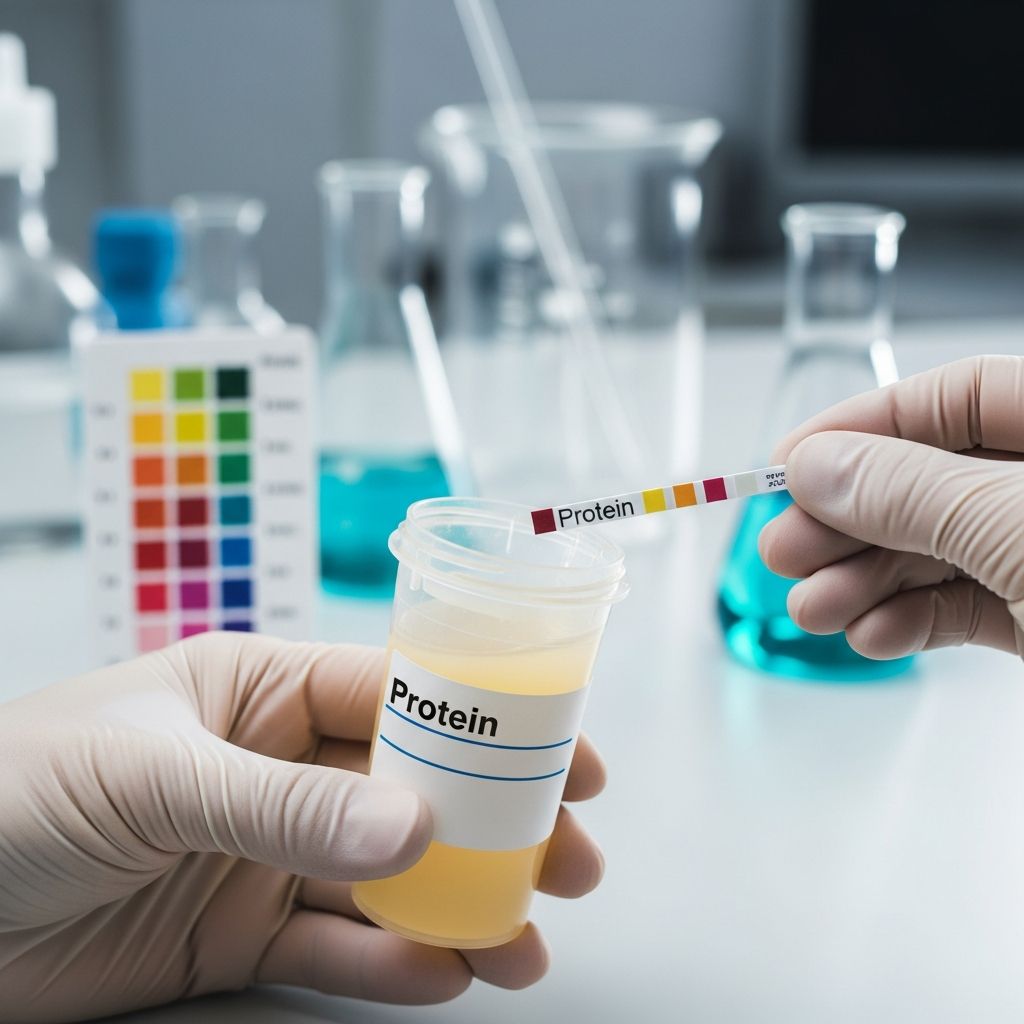
After your urine sample is collected, a laboratory technician will perform analysis using specialized equipment. The most common method involves using a dipstick with color-changing indicators. When the dipstick is immersed in your urine sample, it changes color based on the protein concentration present. The intensity of the color change indicates the approximate level of protein in your urine.
More precise quantitative measurements may also be performed using advanced laboratory techniques that provide exact measurements of protein and creatinine levels. The laboratory will then send your results to your healthcare provider, who will interpret them and discuss what they mean for your health.
Understanding Your Test Results
Normal urine protein ranges vary slightly depending on the type of test performed and the laboratory conducting the analysis. However, general guidelines help determine if your results indicate healthy kidney function:
| Type of Test | Normal Range |
|---|---|
| Random urine sample | Protein: 0-20 mg/dL; Albumin: 0-23 mg/L |
| Timed urine test (4-24 hours) | 0-6 mg/hr |
| 24-hour urine collection | 0-0.15 gm/24 hr (less than 150 mg/day) |
What Normal Results Mean
Test results within the ranges listed above indicate that your kidney function is normal. This means your kidneys are effectively filtering waste products while retaining proteins your body needs. Normal results are reassuring and suggest you likely don’t have kidney disease or significant kidney damage.
What Abnormal Results Mean
Values above the reference range indicate that kidney disease or damage may be present. If your test result shows elevated protein or albumin levels, your doctor will likely repeat the test to confirm the findings. A single elevated result can sometimes occur due to temporary factors, so confirmation is important before beginning treatment or making significant medical decisions.
Factors That Can Affect Test Results
Several factors can temporarily increase protein levels in your urine, which may lead to inaccurate results if not considered:
- Strenuous exercise performed shortly before or during sample collection
- Dehydration or concentrated urine due to insufficient fluid intake
- Fever or acute illness
- Urinary tract infections
- Menstruation in women
- Presence of blood in urine from kidney stones or other conditions
- Recent trauma or surgery
Because these factors can temporarily elevate protein levels, your healthcare provider may recommend repeating the test at a different time to obtain more accurate baseline measurements of your kidney function.
Preparation and Precautions
The good news is that a urine protein test requires minimal preparation on your part. You don’t need to fast, avoid certain foods, or take any special medications before the test.
However, to ensure the most accurate results:
- Inform your provider about any strenuous exercise you’ve done recently
- Mention if you’re currently ill or have a fever
- Disclose any urinary tract infection symptoms
- Report any blood in your urine
- Let your provider know about recent surgeries or injuries
Additional Testing
If your urine protein test shows elevated levels, your doctor may order additional tests to determine the underlying cause and assess the extent of kidney damage. Your healthcare provider may also order a blood test to check for other signs of kidney damage, specifically looking for the presence of waste products that would normally be removed from the blood if the kidneys are functioning properly.
These complementary tests help create a complete picture of your kidney function and guide your healthcare provider in developing an appropriate treatment plan.
Timeline for Results
The timing for receiving your test results depends on where the analysis is performed:
- If testing occurs in your provider’s office, results may be available within a few minutes
- If your sample is sent to a laboratory, results typically arrive within a few days
- In some cases, it may take up to a week to receive results from the lab
Your healthcare provider will contact you when the results are ready and discuss what they mean and whether you need any follow-up care or treatment.
When Proteinuria Is Detected
If your test results show high levels of protein in your urine, your provider will take several steps to understand the cause and determine the appropriate management plan:
- Perform a detailed physical examination
- Review your medical history and current medications
- Order additional laboratory tests to assess kidney function
- Evaluate for conditions like diabetes or high blood pressure
- Discuss lifestyle modifications that may help protect your kidneys
- Determine if treatment is needed based on the underlying cause
Home Testing Options
For those interested in monitoring their urine protein at home, at-home protein urine test kits are available at most pharmacies. These over-the-counter tests work similarly to laboratory tests, using dipsticks that change color based on protein levels. However, these home tests should be used as screening tools and not as replacements for professional medical testing. If home test results show elevated protein levels, you should contact your healthcare provider for professional evaluation and confirmation.
Related Kidney Function Tests
The urine protein test is often performed alongside other kidney function assessments. Medical professionals may also use urine albumin-to-creatinine ratio (UACR) tests or protein-to-creatinine ratio tests, which are related measurements that provide additional information about kidney function.
Frequently Asked Questions
Q: Is the urine protein test painful?
A: No, the urine protein test is completely non-invasive and painless. It simply involves providing a urine sample, which is a normal bodily function. There are no needles, injections, or uncomfortable procedures involved.
Q: Can I eat or drink before a urine protein test?
A: Yes, there are no dietary restrictions before a urine protein test. You can eat and drink normally unless your healthcare provider gives you specific instructions for other tests being performed at the same time.
Q: How often should I have a urine protein test?
A: The frequency depends on your individual health status. People with diabetes, high blood pressure, or known kidney disease may need regular testing, while others may only need periodic screening as part of routine health maintenance.
Q: What does it mean if my protein levels are slightly elevated?
A: Slightly elevated protein levels don’t always indicate serious kidney disease. Your provider may recommend repeating the test to confirm results and ruling out temporary factors before beginning any treatment.
Q: Can medications affect urine protein test results?
A: Some medications can influence urine composition. Always inform your healthcare provider about all medications and supplements you’re taking before the test.
Q: Is proteinuria always a sign of kidney disease?
A: While proteinuria often indicates kidney issues, it can sometimes result from temporary factors like strenuous exercise, dehydration, or infection. Your healthcare provider will help determine the underlying cause.
References
- Urine Protein (Microalbuminuria/Proteinuria) Test — Cleveland Clinic Abu Dhabi. 2024. https://www.clevelandclinicabudhabi.ae/en/health-hub/health-resource/diagnostics-and-testing/urine-protein-test
- Urine Protein Creatinine Ratio (UPCR): Test & Results — Cleveland Clinic. 2024. https://my.clevelandclinic.org/health/diagnostics/23933-urine-protein-creatinine-ratio
- Urine Test for Protein — Cleveland Clinic. 2024. https://my.clevelandclinic.org/health/diagnostics/12983-urine-protein-test
- Protein In Urine (Proteinuria): Causes, Symptoms & Treatment — Cleveland Clinic. 2024. https://my.clevelandclinic.org/health/symptoms/16428-proteinuria
- Urinalysis: What It Is, Purpose, Procedure, Results & Types — Cleveland Clinic. 2024. https://my.clevelandclinic.org/health/diagnostics/17893-urinalysis
- Proteinuria: How to Evaluate an Important Finding — Cleveland Clinic Journal of Medicine. 2003. https://www.ccjm.org/content/ccjom/70/6/535.full-text.pdf
- Protein / Creatinine Ratio — Cleveland Clinic Laboratories. 2024. https://clevelandcliniclabs.com/test/protein-creatinine-ratio-2/
Similar Articles








Read full bio of medha deb