Urine Specific Gravity: Purpose, Normal Range & Results
Understanding urine specific gravity tests: What they measure, normal ranges, and what abnormal results mean.
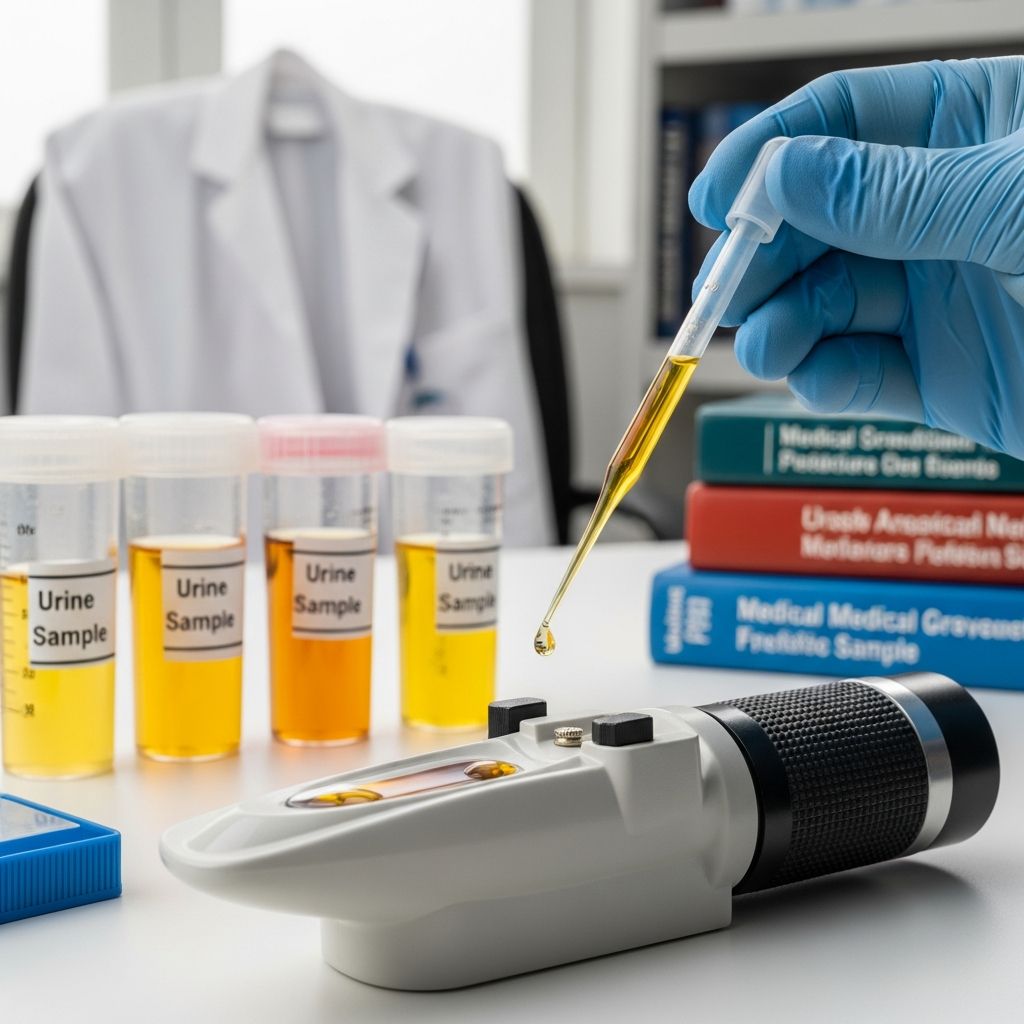
Understanding Urine Specific Gravity: A Comprehensive Guide
Urine specific gravity is a type of urinalysis test that helps healthcare providers understand the amount of water and waste products in your urine. This simple, noninvasive test measures how well your kidneys balance water and remove chemical particles from your blood by evaluating the density of your urine relative to the density of water. A typical specific gravity of urine range is 1.005 to 1.030, and dehydration, overhydration, or certain medical conditions may cause your specific gravity of urine to be outside that range.
What Is Urine Specific Gravity?
Specific gravity of urine is a fast, simple urinalysis test that measures the concentration of all chemical particles in your urine. Waste products in your urine may include:
- Urea
- Creatinine
- Sodium and other electrolytes
- Glucose
- Various other dissolved substances
A low specific gravity indicates you have more water in your urine (overly hydrated or diluted urine). A high specific gravity indicates you have many waste products in your urine (dehydrated or concentrated urine). Sometimes, your specific gravity is abnormal because you’re drinking too many fluids or not enough. However, sometimes a condition that affects your kidneys can impact your specific gravity of urine.
Alternative Names for This Test
Specific gravity of urine has many different names that healthcare professionals may use interchangeably, including:
- Urine specific gravity test
- Specific gravity urinalysis
- USG test
- Urine density test
- Urine osmolarity screening
Why Your Doctor May Order This Test
A healthcare provider may recommend a urine-specific gravity test if they suspect you have a condition that affects your kidneys’ ability to balance water or remove wastes from your blood. This test can help evaluate your body’s water balance and urine concentration, providing valuable insights into kidney function and overall hydration status. The test is typically ordered as part of a routine urinalysis or when specific concerns about kidney function arise.
How the Urine Specific Gravity Test Is Performed
The procedure for a urine specific gravity test is straightforward and involves minimal preparation:
Sample Collection: You will provide a urine sample by urinating into a sterile cup. Your healthcare provider will give you specific instructions about the collection process and where to place your sample.
Dipstick Testing: A healthcare provider will insert a dipstick into your urine sample. A dipstick is a thin strip of plastic or paper with patches of chemicals that change color according to the specific gravity of your urine. The color the dipstick changes to will tell the provider the specific gravity of your urine. The dipstick test gives only a rough result.
Laboratory Analysis: For a more accurate result, your provider may send your urine sample to a lab for examination with a refractometer, which provides more precise measurements than the dipstick method.
What to Expect During the Test
The test involves only normal urination, and there is no discomfort associated with providing a urine sample. After you provide your urine sample, a healthcare provider will immediately run a dipstick test or send it to a lab to examine with a refractometer. If your healthcare provider uses a dipstick, you will get your results right away. If they use a refractometer, it may take longer to receive results.
Related Stories



A urine-specific gravity test is usually one part of many different urine tests, so you’ll likely get the results of all your tests in one to two business days. A provider may call you with the results or send them to you electronically.
Factors That May Affect Your Test Results
Several factors can influence your urine specific gravity test results. Tell your provider if you recently:
- Had any type of anesthesia for an operation
- Received intravenous dye (contrast medium) for an imaging test, such as a CT or MRI scan
- Used herbs or natural remedies, especially Chinese herbs
- Taken certain medications
- Changed your fluid intake significantly
These factors can temporarily alter the concentration of substances in your urine and may affect test results.
Normal Results and Reference Range
The expected or normal range for urine-specific gravity is 1.005 to 1.030. Water has a specific gravity of 1.0, so any measurement above this indicates dissolved substances in your urine. Normal value ranges may vary slightly among different laboratories, as some labs use different measurements or test different samples. It is important to talk to your provider about the meaning of your specific test results and what the reference range is for your particular laboratory.
Understanding these ranges helps healthcare providers determine whether your kidney function is appropriate and whether your hydration status is balanced.
What Abnormal Results Mean
High Urine Specific Gravity (Above 1.030)
High urine specific gravity indicates that your urine is more concentrated, meaning there are more waste products and dissolved substances relative to water. This can result from various conditions and situations:
- Adrenal glands do not produce enough hormones (such as Addison disease)
- Glucose in the urine
- Heart failure
- High sodium level in the blood
- Loss of body fluids (dehydration)
- Narrowing of the kidney artery (renal artery stenosis)
- Shock
- Syndrome of inappropriate ADH secretion (SIADH)
Low Urine Specific Gravity (Below 1.005)
Low urine specific gravity indicates that your urine is more dilute, meaning there is more water relative to waste products. This can result from:
- Damage to kidney tubule cells (renal tubular necrosis)
- Diabetes insipidus
- Drinking too much fluid
- Kidney failure
- Low sodium level in the blood
- Severe kidney infection (pyelonephritis)
If your urine-specific gravity is lower than 1.005, that means your urine has more water in it. If your urine-specific gravity is higher than 1.030, that means there are more waste products in your urine.
Interpreting Your Results
If your results are abnormal, your healthcare provider may recommend additional tests to help diagnose the cause. The additional tests may depend on whether you’re overly hydrated or dehydrated. These tests might include kidney function panels, blood tests to measure electrolyte levels, imaging studies, or other specialized urinalysis tests.
Urine osmolality is a more specific and precise test for urine concentration than specific gravity. However, the urine specific gravity test is easier and more convenient and is usually part of a routine urinalysis, making it an excellent screening tool.
When to Contact Your Healthcare Provider
Call your healthcare provider if you:
- Have abnormal urine specific gravity results
- Experience persistent changes in urine color or clarity
- Have difficulty urinating or pain during urination
- Notice blood in your urine
- Have symptoms of dehydration or fluid retention
- Have concerns about your kidney function
Benefits and Limitations of the Test
The urine specific gravity test offers several advantages as a diagnostic tool. It is quick, noninvasive, and provides immediate results with dipstick testing. The test is cost-effective and can be performed in various healthcare settings, from clinics to hospitals. Additionally, it requires minimal patient preparation and carries no risks.
However, the test has some limitations. Dipstick results provide only rough estimates, and certain substances in urine may interfere with accurate readings. Additionally, the test cannot specifically identify which substances are present in elevated concentrations—it only measures total concentration.
Risks Associated with This Test
There are no risks associated with the urine specific gravity test. The procedure is completely noninvasive and only requires providing a normal urine sample. There are no needles, radiation, or medications involved in this test.
Importance of Proper Hydration
Understanding your urine specific gravity can provide valuable information about your hydration status. Healthy hydration is essential for proper kidney function, cardiovascular health, and overall wellness. If you consistently have high urine specific gravity readings, it may indicate that you need to increase your fluid intake. Conversely, consistently low readings might suggest you’re drinking excessive amounts of fluid.
Frequently Asked Questions About Urine Specific Gravity
Q: What is the difference between urine specific gravity and urine osmolality?
A: While both tests measure urine concentration, urine osmolality is more specific and precise as it directly measures the number of dissolved particles per unit of solvent. Urine specific gravity is an indirect measurement that is easier to perform and is typically part of routine screening.
Q: Can medications affect my urine specific gravity results?
A: Yes, certain medications and substances can affect your results. It is important to inform your healthcare provider about any medications, supplements, or recent contrast dyes you have received, as these may temporarily alter your urine concentration.
Q: How long does it take to get urine specific gravity results?
A: If your provider uses a dipstick, results are typically available immediately. If laboratory analysis with a refractometer is performed, results are usually available within one to two business days as part of your complete urinalysis.
Q: Is it normal for my urine specific gravity to vary?
A: Yes, it is normal for urine specific gravity to vary throughout the day and from day to day depending on your hydration status, diet, physical activity, and other factors. A single abnormal result does not necessarily indicate a medical problem, but repeated abnormal results warrant further investigation.
Q: What should I do to prepare for a urine specific gravity test?
A: No special preparation is required for this test. You can eat and drink normally before providing your sample. However, inform your healthcare provider about any recent anesthesia, contrast dyes, or medications you have taken.
Q: Can dehydration cause high urine specific gravity?
A: Yes, dehydration is one of the most common causes of elevated urine specific gravity. When you are dehydrated, your kidneys conserve water, resulting in more concentrated urine with higher specific gravity readings.
Conclusion
It can be a little awkward to provide a urine sample into a cup. But your specific gravity of urine is a quick, noninvasive way for healthcare providers to see how well your kidneys work. If your results are outside of the expected range, it can help a provider quickly determine if you need additional testing or treatment. This simple test provides valuable insights into your kidney function, hydration status, and overall health. If you have any questions about your results or what they mean for your health, don’t hesitate to reach out to your healthcare provider for clarification and guidance.
References
- Urine Specific Gravity Test — MedlinePlus Medical Encyclopedia, U.S. National Library of Medicine. 2024. https://medlineplus.gov/ency/article/003587.htm
- Urinalysis: What It Is, Purpose, Procedure, Results & Types — Cleveland Clinic. 2024. https://my.clevelandclinic.org/health/diagnostics/17893-urinalysis
- Urinalysis Only — Cleveland Clinic Laboratories. 2024. https://clevelandcliniclabs.com/test/urinalysis-only/
- Kidney Function Tests: Types, Results & Follow Up — Cleveland Clinic. 2024. https://my.clevelandclinic.org/health/diagnostics/21659-kidney-function-tests
- Changes In Urine: Causes, Symptoms & Treatment — Cleveland Clinic. 2024. https://my.clevelandclinic.org/health/diseases/15357-urine-changes
Similar Articles








Read full bio of medha deb