Urosepsis: Causes, Symptoms, Diagnosis & Treatment
Understanding urosepsis: A serious infection requiring immediate medical attention and swift treatment.
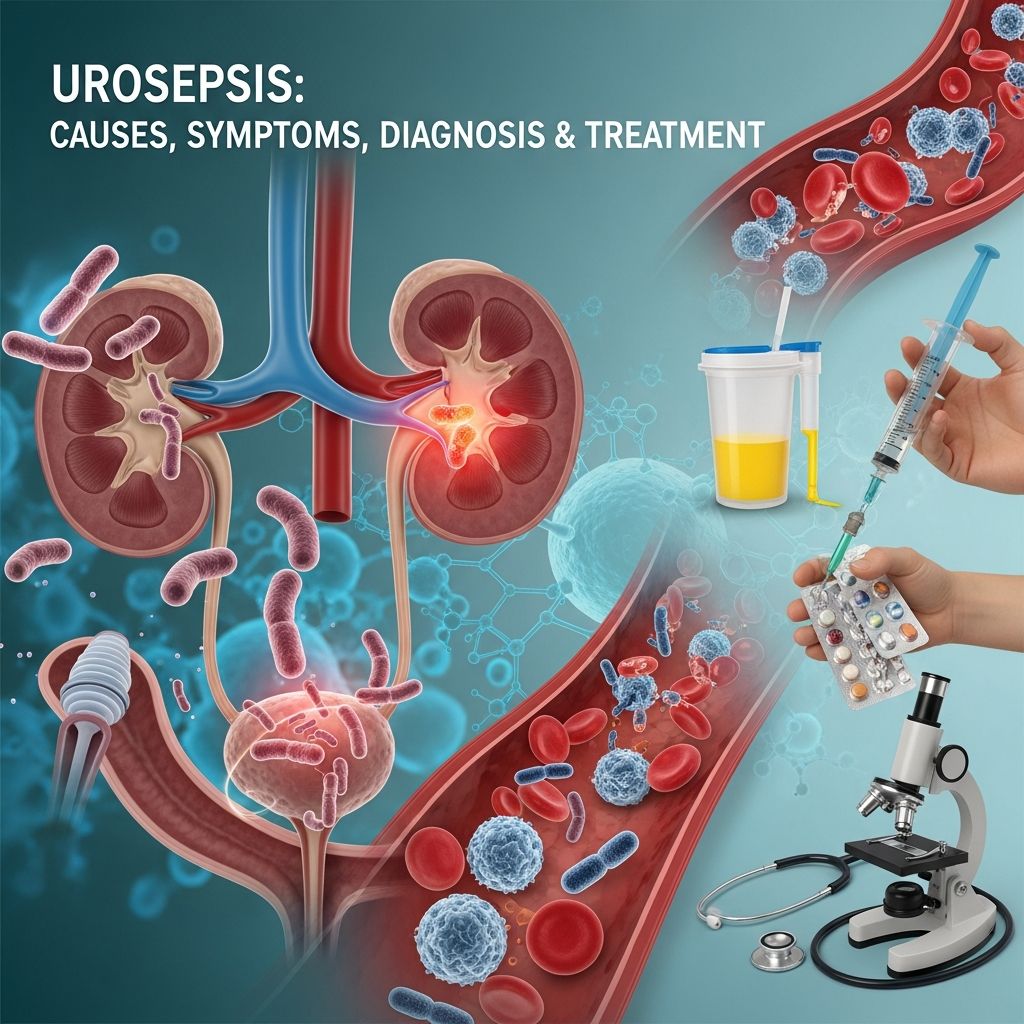
Understanding Urosepsis
Urosepsis is a severe, life-threatening condition that develops when a urinary tract infection spreads throughout the body and triggers an extreme inflammatory response. Unlike a typical urinary tract infection (UTI) that remains localized to the bladder or urethra, urosepsis represents a critical escalation where bacteria from the urinary system enter the bloodstream and affect multiple organ systems. This condition demands immediate medical intervention, as delays in treatment can result in organ failure, septic shock, and potentially death. Understanding the mechanisms, risk factors, and warning signs of urosepsis is essential for early recognition and prompt treatment.
What is Urosepsis?
Urosepsis is classified as a form of sepsis, which is defined as a life-threatening organ dysfunction resulting from the body’s dysregulated response to infection. When bacteria or other pathogens from the urinary tract enter the bloodstream, the immune system launches an overwhelming inflammatory cascade. This response, while designed to fight infection, can paradoxically damage the body’s own tissues and organs. In urosepsis specifically, the infection originates in the urinary system—typically the kidneys, bladder, or urethra—but the systemic effects extend far beyond the initial site of infection.
The progression from a simple UTI to urosepsis is not inevitable, but certain conditions increase vulnerability. The severity of the infection, the virulence of the pathogen, and the individual’s immune status all play crucial roles in determining whether an infection remains localized or becomes systemic.
Causes and Risk Factors
Urosepsis typically originates from bacterial infections within the urinary tract. The most common causative organisms include gram-negative bacteria such as E. coli, Klebsiella, and Proteus, as well as gram-positive organisms like Staphylococcus aureus and Enterococcus. Several factors predispose individuals to developing urosepsis from an initial UTI:
– Delayed treatment of UTI or sepsis- Urinary tract obstruction (kidney stones, tumors, strictures)- Indwelling urinary catheters or recent urological procedures- Diabetes mellitus or poorly controlled blood sugar- Weakened immune system (HIV/AIDS, chemotherapy, immunosuppressive therapy)- Pregnancy and postpartum period- Neurogenic bladder or urinary retention- Spinal cord injuries- Advanced age- Male gender (though women are more prone to UTIs initially)- Recent urological surgery or instrumentation- Anatomical abnormalities of the urinary tract
In hospitalized patients, prolonged catheterization and antibiotic-resistant organisms significantly increase the risk of progression to urosepsis.
Recognizing the Symptoms of Urosepsis
The presentation of urosepsis can be deceptive because it may begin with symptoms indistinguishable from a standard UTI. However, as the condition progresses and becomes systemic, characteristic sepsis symptoms emerge. Early recognition is vital for improving outcomes.
Initial UTI Symptoms
Before systemic manifestations appear, patients may experience:
– Painful urination (dysuria)- Frequent urge to urinate- Urgency and incomplete emptying- Pain in the lower back, side, or lower abdomen- Cloudy or dark urine- Blood in urine (hematuria)- Strong or foul-smelling urine
Sepsis Warning Signs
As infection progresses to urosepsis, more severe systemic symptoms develop:
– High fever (typically above 101.5°F or 38.6°C)- Chills and rigors- Rapid heart rate (tachycardia)- Rapid or difficult breathing (tachypnea)- Confusion or altered mental status- Extreme pain or discomfort- Hypotension (low blood pressure)- Skin changes (flushed, pale, or clammy appearance)- Nausea and vomiting- Diarrhea- Lethargy and weakness
Related Stories



Septic Shock Indicators
In the most severe cases, urosepsis may progress to septic shock, characterized by:
– Severe hypotension requiring vasopressor support- Altered consciousness or unresponsiveness- Organ failure (respiratory, cardiac, renal, hepatic)- Decreased urine output- Lactic acidosis- Multiple organ dysfunction syndrome (MODS)
Diagnosis of Urosepsis
Early diagnosis is critical for improving survival rates. Healthcare providers employ multiple diagnostic approaches to confirm urosepsis and identify the causative organism.
Clinical Assessment Tools
Providers may use standardized criteria to assess sepsis severity:
– Quick Sequential Organ Failure Assessment (qSOFA): A bedside tool evaluating altered mental status, systolic blood pressure, and respiratory rate.- Systemic Inflammatory Response Syndrome (SIRS) Criteria: Assesses temperature, heart rate, respiratory rate, and white blood cell count.- Sequential Organ Failure Assessment (SOFA): More comprehensive scoring of organ dysfunction across multiple systems.
Laboratory Tests
Confirmatory testing includes:
– Urinalysis: Reveals pyuria (white blood cells in urine), bacteriuria, and nitrites.- Urine Culture: Identifies the specific bacterial organism and determines antibiotic susceptibility. Should be collected before starting antibiotics.- Blood Cultures: Multiple samples drawn to detect bacteremia and identify systemic infection.- Complete Blood Count (CBC): Assesses white blood cell elevation or depression.- Comprehensive Metabolic Panel: Evaluates organ function and electrolyte abnormalities.- Serum Lactate: Elevated levels indicate tissue hypoxia and poor perfusion.- Coagulation Studies: Assesses for disseminated intravascular coagulation (DIC).- Procalcitonin: Biomarker indicating severe bacterial infection.
Imaging Studies
Radiological evaluation may include:
– Ultrasound: Initial imaging to assess kidney hydronephrosis or obstruction.- Computed Tomography (CT): High-resolution imaging to identify abscesses, obstructions, or anatomical abnormalities.- Chest X-ray: Evaluates for pulmonary complications and acute respiratory distress syndrome (ARDS).
Treatment and Management
Urosepsis management requires immediate, multifaceted intervention. Treatment efficacy is directly correlated with the speed of intervention, making time-sensitive decision-making critical.
Initial Resuscitation (First 3 Hours)
Upon recognition of urosepsis, the following interventions should be initiated immediately:
– Fluid Resuscitation: Intravenous fluid boluses (typically 30 mL/kg for septic shock) to restore intravascular volume and improve organ perfusion.- Lactate Measurement: Baseline serum lactate level obtained to assess tissue perfusion.- Blood Cultures: Multiple sets obtained before antibiotic administration.- Broad-Spectrum Antibiotics: Immediate initiation based on local resistance patterns, without waiting for culture results.- Vasopressor Support: Administration if hypotension persists despite fluid resuscitation.- Oxygen Therapy: Supplemental oxygen to maintain adequate oxygenation.- Monitoring: Continuous cardiac, respiratory, and hemodynamic monitoring in intensive care unit (ICU) setting.
Antibiotic Therapy
Initial antibiotic selection should be broad-spectrum to cover likely uropathogens:
– Combination therapy typically includes a beta-lactam (such as a cephalosporin or carbapenem) plus an aminoglycoside or fluoroquinolone- Alternatively, extended-spectrum beta-lactams may be used as monotherapy- Therapy should be tailored based on culture results and susceptibility testing, with daily reassessment for de-escalation- Duration typically ranges from 7 to 14 days depending on clinical response and source control
Source Control
Addressing the origin of infection is essential for urosepsis resolution:
– Catheter Removal: Removal of indwelling urinary catheters if present and alternative drainage methods established if necessary.- Obstruction Relief: Intervention for obstructing kidney stones, tumors, or strictures (percutaneous nephrostomy, ureteral stent placement, or surgical intervention).- Abscess Drainage: Percutaneous or surgical drainage of renal or perinephric abscesses.- Timeline: Source control should be achieved within 6 to 12 hours of diagnosis once initial resuscitation is completed.
Hemodynamic Support
Dynamic management of fluid status progresses through several phases:
– Resuscitation Phase: Aggressive fluid administration to restore perfusion.- Optimization Phase: Weighing benefits and risks of additional fluid based on dynamically assessed volume status.- Stabilization Phase: Achievement of net-neutral or slightly negative fluid balance, typically 24 to 48 hours after septic shock onset.- De-escalation Phase: Aggressive fluid removal strategies once shock resolves and organ recovery begins.
Supportive Care
Management in the ICU includes:
– Mechanical ventilation if respiratory support is needed- Renal replacement therapy for acute kidney injury- Management of disseminated intravascular coagulation- Stress ulcer prophylaxis- Glucose control and metabolic management- Thromboembolism prophylaxis- Nutritional support
Complications of Urosepsis
Without prompt treatment, urosepsis can lead to severe complications:
– Septic shock with refractory hypotension- Acute respiratory distress syndrome (ARDS)- Acute kidney injury or acute renal failure- Liver dysfunction or hepatic failure- Disseminated intravascular coagulation (DIC)- Multiple organ dysfunction syndrome (MODS)- Death
Mortality rates for urosepsis range from 5% to 40% depending on severity, underlying conditions, and treatment timeliness.
Prevention Strategies
Reducing the risk of urosepsis involves:
– Prompt treatment of urinary tract infections with appropriate antibiotics- Complete antibiotic course completion even if symptoms resolve- Prophylactic antibiotics before urological procedures in high-risk patients- Minimizing unnecessary urinary catheterization duration- Aseptic technique during catheter insertion and maintenance- Regular catheter assessment and removal when no longer clinically necessary- Management of urinary obstruction- Optimization of blood sugar control in diabetic patients- Adequate hydration- Prompt evaluation of urinary symptoms
Frequently Asked Questions
Q: What is the difference between a UTI and urosepsis?
A: A UTI is a localized infection of the urinary system affecting the bladder, urethra, or kidneys. Urosepsis occurs when bacteria from a UTI enter the bloodstream and cause a systemic inflammatory response affecting multiple organ systems. Urosepsis is life-threatening and requires immediate hospitalization, while many UTIs can be treated on an outpatient basis.
Q: How quickly can a UTI develop into urosepsis?
A: The progression varies depending on individual factors, pathogen virulence, and immune status. In some cases, progression can occur within hours, particularly in elderly patients, those with immunocompromise, or those with urinary obstruction. This underscores the importance of seeking medical attention for concerning UTI symptoms.
Q: Can urosepsis be prevented?
A: While not all cases can be prevented, risk reduction is possible through prompt UTI treatment, minimizing catheterization duration, proper hygiene, adequate hydration, and management of underlying conditions like diabetes and urinary obstruction.
Q: What is the survival rate for urosepsis?
A: Survival rates depend on severity and treatment timing. With prompt recognition and appropriate treatment, survival rates are higher. However, mortality can range from 5% to 40% depending on complications and underlying health conditions.
Q: Is urosepsis always caused by bacteria?
A: While bacterial infections are the primary cause of urosepsis, fungal infections can occasionally cause similar presentations, particularly in immunocompromised patients or those with prolonged antibiotic exposure.
Q: What should I do if I suspect urosepsis?
A: Seek emergency medical attention immediately. Call 911 or go to the nearest emergency department. Urosepsis is a medical emergency requiring immediate hospital evaluation, laboratory testing, imaging, and treatment. Do not delay seeking care.
References
- Diagnostic Stewardship for Urinary Tract Infection: A Snapshot of the Expert Guidance — Cleveland Clinic Consult QD. 2024. https://consultqd.clevelandclinic.org/diagnostic-stewardship-for-urinary-tract-infection-a-snapshot-of-the-expert-guidance
- Sepsis: Symptoms, Causes, Treatment & Prevention — Cleveland Clinic Health Library. 2023. https://my.clevelandclinic.org/health/diseases/12361-sepsis
- Sepsis and Septic Shock: Guideline-Based Management — Cleveland Clinic Journal of Medicine, Vol. 87, No. 1. 2020. https://www.ccjm.org/content/87/1/53
- Urinary Tract Infection (UTI): Causes, Symptoms & Treatment — Cleveland Clinic Health Library. 2023. https://my.clevelandclinic.org/health/diseases/9135-urinary-tract-infections
- Sepsis and Septic Shock: Guideline-Based Management — National Center for Biotechnology Information (PubMed). 2020. https://pubmed.ncbi.nlm.nih.gov/31990655/
Similar Articles








Read full bio of Sneha Tete