Ustekinumab For Psoriasis: Complete Guide To Dosage & Safety
Comprehensive guide to ustekinumab (STELARA™) as a biologic therapy for moderate to severe psoriasis and related conditions.

Ustekinumab for Psoriasis
Introduction
Ustekinumab, marketed as STELARA™, is a biologic therapy approved for moderate-to-severe plaque psoriasis in adults and children aged 12 years and older who are candidates for systemic or phototherapy.
This human monoclonal antibody targets the p40 subunit shared by interleukin-12 (IL-12) and interleukin-23 (IL-23), key cytokines driving psoriatic inflammation. Clinical trials demonstrate good to excellent responses in over two-thirds of patients with chronic plaque psoriasis.
Beyond plaque psoriasis, ustekinumab shows promise in nail psoriasis, erythrodermic psoriasis, generalised pustular psoriasis, palmoplantar pustulosis, psoriatic arthritis, and Crohn disease based on smaller studies and approvals.
In New Zealand and other regions, access may be restricted to severe cases via special authority due to high costs, alongside agents like adalimumab and secukinumab funded by PHARMAC.
How it Works
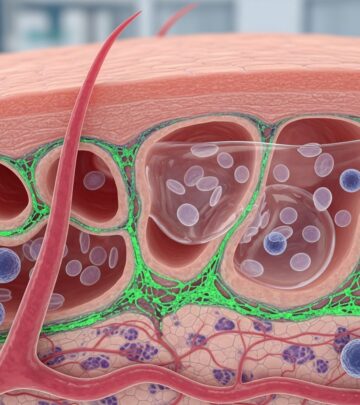
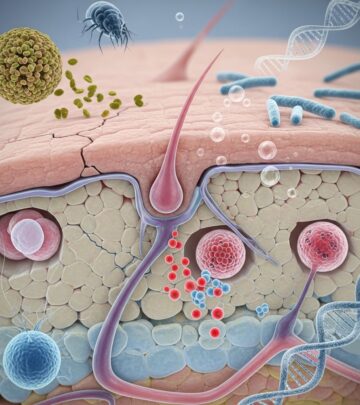
Psoriasis arises from immune dysregulation, with excessive T-cell production stimulated by cytokines like IL-12 and IL-23. These interleukins bind to T-lymphocytes, promoting rapid skin cell proliferation and plaque formation.
Ustekinumab binds specifically to the p40 subunit of IL-12 and IL-23, preventing their interaction with T-cell receptors (IL-12Rβ1). This blocks downstream signaling, reduces T-cell activation, and slows keratinocyte hyperproliferation, alleviating plaques.
Pharmacokinetics: After subcutaneous injection, peak serum concentrations occur at 7-13.5 days. Half-life ranges from 14.9 to 45.6 days, with clearance of 1.90-2.22 mL/day/kg. Clinical response correlates with serum levels; higher concentrations link to better PASI improvements.
In phase III trials (PHOENIX 1/2, ACCEPT), ustekinumab outperformed placebo and etanercept in PASI 75 (≥75% improvement) and Physician’s Global Assessment (PGA) endpoints at week 12.
Dosage
Ustekinumab is administered via subcutaneous injection. Standard regimen for plaque psoriasis:
- 45 mg at week 0 and week 4, then every 12 weeks.
- 90 mg dose for patients >100 kg or inadequate response to 45 mg.
Peak efficacy emerges around week 28. For psoriatic arthritis, similar dosing applies, often combined with methotrexate.
| Patient Weight | Initial Dose (Week 0, 4) | Maintenance |
|---|---|---|
| ≤100 kg | 45 mg | Every 12 weeks |
| >100 kg | 90 mg | Every 12 weeks |
Adjustments may be needed based on response; consult national formularies like Medsafe, FDA, or NZF.
Adverse Events
Safety profile aligns with other biologics. Common events include upper respiratory infections, headache, and injection-site reactions (mild, transient).
Serious risks (rare):
- Infections: Increased susceptibility to bacterial, viral, fungal; monitor for TB reactivation.
- Malignancy: No significant increase in trials, but long-term data ongoing.
- Hypersensitivity: Anaphylaxis rare; discontinue if occurs.
In ACCEPT trial vs. etanercept, ustekinumab had comparable or fewer adverse events. Pediatric data (12-17 years) mirrors adults.
Precautions
Screen for active infections, TB (latent/prior), and hepatitis before initiation. Avoid live vaccines; update immunizations pre-treatment.
No data on pharmacokinetics in hepatic/renal impairment; use caution. Pregnancy: Limited data; registry recommended. Lactation: Detected in milk, weigh benefits.
Contraindicated in hypersensitivity to ustekinumab or active severe infections.
Vaccinations
Review immunization status prior to starting. Update non-live vaccines (e.g., influenza annually, pneumococcal) before or during therapy.
- Recommended: Inactivated influenza yearly; others per guidelines.
- Avoid: Live vaccines (MMR, varicella, oral polio) due to immunosuppression risk.
For travel or outbreaks, consult specialists.
Drug Interactions
No major cytochrome P450 interactions. However:
- CYP450 substrates (e.g., warfarin): Monitor if infection/inflammation alters levels.
- Other biologics/immunosuppressants: Avoid concurrent use to prevent excessive immunosuppression.
- No significant interaction with methotrexate or NSAIDs in psoriatic arthritis.
Always check national drug databases.
Use of Ustekinumab
Indicated for adults/children ≥12 years with moderate-severe psoriasis failing topical/phototherapy. Effective in anti-TNF failures.
In trials:
- PHOENIX 1/2: 67-76% PASI 75 at week 12 (45/90 mg vs. 4% placebo).
- ACCEPT: Superior to etanercept (PASI 75: 67-73% vs. 57%).
Comparators: Secukinumab/brodalumab may show higher PASI rates short-term, but ustekinumab offers durable response with good safety.
In children: Safe/effective per studies.
Monitoring
Routine labs every 6 months: Full blood count, liver function, lipids.
- TB testing periodically.
- Assess PASI/PGA response; switch if inadequate by week 12-16.
- Yearly skin cancer screen in high-risk patients.
Patient education on infection signs, injection technique essential.
Frequently Asked Questions (FAQs)
Q: Who is ustekinumab suitable for?
A: Adults and children ≥12 years with moderate-severe plaque psoriasis unresponsive to conventional therapies.
Q: How soon does ustekinumab work?
A: Improvements by week 4-12; peak at week 28.
Q: Is ustekinumab safe long-term?
A: Yes, consistent with other biologics; monitor infections.
Q: Can I get vaccinated on ustekinumab?
A: Non-live vaccines yes; avoid live ones.
Q: What if I miss a dose?
A: Administer ASAP, resume schedule; consult prescriber.
References
- Ustekinumab for psoriasis — DermNet NZ. 2023. https://dermnetnz.org/topics/ustekinumab-for-psoriasis
- Ustekinumab trials — DermNet NZ. 2023. https://dermnetnz.org/topics/ustekinumab-trials
- STELARA® Datasheet — Medsafe (NZ). 2024-01-15. https://www.medsafe.govt.nz/profs/datasheet/s/stelarainj.pdf
- Biological agents for psoriasis — DermNet NZ. 2023. https://dermnetnz.org/topics/biological-agents-for-psoriasis
- Psoriasis – StatPearls — NCBI Bookshelf, NIH. 2023-10-01. https://www.ncbi.nlm.nih.gov/books/NBK448194/
- Guidelines for the management of psoriasis — DermNet NZ. 2023. https://dermnetnz.org/topics/guidelines-for-the-treatment-of-psoriasis
Similar Articles








Read full bio of medha deb