Uterine Fibroids Treatment: 4 Effective Options For Relief
Explore comprehensive treatment options for uterine fibroids, from medications to surgery, tailored for symptom relief and fertility preservation.
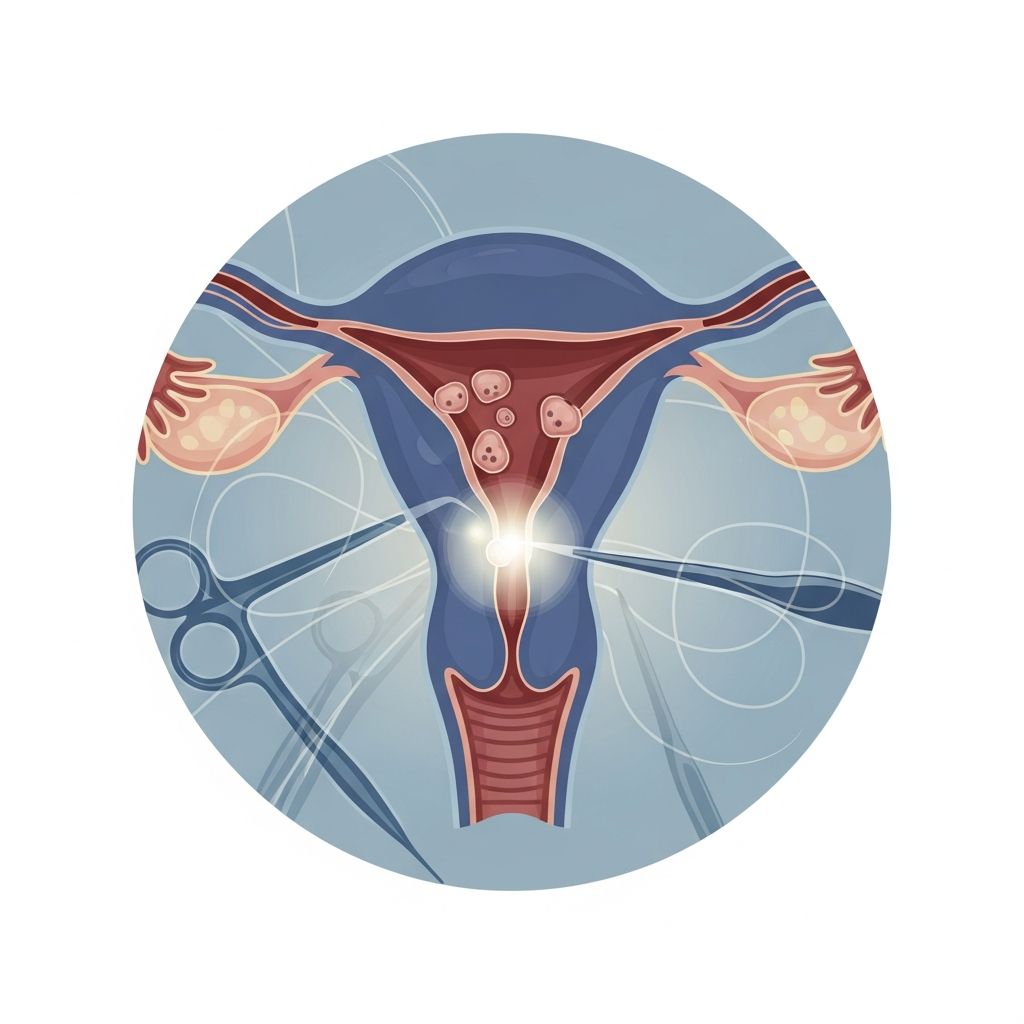
Uterine fibroids, also known as leiomyomas, are noncancerous growths in the uterus that affect up to 80% of women by age 50, often causing heavy menstrual bleeding, pelvic pain, and infertility issues. Treatment depends on symptoms, fibroid size, location, and fertility desires, ranging from watchful waiting to definitive surgery like hysterectomy.
What Are Uterine Fibroids?
Uterine fibroids are benign tumors composed of smooth muscle cells and fibrous connective tissue that develop in or on the uterus. They vary in size from seedlings to large masses distorting the uterus and are classified by location: submucosal (inside the uterine cavity), intramural (within the uterine wall), and subserosal (on the outer surface). Risk factors include age, African American ethnicity, family history, obesity, and early menarche. While many are asymptomatic, symptomatic fibroids impact quality of life through abnormal uterine bleeding (AUB), bulk symptoms like pelvic pressure, urinary frequency, and infertility by distorting the endometrial cavity or blocking fallopian tubes.
Fibroids contribute to infertility in 5-10% of cases, particularly submucosal ones that impair implantation. They rarely become cancerous (less than 1 in 1,000), but timely treatment alleviates symptoms and preserves fertility when needed.
Symptoms of Uterine Fibroids
Common symptoms include:
- Heavy or prolonged menstrual bleeding (menorrhagia), leading to anemia.
- Pelvic pain or pressure, worsened during periods.
- Urinary symptoms like frequent urination or incontinence from bladder compression.
- Bowel issues such as constipation.
- Infertility or recurrent miscarriages, especially with submucosal fibroids.
- Pain during intercourse (dyspareunia).
Asymptomatic fibroids, found incidentally on imaging, often require no treatment as they may shrink post-menopause.
Diagnosis of Uterine Fibroids
Diagnosis starts with a pelvic exam to detect enlarged or irregular uterus. Transvaginal ultrasound is first-line imaging, visualizing fibroid number, size, and location. Saline infusion sonohysterography enhances submucosal fibroid detection. MRI provides detailed mapping for surgical planning, while hysteroscopy allows direct visualization and biopsy if malignancy is suspected. Blood tests rule out anemia or thyroid issues. Differential diagnoses include adenomyosis, polyps, or endometrial hyperplasia.
Treatment Options for Uterine Fibroids
No one-size-fits-all treatment exists; choices balance symptom relief, fibroid characteristics, age, and fertility goals. Options span medical management, minimally invasive procedures, and surgery.
Watchful Waiting
For asymptomatic or mildly symptomatic fibroids, watchful waiting is appropriate. Fibroids often stabilize or shrink after menopause due to declining estrogen. Regular monitoring via exams or ultrasound tracks changes.
Medications
Medications manage symptoms without curing fibroids:
- Nonsteroidal anti-inflammatory drugs (NSAIDs) like ibuprofen reduce pain and cramping.
- Tranexamic acid decreases heavy bleeding by 40-50% on heavy days.
- Progestin-releasing IUD (e.g., Mirena) thins endometrium, reducing bleeding by up to 90% but doesn’t shrink fibroids.
- GnRH agonists (leuprolide, goserelin) induce temporary menopause, shrinking fibroids 30-50% in 3-6 months, used short-term due to bone loss risk.
- Selective progesterone receptor modulators (SPRMs) like ulipristal reduce bleeding and fibroid volume but monitor for liver effects.
- Combined oral contraceptives control bleeding cycles.
Related Stories



Iron supplements treat anemia from blood loss.
Minimally Invasive Procedures
These uterus-preserving options suit women desiring fertility:
- Uterine artery embolization (UAE): Catheter blocks fibroid blood supply, shrinking them 30-60% in months. Effective for bulk symptoms; 85-90% symptom improvement. Fertility data mixed; some pregnancies post-UAE, but higher miscarriage risk. Post-embolization syndrome (pain, fever) common but transient.
- MRI-guided focused ultrasound surgery (MRgFUS): High-intensity ultrasound destroys fibroids non-invasively. Short recovery; symptom relief in 70-80%. Long-term fertility unknown; not for all fibroid types.
- Radiofrequency ablation (RFA): Heat via laparoscopy, transvaginally, or transcervically ablates fibroids. Preserves uterus; quick recovery.
- Endometrial ablation: Destroys uterine lining for bleeding control, not for large fibroids or fertility preservation.
Surgical Treatments
Surgery offers definitive relief:
- Myomectomy: Removes fibroids, preserving uterus for fertility. Approaches: hysteroscopic (submucosal), laparoscopic/robotic (smaller fibroids), abdominal (multiple/large). Recurrence risk 15-30%; adhesion formation possible.
- Hysterectomy: Gold standard, removes uterus for complete cure in non-fertility-seeking women. Approaches: vaginal (least invasive), laparoscopic, abdominal. Only 100% effective for symptom resolution; ends fertility.
| Treatment | Indications | Advantages | Disadvantages | Fertility Preservation |
|---|---|---|---|---|
| Medical (GnRH agonists) | Symptom relief pre-surgery | Non-invasive, shrinks fibroids | Temporary, side effects | Yes |
| UAE | Bulk symptoms | Minimally invasive, outpatient | Post-embolization syndrome, uncertain fertility | Possible |
| Myomectomy | Fertility desired | Uterus preserved | Recurrence, surgical risks | Yes |
| Hysterectomy | Severe symptoms, completed family | Definitive cure | No fertility, major surgery | No |
Fertility and Uterine Fibroids
Fibroids cause 5-10% of infertility; submucosal impair implantation, others distort cavity. Myomectomy improves pregnancy rates 40-50% post-procedure. UAE/MRgFUS fertility impacts unclear; avoid if pregnancy planned soon. IVF may bypass some effects.
Risks and Complications
Treatments carry risks: medications (bone loss, thromboembolism), UAE (infection, ovarian failure <1%), myomectomy (bleeding, adhesion), hysterectomy (infection, menopause if ovaries removed). Choose least invasive feasible.
Lifestyle and Prevention
Maintain healthy weight, vitamin D levels; limit red meat. No proven prevention, but early detection aids management.
Frequently Asked Questions (FAQs)
Can uterine fibroids cause infertility?
Yes, particularly submucosal fibroids distorting the cavity, contributing to 5-10% of infertility cases. Treatment like myomectomy can improve outcomes.
Is hysterectomy the only cure for fibroids?
Yes, it’s the definitive treatment eliminating recurrence, ideal for women not pursuing pregnancy.
Can I get pregnant after UAE?
Possible, but data mixed with higher miscarriage risks; discuss with a fertility specialist.
How long do fibroids take to shrink after treatment?
Varies: medications 3 months, UAE 3-6 months for 30-60% reduction.
Do fibroids go away after menopause?
Often yes, as estrogen drops, but symptomatic ones may need prior treatment.
References
- Uterine Fibroids: Epidemiology & Management (incl. UAE) — Gland Surgery (AME Groups). 2019-12-25. https://gpm.amegroups.org/article/view/10206/html
- Uterine Fibroids: Diagnosis and Treatment — American Academy of Family Physicians (AAFP). 2017-01-15. https://www.aafp.org/pubs/afp/issues/2017/0115/p100.html
- Uterine Fibroids: Origin, Pathogenesis, and Treatment Review — PMC (NIH). 2022-07-06. https://pmc.ncbi.nlm.nih.gov/articles/PMC9277653/
- Uterine fibroids – Diagnosis and treatment — Mayo Clinic. 2023-08-31. https://www.mayoclinic.org/diseases-conditions/uterine-fibroids/diagnosis-treatment/drc-20354294
- Fibroids — UCLA Health. 2023. https://www.uclahealth.org/news/article/fibroids
- What Are Uterine Fibroids? — JAMA Network. 2024. https://jamanetwork.com/journals/jama/fullarticle/2824424
Similar Articles








Read full bio of Sneha Tete